
The SUV market is crowded in 2025, with countless models promising power, comfort, and rugged versatility. Yet, one name continues to resonate with adventurers and off-road enthusiasts worldwide: the Toyota 4Runner. For decades, it has stood as a benchmark for reliability and trail-ready durability. This year, Toyota has raised the bar with the introduction of the 2025 Toyota 4Runner Trailhunter — a purpose-built overlanding SUV designed straight from the factory for those who live for exploration.
Unlike traditional trims, the Trailhunter is not just another cosmetic upgrade. It’s a fully engineered overlanding solution with heavy-duty suspension, protective underbody gear, integrated lighting, an air snorkel for dusty and wet trails, and even a roof rack capable of handling extended gear loads. Toyota has essentially taken the guesswork out of aftermarket modifications and delivered a rig that’s ready for adventure the moment you drive it off the lot.
So, is this the ultimate SUV for explorers in 2025? Let’s dive deep into the details.









A Brief History of the Toyota 4Runner Legacy
Evolution of the 4Runner from 1980s to 2025
The Toyota 4Runner first hit the market in the early 1980s as a rugged, compact SUV based on the Hilux pickup. What started as a utilitarian model with a removable fiberglass rear top quickly evolved into a full-size SUV with a reputation for being nearly indestructible. Over the decades, Toyota refined the 4Runner while keeping its adventurous DNA intact.
By the 2000s, it had become one of the few SUVs that still embraced body-on-frame construction, making it far more durable for off-road use compared to unibody crossovers. Now, in 2025, the sixth-generation 4Runner continues to stay true to its roots but adapts to modern expectations with hybrid technology, advanced safety systems, and new overlanding-focused trims like the Trailhunter.
The Growing Popularity of Overlanding Vehicles
In recent years, “overlanding” has gone from niche hobby to mainstream adventure trend. Unlike traditional off-roading, which focuses on short bursts of trail fun, overlanding emphasizes long-distance self-reliant travel, often into remote areas. That means SUVs need to be outfitted with storage solutions, reliable powertrains, auxiliary electricity for gear, and durable suspension that can withstand thousands of miles of rough terrain.
Toyota recognized this shift in demand and responded by launching the Trailhunter sub-brand — first seen on the Tacoma and now available on the 2025 4Runner. The Trailhunter isn’t just an off-road trim; it’s an overlanding-specific build backed by Toyota’s engineering and aftermarket partnerships.
First Look at the 2025 Toyota 4Runner Trailhunter
Exterior Design and Rugged Styling
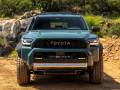
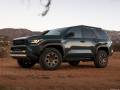
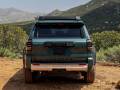
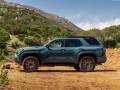
The first thing you’ll notice about the 2025 Toyota 4Runner Trailhunter is that it looks ready for the wild. With a taller stance, chunky tires, and bronze accents across its exterior, it’s clear this SUV is more than just a city commuter.
The front fascia features a bold “TOYOTA” heritage grille in bronze, flanked by a 20-inch LED light bar integrated neatly into the upper grille section. Color-selectable LED fog lamps sit lower, providing extra illumination for tricky nighttime trail navigation.
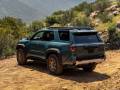
Steel rock rails and skid plates line the undercarriage, offering both protection and rugged aesthetics. The ARB roof rack adds serious utility, making it easier to mount tents, storage boxes, or additional gear without resorting to aftermarket installations.
Unique Trailhunter Badging and Bronze Accents
Distinctive “Trailhunter” badging and bronze Toyota emblems set this trim apart from the rest of the 4Runner lineup. The 18-inch bronze wheels are wrapped in beefy 33-inch Toyo Open Country A/T tires, giving it both traction and an aggressive stance. These design choices aren’t just for looks — they signal that the Trailhunter is built for serious outdoor use.
Color Options and Customization Choices
Toyota offers the Trailhunter in several earthy tones, perfect for blending into natural environments. Expect hues like Lunar Rock, Midnight Black, Army Green, and Ice Cap White, among others. Combined with the bronze detailing, these colors emphasize the vehicle’s overlanding personality.
Engine and Performance Specifications
i-FORCE MAX Hybrid Powertrain
At the heart of the 2025 Trailhunter is Toyota’s new i-FORCE MAX hybrid system. This setup combines a 2.4-liter turbocharged four-cylinder engine with an electric motor and a 1.87-kWh battery pack. The result is an impressive 326 horsepower and 465 lb-ft of torque (≈ 630 Nm).
What makes this hybrid unique is that it isn’t primarily about saving fuel — it’s about delivering torque instantly, which is crucial for climbing steep trails, towing heavy loads, or powering through mud and sand.
Horsepower, Torque, and Towing Capacity
With nearly 6,000 pounds of towing capacity, the Trailhunter is no slouch in terms of utility. Whether you’re hauling a camper trailer, dirt bikes, or a boat, it has the muscle to get the job done. The instant torque delivery from the hybrid motor gives it an edge over traditional gas-only rivals like the Jeep Wrangler or Ford Bronco.
Fuel Efficiency: City, Highway, and Off-Road
While official EPA figures are still being finalized, Toyota estimates the Trailhunter will deliver slightly better fuel economy than the outgoing V6-powered 4Runner. Expect around 20–23 mpg combined, depending on conditions. Of course, off-road driving, larger tires, and heavy gear loads will impact efficiency. But compared to non-hybrid competitors, the i-FORCE MAX gives it a more modern balance of power and economy.
Off-Road Features of the Trailhunter
Old Man Emu Suspension and Lift
One of the biggest highlights of the Trailhunter is its Old Man Emu (OME) suspension system, co-developed with ARB. This setup includes 2.5-inch forged monotube shocks with piggyback reservoirs for superior heat dissipation. The Trailhunter also rides 2 inches higher in the front and 1.5 inches in the rear compared to standard 4Runners, improving approach and departure angles.
This isn’t just a cosmetic lift — the OME suspension is engineered to provide stability and comfort over long stretches of rocky or washboard terrain, which is exactly what overlanders need.
Skid Plates, Rock Rails, and Protection Features
The underbody is shielded by stamped steel skid plates, and the sides are protected by rock rails designed to handle scrapes from boulders and debris. These factory-installed protective features save owners from spending thousands on aftermarket armor.
33-Inch All-Terrain Tires and 18-Inch Wheels
The factory-equipped Toyo Open Country A/T tires measure 33 inches and are mounted on bronze 18-inch alloy wheels. This setup balances off-road durability with on-road comfort, making the Trailhunter versatile for both highway drives and backcountry exploration.
Air Intake Snorkel and Water Fording Capabilities
Perhaps the most adventurous addition is the high-mounted air intake snorkel. Not only does it protect the engine from ingesting dust in desert environments, but it also allows the SUV to ford deeper waters without risking hydro-lock. This feature alone makes the Trailhunter a standout in its class.
Interior Comfort and Technology
Seating, Upholstery, and Cabin Layout
Inside, the 2025 Toyota 4Runner Trailhunter strikes a balance between rugged durability and modern comfort. Toyota equips it with SofTex-trimmed seats — a synthetic leather alternative known for being easier to clean after long, muddy adventures. The front seats are heated and ventilated, offering comfort whether you’re driving through snow or desert heat.
The cabin layout emphasizes practicality, with durable surfaces that resist scratches and wear. Toyota also provides plenty of storage cubbies, tie-down hooks, and cargo management solutions, ensuring you have room for all your overlanding essentials.
Rear passengers benefit from generous legroom, and the Trailhunter maintains the 4Runner’s boxy design, which maximizes cargo space. Fold the second row flat, and you have enough room to fit camping gear, recovery equipment, or even a small mattress for overnight stays inside.
Infotainment and Connectivity Features
The Trailhunter doesn’t skimp on technology. It features a 14-inch touchscreen infotainment system (on higher trims) with wireless Apple CarPlay and Android Auto support. A fully digital 12.3-inch instrument cluster provides real-time driving stats, including off-road gauges for pitch, roll, and torque distribution.
Overlanders will especially appreciate the integrated 2,400-watt AC inverter, which provides household-style outlets in both the cabin and cargo area. This makes it easy to power portable fridges, cooking appliances, or even recharge laptops and drones while off-grid.
Storage Solutions and Overlanding Utility
What makes the Trailhunter truly shine is its factory-installed overlanding gear. The ARB roof rack can handle rooftop tents, extra fuel cans, or storage boxes, eliminating the need for aftermarket modifications. Toyota also pre-wired the SUV with three auxiliary switches, allowing drivers to easily install winches, extra lighting, or other gear without messy electrical work.
Advanced Safety and Driver Assistance
Toyota Safety Sense Features
Safety has become non-negotiable in modern SUVs, and Toyota equips the Trailhunter with the latest Toyota Safety Sense suite. Standard features include:
- Pre-Collision System with Pedestrian Detection
- Dynamic Radar Cruise Control
- Lane Departure Alert with Steering Assist
- Road Sign Assist
- Automatic High Beams
These driver-assistance tools make the Trailhunter more manageable for long road trips and city driving, despite its rugged personality.
Off-Road Driver Assistance Systems
Beyond highway safety, the Trailhunter includes features like:
- Crawl Control (CRAWL): A low-speed cruise control for off-road trails.
- Multi-Terrain Select: Adjusts throttle and traction control for surfaces like mud, sand, or rocks.
- Locking Rear Differential: Ensures maximum traction when one wheel loses grip.
These systems allow both beginners and seasoned off-roaders to tackle challenging environments with confidence.
Comparison with Other 2025 4Runner Trims
Trailhunter vs TRD Pro
The TRD Pro trim has long been Toyota’s flagship off-road model, but the Trailhunter edges ahead when it comes to overlanding-specific features. While the TRD Pro uses FOX shocks, the Trailhunter’s Old Man Emu setup provides better long-distance comfort. Additionally, the Trailhunter’s snorkel, roof rack, inverter, and auxiliary switches make it more adventure-ready straight from the factory.
Trailhunter vs TRD Off-Road Premium
The TRD Off-Road Premium trim offers excellent trail capability at a lower price point. However, it lacks many of the specialized features that make the Trailhunter stand out, such as the larger tires, integrated lighting, and ARB equipment. Buyers who don’t plan extensive overlanding may find the TRD Off-Road Premium more practical.
Trailhunter vs Platinum Edition
The Platinum trim leans more toward luxury, offering premium materials, heated second-row seats, and advanced convenience features. However, it doesn’t include the heavy-duty off-road gear. The Platinum is ideal for urban drivers seeking comfort, while the Trailhunter is tailored for those who prioritize rugged adventures.
Pricing and Availability
U.S. Starting Price and Packages
Toyota positions the Trailhunter near the top of the 2025 4Runner lineup. The starting price is expected to be around $68,350 in the U.S. This makes it more expensive than the TRD Pro but justifiable considering its factory-installed overlanding gear, which would otherwise cost thousands in aftermarket modifications.
International Market Availability
The Trailhunter will initially be offered in North America, but Toyota has hinted at expanding its availability to select international markets. Prices abroad will vary depending on import taxes, shipping costs, and regional demand. In markets where overlanding is popular, such as Australia and parts of Africa, the Trailhunter is expected to become a flagship offering.
Pros and Cons of the 2025 4Runner Trailhunter
Key Advantages
- Factory-ready overlanding SUV — no need for expensive aftermarket modifications.
- Strong hybrid powertrain with excellent torque for off-road climbing and towing.
- Integrated snorkel, skid plates, and rock rails for serious adventure durability.
- Spacious interior with practical storage and camping-friendly features.
- Pre-wired auxiliary switches and powerful inverter for off-grid power solutions.
Potential Drawbacks
- Higher price point compared to other trims.
- Hybrid system may increase maintenance complexity.
- Larger tires and lifted suspension could reduce on-road comfort.
- Limited availability outside North America at launch.
Competitor Comparison: Jeep Wrangler, Ford Bronco, and Land Rover Defender
Strengths Against Jeep Wrangler
The Jeep Wrangler is a legend in off-roading, but it requires significant aftermarket work to match the Trailhunter’s overlanding capabilities. The 4Runner’s hybrid torque advantage and built-in overlanding gear give it the edge for long-distance expeditions.
Differences Compared to Ford Bronco
The Ford Bronco competes closely with the 4Runner in style and trail ability. However, the Trailhunter’s factory snorkel, roof rack, and inverter are features not offered stock on the Bronco. That said, the Bronco may have more customization options through Ford’s accessory catalog.
Where It Stands Against Land Rover Defender
The Land Rover Defender blends luxury with off-road performance, but it comes at a much higher price point. The Trailhunter offers a more affordable entry into serious overlanding while still maintaining Toyota’s legendary reliability.
Best Use Cases for the Trailhunter
Weekend Adventurers
For weekend warriors who want to escape the city, the Trailhunter offers enough space and utility to haul bikes, kayaks, and camping gear with ease.
Long-Distance Overlanders
Those planning multi-day or multi-week expeditions will benefit from its hybrid torque, factory roof rack, and power inverter. It’s built for self-reliant journeys deep into remote areas.
Everyday Drivers Who Love Adventure Style
Even if you spend most of your time commuting, the Trailhunter’s rugged styling and advanced safety systems make it a practical daily driver with a strong personality.
Expert Opinions and Early Reviews
Automotive Journalists’ First Impressions
Early test drives from outlets like Car and Driver and MotorTrend praise the Trailhunter’s suspension comfort and torque delivery. Reviewers highlight that Toyota has “nailed the factory overlanding formula” by eliminating the need for costly aftermarket modifications.
Off-Road Community Reactions
Within the off-road community, the Trailhunter is being welcomed as a serious alternative to modified Jeeps and Broncos. Enthusiasts appreciate Toyota’s collaboration with trusted brands like ARB and Old Man Emu, which add credibility to its off-road hardware.
Frequently Asked Questions (FAQs)
1. What is the starting price of the 2025 Toyota 4Runner Trailhunter?
The Trailhunter starts at around $68,350 in the U.S., with variations depending on packages and dealer fees.
2. Is the Trailhunter hybrid-only?
Yes, the Trailhunter comes exclusively with Toyota’s i-FORCE MAX hybrid powertrain, delivering 326 hp and 465 lb-ft of torque.
3. How does the Trailhunter compare to the TRD Pro?
While both are capable, the Trailhunter is geared toward overlanding with added features like a snorkel, roof rack, inverter, and pre-wired switches.
4. Can the Trailhunter tow heavy loads?
Yes, it can tow up to 6,000 pounds, making it suitable for campers, boats, and trailers.
5. Does it come with a third row of seats?
No, the Trailhunter prioritizes storage and overlanding space over a third row. Other trims of the 4Runner may offer a third-row option.
6. When will the 2025 4Runner Trailhunter be available?
It will reach U.S. dealerships in early 2025, with possible international launches later in the year.
Conclusion: Is the 2025 Toyota 4Runner Trailhunter Worth It?
The 2025 Toyota 4Runner Trailhunter isn’t just another trim — it’s a statement from Toyota that they understand and embrace the booming overlanding culture. With its hybrid torque, heavy-duty suspension, snorkel, roof rack, and pre-installed power solutions, the Trailhunter is built for those who want to go farther, stay longer, and explore deeper without endless aftermarket upgrades.
While it comes at a premium price, the value lies in its factory-backed reliability and the peace of mind that every component has been engineered to work together. For serious adventurers and explorers, the Trailhunter stands as one of the best overlanding SUVs of 2025.
External Source for More Info: Toyota Pressroom – 2025 4Runner Details