
The automotive industry is rapidly transforming, and the 2026 Mazda 6e is Mazda’s bold step into the fully electric sedan market. Designed to compete head-on with industry leaders like the Tesla Model 3, Hyundai Ioniq 6, and BMW i4, this sleek liftback sedan blends Mazda’s signature styling with cutting-edge electric technology.
Equipped with two battery options, impressive range figures, and a refined interior, the Mazda 6e promises to appeal to buyers seeking both practicality and luxury in an EV. With a launch set for Europe in mid-2025 and the UK in 2026, the 6e is positioned as a global contender in the mid-sized electric sedan segment.
Let’s dive deep into its design, performance, pricing, and unique features to see if the Mazda 6e has what it takes to shake up the EV market.








Mazda’s Shift Toward Electrification
The importance of the 6e in Mazda’s EV strategy
Mazda has traditionally been known for driver-focused engineering, particularly its rotary engines and engaging road manners. However, with global regulations tightening around emissions, Mazda has embraced electrification.
The 6e is not just another model—it’s a flagship EV for the brand in Europe and beyond. It signals Mazda’s commitment to transitioning toward sustainable mobility while still retaining its identity of fun-to-drive vehicles.
Competition landscape: Tesla Model 3, Hyundai Ioniq 6, BMW i4
The Tesla Model 3 dominates much of the EV sedan market, thanks to its established ecosystem and long driving ranges. Meanwhile, Hyundai’s Ioniq 6 brings futuristic styling and advanced 800-volt charging, while the BMW i4 offers premium performance.
Mazda enters this competitive space with a balance of affordability, design, and practicality, aiming to carve out its unique position.
Exterior Design and Styling
Kodo design philosophy in the electric era
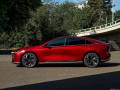
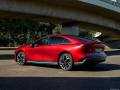
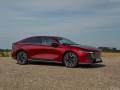
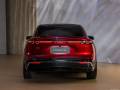
Mazda is known for its “Kodo: Soul of Motion” design language, which emphasizes elegance, flowing lines, and minimalism. The Mazda 6e embraces this philosophy while adapting to the needs of EV aerodynamics.
It features:
- Sleek, coupe-like roofline for improved efficiency.
- Frameless doors for a sporty premium feel.
- Flush door handles that enhance aerodynamics and aesthetics.
Dimensions, aerodynamics, and body lines
- Length: ~4,921 mm
- Wheelbase: ~2,895 mm
- Width: ~1,890 mm
- Height: ~1,485 mm
These proportions give the Mazda 6e a long, stable stance, providing both spaciousness inside and an aerodynamic silhouette outside.
Liftback practicality vs. sedan styling
Unlike traditional sedans, the Mazda 6e is a five-door liftback, blending sedan styling with hatchback practicality. This design allows easier access to the cargo area while maintaining the sporty, elegant look Mazda is known for.
Interior Features and Comfort
Dashboard, infotainment, and driver interface
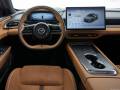
Inside, the Mazda 6e offers a driver-centric cockpit with advanced technology:
- 14.6-inch central infotainment screen with a responsive interface.
- 10.2-inch digital instrument cluster for real-time driving info.
- Head-up display (HUD) that projects key data directly on the windshield.
The software experience is expected to be smoother than past Mazda systems, offering navigation, smartphone integration, and EV-specific features like charging station locators.
Passenger space, seats, and storage capacity
Thanks to its long wheelbase, the Mazda 6e offers ample legroom in both rows. Seating is expected to be ergonomically designed, with premium materials on higher trims.
Cargo space: trunk, frunk, and folding seats
- Rear trunk: ~466 liters
- Front trunk (“frunk”): ~70 liters
- Expanded cargo with rear seats folded: ~1,070 liters+
This makes the Mazda 6e more versatile than many sedan rivals, particularly the Tesla Model 3, which offers less traditional cargo capacity.
Performance and Powertrain
Motor configurations and power output
The Mazda 6e is currently offered as a rear-wheel drive (RWD) model across both battery versions:
- Short-range version: ~190 kW (~258 hp), ~320 Nm torque.
- Long-range version: ~180–190 kW (~245 hp).
This power output provides a balance between efficiency and performance.
Rear-wheel drive dynamics
Unlike many front-wheel drive EVs, the Mazda 6e emphasizes a rear-wheel drive setup for more engaging handling. While it doesn’t yet offer an all-wheel drive option, RWD ensures a sportier, balanced driving experience, consistent with Mazda’s tradition.
Battery and Range Options
Short-range version (68.8 kWh LFP)
- Battery type: Lithium Iron Phosphate (LFP).
- Range (WLTP): ~479 km (298 miles).
- Charging speed: Up to 200 kW (DC fast charge).
- 0–100 km/h: ~7.6 seconds.
This version is ideal for drivers prioritizing fast charging and daily commuting.
Long-range version (80 kWh NMC)
- Battery type: Nickel Manganese Cobalt (NMC).
- Range (WLTP): ~552 km (343 miles).
- Charging speed: ~95 kW (DC fast charge).
- 0–100 km/h: ~7.8 seconds.
Although the long-range battery provides more distance per charge, its slower charging speed is a noticeable trade-off.
WLTP range figures and real-world expectations
While WLTP figures are impressive, real-world conditions—such as cold weather, driving habits, and highway use—may reduce range by 10–20%. Still, both versions remain competitive for long-distance travel.
Charging Technology
AC home charging
The Mazda 6e supports 11 kW AC charging, suitable for overnight recharging using a wallbox at home.
DC fast charging speeds compared
- Short-range version: 200 kW charging, 10–80% in ~22 minutes.
- Long-range version: 95 kW charging, 10–80% in ~45 minutes.
200 kW vs. 95 kW — strengths and trade-offs
- The short-range model is great for drivers who frequently use public fast chargers.
- The long-range model, while offering more miles per charge, sacrifices speed when topping up the battery.
Safety and Driver Assistance Systems
Airbags, structural safety, and crash standards
The Mazda 6e includes:
- 9 airbags covering front, side, and curtain protection.
- Reinforced battery housing for crash safety.
- Advanced crumple zones designed to absorb impact forces.
Advanced driver assistance systems (ADAS)
Mazda equips the 6e with:
- Adaptive cruise control.
- Automatic emergency braking.
- Lane-keeping assist.
- Occupant detection systems (child safety monitoring).
- 360-degree camera system in higher trims.
Technology and Connectivity
Infotainment system (14.6-inch screen)
The centerpiece of the cabin, this screen supports:
- Mazda’s latest software interface.
- Apple CarPlay and Android Auto (wireless).
- EV-specific navigation tools.
Digital cockpit and head-up display
The digital instrument cluster and HUD ensure the driver stays focused while still accessing important information like speed, battery range, and driver-assist alerts.
Trim Levels and Customization
Standard trims vs. premium trims
Mazda 6e trims are expected to start with base editions featuring cloth seats and essential tech, scaling up to premium versions with leather, advanced sound systems, and panoramic roofs.
Expected Takumi luxury edition
The Takumi edition, already seen in other Mazda models, may offer:
- Premium leather interiors.
- Unique styling details.
- Exclusive wheels and finishes.
Pricing and Availability
Starting price in Europe (€45,000)
The Mazda 6e is expected to start around €45,000 in European markets for the base version.
Release timeline across regions
- Europe: Mid-2025.
- UK: Early 2026.
- Middle East & Asia: Expected late 2025 or early 2026, depending on regional launches.
2026 Mazda 6e vs. Rivals
Tesla Model 3
- Range advantage: Tesla offers up to 600 km+ in Long Range.
- Charging: Tesla’s Supercharger network is a big plus.
- Interior: Minimalist but lacks Mazda’s tactile luxury.
Hyundai Ioniq 6
- Range: Comparable (614 km WLTP on Long Range).
- Charging: 800V architecture enables ultra-fast 18 min charging.
- Design: More futuristic vs Mazda’s elegant look.
BMW i4
- Performance: Stronger acceleration, especially in M50 trim.
- Luxury: Premium interior and materials.
- Price: Higher starting cost than Mazda 6e.
Pros and Cons of the Mazda 6e
Pros:
- Elegant Kodo design with liftback practicality.
- Competitive WLTP ranges.
- Strong interior tech with large screens.
- Rear-wheel drive handling.
Cons:
- Long-range version charges slower.
- Acceleration is solid but not sporty.
- Late release compared to rivals already dominating the market.
Target Market and Buyer Profile
The Mazda 6e is aimed at:
- Families needing a spacious, practical EV.
- Professionals seeking a stylish sedan for commuting.
- Eco-conscious drivers looking for sustainable alternatives.
- Mazda loyalists wanting to transition to electric without leaving the brand.
Environmental Impact and Sustainability
Mazda is focusing on responsible battery sourcing and designing the 6e to minimize lifetime emissions. The use of LFP batteries in the short-range version is both cost-effective and environmentally friendlier, reducing reliance on cobalt.
Expert Opinions and Early Reviews
Early impressions from automotive journalists suggest the Mazda 6e strikes a fine balance between practicality and luxury. While it may not set performance records, its refinement, design, and efficiency make it a serious contender in the EV space.
Frequently Asked Questions (FAQs)
What is the range of the 2026 Mazda 6e?
The short-range version offers ~479 km WLTP, while the long-range version extends to ~552 km.
How fast can the 2026 Mazda 6e charge?
The short-range version supports 200 kW DC fast charging (~22 min to 80%), while the long-range charges at 95 kW (~45 min to 80%).
How much will the Mazda 6e cost?
Prices are expected to start at around €45,000 in Europe, with higher trims costing more.
When will the Mazda 6e be released?
Launch begins in Europe mid-2025, UK sales in 2026, and other regions around late 2025–2026.
Is the Mazda 6e a sedan or a hatchback?
It’s a five-door liftback sedan, combining sedan looks with hatchback practicality.
How does the Mazda 6e compare to Tesla?
Tesla has faster charging and longer range, but Mazda counters with elegant design, better cargo practicality, and competitive pricing.
Conclusion: Is the 2026 Mazda 6e Worth Buying?
The 2026 Mazda 6e represents a new era for Mazda, combining the company’s design excellence with the demands of modern EV buyers. While it may not outpace Tesla or BMW in sheer performance, it shines in design, comfort, and balance.
For buyers who want an attractive, practical, and reliable electric sedan with Mazda’s unique DNA, the 6e is a strong contender. Its competitive pricing, spacious interior, and stylish execution could make it one of the most appealing EVs of 2026.
External Resource: For more details on Mazda’s electrification strategy, check Mazda Global.