
Finding the cheapest car to insure can save you hundreds, or even thousands, of dollars every year. Many car buyers make the mistake of only looking at the sticker price of a vehicle. They forget that car insurance stands as an ongoing monthly expense that can easily break a budget. If you choose the right vehicle, you keep your auto insurance premiums low and keep more money in your pocket.
Insurance companies look at massive amounts of data to decide how much you will pay for coverage. They evaluate how often a specific car crashes, how much it costs to fix, and what kind of drivers usually buy it. Because of these factors, standard family SUVs and sensible sedans consistently rank as the cheapest cars for insurance. Meanwhile, luxury vehicles, sports cars, and heavy-duty trucks demand much higher monthly payments.
This comprehensive guide explores everything you need to know about vehicle insurance rates. We will review the top vehicles with the lowest insurance rates, explain exactly why some cars cost less to cover, and provide actionable tips to help you slash your premium. Whether you want a reliable family SUV or need cheap insurance cars for young drivers, this article will point you in the right direction.
What Makes a Car Cheap to Insure?
You might wonder how insurance companies decide the exact premium for every vehicle on the market. Insurers do not just guess. They rely on detailed statistics and historical claims data. When a specific vehicle model shows a history of low claims, the insurance company passes those savings on to the owner. Several key factors determine whether a vehicle belongs on the list of least expensive cars to insure.
Safety Ratings
Safety stands as the number one priority for car insurance companies. When a vehicle protects its driver and passengers well during a crash, the insurance company pays less for medical bills and bodily injury claims. Medical claims often cost far more than property damage claims. Therefore, vehicles with top-tier safety features naturally command lower premiums.
Insurance companies heavily rely on independent safety organizations. They look at crash test results from the National Highway Traffic Safety Administration (NHTSA) and the Insurance Institute for Highway Safety (IIHS). Cars that earn the “Top Safety Pick” award from the IIHS usually feature advanced safety technology. Features like automatic emergency braking, lane departure warning, and blind-spot monitoring help prevent accidents entirely. Fewer accidents mean fewer claims, which leads to cheaper insurance rates for you.
Repair Costs
Even a minor fender bender can cost a small fortune to fix. However, repair costs vary wildly from one car brand to another. If you drive an everyday domestic vehicle or a popular Japanese import, mechanics can easily find replacement parts. High parts availability drives down repair costs. Furthermore, any standard mechanic can work on a popular model without needing specialized tools or expensive training.
On the other hand, luxury European cars require imported parts and specialized labor. If you damage a luxury car, the insurance company pays a massive bill to fix it. To protect their profit margins, insurers charge luxury car owners significantly higher premiums. To get the best rates, you must choose a vehicle that mechanics can fix quickly and cheaply using widely available parts.
Theft Rate
Car thieves prefer certain vehicle models over others. Sometimes they steal cars to strip them for parts, and other times they steal them to ship overseas. Insurance companies track exactly which cars get stolen the most in the United States. If you buy a car with a high theft rate, you pose a higher risk to the insurance company. They will charge you a higher premium for comprehensive coverage to offset that risk.
Vehicles that come with standard anti-theft devices, engine immobilizers, and GPS tracking often deter thieves. Boring, sensible family cars rarely attract attention from car thieves. Because criminals ignore these family vehicles, insurance companies consider them very low risk, resulting in highly affordable insurance premiums.
Engine Power
Horsepower directly impacts your car insurance quote. Insurance companies know that large, powerful engines tempt drivers to speed. High speeds lead to more severe accidents. A severe accident causes more property damage and more serious bodily injuries, resulting in massive insurance payouts.
If you buy a car with a V8 engine or a turbocharged sports motor, you will pay a “performance penalty” on your insurance. Conversely, cars with standard four-cylinder engines encourage safe, relaxed driving. The statistics show that drivers of four-cylinder vehicles get into fewer high-speed wrecks. Therefore, low-horsepower vehicles almost always rank as the cheapest cars to insure.
Vehicle Value
The math here remains very simple. If you total your car in a severe accident, your insurance company must write you a check for the actual cash value of the vehicle. It costs an insurance company much less to replace a $25,000 compact SUV than a $75,000 luxury SUV. Because their financial exposure stays low, insurers charge lower premiums for cheaper cars.
When you shop for a vehicle, remember that a lower sticker price usually translates to a lower insurance rate. However, you must still balance the vehicle value with safety ratings. A slightly more expensive car with brilliant crash test scores might actually cost less to insure than a cheaper car with terrible safety ratings.
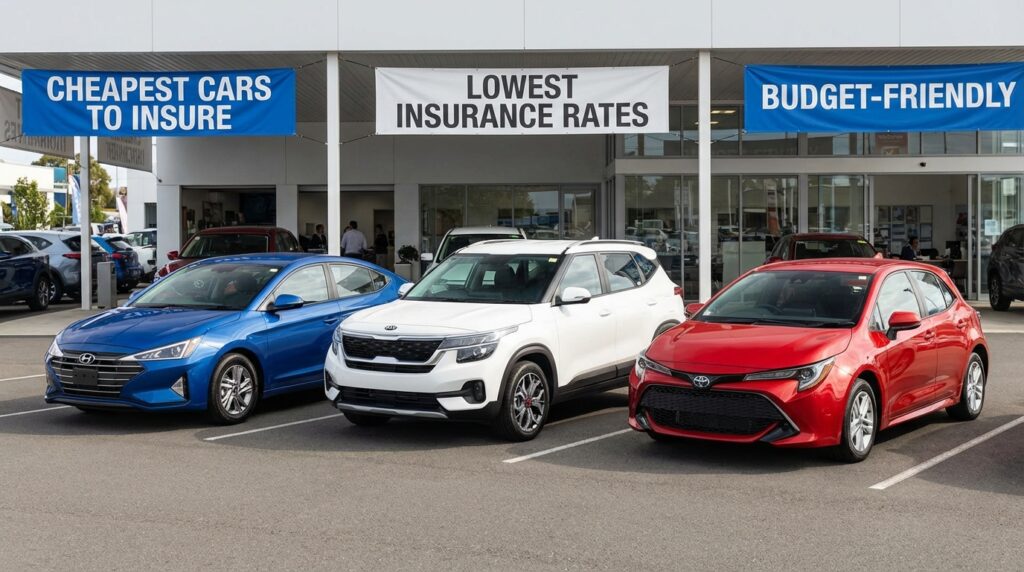
Top 10 Cheapest Cars to Insure in the US
Finding the absolute cheapest car to insure requires looking at standard, mass-market vehicles. As you review the list below, you will notice a clear trend. The majority of these vehicles belong to the compact SUV or compact sedan categories. Families and safe drivers tend to buy these cars, which keeps the claims statistics incredibly favorable.
Below, we outline ten of the most affordable vehicles for insurance purposes. Please note that the average insurance costs represent an estimate for a driver with a clean record. Your personal rates will vary based on your age, location, credit score, and driving history.
| Car Model | Average Annual Insurance Cost | Why It Is Cheap to Insure |
|---|---|---|
| Subaru Outback | $1,350 | Standard All-Wheel Drive, incredible safety ratings, and family-oriented drivers. |
| Honda CR-V | $1,380 | Highly reliable, widely available cheap parts, and excellent crash test scores. |
| Toyota RAV4 | $1,410 | Standard active safety technology on all trims reduces accident frequency. |
| Mazda CX-5 | $1,420 | Wins top safety awards consistently; very popular among cautious drivers. |
| Subaru Forester | $1,440 | Exceptional visibility, standard driver-assist tech, and low repair costs. |
| Honda Civic | $1,450 | Inexpensive body parts and simple mechanical designs make repairs very cheap. |
| Hyundai Tucson | $1,470 | Excellent warranty, robust safety frame, and low replacement value. |
| Chevrolet Equinox | $1,480 | Domestic availability means mechanics can find cheap parts anywhere in the US. |
| Ford Escape | $1,490 | Mass-produced domestic SUV with a long history of low-cost mechanical repairs. |
| Toyota Corolla | $1,510 | Legendary reliability, low horsepower, and extremely low production costs. |
1. Subaru Outback
The Subaru Outback consistently claims the top spot for insurance affordability. Subaru designs the Outback specifically for safety-conscious families and outdoor enthusiasts. It comes standard with Symmetrical All-Wheel Drive, which helps drivers maintain control in rain, snow, and ice. Furthermore, Subaru includes its EyeSight driver-assist technology on every trim level. Because Outback drivers rarely get into severe accidents, insurance companies offer them the lowest possible rates.
2. Honda CR-V
The Honda CR-V represents one of the best-selling SUVs in the United States. Its massive popularity directly benefits owners when it comes to insurance. Because millions of CR-Vs drive on American roads, the market overflows with cheap replacement parts. If you back into a pole, a mechanic can source a replacement bumper for pennies on the dollar compared to a luxury car. High safety scores and a practical four-cylinder engine keep this model highly affordable.
3. Toyota RAV4
Toyota built a reputation for bulletproof reliability, and the RAV4 proves this point perfectly. Toyota equips every new RAV4 with Toyota Safety Sense, a suite of advanced features including pre-collision systems and pedestrian detection. This technology prevents minor accidents in stop-and-go traffic. Insurers love the RAV4 because it protects passengers effectively and rarely requires expensive, complicated repairs after a collision.
4. Mazda CX-5
Many drivers overlook the Mazda CX-5, but insurance companies certainly do not. The CX-5 consistently earns the IIHS Top Safety Pick+ award. Mazda builds the CX-5 with a rigid body structure that absorbs impact energy incredibly well. The people who buy the Mazda CX-5 usually have clean driving records, which pushes the statistical risk even lower. You get a premium-feeling vehicle without the premium insurance price tag.
5. Subaru Forester
Similar to the Outback, the Subaru Forester offers an amazing combination of low vehicle price and high safety standards. The Forester provides drivers with a tall seating position and massive windows, resulting in superior visibility. When drivers can clearly see their blind spots, they avoid side-swipe accidents. Insurance algorithms reward the Forester’s sensible design with rock-bottom monthly premiums.
6. Honda Civic
When you look for a compact sedan, the Honda Civic always enters the conversation. Some older Civic models suffered from high theft rates, but modern iterations feature excellent anti-theft immobilizers. The base model Civic uses a small, highly efficient engine that deters street racing. Its lightweight frame and mass-market appeal ensure that body shops can fix dents and scrapes quickly, keeping your collision coverage cheap.
7. Hyundai Tucson
Hyundai disrupted the market by offering high-tech features at a bargain price. The Hyundai Tucson packs an incredible amount of safety technology into a very affordable package. Because the initial purchase price remains low, insurance companies take on less financial risk if they have to total the vehicle. The Tucson also enjoys a very low theft rate, which keeps comprehensive insurance quotes highly competitive.
8. Chevrolet Equinox
The Chevrolet Equinox stands as a proud domestic option for budget-conscious buyers. Because General Motors manufactures parts in North America, supply chain issues rarely affect repair times. An insurance company saves money when a body shop can fix a car in three days instead of waiting three weeks for a part from overseas. The Equinox serves as a practical, spacious family hauler with insurance rates to match.
9. Ford Escape
The Ford Escape shares many of the same benefits as the Chevrolet Equinox. It serves as a staple of the American suburbs. Ford equips the Escape with an array of standard safety features, and its moderate engine power keeps drivers out of trouble. Mechanics know the Ford Escape inside and out, meaning labor costs during post-accident repairs stay relatively low compared to complex hybrid or luxury models.
10. Toyota Corolla
The Toyota Corolla is arguably the most sensible car money can buy. It lacks the aggressive styling and high horsepower that attract risky drivers. Instead, it attracts commuters, students, and budget-focused families. The Corolla provides a sturdy safety cage and basic, reliable mechanicals. While sedans sometimes cost slightly more to insure than small SUVs, the Corolla remains a definitive exception due to its legendary track record of safety.
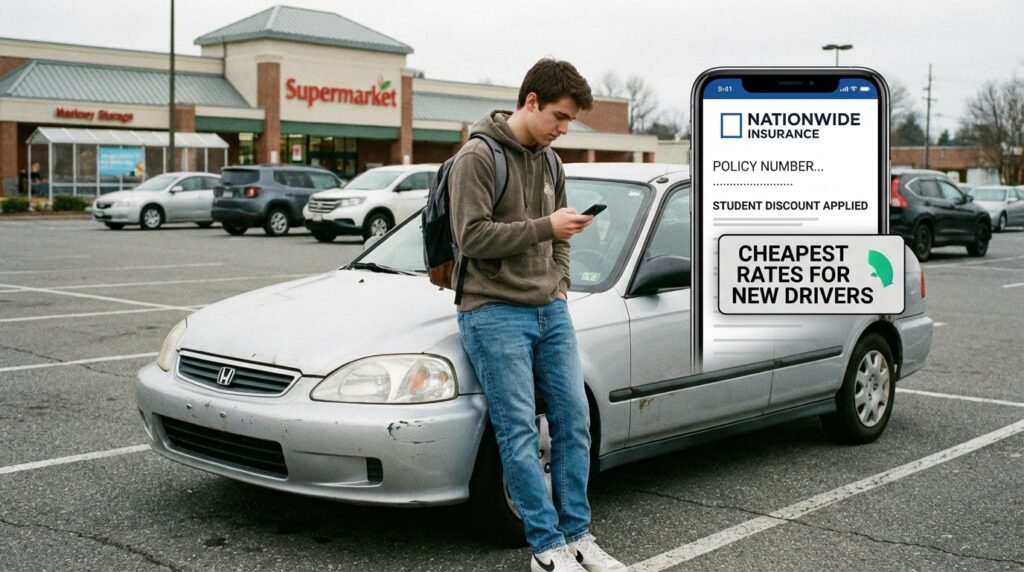
Cheapest Cars to Insure for Young Drivers
Young drivers face a massive challenge when shopping for auto insurance. Statistics prove that teenagers and drivers in their early twenties cause more accidents than any other age group. They lack driving experience and often take unnecessary risks. Because of this, insurance companies charge young drivers exorbitant premiums. To fight these high costs, parents and teens must look for specific cheap insurance cars for young drivers.
If you buy a young driver a brand new sports car, prepare for an insurance bill that might exceed the car payment. Instead, young drivers should stick to used, low-horsepower vehicles. Older models of the Honda CR-V, Toyota RAV4, and Subaru Outback provide the perfect solution. These vehicles offer plenty of metal to protect the driver during a crash, but their low actual cash value keeps collision coverage manageable.
Additionally, young drivers should look for cars that lack a “cool factor.” While a teenager might want a Ford Mustang or a Chevrolet Camaro, insurance companies view these cars as magnets for speeding tickets and street racing. A boring, sensible sedan like the Toyota Corolla or a bulky compact SUV discourages reckless driving behavior. Choosing a slow, safe, and heavily depreciated used car remains the ultimate strategy for young drivers trying to survive their first few years of insurance premiums.
SUV vs Sedan Insurance Cost Comparison
Many car buyers naturally assume that smaller cars cost less to insure. This logical assumption often proves false. In reality, insurance companies generally charge less to insure compact and midsize SUVs than they do for small sedans. You must understand how vehicle classes affect your rates before you make a purchase.
| Vehicle Type | Average Annual Insurance Cost | General Risk Level |
|---|---|---|
| Compact / Small SUV | $1,380 – $1,450 | Very Low |
| Midsize SUV | $1,450 – $1,550 | Low |
| Compact Sedan | $1,500 – $1,600 | Moderate |
| Midsize Sedan | $1,550 – $1,650 | Moderate |
| Sports Car / Coupe | $2,200 – $2,800+ | Very High |
Why SUVs Are Often Cheaper to Insure
You might look at the table above and ask why a larger, more expensive SUV costs less to insure than a small sedan. The answer comes down to physics and driver demographics. Let us start with physics. An SUV sits higher off the ground and weighs more than a sedan. In a multi-vehicle collision, the heavier vehicle usually sustains less damage and protects its occupants better. Because SUV passengers suffer fewer severe injuries, insurance companies pay out less money in medical claims.
Second, we must look at the demographics of the drivers. Who buys compact sedans? Often, young, inexperienced drivers and daily commuters buy them. These drivers spend a lot of time in heavy, risk-prone traffic. Who buys midsize SUVs? Parents driving with children in the backseat. A parent with a toddler in the car generally obeys the speed limit, avoids reckless maneuvers, and drives defensively. Insurance companies look at the data, see that SUV owners file fewer claims, and reward that vehicle class with cheaper insurance premiums.
Tips to Lower Car Insurance Costs
Even if you purchase one of the least expensive cars to insure, you can still take extra steps to drive your premium down further. Car insurance companies offer dozens of discounts and adjustments. You simply need to know how to ask for them and how to structure your policy correctly. Implement these tips to secure the best possible rate.
- Choose Cars with High Safety Ratings: Always check the IIHS and NHTSA scores before buying a car. Mention the safety features to your insurance agent. Features like anti-lock brakes, multiple airbags, and crash-avoidance systems directly trigger discounts on your policy.
- Avoid Sports Cars and Luxury Badges: The moment you buy a car with a turbocharger or a luxury logo on the hood, your rates skyrocket. Stick to reliable, sensible brands like Honda, Toyota, Subaru, and Ford if you want to keep costs low.
- Increase Your Deductible: Your deductible represents the amount you pay out of pocket before insurance kicks in. If you raise your deductible from $500 to $1,000, you lower the insurance company’s risk. They will lower your monthly premium in return. Just ensure you keep $1,000 in an emergency savings account.
- Compare Insurance Companies: Never accept the first quote you receive. Every insurance company uses a different formula to calculate risk. One company might charge you $150 a month for a Honda CR-V, while another company charges $100. Shop around and compare at least three quotes every year.
- Bundle Your Policies: If you rent an apartment or own a home, buy your renter’s or homeowner’s insurance from the same company that provides your auto insurance. Insurers love loyal customers and usually offer a multi-policy discount that saves you up to 15 percent on your total bill.
- Take a Defensive Driving Course: Many insurance companies offer a mandatory discount if you complete an approved defensive driving class. You can often take these classes online over a weekend. The savings easily pay for the cost of the course.

Frequently Asked Questions
What is the cheapest car to insure?
Currently, the Subaru Outback frequently ranks as the absolute cheapest car to insure in the United States. It offers standard all-wheel drive, exceptional crash test safety ratings, and advanced collision-avoidance technology. Furthermore, cautious drivers and families usually purchase the Outback. This means the model experiences very few high-speed accidents, allowing insurance companies to offer rock-bottom monthly premiums to owners.
Which cars have the lowest insurance rates?
Cars with the lowest insurance rates generally fall into the compact SUV and practical sedan categories. Vehicles like the Honda CR-V, Toyota RAV4, Mazda CX-5, and Subaru Forester consistently boast low rates. These vehicles share common traits: they utilize four-cylinder engines, feature widely available and inexpensive replacement parts, deter car thieves, and prioritize passenger safety over high-speed performance.
Are SUVs cheaper to insure?
Yes, in most cases, compact and midsize SUVs cost less to insure than compact sedans. Because SUVs feature heavier frames, they offer better protection during collisions, which reduces costly medical claims. Additionally, insurance data shows that family-oriented drivers typically buy SUVs and drive them more carefully. This combination of better physics and safer drivers makes SUVs highly affordable to insure.
What is the cheapest car to insure for young drivers?
The cheapest cars for young drivers are used, low-horsepower compact SUVs or highly rated safety sedans. Older models of the Honda CR-V, Subaru Forester, or Toyota Corolla serve as perfect choices. Young drivers should avoid sports cars, convertibles, and brand-new luxury vehicles at all costs. Buying a slightly older, reliable vehicle with a high safety rating helps offset the massive “inexperience penalty” that insurance companies place on young drivers.
Conclusion
Finding the absolute cheapest car to insure requires a bit of research, but the financial rewards speak for themselves. Car insurance operates as an unavoidable monthly bill, and over the lifespan of a vehicle, you will spend thousands of dollars on coverage. By making a smart choice at the dealership, you gain long-term control over your budget.
Remember that insurance companies reward safety, reliability, and sensible driving. Vehicles like the Subaru Outback, Honda CR-V, and Toyota RAV4 dominate the list of the least expensive cars to insure because they protect passengers and cost very little to repair. Whether you shop for a safe family hauler or seek out affordable options for a newly licensed teen, prioritizing safety ratings and avoiding powerful sports engines will guide you to the best rates.
Finally, always remember that the car you drive represents just one piece of the puzzle. Maintain a clean driving record, utilize discounts, increase your deductibles wisely, and always compare quotes from multiple providers. By combining a cheap-to-insure car with smart shopping habits, you guarantee yourself the lowest possible auto insurance premium on the market.