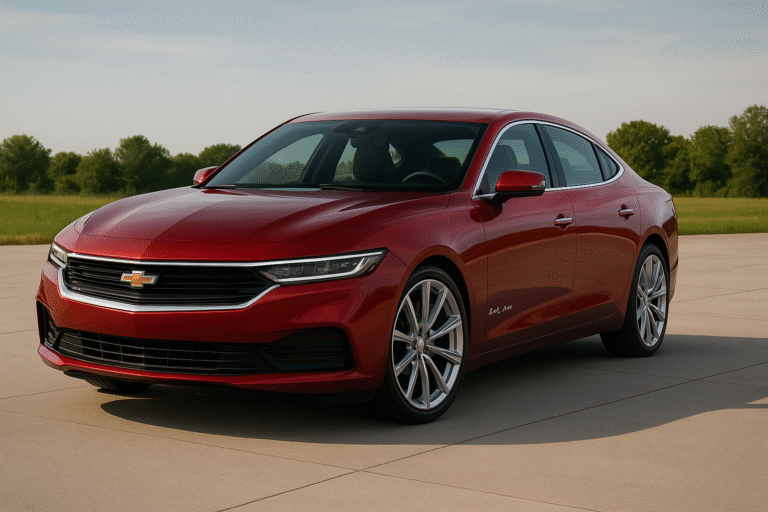

When we think of Ferrari, sleek two-door sports cars racing down the Italian countryside instantly come to mind. Synonymous with speed, performance, and exclusivity, Ferrari has carefully built a brand identity that revolves around passion for racing and design perfection. But few people know that once upon a time, Ferrari dared to imagine something radically different: a four-door sedan.
This bold experiment became known as the Ferrari Pinin, a concept car unveiled in 1980. Unlike the roaring V12 coupes and convertibles we associate with the brand, the Pinin was designed as a luxurious four-door saloon. It was Ferrari’s one and only attempt to break tradition—and it remains one of the most fascinating “what ifs” in automotive history.
In this article, we’ll take a deep dive into The Forgotten Ferrari With Four Doors, exploring its origins, design, and legacy.
The Legacy of Ferrari: A Brand Known for Two-Door Icons
Ferrari’s Racing Heritage and Design Philosophy
Founded by Enzo Ferrari in 1939, Ferrari’s DNA is deeply rooted in motorsport. From Formula One dominance to legendary road cars like the Ferrari 250 GTO, the brand has always prioritized performance above all else. Every Ferrari has historically been engineered to embody speed, agility, and elegance.
Why Ferrari Traditionally Avoided Four-Door Models
Unlike Maserati or Aston Martin, Ferrari never wanted to be seen as a brand that built family cars. Enzo Ferrari himself was famously reluctant to produce anything that wasn’t closely tied to racing. A four-door sedan, while luxurious, didn’t align with Ferrari’s vision of exclusivity and competition-inspired engineering.
The Birth of the Forgotten Ferrari With Four Doors
The 1980 Ferrari Pinin Concept Car
In 1980, Ferrari shocked the automotive world at the Turin Motor Show by unveiling the Ferrari Pinin—a four-door luxury saloon styled by the legendary design house Pininfarina. The car was named after Battista “Pinin” Farina, the founder of Pininfarina, in honor of his contribution to Italian automotive design.
Collaboration Between Ferrari and Pininfarina
The project was initiated by Sergio Pininfarina as a celebration of the partnership between Ferrari and his design studio. Together, they created a car that blended Ferrari’s performance DNA with the practicality of a sedan.
Why the Four-Door Ferrari Was Created
The idea was to test Ferrari’s potential entry into the high-end luxury saloon market. Competitors like Maserati (with the Quattroporte) and Aston Martin (with the Lagonda) were already exploring this territory. Ferrari wanted to see if it could expand its reach without diluting its brand.
Design and Engineering of the Ferrari Pinin
Exterior Styling: Italian Elegance Meets Practicality
The Ferrari Pinin was an exercise in understated sophistication. Unlike Ferrari’s aggressive sports cars, the Pinin had clean lines, a long wheelbase, and a commanding presence. Its design echoed the elegance of luxury sedans while retaining Ferrari’s unmistakable flair.
Interior Luxury: A Ferrari Built for Comfort
Inside, the Pinin offered plush leather seats, advanced instrumentation for its time, and an emphasis on passenger comfort—something Ferrari had never prioritized before.
Performance and Engine Specifications
The concept originally showcased Ferrari’s classic 4.9L flat-12 engine, the same powerhouse used in the Ferrari 512 BB. This ensured that despite being a sedan, the Pinin would still deliver Ferrari’s legendary performance.
Why the Four-Door Ferrari Never Reached Production
Market Risks and Brand Identity Concerns
Ferrari executives feared that producing a four-door sedan might weaken the brand’s identity. Enzo Ferrari himself was skeptical about deviating from the company’s racing-driven philosophy.
Economic Challenges of the 1980s
The 1980s were marked by economic uncertainty, rising fuel prices, and stricter emissions regulations. Launching a large V12-powered luxury sedan didn’t seem financially viable.
The Changing Luxury Car Market
While competitors experimented with luxury sedans, Ferrari decided its core audience wanted nothing less than uncompromised sports cars.
Comparisons: The Ferrari Pinin vs Other Luxury Sedans
Maserati Quattroporte
The Maserati Quattroporte was perhaps the most natural competitor for Ferrari’s four-door experiment. By 1980, Maserati had already established itself as a luxury sedan maker with Italian flair. While the Quattroporte lacked Ferrari’s raw performance edge, it filled the niche of a comfortable, high-performance executive car.
Aston Martin Lagonda
The futuristic Aston Martin Lagonda also pushed boundaries in the luxury sedan market. Known for its wedge-shaped design and high-tech (but often unreliable) digital dashboard, the Lagonda was bold but divisive. Compared to the understated elegance of the Ferrari Pinin, the Lagonda felt experimental and polarizing.
Porsche Panamera (Later Competitor)
Decades later, Porsche introduced the Panamera in 2009, proving that performance-oriented brands could succeed with four-door models. If Ferrari had greenlit the Pinin in 1980, it might have predated Porsche’s move by nearly 30 years, reshaping the landscape of luxury sports sedans.
The Ferrari Pinin’s Place in History
From Concept to Collector’s Item
The Ferrari Pinin remained a one-off concept car. Unlike many prototypes that fade into obscurity, the Pinin survived as a complete, functioning vehicle, making it a highly desirable collector’s piece.
Auction Records and Ownership Changes
Over the years, the car has changed hands several times. In 2010, it was auctioned by RM Sotheby’s, attracting significant attention from Ferrari collectors worldwide. The rarity and story behind the Pinin have made it one of the most fascinating Ferraris ever built.
Legacy Among Car Enthusiasts
Among Ferrari enthusiasts, the Pinin holds a special place as the car that never was. Its blend of practicality and Ferrari DNA continues to spark debates: should Ferrari have pursued it, or was it wise to stay true to its sports car roots?
Ferrari’s Later Approach to Practicality
The Ferrari FF and GTC4Lusso
In 2011, Ferrari introduced the FF (Ferrari Four), a shooting-brake-style four-seater with all-wheel drive. Later updated as the GTC4Lusso, these models showed Ferrari’s willingness to offer practicality without compromising performance. While not sedans, they echoed the Pinin’s spirit by blending speed with usability.
The Ferrari Purosangue SUV
Fast forward to 2022, Ferrari launched its first-ever SUV—the Purosangue. With four doors, seating for four, and a powerful V12 engine, the Purosangue can be seen as Ferrari’s spiritual successor to the Pinin. Unlike the 1980s, today’s market embraces high-performance four-door vehicles, making it the perfect time for Ferrari to explore this path.
Why the Forgotten Ferrari With Four Doors Still Fascinates Fans
The “What If” Scenario in Ferrari’s History
The Ferrari Pinin represents one of the greatest “what if” stories in automotive history. What if Ferrari had gone ahead with the four-door model? Could it have redefined luxury sedans decades before Porsche and Lamborghini entered the market with their own four-door offerings?
Influence on Future Automotive Designs
Although Ferrari never pursued the Pinin, the concept influenced the design language of future Italian luxury sedans. The clean lines, understated elegance, and balance between performance and practicality remain timeless.
FAQs About the Forgotten Ferrari With Four Doors
1. What was the Ferrari Pinin?
The Ferrari Pinin was a one-off concept car unveiled in 1980 at the Turin Motor Show. It was Ferrari’s only attempt at creating a four-door sedan.
2. Who designed the Ferrari Pinin?
It was designed by Pininfarina, Ferrari’s long-time design partner, as a tribute to Battista “Pinin” Farina.
3. Did the Ferrari Pinin ever go into production?
No, it remained a concept. Ferrari decided not to pursue production due to brand identity concerns and market conditions in the 1980s.
4. What engine did the Ferrari Pinin have?
The concept showcased Ferrari’s 4.9L flat-12 engine, the same powerplant used in the Ferrari 512 BB.
5. How much is the Ferrari Pinin worth today?
As a one-off collector’s car, the Pinin has fetched millions at auctions, though its exact value depends on rarity and demand at the time of sale.
6. Is the Ferrari Purosangue inspired by the Pinin?
While not directly based on the Pinin, the Purosangue SUV represents Ferrari’s modern embrace of practicality with four doors and space for four passengers.
Conclusion: The Four-Door Ferrari That Could Have Changed Everything
The Forgotten Ferrari With Four Doors, also known as the Ferrari Pinin, remains a fascinating chapter in Ferrari’s history. It was bold, elegant, and years ahead of its time. While it never reached production, the Pinin proved that Ferrari could have built a world-class luxury sedan without compromising performance.
Today, with the Ferrari Purosangue on the roads, the spirit of the Pinin lives on. It serves as a reminder that even the most tradition-bound companies sometimes dare to dream differently. For Ferrari enthusiasts, the Pinin will always be the car that almost redefined the Prancing Horse.
For further reading on Ferrari’s rarest concept cars, check out RM Sotheby’s archives.