
Drifting is more than just a motorsport; it is an art form. It is the delicate balance of chaos and control, where smoking tires and sideways angles create a spectacle unlike anything else on asphalt. As we navigate through 2026, the landscape of drifting has evolved. Prices for classic JDM legends have soared, but new contenders have entered the arena, making the sport more diverse than ever.
Whether you are a complete beginner looking to buy your first slider or a seasoned pro hunting for a new chassis, choosing the right vehicle is critical. Not every rear-wheel-drive car can handle the intense physics of drifting. The top drift cars share specific traits: chassis balance, steering angle potential, and a robust aftermarket community.
In this ultimate guide, we will break down the best machines for getting sideways in 2026. From the untouchable legends of the 90s to the modern sports cars dominating professional circuits today, here is everything you need to know.

What Makes a Car Good for Drifting?
Before we list the cars, we must understand the ingredients of a drift machine. You cannot simply grab any car and expect it to hold a slide. The physics of drifting place immense stress on specific components.
Rear-Wheel Drive (RWD) is King
This is the golden rule. While you can technically slide an AWD (All-Wheel Drive) car or pull the handbrake in an FWD (Front-Wheel Drive) car, true drifting requires RWD. The rear wheels push the car forward while losing traction, allowing the driver to control the slide angle with the throttle.
Wheelbase and Balance
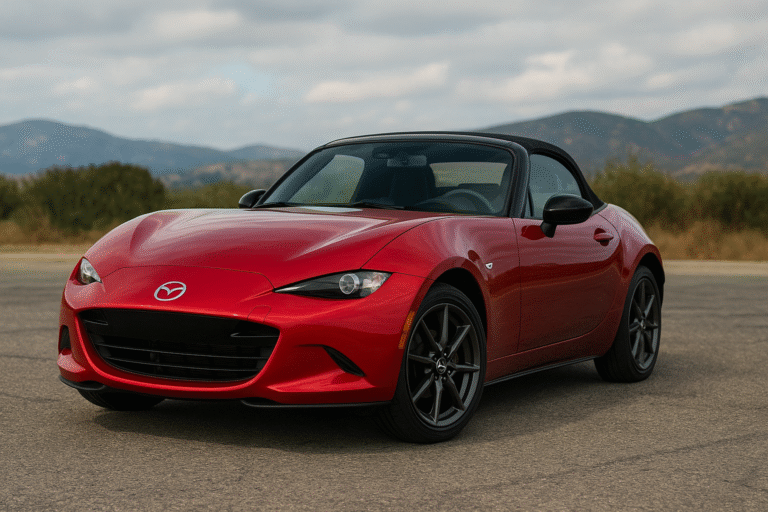
The length of the car matters. A longer wheelbase (like a Toyota Chaser or Ford Mustang) is generally more stable and easier to control during long, sweeping transitions. A shorter wheelbase (like a Mazda Miata) is snappier and requires faster reflexes. Most drivers prefer a balanced chassis that sits somewhere in the middle.
Limited Slip Differential (LSD)
An open differential is the enemy of drifting. It sends power to the wheel with the least resistance (usually the inside wheel during a turn), which stops a drift instantly. A proper drift car needs a Limited Slip Differential or a welded differential to ensure both rear wheels spin together.
Pro Tip: Manual transmission is highly recommended for drifting. While some modern automatics are capable, a clutch pedal gives you the ability to “clutch kick,” a vital technique for initiating a drift and keeping the RPMs high.
The Legends: JDM Icons That Defined the Sport
These are the cars that built the sport. Despite being over 30 years old in 2026, they remain the gold standard for chassis geometry and drift capability.
Nissan Silvia (S13, S14, S15)
If there is a face of drifting, it is the Nissan S-chassis. The S13 (240SX), S14, and S15 are widely considered the best drift chassis ever made. They are lightweight, perfectly balanced, and have an endless supply of aftermarket parts.
- Why it wins: The suspension geometry is naturally suited for sliding.
- The downside: In 2026, finding a clean chassis is difficult and expensive. Rust is a major enemy.
Toyota Supra (Mk4) and Soarer (SC300/400)
The Supra is legendary for its 2JZ engine, capable of handling massive power. However, the long wheelbase makes it a stable and smoky drift car. Its cousin, the Lexus SC300 (Toyota Soarer), offers a similar chassis feel for a lower price point.
Toyota Corolla AE86
The “Hachi-Roku” is where it all began. Immortalized by the anime Initial D, this lightweight car lacks power but makes up for it with agility. It teaches you to carry momentum rather than relying on horsepower.
“You don’t drift an AE86 with power; you drift it with courage. If you can master this car, you can drift anything.”
Modern Drift Warriors (2020s – 2026)
As the classic cars become collector items, modern sports cars have taken over the tracks. These vehicles offer modern reliability, safer chassis, and easily accessible parts.
Toyota GR86 / Subaru BRZ (The ZN8 Platform)
The second generation of the 86/BRZ twins has become the go-to starter car for the 2020s. With a punchier 2.4L engine compared to the first generation, it solves the “lack of torque” issue while maintaining the perfect balance of the original.
It is one of the few cars you can buy from a showroom in 2026, install coilovers on, and immediately take to a track day. The chassis is rigid, and the steering is communicative.
Nissan Z (RZ34)
The spiritual successor to the 350Z and 370Z, the new Nissan Z brings twin-turbo power to the party. Professional drift teams quickly adopted this chassis because it shares many suspension components with previous generations, making it easy to modify. It is heavy, but the torque makes it a smoke machine.
Ford Mustang (S550 and S650)
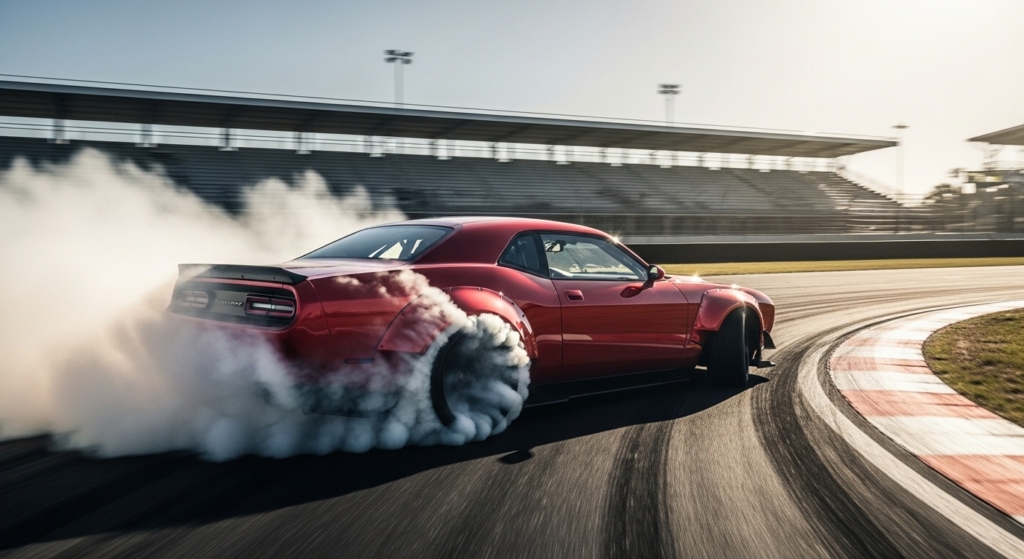
Drifting is not just for Japanese cars. The Ford Mustang has dominated the Formula Drift championship for years. The massive steering angle available from the factory and the torque of the V8 Coyote engine make it a beast. Parts are cheap, and the drivetrain is bulletproof.
Budget-Friendly Drift Starters for Beginners
Drifting is hard on cars. You will hit walls. You will break axles. Therefore, your first drift car should be affordable and tough. Here are the best budget picks for 2026.
Nissan 350Z (Z33)
The 350Z is arguably the best value-for-money drift car in the world. It comes with a strong V6 engine (VQ35DE), a robust 6-speed manual gearbox, and RWD layout. You do not need to upgrade the engine to learn; just weld the differential, add a hydro handbrake, and go driving.
BMW 3 Series (E36 and E46)
In Europe and parts of the US, the BMW 3 Series is the drift king. The E36 and E46 chassis offer incredible steering feedback. They are cheap to buy, and junkyards are full of spare parts. The inline-6 engines are smooth and responsive, perfect for learning throttle control.
Lexus IS300 (XE10)
Often called the “4-door Supra,” the first-gen IS300 comes with the legendary 2JZ-GE engine. While usually automatic, manual swaps are common. It is a comfortable sedan that can turn into a tire-shredding monster with a few suspension tweaks.
Comparison: JDM vs. Euro vs. American
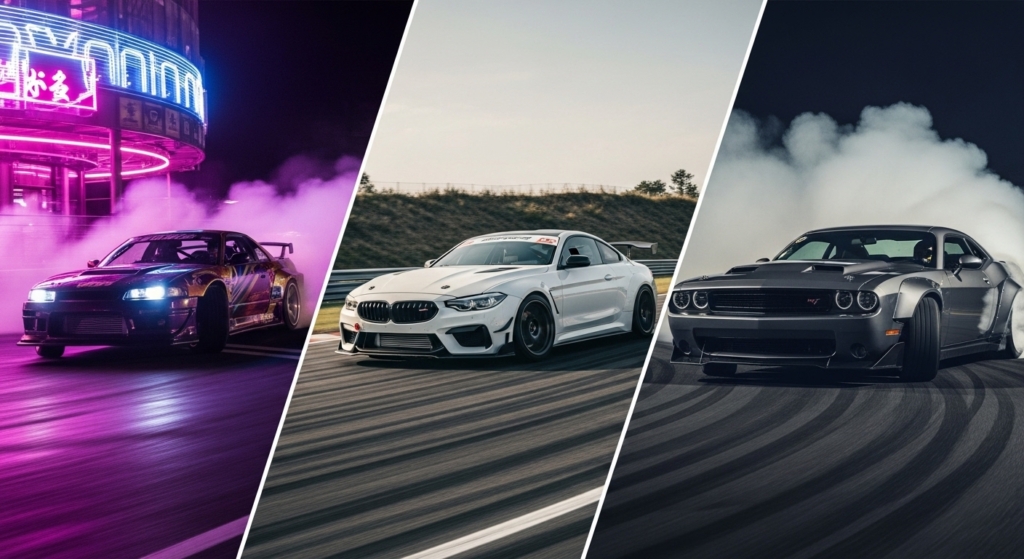
Which region produces the best drift platform? It depends on your driving style and budget. Here is a quick comparison table to help you decide.
| Region | Typical Characteristics | Best For | Popular Models |
| JDM (Japan) | Lightweight, balanced, high aftermarket support. | Precision drifting and technical tracks. | Silvia S15, GR86, RX-7, 350Z |
| Euro (Germany) | Great steering angle, solid chassis, torque-heavy engines. | Budget builds and street drifting. | BMW E36, E46, E92 |
| US Domestic (USA) | Heavy, high horsepower, long wheelbase. | High-speed competition and smoke shows. | Ford Mustang, Corvette C6 |
Essential Modifications for Drifting
Even the best stock car needs a few changes to drift properly. Do not spend your money on power mods first. Focus on control and reliability.
1. The Differential
As mentioned earlier, you need a locked rear axle.
- Welded Diff: The cheapest option. A mechanic welds the gears together. Great for track, annoying for street parking.
- 2-Way LSD: The professional choice. It locks under acceleration and deceleration, providing predictable behavior.
2. Suspension (Coilovers)
Factory suspension is too soft; the body roll makes the car hard to control sideways. A good set of coilovers stiffens the ride and allows you to lower the center of gravity. Look for coilovers specifically valved for drifting, not just general racing.
3. The Seat
It is impossible to control a car if you are sliding out of your seat. A bucket seat keeps your body planted, allowing your arms and legs to focus on steering and pedals without having to brace yourself.
Safety First: Drifting looks fun, but it is dangerous. Always invest in a quality helmet and a fire extinguisher for your car. If you plan to do tandem drifting (sliding with other cars), a roll cage is mandatory.
Drifting in 2026: Trends and Changes
The sport continues to evolve. In 2026, we are seeing interesting shifts in how people build and drive their cars.
Sim Racing as a Training Ground
Simulators have become indistinguishable from reality. Many top drivers in 2026 started on wheels like Fanatec or Simucube before ever sitting in a real car. It is the cheapest way to learn the physics of weight transfer without burning expensive tires.
The Electric Drift Challenge
Electric Vehicles (EVs) are entering the scene. Cars like the Hyundai Ioniq 5 N have introduced “Drift Modes” that simulate clutch kicks. While heavy batteries are a disadvantage, the instant torque of an electric motor offers a unique advantage for initiating slides.
How to Choose Your First Drift Car
Still undecided? Ask yourself these three questions to narrow down your list.
- What is your budget? If it is low, look at a BMW E46 or Nissan 350Z. If it is high, look at a GR86 or a clean S-Chassis.
- Can you wrench? If you cannot fix a car yourself, avoid 30-year-old turbo cars like the RX-7 or S13. Stick to newer, naturally aspirated engines.
- Is it a daily driver? If you need to drive to work, do not weld the differential. Get a proper LSD or buy a second car dedicated to the track.
Conclusion
The quest for the perfect drift car is a personal journey. Some drivers prefer the raw, mechanical feel of a 90s Nissan, while others prefer the reliability and torque of a modern Mustang or GR86. Regardless of your choice, the 2026 market offers something for everyone.
Remember, the car is only half the equation. The best modification you can make is the “driver mod.” Seat time is more valuable than horsepower. So pick a car from this list, buy some cheap tires, find a local track, and send it.
Drifting is the most fun you can have in a car. Welcome to the community.
For more details on upcoming drift events and safety regulations, check out Formula Drift’s official website.