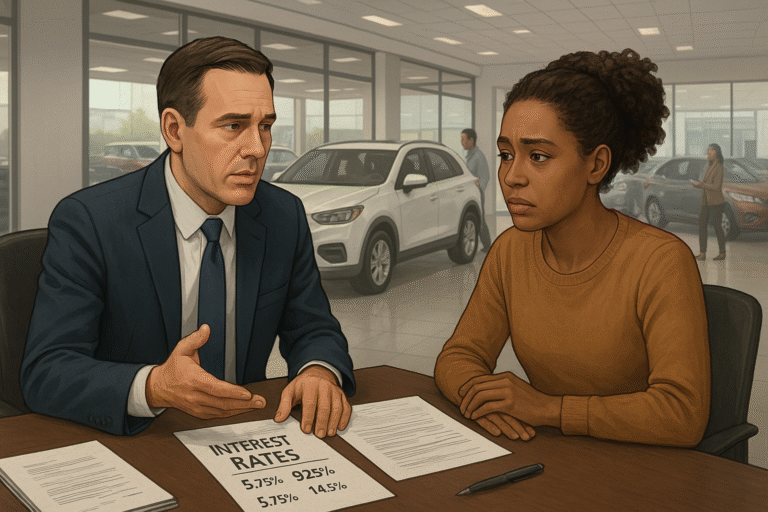


Buying your very first car is an exciting milestone. It brings a new sense of freedom and independence. However, figuring out exactly how to pay for that car can easily feel overwhelming. If you do not have enough cash saved up to buy a vehicle outright, you will need a first time car buyer loan.
Stepping into the world of auto financing can be scary for beginners. You might hear strange words like “interest rates,” “loan terms,” and “debt-to-income ratio.” But do not worry. Getting a car loan is actually quite simple once you break it down into easy steps.
This comprehensive guide will help you understand exactly how car loans work in the United States. We will explain all the first time car buyer loan requirements, show you how to find the best interest rates, and give you expert tips on getting approved. By the end of this article, you will have the confidence to walk into a dealership or bank and secure the best financing option for your first vehicle.
First Time Car Buyer Loan Quick Overview
If you are applying for your first auto loan, understanding the basic numbers helps you make smarter financial decisions. The table below summarizes the most common loan conditions that first-time car buyers experience in the United States.
| Loan Feature | Typical Range for First-Time Buyers |
|---|---|
| Minimum Credit Score | No credit to 660+ |
| Typical Interest Rate | 8% – 18% |
| Recommended Down Payment | 10% – 20% of vehicle price |
| Loan Term | 36 – 72 months |
| Average Monthly Payment | $250 – $500 depending on vehicle price |
These numbers vary depending on your credit profile, income, and the type of car you buy. However, they give first-time buyers a realistic idea of what to expect before applying for a car loan.
What Is a First Time Car Buyer Loan?
A first time car buyer loan is an auto loan designed specifically for people who have never financed a vehicle before. When you apply for a standard loan, banks look at your past borrowing history. Because first-time buyers usually have little or no credit history, standard lenders might deny their application.
To solve this problem, many banks, credit unions, and dealerships offer specialized first time car buyer auto loan programs. These programs use different rules to approve your application. Instead of focusing only on your credit score, lenders look closely at your job stability, income, and education level.
While these loans make it easier to buy a car, they often come with slightly different terms than regular loans. Lenders take on more risk when they give money to someone with no borrowing history. Because of this added risk, lenders might ask for a larger down payment or charge a higher interest rate. However, once you make regular, on-time payments on this initial loan, you will quickly build a strong credit profile for the future.
Average First Time Car Loan Interest Rates
The first time buyer car loan interest rate you receive depends heavily on your credit score, your income, and whether you buy a new or used car. Generally, used cars carry higher interest rates than new cars.
Because first-time buyers often have a “thin” credit file (meaning you do not have a long history of borrowing money), lenders usually place you in the “near prime” or “subprime” category. This means you will likely pay a higher interest rate than someone who has bought five cars over the last twenty years.
Here is a helpful comparison table showing estimated interest rates based on credit score tiers. Keep in mind that national interest rates change regularly, but this gives you a clear idea of what to expect:
| Credit Score Category | FICO Score Range | Estimated Rate (New Car) | Estimated Rate (Used Car) |
|---|---|---|---|
| Super Prime | 781 – 850 | 5.50% – 6.00% | 7.00% – 7.50% |
| Prime (Good) | 661 – 780 | 6.50% – 7.50% | 8.00% – 9.50% |
| Nonprime (Fair) | 601 – 660 | 9.00% – 10.50% | 13.00% – 14.50% |
| Subprime (Poor/No Credit) | 501 – 600 | 12.00% – 14.00% | 18.00% – 21.00% |
If you have no credit history at all, lenders usually assign you a rate somewhere between the Nonprime and Subprime levels. Do not let this discourage you. You can refinance the loan after a year of on-time payments to get a much lower rate.
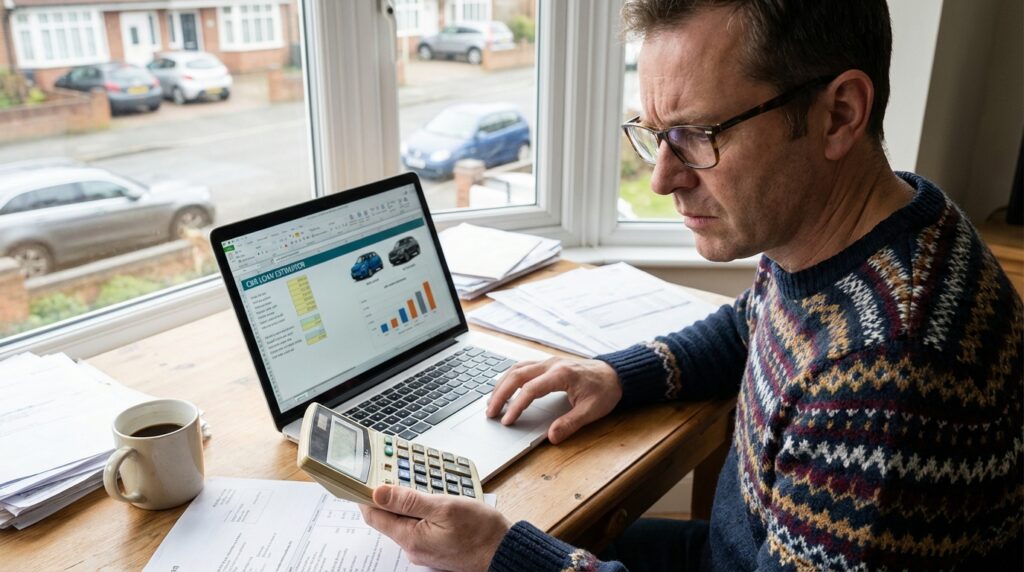
First Time Car Buyer Loan Requirements
To successfully learn how to get a car loan as a first time buyer, you must understand exactly what the bank wants from you. Lenders look at several specific criteria to make sure you can afford the monthly payments.
Here are the standard first time car buyer loan requirements you must meet:
1. Credit Score
Your credit score is a number between 300 and 850 that tells lenders how responsible you are with money. If you have paid credit cards or student loans on time, you might already have a good credit score. Lenders prefer a score above 660 for the best rates. However, if you are looking for a car loan for first time buyers with no credit, the lender will focus heavily on the next three requirements instead.
2. Proof of Income
Since you lack borrowing history, the lender needs concrete proof that you make enough money to pay them back every month. You will need to show recent pay stubs (usually the last 30 days) and your W-2 tax forms from the previous year. If you are self-employed or a freelancer, you might need to show recent bank statements or tax returns.
3. Down Payment
A down payment is the amount of cash you pay upfront toward the car’s total price. First-time buyers usually need to provide a larger down payment than experienced buyers. Lenders typically ask for at least 10% to 20% of the vehicle’s purchase price. A larger down payment reduces the amount of money the bank has to lend you, which makes them much more likely to approve your application.
4. Employment History
Lenders want to see job stability. They get nervous if you change jobs every two months. Usually, a lender wants to see that you have worked at your current job for at least six months. They also prefer a total continuous employment history of at least one year. The longer you stay at one company, the safer you look to the bank.
Best Lenders for First Time Car Buyer Loans
Choosing the right lender is just as important as choosing the right car. When searching for the best first time car buyer financing, you have four main options. Each option has unique benefits and drawbacks.
Banks
Traditional banks like Chase, Bank of America, or Wells Fargo offer reliable auto loans. If you already have a checking or savings account with a major bank, they might give you a slight discount on your interest rate. However, big banks also have very strict approval rules, which can make them difficult for people with zero credit.
Credit Unions
Credit unions are non-profit financial institutions. They are widely considered the absolute best option for first-time buyers. Because they do not have to make a profit for shareholders, credit unions offer lower interest rates and have much more forgiving approval rules. They are willing to look at your personal story rather than just a credit score number.
Online Lenders
Online lenders (like Capital One Auto Navigator, Ally Bank, or Upstart) make the application process incredibly fast and easy. You can apply on your phone and get a decision in minutes. Many online lenders specialize in helping people with thin credit files or no credit at all.
Dealership Financing
When you buy a car, the dealership will offer to set up the loan for you right in their office. This is very convenient. Sometimes, automakers (like Toyota or Ford) offer special “college graduate” or first-time buyer programs with excellent rates. However, you must be careful. Dealerships often add a “markup” to the interest rate to make extra profit for themselves.
How Much Can First Time Buyers Borrow?
Before you fall in love with a shiny new car, you need to figure out how much you can actually afford. Just because a lender approves you for a $30,000 loan does not mean you should spend that much.
Financial experts highly recommend using the 20/4/10 Rule for first-time car buyers:
- 20% Down Payment: You should put down at least 20% of the car’s total price.
- 4-Year Loan Term: You should try to pay off the loan in 4 years (48 months) or less.
- 10% of Your Income: Your total monthly car expenses (the loan payment plus car insurance) should not exceed 10% of your gross monthly income.
For example, if you make $4,000 a month before taxes, your car payment and insurance together should not cost more than $400 a month. Sticking to this rule ensures that your new car never stops you from paying rent, buying groceries, or saving for emergencies.
Factors That Affect Loan Approval
Whenever you apply for a loan, the lender puts your application through a strict review process. Understanding what happens behind the scenes will drastically improve your chances of getting a “Yes.” Here are the five biggest factors that affect your loan approval.
1. Credit Score
As we mentioned earlier, your credit score acts as your financial report card. Lenders check it immediately. A higher score means an easy approval and a low rate. A low score (or no score) means the lender will heavily scrutinize the other four factors below.
2. Income
Lenders need to see that you earn enough money to live your life and still make your car payment. Most lenders require a minimum gross monthly income of $1,500 to $2,000 to even consider your application.
3. Debt-to-Income Ratio (DTI)
Your debt-to-income ratio compares how much money you owe each month to how much money you make. You calculate it by dividing your total monthly debt payments (like student loans, credit cards, and your future car payment) by your monthly income.
Lenders want your total DTI to be below 40%. If a large portion of your paycheck already goes toward paying off student loans, the bank will worry that you cannot afford a car payment on top of it.
4. Loan Term
The loan term is the number of months you have to pay the money back. Typical terms are 36, 48, 60, or 72 months. A longer term gives you a smaller monthly payment, which sounds great. However, lenders charge higher interest rates for long terms. Plus, a long term means you will pay thousands of dollars more in overall interest.
5. Vehicle Price and Age
Lenders evaluate the car you want to buy. If you try to buy a heavily modified, 15-year-old sports car, lenders will likely deny the loan. Old cars break down easily, and lenders worry you will stop paying the loan if the car stops running. A modestly priced, reliable car (like a gently used Honda Civic or Toyota Corolla) makes lenders feel safe and increases your chances of approval.

First Time Car Loan Example Calculation
To help you see how all these numbers work together in the real world, let us look at an example calculation for a first-time buyer.
Imagine you want to buy a reliable used car. You have a small credit history, so your lender gives you an average interest rate for a beginner. Here is how the math breaks down:
- Car Purchase Price: $18,000
- Taxes and Dealership Fees: $1,500
- Total Cost: $19,500
- Your Cash Down Payment: $3,500
- Total Loan Amount Needed: $16,000
You decide to finance that $16,000 over 60 months (5 years) at a 9% interest rate.
| Loan Details | Amount |
|---|---|
| Total Loan Amount | $16,000 |
| Interest Rate | 9.00% |
| Loan Term | 60 Months |
| Your Monthly Payment | $332.13 |
| Total Interest Paid Over 5 Years | $3,927.80 |
In this example, your monthly payment sits comfortably at roughly $332. However, notice the bottom line. Over five years, you will pay almost $4,000 in interest alone. This is exactly why experts recommend making large down payments and paying off the loan as quickly as you can.
Tips to Get Approved for Your First Car Loan
Getting your first auto loan approved does not have to be stressful. If you prepare properly, you can easily walk away with the keys to your new car. Follow these essential tips to guarantee loan approval.
Get Pre-Approved Before You Shop
Never walk into a car dealership without a plan. You should apply for auto loan pre-approval at a local credit union or online bank before you even look at a car. A pre-approval tells you exactly how much money you can borrow and locks in your interest rate. When you have a pre-approval, you can shop like a cash buyer and negotiate a much better deal.
Find a Reliable Co-Signer
If you need a car loan for first time buyers with no credit, finding a co-signer is your strongest weapon. A co-signer is a trusted family member or parent who has excellent credit. They sign the loan document with you. By doing this, they promise the bank that they will make the car payment if you fail to do so. A co-signer almost guarantees your approval and severely lowers your interest rate.
Save Up a Larger Down Payment
Cash is king. If your credit is poor or non-existent, bringing a large pile of cash to the table solves the problem. A 20% to 25% down payment shows the lender you are serious and financially disciplined. It drastically reduces the lender’s risk.
Build Your Credit First
If you do not need a car immediately, take six months to build your credit before applying for a loan. You can apply for a beginner credit card, buy your daily groceries with it, and pay the balance perfectly in full every single month. Within a few months, your score will climb, making the car loan process much easier.
Common Mistakes First Time Car Buyers Make
First-time car buyers easily fall into expensive traps. Dealerships deal with negotiations every single day, while you are doing it for the very first time. Avoid these major mistakes to protect your wallet.
1. Shopping by Monthly Payment
This is the biggest mistake you can make. A car salesperson will always ask, “What monthly payment are you looking for?” If you say, “$300 a month,” the dealer will manipulate the math to hit that number. They will extend your loan out to 72 or 84 months. Your payment drops to $300, but you will pay thousands of dollars in extra hidden interest. Always negotiate the total price of the car, never the monthly payment.
2. Forgetting About Car Insurance
A car loan is not your only expense. Car insurance for first-time drivers is notoriously expensive. Before you buy any car, call an insurance agent and ask for a quote on the specific vehicle you want. Many beginners buy a car only to discover the insurance costs just as much as the monthly loan payment.
3. Skipping the Test Drive and Inspection
Never let the excitement of buying a car blind your common sense. If you buy a used car, always take it for a long test drive. More importantly, spend $100 to have an independent, trusted mechanic inspect the car before you sign the loan papers. A bad car will leave you paying off a loan for a vehicle that does not even run.
First Time Car Buyer Loan vs Regular Auto Loan
You might wonder exactly how your first loan compares to a traditional auto loan. This comparison table highlights the main differences you will experience:
| Feature | First-Time Buyer Loan | Regular Auto Loan |
|---|---|---|
| Credit History Required | None or very little | Established history required |
| Focus of Approval | Income, job history, education | Primarily credit score and DTI |
| Down Payment | Strictly enforced (often 10%-20%) | Flexible (sometimes $0 down) |
| Interest Rates | Typically higher | Low and highly competitive |
| Co-Signer | Highly recommended | Rarely needed |
First Time Car Buyer Loan vs Leasing
Many first-time buyers wonder whether they should finance a car with a loan or choose a lease. While both options allow you to drive a vehicle without paying the full price upfront, they work very differently.
The comparison below explains the key differences between financing your first car with a loan and leasing a vehicle.
| Feature | Car Loan | Car Lease |
|---|---|---|
| Ownership | You own the car after the loan is paid | You return the car at the end of the lease |
| Monthly Payment | Usually higher | Usually lower |
| Mileage Limits | No mileage restrictions | Strict annual mileage limits |
| Customization | You can modify the car | No modifications allowed |
| Long-Term Value | You build ownership equity | No ownership value |
For most first-time buyers, financing a car with a loan is the better long-term option because you eventually own the vehicle. Leasing can be attractive for lower monthly payments, but it does not help you build long-term ownership or financial equity.
FAQ Section
First-time car buyers have a lot of questions. Here are the most common inquiries we receive, answered simply and directly.
Can you get a car loan with no credit history?
Yes, you can absolutely get a car loan with no credit history. Lenders will focus on your employment stability, your monthly income, and the size of your down payment instead of a credit score. Having a co-signer also makes getting approved with zero credit much easier.
What credit score do you need for a first time car loan?
There is no strict minimum credit score needed for a first time car loan. Many lenders have special programs for scores of zero. However, to get a favorable interest rate without needing a co-signer, you generally need a credit score of 660 or higher.
How much should a first time buyer put down on a car?
A first-time car buyer should plan to put down at least 10% to 20% of the vehicle’s total purchase price. A larger down payment lowers your monthly payments, reduces the total interest you pay, and makes lenders much more willing to approve your application.
Is dealership financing good for first time buyers?
Dealership financing can be good if you qualify for a specific manufacturer “first-time buyer” or “recent college grad” program. However, dealerships often mark up interest rates to make a profit. You should always compare the dealership’s offer against a pre-approval from your local credit union.
What is the easiest car loan to get approved for?
The easiest car loan to get approved for is usually found at a local credit union or through an online lender that specializes in subprime loans. Applying with a strong co-signer and offering a 20% down payment makes any auto loan incredibly easy to secure.
Conclusion
Securing a first time car buyer loan marks a massive step in your financial life. While the terminology and paperwork seem intimidating at first, the actual process boils down to common sense. Lenders simply want to know that you make enough money to comfortably pay back what you borrow.
Remember to prepare before you shop. Check your credit, save up a solid down payment, and secure a pre-approval from a bank or credit union. Do not rush the process, and never let a car salesperson pressure you into a monthly payment that feels uncomfortable.
By following the tips and requirements outlined in this guide, you will avoid expensive traps, secure a fair interest rate, and confidently drive away in a vehicle that perfectly fits your budget and lifestyle. Happy car hunting!
car loan requirements for first time buyers