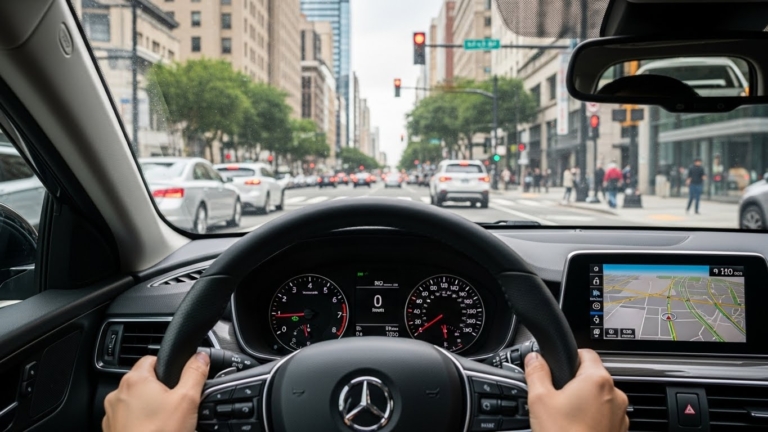


We’ve all been there. You’re running late for work, you jump into your car, turn the key, and… nothing. Just a rapid clicking sound. Or maybe you’re driving down the highway at night, and your dashboard suddenly lights up like a pinball machine while your headlights dim.
Car electrical issues are arguably the most stressful problems a driver can face. They feel unpredictable, and let’s be honest, they make most of us worry about a massive repair bill coming our way.
If you’re currently dealing with weird power failures, a dead battery, or blown fuses, you probably just want a straight answer about the price. So, let’s cut right to the chase.
On average, fixing a car’s electrical system will run you anywhere from $200 to $1,500.
I know that’s a pretty huge range. But the truth is, “the electrical system” isn’t just one part. Replacing a tiny $5 blown fuse will cost you next to nothing. But if a mechanic has to rip out your dashboard to replace a completely fried wiring harness? You’re looking at a bill over $2,000.
In this guide, we’re going to break down the real-world costs of these repairs. I’ll show you exactly what to expect depending on what parts failed, and more importantly, how to figure out what’s wrong with your car before you even call a mechanic.
Average Car Electrical System Repair Costs (By Component)
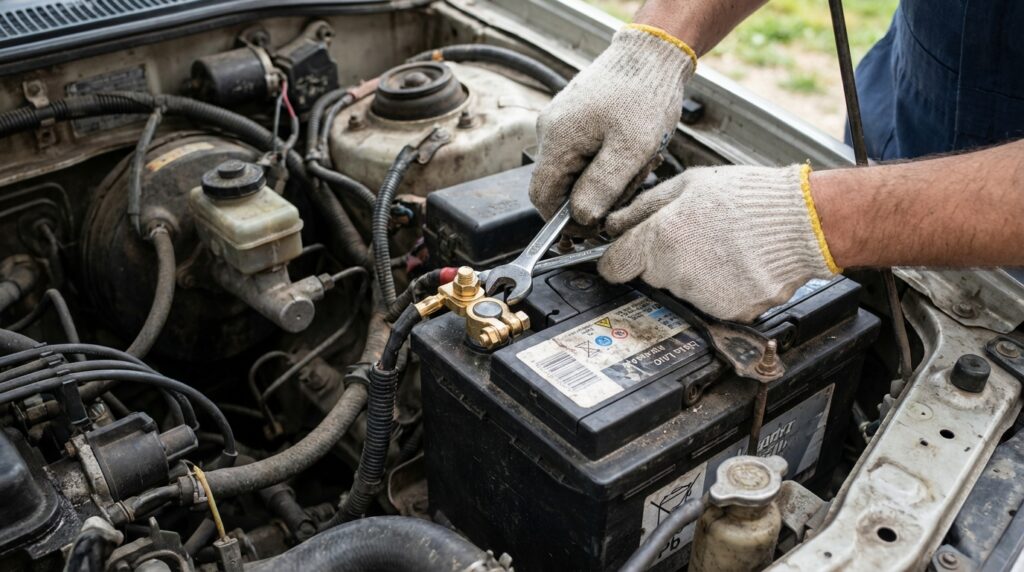
When a mechanic talks about your car’s electronics, they’re referring to a massive web of wires, computers, sensors, and motors. Because it’s such a complex network, the price you pay depends entirely on which specific link in the chain broke.
Here’s a handy cheat sheet. These are the average prices we see in repair shops right now, including the cost of parts and the mechanic’s labor.
| What Broke? | Cost of the Part | Labor Cost | Total Estimated Bill |
|---|---|---|---|
| The Battery | $80 – $250 | $20 – $50 | $100 – $300 |
| The Alternator | $150 – $400 | $150 – $300 | $300 – $700 |
| The Starter Motor | $200 – $500 | $200 – $300 | $400 – $800 |
| Fuses and Relays | $5 – $20 | $15 – $80 | $20 – $100 |
| Engine Computer (ECU) | $300 – $1,500 | $200 – $500 | $500 – $2,000 |
| Wiring Harness | $400 – $1,200 | $600 – $1,500+ | $1,000 – $2,500+ |
Let’s dig a little deeper into these components so you know exactly what you’re paying for.
1. Battery Replacement: ($100 – $300)
Think of the battery as your car’s morning cup of coffee. It provides that massive jolt of energy the engine needs to wake up and start running. It also powers your radio and lights when the engine is off.
Most batteries give up the ghost after three to five years. Cold winters and brutally hot summers kill them even faster. A standard battery costs around $100. But if you drive a newer car with a “start-stop” engine (where it shuts off at red lights), you’ll need an AGM battery. Those bad boys are heavy-duty and can push the price closer to $250.
The good news? The labor is cheap. Many auto parts stores will even swap it out for free in the parking lot if you buy the battery from them.
2. Alternator Replacement: ($300 – $700)
If the battery starts the car, the alternator keeps it running. As you drive, the alternator generates electricity. It constantly recharges the battery and powers your headlights, wipers, and air conditioning.
If your alternator dies, your car tries to run entirely on whatever juice is left in the battery. It won’t get far. Eventually, the engine will just shut down in the middle of the road. A new alternator usually costs between $150 and $400 depending on what you drive.
Because the alternator is bolted to the engine and attached to drive belts, mechanics charge about one or two hours of labor to replace it. That adds another $150 to $300 to your bill.
3. Starter Motor Repair: ($400 – $800)
When you twist your key (or push the start button), power flows to the starter motor. This little motor does the heavy lifting of physically spinning your engine to get it firing. If you hear a loud, single “clunk” when you try to start the car, your starter is probably toasted.
Starters take a beating every single day. The part itself usually costs between $200 and $500. The tricky part is the labor. Auto manufacturers love to bury the starter motor deep underneath the engine block or intake manifold, making it a real headache for mechanics to reach. Expect to pay a few hundred bucks just for the labor.
4. Fuse and Relay Replacement: ($20 – $100)
Fuses are the unsung heroes of your car. They exist for one reason: to sacrifice themselves. If a power surge hits, the fuse blows, breaking the circuit so your car doesn’t catch on fire. It’s exactly like the breaker box in your house.
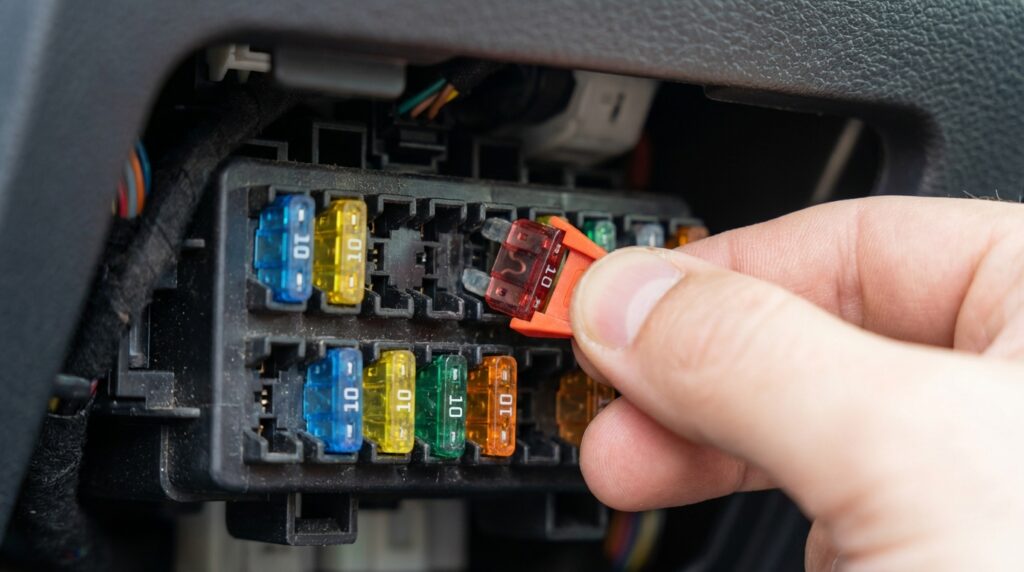
If your radio suddenly stops working, or your power windows won’t roll down, check your fuses first. You can buy a pack of replacement fuses at any gas station for $5. If a mechanic does it, they’ll usually just charge a minimal diagnostic fee.
But keep this in mind: fuses don’t blow for no reason. If you put a new fuse in and it immediately pops again, you’ve got a short circuit somewhere. A wire is likely rubbing against bare metal.
5. Rewiring and Wiring Harness Replacement: ($1,000 – $2,500+)
This is the big one. The wiring harness is a giant, spaghetti-like bundle of cables running underneath the carpets, through the doors, and behind the dashboard. It connects every single computer and sensor in your car.
Wiring harnesses don’t usually fail on their own. They fail because something attacked them. Flood damage destroys them. But the most common culprit? Mice. Believe it or not, modern cars use soy-based insulation on their wires to be eco-friendly. To a mouse, your car’s wiring harness looks like an all-you-can-eat buffet.
Fixing a chewed-up wiring harness is a mechanic’s worst nightmare. They often have to remove the seats and the entire dashboard just to find the broken wire. You’re easily looking at 10 to 15 hours of labor. The bill will hurt.
6. Engine Control Unit (ECU) Repair: ($500 – $2,000)
The ECU is the brain of the operation. It’s the main computer that tells the engine how much fuel to use and controls the spark plugs. When the brain gets fried, the car acts crazy. It might misfire, stall, or refuse to start entirely.
You can’t just slap a new computer in and drive away. The mechanic has to order a new unit (which isn’t cheap) and then use specialized software to program it to your specific key and security system. Between the expensive part and the software programming, it’s easily a $1,000+ job.
“People always assume the worst when their dashboard goes black. Honestly, nine times out of ten, it’s just a corroded ground wire or a weak battery. Don’t let a shop talk you into a massive rewiring job until they’ve verified the simple stuff first.”
— Dave, Master ASE Certified Technician
How Much Does an Auto Electrician Charge Per Hour?
When you look at a repair estimate, you’ll see two main lines: parts and labor. Understanding how labor rates work will save you from sticker shock.
Swapping out brake pads is pretty straightforward mechanical work. But tracing an electrical short? That requires a guy with an oscilloscope, wiring diagrams, and a lot of patience. It’s highly specialized work, which means auto electricians command higher rates.
- Independent Local Shops: Generally charge $80 to $120 per hour.
- Specialized Auto Electricians: Usually charge $100 to $160 per hour.
- Dealership Service Centers: The most expensive option, often charging $150 to $200+ per hour.
Of course, where you live changes everything. A mechanic in downtown Los Angeles is going to charge a lot more per hour than a shop in rural Ohio.
How much is a diagnostic test for a car electrical system?
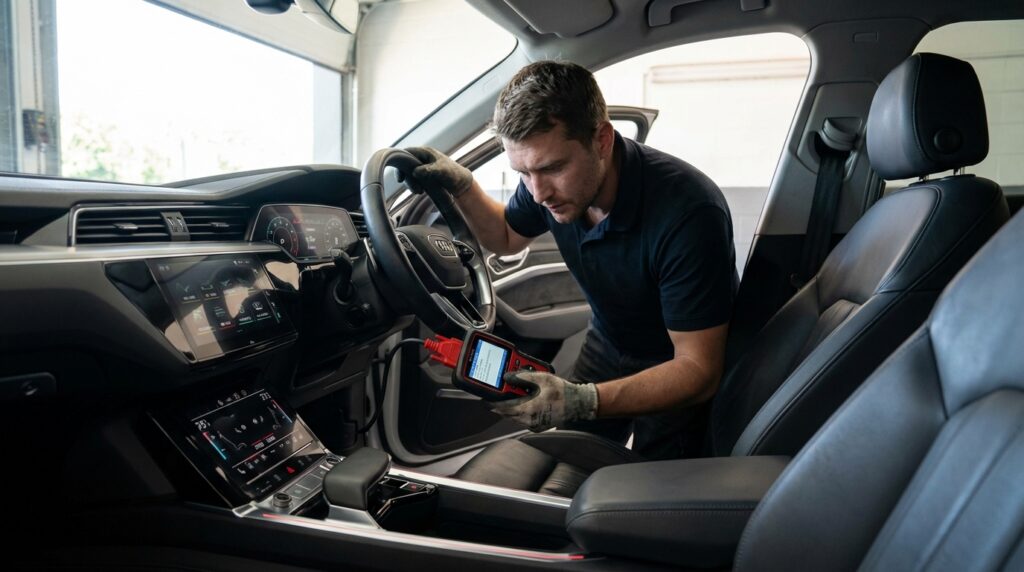
Mechanics aren’t magicians. They can’t just look at your car and know why the battery keeps dying overnight. They have to play detective, using multimeters and scan tools to hunt down the problem.
Most shops charge a flat fee to diagnose electrical issues, which usually equals one or two hours of their standard labor rate. So, expect to hand over $100 to $200 just to find out what’s wrong.
Once they find the broken wire or bad sensor, they will give you a second quote to actually fix it.
What Are the Signs of Electrical Problems in a Car?
Cars rarely just die without warning. They usually give you a few hints that the electronics are struggling. If you know what to look for, you can catch the problem before you end up stranded in a parking lot.
Keep your eyes (and nose) open for these common warning signs:
- The Dreaded Clicking Sound: If you turn the key and hear a fast “click-click-click,” your starter isn’t getting enough juice. You either have a dead battery, dirty battery terminals, or a bad starter motor.
- Dim or Flickering Headlights: If your headlights dim every time you press the brakes or roll down the window, your alternator is waving the white flag. It can’t produce enough power to keep up with the car’s demands.
- The Smell of Burning Plastic: Take this seriously. If you smell burning plastic or melting rubber through your air vents, a wire is overheating. Pull over immediately and shut the car off before it starts an electrical fire.
- Fuses Keep Blowing: Replacing a blown fuse once is normal. Replacing the same fuse three times in one week means you have a short circuit. A bare wire is touching metal somewhere it shouldn’t.
- Weird Accessory Behavior: If your heated seats quit, your radio restarts randomly, or your power windows move at a snail’s pace, the system is experiencing low voltage. The computers don’t have enough power to run everything smoothly.
Can a Bad Battery Cause Major Electrical Problems?
You bet it can. In fact, a failing battery is the number one cause of “phantom” electrical problems in modern cars.
Today’s cars are essentially rolling computers. Those computers are incredibly sensitive to voltage drops. They expect a constant, steady 12.6 volts. When your battery starts dying, the voltage fluctuates. This sends the car’s computers into a panic.
I’ve seen cars where the transmission started shifting aggressively, the ABS lights came on, and the speedometer stopped working—all at the same time. The owner thought the car was totalled. We swapped out a $150 battery, and the car drove like it was brand new.
Plus, driving around with a dying battery forces your alternator to work overtime. The alternator constantly tries to charge a battery that refuses to hold the charge. If you ignore a bad battery for too long, you will literally burn out your alternator. You just turned a cheap fix into an expensive one.
DIY vs. Mechanic: What Can You Fix Yourself?
A lot of people are terrified to touch car wires, and that’s fair. You don’t want to mess up a $30,000 vehicle. But you actually don’t need to pay a mechanic for every little thing. Some of this stuff is totally manageable in your own driveway.
Here is my honest take on what you can handle, and when you need to call a pro:
| The Job | How Hard Is It? | My Recommendation |
|---|---|---|
| Replacing Fuses | Super Easy | Do it yourself. Grab your owner’s manual, find the fuse box, pull the broken one out, and pop a new one in. Takes two minutes. |
| Cleaning Battery Terminals | Easy | Do it yourself. If you see fluffy white acid on the battery posts, scrub it off with a wire brush and a mix of baking soda and water. |
| Swapping the Battery | Easy | Do it yourself. Just remember the golden rule: disconnect the negative (black) cable first, then the positive (red) cable. |
| Replacing the Alternator | Moderate | Depends on your skills. If you have a decent socket set and some patience, you can do this. Routing the serpentine belt back on can be frustrating, though. |
| Finding a Parasitic Draw | Hard | Call a mechanic. Finding out what is secretly draining your battery overnight requires a multimeter and a lot of electrical knowledge. |
| Wiring Harness Repair | Expert Level | Call a mechanic. Don’t try splicing modern data wires together. You can permanently fry the car’s computer system. |
Is It Worth Fixing an Electrical Problem in a Car?
If a mechanic hands you a $2,000 estimate to fix a major electrical issue, you have a tough decision to make. Do you empty your savings account to fix the car, or do you cut your losses and sell it?
Electrical “gremlins” have a nasty reputation. Sometimes, a mechanic fixes one short circuit, only for another one to pop up a week later. It can feel like you’re throwing money into a bottomless pit.
A good rule of thumb in the auto industry is the “50% Rule.” If the cost of the repair is more than half of what the entire car is worth, don’t fix it.
Let’s say you drive a 15-year-old sedan worth about $2,500. A rat chews up your main wiring harness, and the shop wants $1,800 to fix it. Walk away. It makes more financial sense to sell the car for parts and put that $1,800 toward a newer vehicle.
But, if you need a $400 alternator on a Honda Civic that has otherwise been perfectly reliable, fix it! Starters and alternators wear out eventually. Replacing them is just normal maintenance, not a sign that your car is falling apart.
If you aren’t sure what your car is worth right now, spend five minutes on Kelley Blue Book. It will give you a solid baseline before you make any big decisions.
Frequently Asked Questions (FAQs)
How do I know if it is my battery or my alternator?
Here’s a classic mechanic’s trick: Get someone to jump-start your car. Once the engine is running, take the jumper cables off. If the engine immediately coughs and dies, your alternator is shot. If the car stays running perfectly fine, but refuses to start again the next time you turn it off, your battery is the problem.
Does my car insurance cover electrical system damage?
Normal wear and tear? No. If your starter motor just gets old and dies, that’s on you. But, if a flood damages your car’s computers, or if rodents chew through your wiring harness overnight, your comprehensive insurance policy will usually cover the repair bill.
How long does an electrical diagnostic take?
For a basic issue, a good mechanic can usually trace the problem in about an hour or two. But if you have an “intermittent” issue—meaning the car only acts up on rainy Tuesdays when you turn the steering wheel left—they might need to keep the car for a few days to recreate the problem.
Let’s Wrap This Up
Nobody likes dealing with car problems, and electrical issues are easily the most annoying of the bunch. But now you know what you’re up against. Fixing a car’s electrical system usually costs between $200 and $1,500.
If you’re lucky, you just need a new battery or a cheap fuse. If you’re unlucky, you’re looking at a pricey alternator or a complex wiring job.
The smartest thing you can do right now is get a proper diagnosis. Do not start spitballing and throwing random parts at the car hoping it fixes the problem. Paying for a professional to test the system is always cheaper than buying parts you didn’t actually need.
If your car is struggling to start, or your dashboard is acting weird, don’t wait until you’re stranded in a grocery store parking lot.