
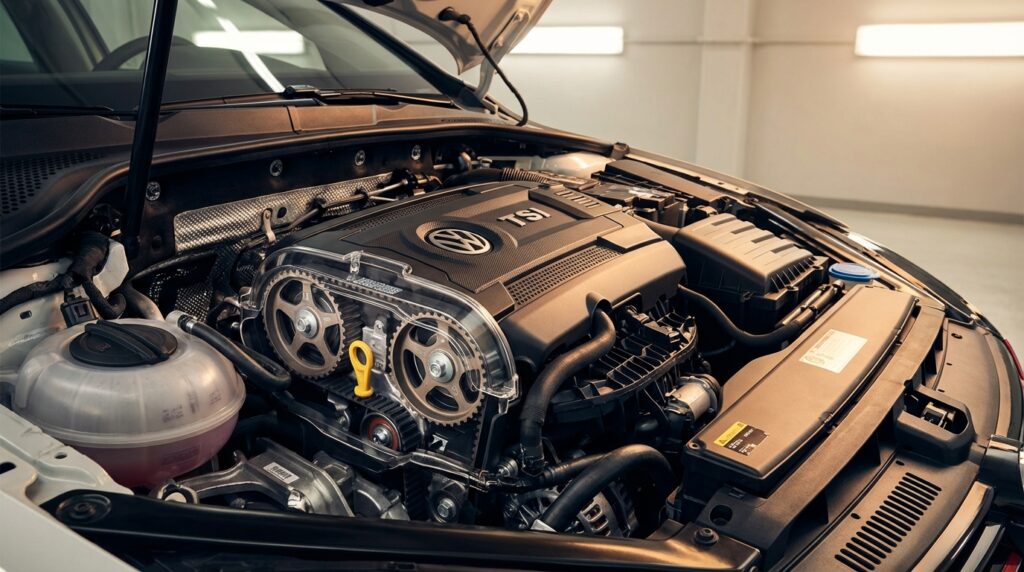
The Volkswagen Golf is a legendary hatchback. It offers sharp handling, excellent fuel economy, and a premium feel. But if you want your Golf to last for hundreds of thousands of miles, you must pay attention to one critical component: the VW Golf timing belt. Many drivers ignore this vital maintenance item because it lives hidden deep inside the engine bay. Out of sight often means out of mind. However, ignoring your timing belt can lead to catastrophic engine failure and a repair bill that might cost more than the car is worth. In this comprehensive guide, we will educate you on exactly when to change your VW Golf timing belt, how much you should expect to pay, and the crucial warning signs you need to look out for. We will also clear up the confusion about which Golf models use a rubber belt versus a metal timing chain.
To keep your car in top condition, follow our complete VW Golf Maintenance & Service Guide
Important Note for Readers: We wrote this guide for general informational purposes. Volkswagen updates their maintenance schedules frequently. Always cross-reference the information here with your specific vehicle’s owner manual or a certified VW dealership.
Does My VW Golf Have a Timing Belt or a Timing Chain?
Before you start worrying about replacement intervals, you need to figure out what type of system your specific engine uses. Volkswagen has manufactured the Golf with many different engines over the decades. Some engines use a rubber timing belt. A timing belt runs quietly and costs less to manufacture, but it requires regular replacement. Other engines use a metal timing chain. A timing chain generally lasts the lifetime of the engine, though the chain tensioners can sometimes fail. Here is a quick breakdown to help you identify what your Golf likely has under the hood:
| VW Golf Generation | Common Engine Types | Timing Belt or Chain? |
|---|---|---|
| Mk4 (1997 – 2003) | 1.8T, 2.0L, 1.9 TDI | Timing Belt (Except VR6, which has a chain) |
| Mk5 (2004 – 2008) | 2.0T FSI, 1.9 TDI | Timing Belt |
| Mk5 / Mk6 Transition | 2.0T TSI (Later models) | Timing Chain |
| Mk6 (2009 – 2012) | 2.0 TDI (Diesel) | Timing Belt |
| Mk7 (2013 – 2020) | 1.4 TSI, 1.6 TDI, 2.0 TDI | Timing Belt |
| Mk7 & Mk8 (Gas/Petrol) | 1.8 TSI, 2.0 TSI (GTI / Golf R) | Timing Chain |
If you own a diesel model (TDI), you almost certainly have a timing belt. If you own a modern GTI or Golf R (Mk6 onward), you likely have a timing chain. If you remain unsure, call your local dealer with your Vehicle Identification Number (VIN), and they will tell you exactly what your engine uses.
Proper engine maintenance also includes regular VW Golf oil change
When to Change Your VW Golf Timing Belt (Intervals)

Mechanics base timing belt replacement on two crucial factors: mileage and time. You must replace the belt whichever comes first. Rubber degrades over time, even if you never drive the car. A low-mileage Golf that sits in a garage for six years still needs a new timing belt!
The Mileage Rule
For most modern VW Golf models, including the popular Mk7 timing belt interval, Volkswagen recommends replacing the belt between 60,000 and 100,000 miles.
- Older Models (Mk4, Mk5): Mechanics highly recommend replacing the belt closer to the 60,000 to 75,000-mile mark. The earlier 1.8T engines were notorious for premature belt failures.
- Newer Models (Mk7 TDI, 1.4 TSI): Volkswagen engineered these belts with stronger materials. They often state the belt can last up to 100,000 miles. However, independent specialists usually suggest a safer interval of 80,000 miles to prevent unnecessary risk.
The Time Rule
Volkswagen officially recommends replacing the timing belt every 4 to 5 years, regardless of the miles driven. Extreme temperatures, engine heat, and dry climates accelerate rubber degradation. If your belt turns five years old, you should book a replacement immediately.
“We see engine failures every month from drivers who wait too long. They tell us the car only has 40,000 miles on it, but they forget the belt is seven years old. The rubber dry-rots, snaps under load, and destroys the engine.” — Senior Master VW Technician
The Crucial Link: Why You Must Replace the Water Pump Too
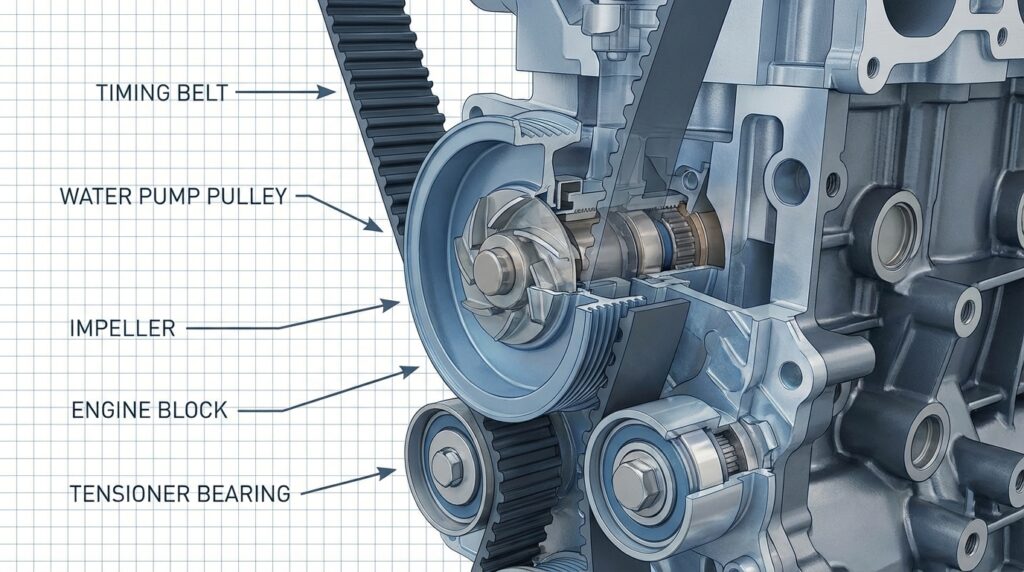
When you take your Golf to a mechanic for a timing belt service, they will almost always quote you for a Timing Belt and Water Pump kit. Do not reject this recommendation. In most VW Golf engines, the timing belt drives the water pump. The water pump circulates coolant through your engine to prevent it from overheating. The bearings inside the water pump wear out over time. If you replace the timing belt but leave the old water pump in place, the water pump will likely fail a few months later. If the old water pump seizes, it will snap your brand-new timing belt. Furthermore, accessing the water pump requires the mechanic to remove the timing belt anyway. Therefore, replacing both at the same time saves you from paying a massive labor bill twice. Always insist that your mechanic uses a complete VW Golf timing belt and water pump kit. This kit should include:
- A high-quality rubber timing belt
- A new water pump (preferably with a metal impeller, rather than plastic)
- New tensioners and idler pulleys
- Fresh engine coolant
which depends on using the correct VW Golf coolant type
VW Golf Timing Belt Replacement Cost
Let us address the biggest pain point for VW owners: the cost. Replacing a timing belt requires significant labor. The mechanic must remove engine mounts, accessory belts, and sometimes part of the front bumper to access the side of the engine. Depending on where you live and the type of shop you use, the total VW Golf timing belt replacement cost generally ranges from $700 to $1,400.
Cost Breakdown Estimate
| Expense Category | Independent VW Specialist | Official VW Dealership |
|---|---|---|
| Parts (Belt, Water Pump Kit) | $250 – $350 | $350 – $500 |
| Labor (4 to 6 hours) | $450 – $650 | $700 – $1,000 |
| Total Estimated Cost | $700 – $1,000 | $1,050 – $1,500 |
While an independent shop saves you money, ensure they specialize in German cars. Volkswagen engines require specific locking tools to hold the camshafts perfectly in place during the replacement. A general mechanic without these special tools can easily ruin the engine timing.
Need a Trusted Mechanic?
Don’t risk your engine. Find a certified local mechanic to inspect or replace your timing belt and water pump today.
Warning Signs Your Timing Belt is Failing
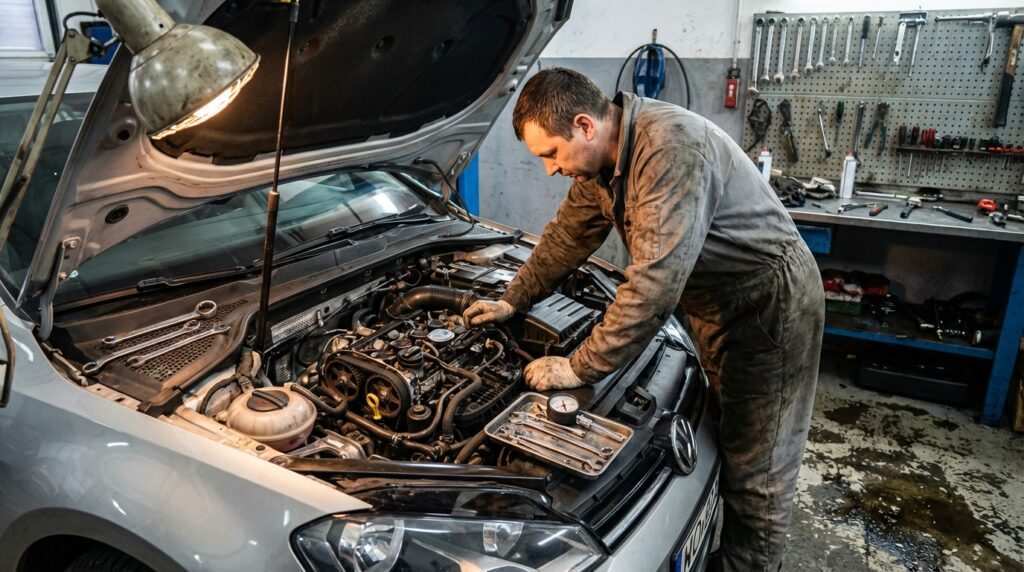
Timing belts usually snap without any warning. However, if you pay close attention, your Golf might give you a few subtle clues that the belt or its surrounding components are nearing the end of their life.
- A Ticking Noise from the Engine: A worn-out belt or a failing tensioner pulley can create a distinct ticking or clicking sound coming from the passenger side of the engine bay.
- Engine Misfires: If the belt stretches and skips a tooth on the gear, the engine’s camshafts and crankshaft will fall out of sync. This causes rough idling, misfires, and a flashing check engine light.
which may also trigger warnings like the VW Golf EPC light
- Coolant Leaks: If you spot a sweet-smelling, pinkish puddle under the front of your car, your water pump is likely leaking. Since the timing belt drives the pump, you need to replace both immediately.
- Oil Leaks near the Motor: Sometimes, the seals behind the timing cover start to leak oil. If engine oil drips onto the rubber timing belt, it will degrade the rubber rapidly and cause premature failure.
Pro Tip: You can often pop off the top plastic timing cover with a few simple clips to visually inspect the belt. If you see deep cracks, fraying edges, or a glossy surface on the rubber, tow the car to a shop immediately. Do not drive it.
What Happens If the Timing Belt Snaps? (The Risks)
Volkswagen engines are what mechanics call “interference engines.” In an interference engine, the engine valves and the pistons occupy the same space inside the cylinder, just at different times. The timing belt acts like the conductor of an orchestra. It ensures the valves open to let air in, and then close tightly before the piston rushes upward. If the timing belt snaps while you are driving, the camshaft stops spinning, and the valves freeze in the open position. The crankshaft, however, keeps spinning due to the momentum of the car. The heavy metal pistons will smash violently into the delicate open valves. This collision bends the valves, damages the cylinder head, and can even punch a hole through the top of the pistons. If this happens, you do not just need a new timing belt. You need a complete engine rebuild or a replacement engine. An engine replacement on a VW Golf will cost you anywhere from $3,500 to over $6,000. Spending $900 on preventive maintenance suddenly looks like a great deal.
Can I Replace the Timing Belt Myself?
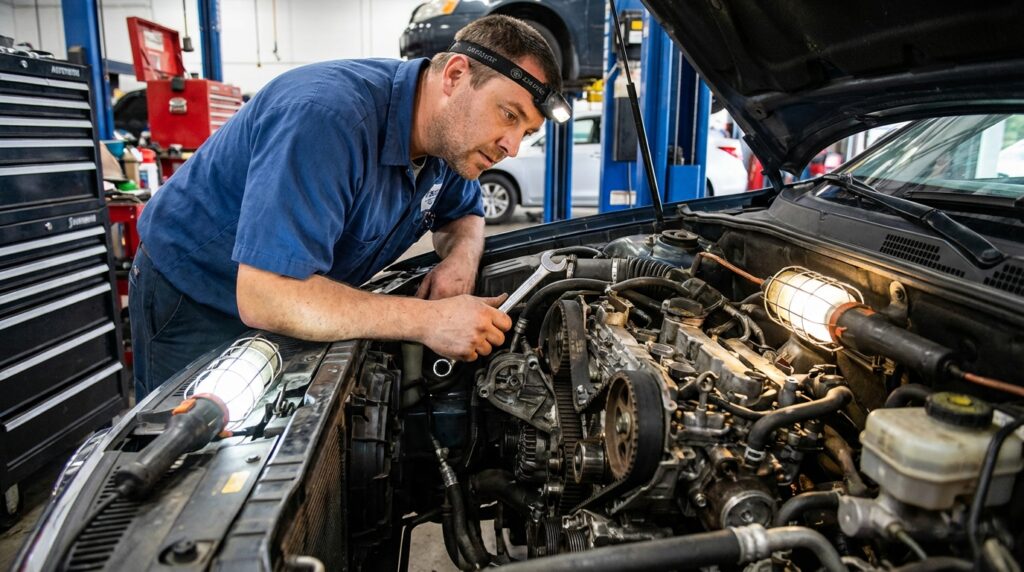
If you enjoy working on cars, you might feel tempted to tackle this job in your home garage. However, we advise against doing this unless you possess advanced mechanical skills. Replacing a VW Golf timing belt is not like doing a simple brake job or an oil change. You need specialized engine support bars to remove the passenger-side motor mount. You also need model-specific VW timing lock tools. If you misalign the new belt by even a single tooth, the engine will run terribly, or you will cause the catastrophic valve damage mentioned above the moment you turn the key. For 95% of car owners, leaving this job to a certified professional remains the smartest and safest choice. If you want to read more about professional repair standards, you can check resources like Kelley Blue Book’s Maintenance Guide to see how experts value this crucial service.
Frequently Asked Questions (FAQs)
How long does it take a mechanic to change a timing belt on a VW Golf?
A trained mechanic usually takes between 4 and 6 hours to complete the job, depending on the specific engine layout and how difficult it is to remove the front-end components.
Does my VW Golf 1.4 TSI have a timing belt or a chain?
If you have the EA211 1.4 TSI engine (common in the Mk7 Golf), it uses a timing belt. Volkswagen engineered this specific belt to be highly durable, but you should still replace it around the 80,000 to 100,000-mile mark.
Can a bad timing belt cause bad gas mileage?
Yes. If the timing belt stretches and the engine timing becomes slightly retarded or advanced, the engine burns fuel inefficiently. You will likely notice a drop in fuel economy and sluggish acceleration.
Should I buy OEM parts or aftermarket kits?
We highly recommend sticking to Original Equipment Manufacturer (OEM) parts, or high-tier aftermarket brands that supply VW directly, such as Continental, INA, or Gates. Never buy cheap, unbranded timing belts online. The risk to your engine is simply too high.
Final Thoughts
Owning a VW Golf brings a lot of driving joy, but it also comes with the responsibility of strict maintenance. The VW Golf timing belt stands out as the single most critical maintenance item on the car. By respecting the mileage and time intervals, and by always replacing the water pump at the same time, you guarantee your engine will run smoothly for years to come. Do not wait for warning signs. Check your service records today. If your Golf is approaching the 70,000-mile mark or the five-year anniversary of its last belt change, start budgeting for a replacement.