
The Volkswagen Golf is a famous and loved car worldwide. Whether you own a practical MK6, a highly acclaimed MK7, or the technologically advanced MK8, it is a car designed to be driven every day. You can get a Volkswagen Golf that’s a reliable family hatchback or one that is a sporty performance machine like the GTI or Golf R. The Volkswagen Golf is the ultimate daily driver because it is highly practical, efficient, and incredibly fun to drive. It is also exceptionally well made, boasting premium German engineering.
However, German engineering requires strict adherence to maintenance schedules. To keep your Volkswagen Golf in peak condition, you have to take proactive care of it. You must follow the exact rules for taking care of your vehicle’s intricate systems. If you do not take care of your car, minor wear and tear can quickly become a catastrophic problem. You have to change the oil on time, use the correct synthetic fluids, and regularly inspect the mechanical components. If you neglect these basic requirements, your car’s engine, turbocharger, or transmission can sustain severe, irreversible damage.
According to Volkswagen official maintenance guidelines, following a regular service schedule is essential to keep your vehicle reliable, efficient, and safe on the road.
If you want to master VW Golf Maintenance, you are in the right place. We have engineered this comprehensive guide to help you take absolute control over your car’s health. We will tell you exactly when you need to change the oil, what specific fluids to buy, how to diagnose warning lights, and what hidden components you need to check regularly. We will also give you actionable tips on how to save thousands of dollars by doing simple DIY maintenance in your own driveway.
A meticulously taken care of Volkswagen Golf is a phenomenal vehicle to own. It will last you a very long time, hold its resale value, and remain an absolute joy to drive for hundreds of thousands of miles.
The Ultimate VW Golf Service Intervals & Schedule
How often should you take your Volkswagen Golf in for service? The foundational answer is straightforward, but the details matter. You should take your car in for a basic service every 10,000 miles or every 12 months, whichever comes first. This is the golden rule that Volkswagen strictly recommends. Even if you do not drive your car much and it sits in a garage, fluids break down over time, so you still need to take it in for an annual inspection.
Understanding your VW Golf service intervals & schedule is the key to preventing expensive breakdowns. While the 10k-mile mark is standard, if you drive your car in heavy stop-and-go traffic, tow small loads, or live in very hot or freezing weather, your vehicle falls under the “severe driving” category. In these specific conditions, expert independent mechanics highly recommend changing the oil and filter every 5,000 to 7,500 miles.
Standard 10,000-Mile (1-Year) Minor Service
When you take your Volkswagen Golf in for a minor service, there are critical things that the mechanic will check and replace. They will drain the old engine oil and replace the oil filter. They will thoroughly check all the other vital fluids in your car, including coolant and brake fluid. They will also inspect the thickness of the brake pads and the tread depth of the tires. This minor service establishes the baseline of your car’s health.
Major 40,000-Mile (4-Year) Comprehensive Service
If you have a Volkswagen Golf approaching the 40,000-mile mark, you are due for a major service. This is where maintenance becomes slightly more expensive but absolutely crucial. This comprehensive service includes everything in the 10k service, plus several major replacements. The mechanic will replace the engine air filter, cabin air filter, and the spark plugs. They will flush the brake fluid system. If your Golf is equipped with a DSG automatic transmission, this is also the exact time the transmission fluid and filter must be replaced.
You can also check detailed service schedules and maintenance recommendations on Edmunds to better understand what your VW Golf needs as it ages over time.
Engine Maintenance: The Heart of Your VW Golf
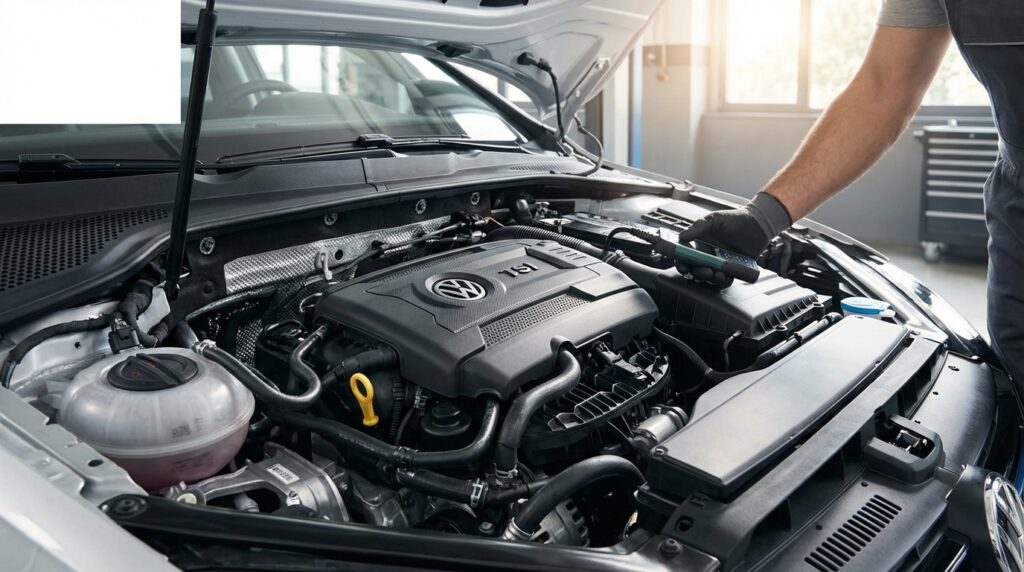
It is very important to take meticulous care of your Volkswagen Golf’s engine. Most modern Golfs use advanced TSI turbocharged direct-injection engines. These engines produce excellent power and fuel economy, but they are highly sensitive to neglect. If you do not perform preventative maintenance, you can have massive problems that cost thousands of dollars to rectify.
VW Golf Oil Change & Fluid Specifications
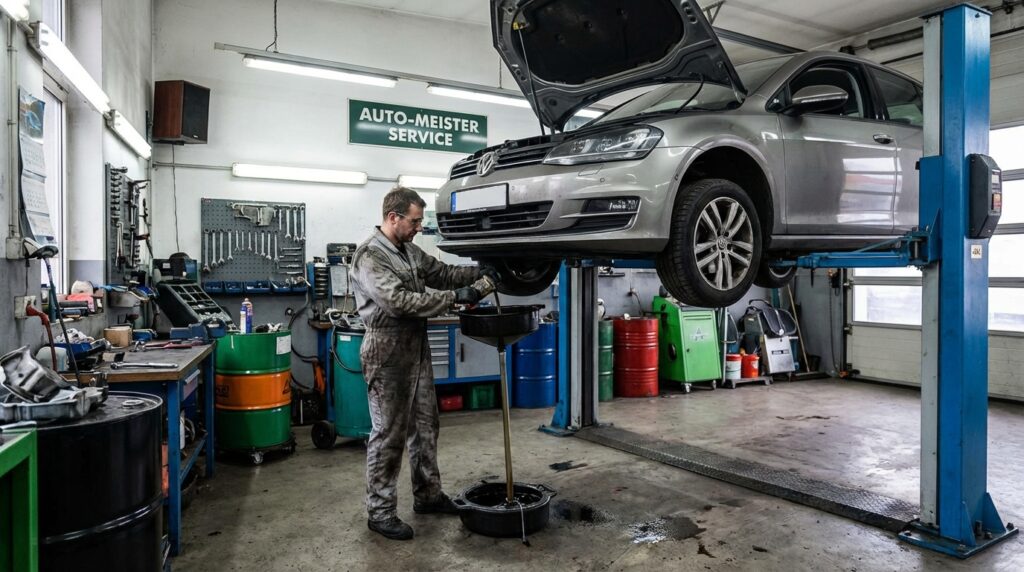
The lifeblood of your TSI engine is high-quality synthetic oil. Performing a routine VW Golf oil change is the single most important task you can do. Always use a premium full-synthetic oil that explicitly meets Volkswagen’s strict approvals (such as VW 502.00, VW 504.00, or the newer 0W-20 VW 508.00 standard found in MK7 and MK8 models). Using the wrong oil viscosity or non-approved oil can lead to premature turbo failure and severe internal engine sludge.
For DIY enthusiasts, changing the oil on a modern Golf is incredibly easy. Because the oil filter housing is conveniently located at the top of the engine bay on most models, you can use a fluid extractor to suck the old oil out through the dipstick tube. This means you can complete an entire oil change in 20 minutes without ever jacking up the car or crawling underneath it.
Air Filter & Spark Plugs Replacement
To burn fuel efficiently, your engine needs clean air and a strong spark. A clogged air filter will choke the turbocharger, resulting in poor acceleration and reduced gas mileage. Performing a VW Golf air filter replacement is a simple DIY task that takes less than 10 minutes. You simply unscrew the Torx screws on the airbox, lift the lid, remove the old dirty paper filter, vacuum out any leaves or debris inside the box, and drop the new filter in.
Equally important is the ignition system. Turbocharged engines put immense pressure on spark plugs. As the plugs wear out, the gap widens, leading to misfires, rough idling, and hesitation under heavy acceleration. A complete VW Golf spark plugs replacement should be done every 40,000 to 60,000 miles depending on your specific engine. When replacing them, ensure you use OEM-spec NGK or Bosch iridium plugs and carefully torque them to the manufacturer’s specifications to avoid damaging the delicate aluminum cylinder head.
The Crucial VW Golf Timing Belt
Depending on the year and specific engine code of your vehicle, your Golf may utilize a timing chain or a timing belt. If your car uses a rubber timing belt, this component is absolutely vital. The belt synchronizes the rotation of the crankshaft and the camshafts. If the belt snaps while the engine is running, the pistons will smash into the valves, completely destroying the engine.
You need to proactively replace the timing belt every 70,000 to 100,000 miles, or every 5 to 7 years, regardless of mileage, because the rubber degrades over time. When performing this major service, mechanics will always replace the tensioners, idler pulleys, and the water pump simultaneously, as accessing these components requires the same intensive labor.
Transmission Care: DSG and Manual Gearboxes
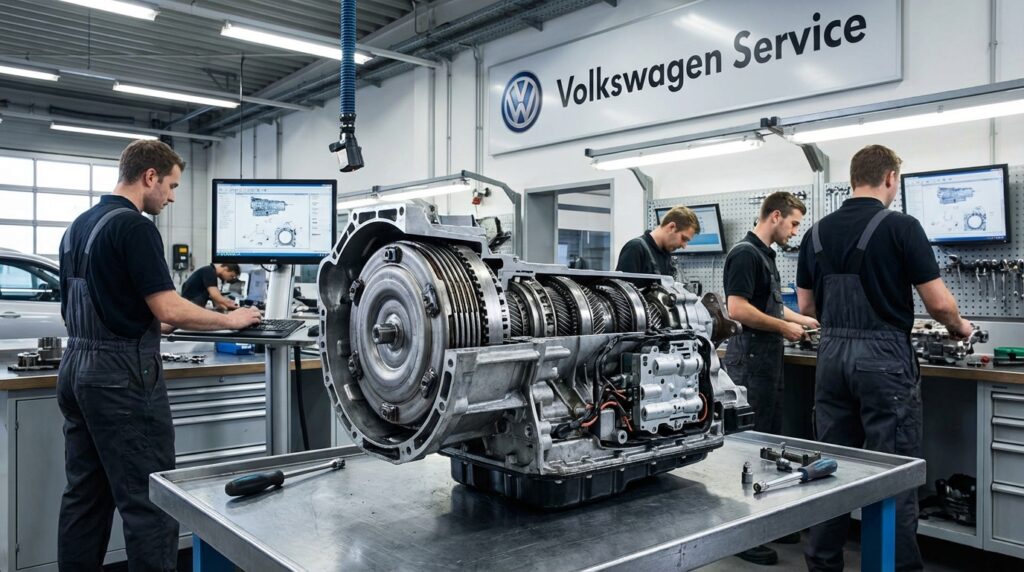
The transmission translates engine power to the wheels. The Volkswagen Golf is famous for its revolutionary Direct-Shift Gearbox (DSG). This dual-clutch transmission is remarkably fast, shifting gears in milliseconds, and provides a highly sporty driving feel. However, it is an intricate mechanical system that requires very specific, non-negotiable care.
DSG Maintenance and Fluid Replacement
The wet-clutch DSG transmission creates a lot of friction and heat. Over time, the internal clutch packs shed microscopic friction material into the fluid. You must perform a VW Golf transmission fluid change exactly every 40,000 miles. If you neglect this, the tiny particles will clog the transmission’s mechatronic unit, leading to jerky shifts, loss of gears, and eventually a complete transmission failure that can cost upwards of $4,000 to replace.
Many owners wonder about the DSG oil change cost. At a dealership, this service typically ranges from $300 to $500 because it requires expensive, specialized DSG fluid, a new internal filter, and a computerized temperature calibration procedure using a diagnostic scan tool to ensure the fluid is at the exact correct level. While advanced DIYers can do it at home using a gravity-fill method, it requires patience and precision.
Diagnostics, Electrical Systems, & Warning Lights
Modern VW Golfs are essentially rolling computers. They are equipped with dozens of sensors monitoring every aspect of the vehicle’s performance. When a sensor detects an anomaly, it communicates with the ECU (Engine Control Unit), which then illuminates a warning light on your dashboard. Ignoring these lights is the fastest way to turn a small, cheap fix into an expensive nightmare.
If you notice amber warning lights on your dash, such as the VW Golf EPC light (Electronic Power Control), it could indicate serious throttle body, accelerator pedal, or engine management issues that require immediate scanning.
Battery Issues & Key Fobs
A weak electrical system can cause a cascade of bizarre error messages on a Volkswagen. If your car struggles to start in the morning, or if you randomly get steering assist or ABS warnings, you likely need a VW Golf battery replacement. Car batteries typically last 3 to 5 years. Note that replacing a battery on newer Golfs with Start/Stop technology requires an AGM battery. Furthermore, the new battery must be “coded” or “adapted” to the car’s computer using a diagnostic tool so the alternator knows exactly how to charge the fresh battery.
On a much smaller scale, if you find yourself having to stand extremely close to your car to unlock it, or if the dashboard displays a “Key Not Found” message, it is time to change the battery in your remote. Replacing the VW Golf key fob battery is incredibly cheap and takes one minute. You simply pop open the plastic casing with a small flathead screwdriver and swap in a fresh CR2025 or CR2032 coin battery (depending on your model year).
Lighting and Fuses
Electrical gremlins often stem from simple blown fuses. Whether your 12V cigarette lighter socket stopped working, your interior dome lights are out, or your infotainment screen is blank, checking the fuses is step one. Knowing how to read a VW Golf fuse box diagram is essential. The Golf usually has two main fuse boxes: one inside the cabin (hidden behind the glovebox or steering wheel panel) and one under the hood next to the battery. Always use a fuse puller and replace a blown fuse with one of the exact same amperage rating.
Visibility at night is critical for safety. If a bulb burns out, completing a VW Golf headlight bulb replacement can range from very easy to moderately difficult. On standard halogen models, you can usually reach behind the headlight assembly under the hood, unclip the wire harness, twist the bulb counter-clockwise, and pull it out. However, if your Golf is equipped with premium HID or LED headlights, bulb replacement might require removing the front bumper or wheel well liners to access the housing assembly.
Brakes, Wheels, and Suspension Maintenance
Power and engine performance mean nothing if you cannot safely stop or control the vehicle. The chassis, suspension, and braking systems of the VW Golf provide its signature tight, planted, and responsive handling. Regular inspections of these lower-body components are vital for your safety and the longevity of your tires.
Brake Pads and Rotors
Brake wear depends entirely on your driving style. Aggressive city drivers may need new brakes at 30,000 miles, while highway commuters might reach 60,000 miles. If you hear a high-pitched squealing noise when stopping, or feel a vibration in the steering wheel, it is time for a VW Golf brake pads replacement. Replacing the front brake pads is a standard mechanical job. However, replacing the rear brake pads on modern Golfs is tricky because of the Electronic Parking Brake (EPB). You cannot simply compress the rear caliper piston with a C-clamp; you must use a digital diagnostic tool to electronically retract the parking brake motors before removing the calipers.
Tires and Alignment
Tires are the only part of your VW Golf that actually touches the road. Poor tire maintenance ruins fuel economy, degrades handling, and significantly increases stopping distances. Checking your VW Golf tire pressure should be a monthly habit. Look at the sticker located inside the driver’s side door jamb for the correct PSI specifications (usually around 36-38 PSI). Do not look at the max pressure written on the tire sidewall. Furthermore, if the TPMS (Tire Pressure Monitoring System) light illuminates, fill your tires when they are cold, and then press the TPMS set button inside the glovebox or through the infotainment screen to recalibrate the system.
HVAC, Visibility, and Detailing
Maintaining the mechanical integrity of your vehicle is crucial, but preserving the comfort of the cabin and the aesthetic beauty of the exterior is what makes owning a VW Golf a truly premium experience.
Cabin Air Filter and Coolant Systems
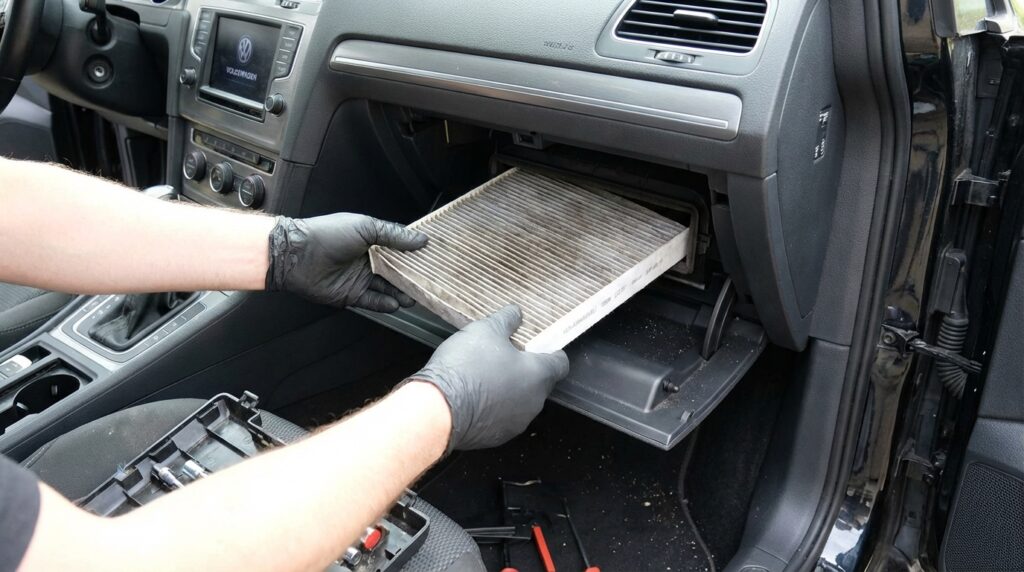
If you turn on your air conditioning and notice a musty, moldy, or stale smell inside the car, the culprit is usually a dirty filter. A VW Golf cabin air filter replacement is one of the easiest and most rewarding DIY tasks. This filter sits right behind the passenger glove compartment. By pressing a few tabs, the glovebox drops down, allowing you to slide out the old filter and insert a fresh, carbon-activated filter that traps dust, pollen, and exhaust fumes. Doing this yourself takes three minutes and saves you over $50 in dealership labor fees.
Under the hood, the heating and cooling of the engine rely on the radiator fluid. Over time, coolant degrades and loses its anti-corrosive properties. Always ensure you are using the correct VW Golf coolant type. Volkswagen exclusively uses a specific pink/purple silicate-free coolant (like G12, G12++, or G13). Never mix this with generic green coolant from a standard auto parts store, as it will gel up and destroy the water pump and heater core.
Wipers and Exterior Care
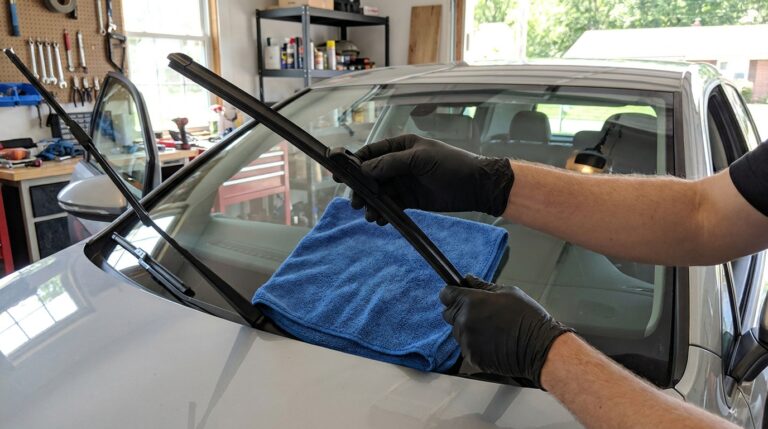
Clear vision in rain or snow is non-negotiable. Wipers naturally degrade from UV exposure and freezing temperatures. When buying replacements, you must know the correct VW Golf windshield wipers size. Typically, the driver’s side requires a 26-inch blade, the passenger side takes an 18-inch blade, and the rear hatch requires a specific 11-inch or 13-inch custom blade. Important Tip: To change the front wipers, you must put them into “Service Mode.” Turn the ignition on, then off, and hold the wiper stalk down. The wipers will sweep up and stop vertically, allowing you to lift them away from the glass without scratching the edge of your metal hood!
Finally, washing your car is not just about vanity; it is preventative maintenance. Following a proper VW Golf detailing & car wash guide protects the clear coat from bird droppings, tree sap, and winter road salt. Using the two-bucket wash method, applying a high-quality ceramic spray wax every few months, and keeping the interior plastics treated with UV protectant will prevent the dashboard from cracking and keep your Golf looking showroom fresh for a decade.
Maintenance Costs & High-Mileage Issues
Some people falsely think that the Volkswagen Golf is prohibitively expensive to maintain compared to Japanese rivals. This is not true. If you take proactive care of your car, it will last you a very long time. You will not have to spend a fortune on unexpected, catastrophic repairs.
To estimate your car’s current value and decide if long-term repairs are worth it, visit Kelley Blue Book for accurate pricing insights and depreciation data.
As your car pushes past 100,000 miles, you may encounter a few common VW-specific issues. Being aware of these allows you to budget properly:
- Carbon Buildup on Intake Valves: Because the TSI engine is direct-injected, fuel never washes over the back of the intake valves. Over time, carbon deposits bake onto the valves. This can cause the engine to run roughly and misfire when cold. You can fix this problem by having a mechanic perform a “walnut blasting” service to physically clean the valves.
- Water Pump and Thermostat Leaks: The plastic water pump housing on many VW engines is prone to micro-cracks over time. This can cause a slow coolant leak and lead to the engine overheating. You can permanently fix this problem by replacing the water pump and thermostat housing, preferably with an upgraded aluminum aftermarket unit if available.
- PCV Valve Failure: The PCV (Positive Crankcase Ventilation) valve helps manage internal engine pressure. If the diaphragm inside fails, you may hear a loud whistling sound, experience rough idling, and notice that your car is consuming too much oil. You can easily fix this problem by replacing the PCV valve assembly located right on top of the engine block.
DIY vs. Dealership: What Can You Do Yourself?
You do not need to take your VW Golf to the dealership for every minor task. You can easily save hundreds of dollars a year by performing basic VW Golf maintenance in your own driveway. The VW Golf community is massive, and parts are widely available. You can find thousands of step-by-step tutorial videos and forum posts online guiding you through almost any repair.
Invest in a Diagnostic Tool for Your VW Golf:
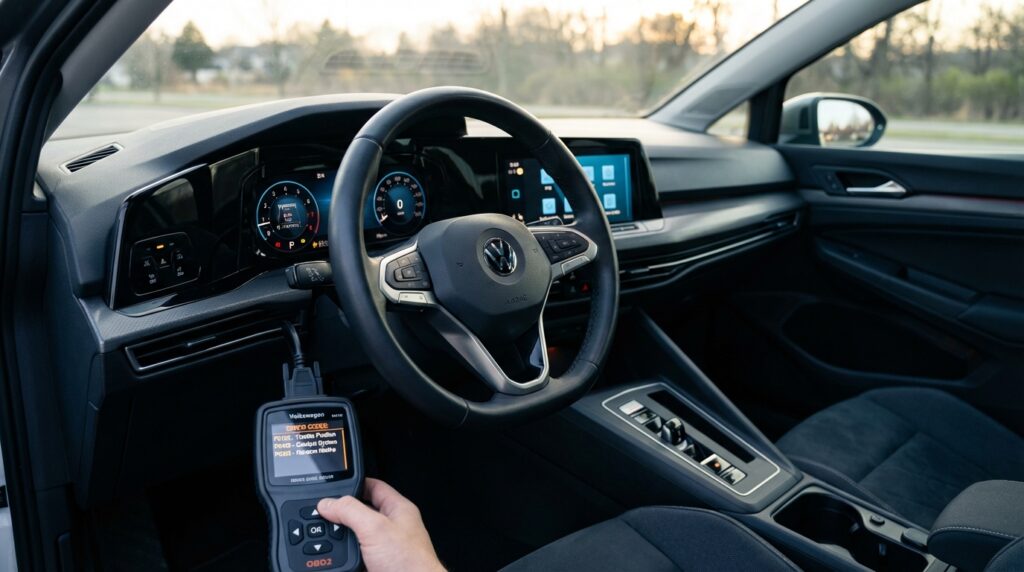
If you plan to DIY with your VW Golf, consider purchasing a specialized diagnostic tool like an OBDeleven or Ross-Tech VCDS scanner. These tools plug directly into your VW Golf’s OBD2 port under the steering wheel and connect to your smartphone or laptop via Bluetooth or USB. They are incredibly powerful.
These tools allow you to read manufacturer-specific VW Golf error codes that generic auto parts store scanners cannot see. They allow you to retract the electronic parking brake for rear brake pad jobs, monitor live turbo boost pressure, code new batteries, and most importantly, reset your service light and inspection reminders on the dashboard after you complete a home oil change.
Frequently Asked Questions (FAQ Section)
We gathered the most frequently asked questions from VW Golf owners across the internet and owner forums. Here are the clear, definitive answers you need to keep your car running perfectly.
How often should a VW Golf be serviced?
You should service your VW Golf every 10,000 miles or every 12 months whichever comes first. This basic routine includes changing the oil and filter alongside performing a comprehensive multi-point safety inspection of the brakes, tires, and vital fluids in your VW Golf.
Is the VW Golf expensive to maintain?
The VW Golf requires a planned maintenance budget. While it costs slightly more to maintain than basic Japanese economy cars, it remains highly affordable compared to luxury German brands like Audi or BMW. Expect to spend roughly $600 to $800 annually on standard upkeep, tires, and oil changes.
What is included in a VW Golf major service vs. minor service?
A minor service focuses strictly on oil, a new oil filter, and visual safety checks. A major service (usually at 40k miles) goes much deeper. It includes replacing the cabin and engine air filters, flushing the brake fluid, rotating the tires, replacing spark plugs, and servicing the DSG transmission if equipped.
When should the timing belt be replaced on a VW Golf?
If your specific VW Golf engine utilizes a timing belt (rather than a metal timing chain), you must replace it between 70,000 and 100,000 miles. Because the VW Golf uses an interference engine, a broken belt will completely destroy the engine internals. Always replace the water pump and tensioners simultaneously.
How often does the DSG transmission need servicing in a VW Golf?
You must strictly service the Direct-Shift Gearbox (DSG) every 40,000 miles. This critical service involves draining the old, contaminated transmission fluid and replacing the internal DSG filter to maintain lightning-fast shifts and prevent incredibly costly mechanical transmission failure.
What type of oil does a VW Golf take?
A VW Golf always requires premium, full-synthetic oil. Older models generally use 5W-30 or 5W-40 that explicitly meets the VW 502 00 specification. Newer Mk7 and Mk8 Golfs often require a thinner 0W-20 oil that meets the strict VW 508 00 specification for maximum efficiency.
How long do VW Golf engines realistically last?
VW Golf engines boast excellent long-term reliability when properly maintained. A well-cared-for VW Golf will easily last 150,000 to over 200,000 miles. To achieve this longevity, you must perform on-time oil changes and immediately address minor issues like PCV failures or tiny coolant leaks before they escalate.
Conclusion
Owning a Volkswagen Golf provides an unmatched daily driving experience. The sharp, planted handling, the premium quiet interior, and the punchy turbocharged engine make it one of the absolute best daily drivers in the automotive world. However, that legendary German engineering relies entirely on your personal commitment to comprehensive maintenance for your VW Golf.
By following this complete VW Golf Maintenance & Service Guide, you take absolute control of your vehicle’s health and longevity. Sticking rigidly to the 10,000-mile synthetic oil change intervals, performing the crucial 40,000-mile DSG transmission services, keeping your filters clean, and keeping an eye on your timing belt will ensure your VW Golf remains reliable, extremely safe, and incredibly fun to drive for hundreds of thousands of miles to come.
Subscribe to our newsletter for more expert VW Golf tips, DIY tutorials, and automotive guides!