
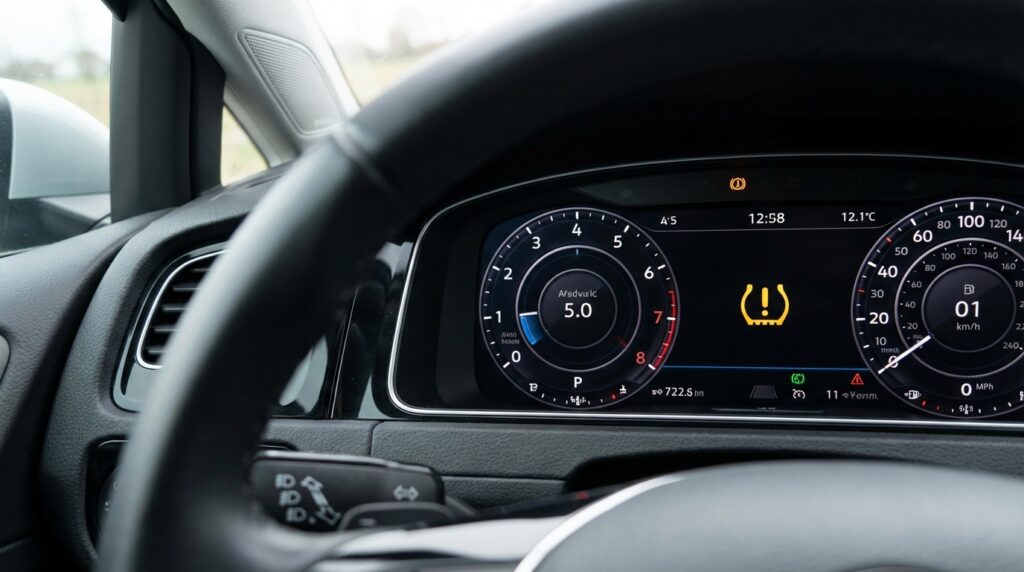
Nobody likes seeing that glowing yellow horseshoe light pop up on the dashboard. When the Tire Pressure Monitoring System (TPMS) triggers in your car, it usually brings a feeling of sudden anxiety. You might wonder if you have a flat tire, or if the cold weather just caused a dip in pressure.
Finding the correct VW Golf tire pressure is crucial for your safety, fuel economy, and the lifespan of your tires. However, flipping through a thick owner’s manual while standing at a gas station air pump is frustrating. You need quick, clear, and accurate answers right now.
For a complete maintenance routine, check our VW Golf Maintenance & Service Guide
This comprehensive guide acts as your ultimate cheat sheet. We will cover the exact recommended PSI and Bar for Volkswagen Golf Mk6, Mk7, and Mk8 models. You will also learn exactly where to find the factory tire sticker on your car, and how to easily reset that stubborn TPMS dashboard light once you finish adding air.
The Quick Answer: What is the Recommended VW Golf Tire Pressure?
If you need a quick baseline to get you back on the road safely, most standard Volkswagen Golf models require a tire pressure of 33 PSI to 38 PSI (2.3 to 2.6 Bar).
Proper maintenance like a VW Golf oil change also improves fuel efficiency
However, the exact number depends heavily on your specific tire size and how much weight you are carrying in the car. Volkswagen usually provides two different pressure recommendations:
- Normal Load (Comfort): This is for everyday driving with one or two passengers and an empty trunk. It provides a softer, smoother ride.
- Full Load (Max): You must use this higher pressure if you are carrying four or five passengers, filling the trunk with heavy luggage, or driving at high highway speeds for long periods.
Important Note: Always check and adjust your tire pressure when the tires are cold. This means the car has been parked for at least three hours, or you have driven it less than one mile. Hot tires give false, high pressure readings.
VW Golf Tire Pressure Charts by Generation
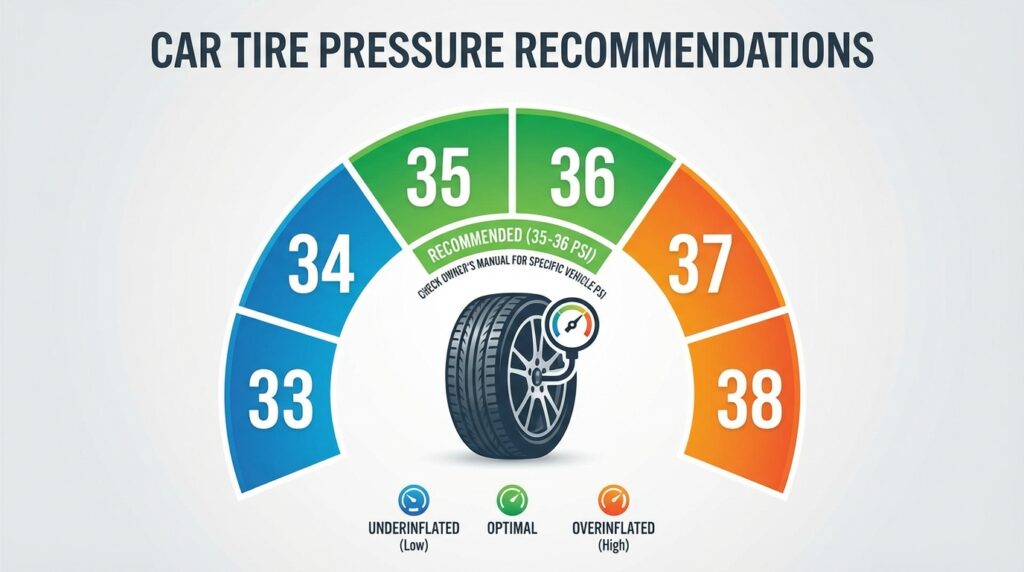
To give you the most accurate numbers, we have broken down the recommended tire pressures by the three most popular recent generations: the Mk6, Mk7, and Mk8. Match your tire size (found on the sidewall of your tire) to the charts below.
VW Golf Mk6 (2009–2013) Tire Pressure Specs
The Mk6 Golf is a legendary hatchback. Whether you drive the standard TDI or a base gas model, keeping these tires properly inflated ensures that classic German handling.
| Tire Size | Normal Load (Front / Rear) | Full Load (Front / Rear) |
|---|---|---|
| 195/65 R15 | 33 PSI (2.3 Bar) / 33 PSI (2.3 Bar) | 36 PSI (2.5 Bar) / 42 PSI (2.9 Bar) |
| 205/55 R16 | 33 PSI (2.3 Bar) / 33 PSI (2.3 Bar) | 36 PSI (2.5 Bar) / 42 PSI (2.9 Bar) |
| 225/45 R17 | 35 PSI (2.4 Bar) / 35 PSI (2.4 Bar) | 38 PSI (2.6 Bar) / 44 PSI (3.0 Bar) |
| 225/40 R18 | 38 PSI (2.6 Bar) / 38 PSI (2.6 Bar) | 41 PSI (2.8 Bar) / 45 PSI (3.1 Bar) |
VW Golf Mk7 (2014–2019) Tire Pressure Specs
The VW Golf Mk7 tire pressure specs are similar to the previous generation, but with slight variations depending on the trim (like the GTI or R). Always refer to your car’s sticker for absolute perfection, but these are the standard factory recommendations.
| Tire Size | Normal Load (Front / Rear) | Full Load (Front / Rear) |
|---|---|---|
| 195/65 R15 | 33 PSI (2.3 Bar) / 33 PSI (2.3 Bar) | 36 PSI (2.5 Bar) / 41 PSI (2.8 Bar) |
| 205/55 R16 | 33 PSI (2.3 Bar) / 33 PSI (2.3 Bar) | 36 PSI (2.5 Bar) / 42 PSI (2.9 Bar) |
| 225/45 R17 | 35 PSI (2.4 Bar) / 35 PSI (2.4 Bar) | 38 PSI (2.6 Bar) / 44 PSI (3.0 Bar) |
| 225/40 R18 | 38 PSI (2.6 Bar) / 38 PSI (2.6 Bar) | 41 PSI (2.8 Bar) / 45 PSI (3.1 Bar) |
VW Golf Mk8 (2020–Present) Tire Pressure Specs
The latest Mk8 Golf comes with heavier technology and a slightly different weight distribution. Ensure your modern hatchback gets the right amount of air to support its advanced driving dynamics.
| Tire Size | Normal Load (Front / Rear) | Full Load (Front / Rear) |
|---|---|---|
| 205/55 R16 | 35 PSI (2.4 Bar) / 35 PSI (2.4 Bar) | 38 PSI (2.6 Bar) / 42 PSI (2.9 Bar) |
| 225/45 R17 | 36 PSI (2.5 Bar) / 36 PSI (2.5 Bar) | 39 PSI (2.7 Bar) / 44 PSI (3.0 Bar) |
| 225/40 R18 | 38 PSI (2.6 Bar) / 38 PSI (2.6 Bar) | 41 PSI (2.8 Bar) / 45 PSI (3.1 Bar) |
| 235/35 R19 (Golf R/GTI) | 39 PSI (2.7 Bar) / 39 PSI (2.7 Bar) | 42 PSI (2.9 Bar) / 46 PSI (3.2 Bar) |
Where to Find the Tire Pressure Sticker on a VW Golf
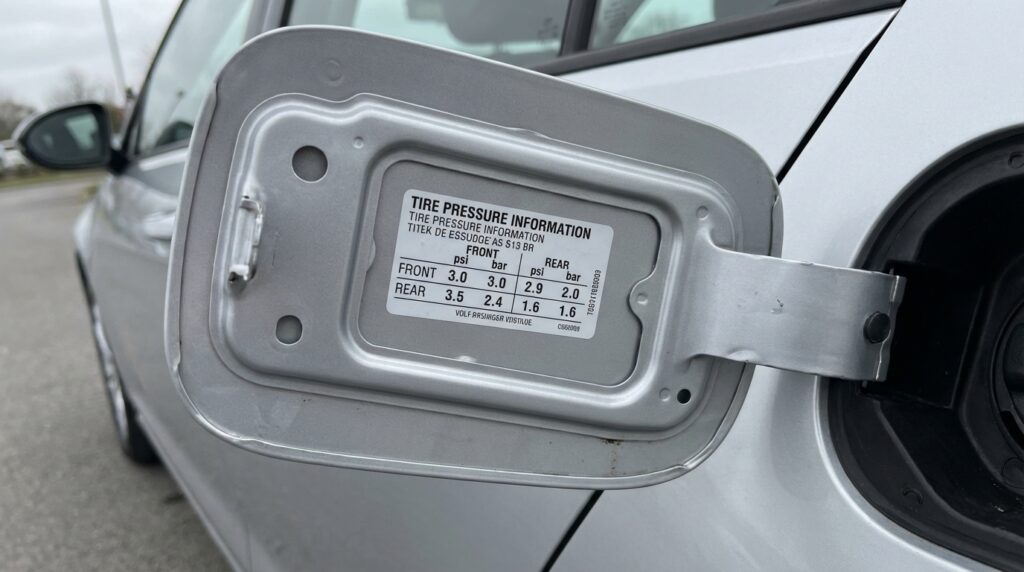
While the charts above are highly accurate, your specific vehicle might have unique requirements based on its exact factory configuration. You should always verify the numbers using the official tire pressure placard physically attached to your car.
Volkswagen generally places this sticker in one of two locations:
- Inside the Fuel Filler Door: On most modern VW Golfs (especially the Mk7 and Mk8), you will find the tire pressure chart stuck to the inside of the gas cap door. Just pop the fuel door open, and you will see a detailed chart listing PSI and Bar for different loads.
- The Driver’s Side B-Pillar (Door Jamb): Open the driver’s side door and look down at the metal frame where the door latches. You will often see a black and white sticker listing the maximum cold tire pressure.
“Never use the maximum pressure molded onto the sidewall of the tire itself. That number shows the absolute limit the tire can hold, not what your specific vehicle needs for safe and comfortable driving.”
Step-by-Step: How to Reset the VW Golf Tire Pressure Light (TPMS)
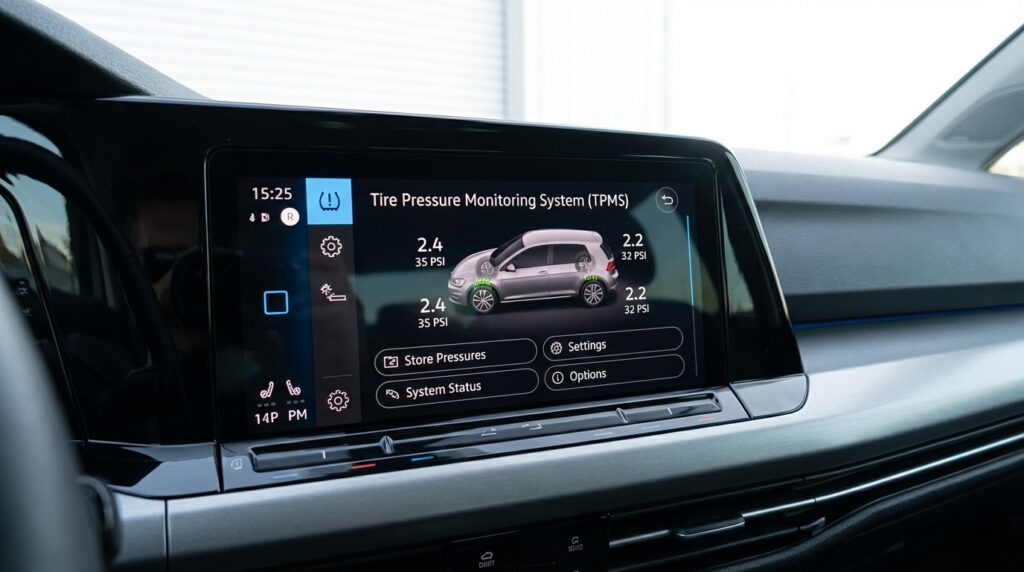
You checked your tires, added the right amount of air, and turned the car on. But wait—the yellow TPMS warning light is still glaring at you. This happens because the car’s computer needs you to manually confirm that you have fixed the issue.
Volkswagen Golfs generally use an indirect TPMS system. Instead of sensors inside the tires, the car uses the ABS wheel speed sensors to detect if one tire is spinning faster than the others (a flat tire has a smaller circumference and spins faster). Therefore, you must tell the computer to memorize the new, correct tire size parameters.
Sometimes warning lights like the VW Golf EPC light may also appear due to system issues
Here is how to perform a VW Golf tire pressure reset based on your model year.
Resetting TPMS on Older Models (Mk6 and some early Mk7s)
Older models use a physical button to reset the system. It is quick and easy.
- Start your engine or turn the ignition to the “On” position without starting the engine.
- Make sure the vehicle is completely parked.
- Locate the TPMS Set button. You will usually find this button inside the glove box (look at the top left inner wall) or down by the gear shifter on the center console. It has the same logo as the dashboard warning light.
- Press and hold this button for about 3 to 5 seconds.
- Listen for a single audible “ding” or beep. Once you hear it, the dashboard light will blink and then turn off. The system is now reset.
Resetting TPMS via the Infotainment Screen (Late Mk7 and Mk8 Models)
Modern VW Golfs have moved away from physical buttons. You now manage the reset process through the central touchscreen.
- Turn on your car’s ignition (the engine can be running as long as you are parked).
- On the main infotainment screen, press the CAR hard button or tap the Vehicle icon on the touchscreen.
- Tap Settings (often represented by a gear icon) in the bottom right corner of the screen.
- Scroll down and tap on Tires.
- Tap the button that says SET.
- A confirmation message will pop up asking: “Do all four tire pressures match the required values?”
- Tap Confirm. The screen will notify you that the tire pressures have been stored, and the dashboard light will vanish.
Troubleshooting Tip: If the TPMS light flashes for 60 seconds when you start the car and then stays solid, it means there is a malfunction with the system itself, not just low air pressure. You will need a mechanic to scan the system with an OBD2 reader.
How Weather and Temperature Affect Your Tire Pressure
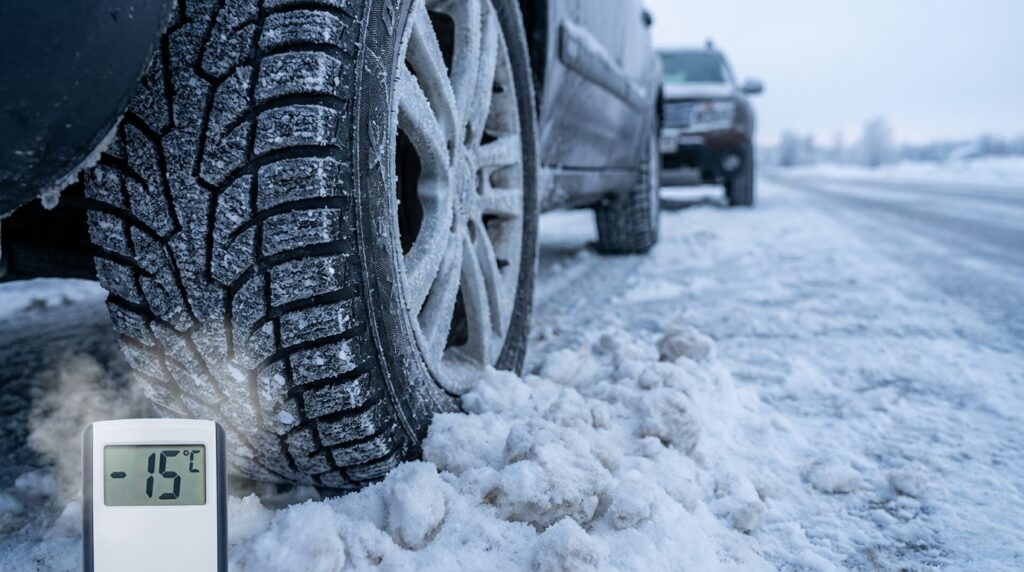
Many drivers notice their TPMS light turns on during the first chilly morning of autumn. This is not a coincidence; it is simple physics.
Air expands when it gets hot and contracts when it gets cold. As a general rule of thumb in the automotive world, your tires will lose 1 PSI of pressure for every 10 degrees Fahrenheit (about 5.5 degrees Celsius) drop in outside temperature.
If you last filled your tires on a hot 85°F summer day, and the temperature suddenly drops to 35°F in the winter, your tires could naturally lose 5 PSI. This sudden drop is more than enough to trigger the VW Golf TPMS light. Therefore, checking your pressure at the start of a new season is a vital maintenance habit.
Why Maintaining Proper Tire Pressure is Crucial
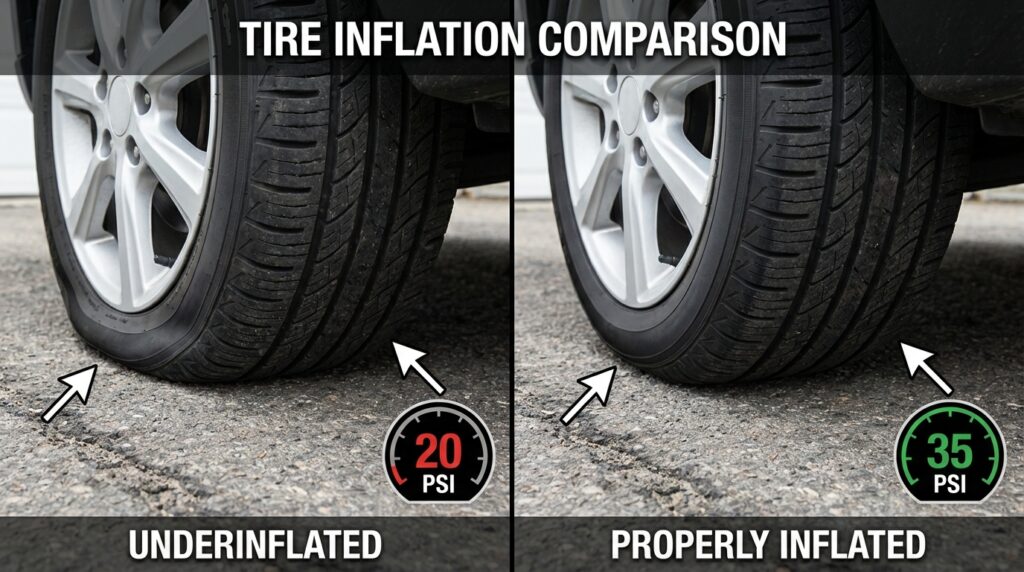
Taking five minutes to check your tires once a month does more than just turn off an annoying dashboard light. It offers massive, tangible benefits to your daily driving experience.
- Better Fuel Economy: Driving on under-inflated tires is like riding a bicycle with flat tires—it requires much more energy. Correct pressure reduces rolling resistance, saving you money at the gas pump.
- Extended Tire Life: Under-inflated tires wear out quickly on the outside edges. Over-inflated tires wear out rapidly down the center. Proper pressure ensures the tire touches the road evenly, extending its life by thousands of miles.
- Enhanced Safety and Braking: Tires are the only contact point between your Golf and the road. Correct inflation guarantees maximum grip during emergency braking and prevents hydroplaning in wet conditions. You can read more about tire safety guidelines from the National Highway Traffic Safety Administration (NHTSA).
- Smoother Ride Comfort: Over-inflating your tires will make your VW Golf feel harsh and bouncy over potholes. Sticking to the factory recommendations provides the perfect balance of sporty handling and cruising comfort.
Frequently Asked Questions (FAQs)
Is 40 PSI too high for a VW Golf?
It depends on your tire size and vehicle load. For normal driving with an empty car, 40 PSI is generally too high and will result in a stiff, uncomfortable ride. However, if you are carrying a full car of passengers and heavy luggage, 40 PSI (or slightly higher) is often the required factory specification for the rear tires.
How often should I check my tire pressure?
Mechanics and tire manufacturers recommend checking your tire pressure at least once a month, and always before embarking on a long road trip. Do not wait for the TPMS light to come on, as the system usually only triggers when a tire is already 20% to 25% under-inflated.
Why does the VW Golf sticker show a “Comfort” and “Eco” pressure?
Some European models display an “Eco” (Economic) tire pressure setting. This setting is slightly higher than normal to reduce rolling resistance and save fuel. The “Comfort” setting uses slightly less pressure to absorb bumps better. You can choose whichever setting fits your driving preference, as long as it falls within the safe factory limits.
Can I reset the TPMS while driving?
No. For safety reasons, the Volkswagen infotainment system locks out the TPMS reset function while the vehicle is in motion. You must be completely stopped with the ignition turned on to perform the reset.
By keeping this guide handy, you will never have to stress about a dashboard warning light again. Maintaining the correct VW Golf tire pressure is one of the easiest, fastest, and cheapest ways to care for your car. Grab a quality digital tire pressure gauge, check those numbers cold, and enjoy the smooth, responsive ride that your German hatchback was engineered to deliver.