
When you see the famous three-pointed star on the road, you instantly recognize luxury, performance, and automotive excellence. Mercedes-Benz stands as one of the most famous and desired car brands in the entire world. However, many car enthusiasts and everyday drivers often wonder about the business side of this massive brand. People frequently search for “who owns mercedes” because the corporate structure of global automakers changes often.
Today, the answer involves a fascinating mix of international investors, powerful strategic partners, and a recently renamed parent company. This article serves as your complete guide to understanding mercedes benz ownership. We will explore the company history, explain the current shareholder structure, and introduce you to the powerful entities that control the brand today.
Who Owns Mercedes Today
Mercedes-Benz does not belong to a single wealthy individual or a private family. Instead, a publicly traded company called Mercedes-Benz Group AG owns the brand. Because the company trades openly on the Frankfurt Stock Exchange under the ticker symbol MBG, investors from all over the world buy and sell pieces of the company every single day.
This public stock market structure means that millions of people and organizations collectively own the automaker. When you purchase shares of Mercedes-Benz Group AG through a standard brokerage account, you technically become a part-owner of the brand. You essentially own a tiny fraction of the factories, the technology, and the profits.
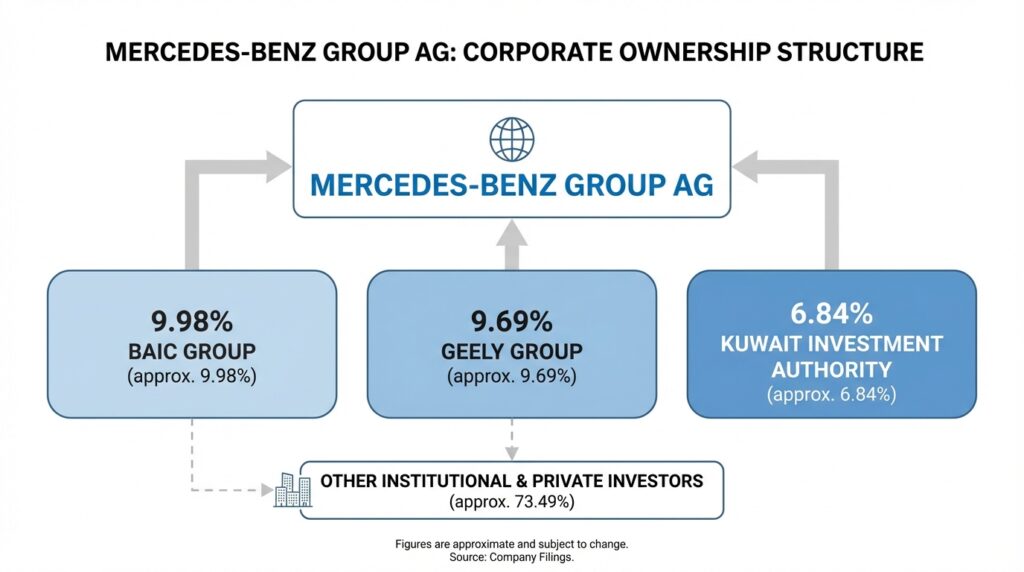
Currently, institutional investors like massive mutual funds, banks, and global pension funds hold the majority of the shares. These financial giants manage money for everyday people. However, three major strategic investors hold massive individual blocks of shares. These key players include the Chinese state-owned BAIC Group, Chinese billionaire Li Shufu, and the Kuwait Investment Authority. We will explore these major players in detail later in this guide.
The company operates under the daily guidance of Chief Executive Officer Ola Källenius. He and his executive Board of Management make the daily business decisions that drive the brand forward. Meanwhile, the shareholders vote on major corporate directions during the annual general meetings. This balanced structure ensures that no single person holds absolute power over the legendary automaker.
The Parent Company of Mercedes Benz
For many decades, the business world knew the mercedes benz parent company as Daimler AG. However, this historic name recently disappeared from the stock market. On February 1, 2022, Daimler AG officially changed its corporate name to Mercedes-Benz Group AG.
Why did the executives decide to change a name with such deep historical roots? The leadership team wanted to sharpen the company focus and boost its value on the stock market. For a long time, Daimler AG operated two very different businesses. They built high-end luxury passenger cars, but they also manufactured heavy commercial freight trucks and city buses.
In late 2021, the company leadership decided to separate these two unique divisions. They spun off the heavy truck and bus division into an entirely independent company called Daimler Truck Holding AG. After removing the commercial vehicles from their daily operations, the original parent company needed a fresh identity.
They rebranded themselves as Mercedes-Benz Group AG. Today, this parent company focuses purely on premium passenger vehicles, high-end vans, and advanced electric cars. The name change directly helps investors understand the core business. By adopting the name of its most famous and profitable product, the parent company tied its corporate identity directly to its most valuable asset.
Major Shareholders of Mercedes Benz Group
Since Mercedes-Benz Group AG issues nearly one billion shares, the ownership structure spans the entire globe. Financial analysts generally divide the shareholders into three distinct categories: institutional investors, strategic individual investors, and retail investors.
Institutional investors control the largest slice of the company. These entities include massive global asset management firms like The Vanguard Group, BlackRock, and Morgan Stanley. They buy millions of shares on behalf of everyday people who invest in retirement accounts and index funds.
Private retail investors also make up a large portion of the ownership base. These are everyday individuals, doctors, teachers, and business owners who buy stock through their personal investment accounts.
Finally, strategic investors play a massive role in the company. These powerful entities buy large percentages of the business to secure long-term partnerships, share automotive technology, or build national wealth.
Below, you can see the breakdown of the current shareholder ownership percentages based on official 2025 and 2026 corporate data.
| Shareholder Entity / Category | Ownership Percentage | Investor Type |
|---|---|---|
| BAIC Group | 9.98% | Strategic Investor (China) |
| Tenaciou3 Prospect Investment Limited (Li Shufu) | 9.69% | Strategic Investor (China) |
| Kuwait Investment Authority | ~6.80% | Strategic Investor (Kuwait) |
| Institutional Investors | ~50.73% | Global Financial Firms |
| Private / Retail Shareholders | ~22.80% | Individual Investors |
Important Note for Readers: Stock ownership percentages constantly fluctuate as investors buy and sell shares on the open market. The exact institutional and retail numbers shift slightly every day, but the strategic investor percentages generally remain stable for years at a time.
History of Mercedes Benz Ownership
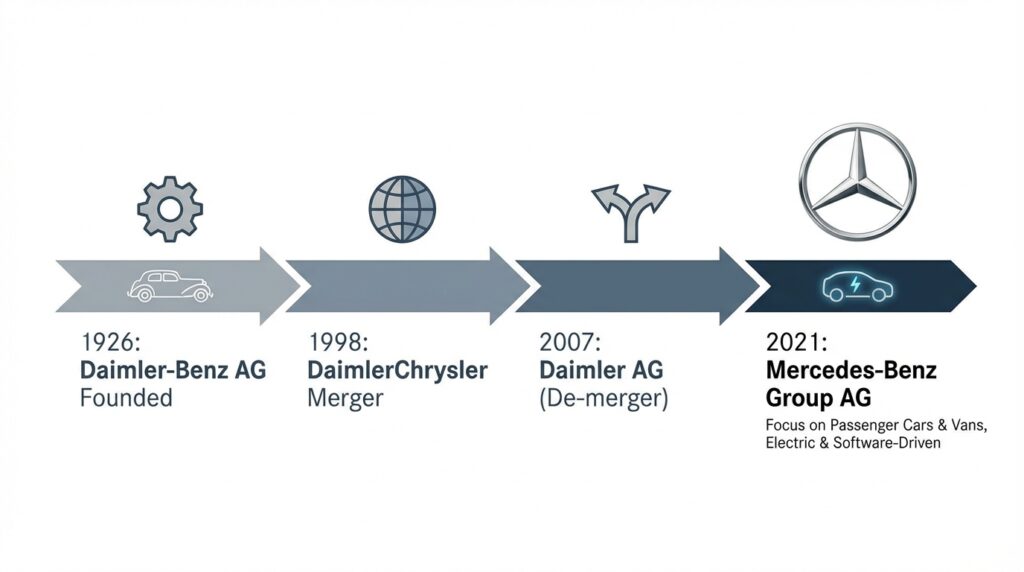
To truly understand who owns daimler and Mercedes today, you need to explore the deep history of the brand. The mercedes benz company history features incredible engineering innovations, massive global mergers, and strategic corporate breakups.
Daimler AG and the Mercedes brand
The automotive story starts over a century ago in Germany. Two brilliant inventors, Karl Benz and Gottlieb Daimler, essentially invented the modern gasoline-powered automobile in the late 1880s. Surprisingly, these two pioneers never actually met in person. They ran fiercely competing companies for decades. Karl Benz managed a company called Benz & Cie., while Gottlieb Daimler started the Daimler Motoren Gesellschaft (DMG).
During the early 1900s, an Austrian entrepreneur named Emil Jellinek began racing DMG cars. He named his customized racing cars after his daughter, Mercedes. The name became so incredibly popular with buyers that DMG permanently trademarked it for their passenger vehicles.
In 1926, the harsh economic conditions in Germany after World War I forced these two rival companies to join forces. They merged their businesses to create Daimler-Benz AG. This historic merger officially launched the Mercedes-Benz brand name to the world. For the next seven decades, Daimler-Benz AG operated as an independent, highly successful German luxury automaker. They survived global conflicts, rebuilt their factories in the 1950s, and introduced legendary vehicles like the 300 SL Gullwing.
Daimler Chrysler merger
In 1998, the company made a dramatic business move that shocked the entire automotive world. Daimler-Benz AG merged with the American automaker Chrysler Corporation. Corporate leaders called it a “merger of equals,” and the massive new parent company took the name DaimlerChrysler AG.
The executives hoped that combining legendary German luxury engineering with American mass-market manufacturing would create an unstoppable global car company. Unfortunately, the two corporate cultures clashed terribly. The German and American executives struggled to work together, the companies failed to share parts efficiently, and profits eventually plummeted.
By 2007, the leadership realized the mega-merger had failed. The parent company sold the majority stake in Chrysler to a private equity firm called Cerberus Capital Management. After selling off the American brand, the parent company renamed itself simply Daimler AG.
The creation of Mercedes Benz Group
Daimler AG operated successfully for many years, building highly desirable luxury cars alongside massive commercial trucks. However, the automotive industry began changing rapidly with the rise of electric vehicles and digital technology.
Modern stock market investors prefer companies with a clear, single focus. Building high-speed luxury cars requires completely different technology, factory setups, and marketing strategies than building heavy freight trucks. Therefore, in December 2021, Daimler AG executed a massive corporate spin-off. They separated the commercial truck division into its own distinct business.
A few months later, in February 2022, Daimler AG officially changed its name to Mercedes-Benz Group AG. This major event marked the end of the Daimler corporate name and launched a new era focused entirely on premium passenger vehicles.
| Year | Corporate Event | Resulting Company Name |
|---|---|---|
| 1926 | Karl Benz and Gottlieb Daimler merge their rival companies. | Daimler-Benz AG |
| 1998 | The company merges with American automaker Chrysler. | DaimlerChrysler AG |
| 2007 | The company sells Chrysler and ends the merger. | Daimler AG |
| 2021 | The commercial truck and bus division spins off. | Daimler AG & Daimler Truck Holding AG |
| 2022 | The parent company officially rebrands to focus on luxury cars. | Mercedes-Benz Group AG |
Important Note for Readers: Even though the parent company dropped the “Daimler” name in 2022, the original founding heritage of Gottlieb Daimler remains a core part of the brand’s official history and marketing.
Who Owns the Largest Stake in Mercedes
If you want to know who holds the most real power in the boardroom, you must look closely at the strategic investors. While institutional funds technically hold the most shares combined, individual strategic investors hold the largest single voting blocks. These massive shareholders guide the long-term vision of the automaker.
- BAIC Group (9.98%): The Beijing Automotive Group, widely known as BAIC, stands as the largest single shareholder of Mercedes-Benz Group AG. BAIC operates as a massive state-owned enterprise in China. They hold a highly influential 9.98 percent stake in the German automaker. This business relationship benefits both sides immensely. Mercedes and BAIC operate a highly successful joint venture in China called Beijing Benz Automotive. This joint venture builds Mercedes vehicles specifically designed for the lucrative Chinese market. BAIC purchased this large stake to cement their partnership and protect their shared factory investments.
- Li Shufu / Tenaciou3 Prospect Investment Limited (9.69%): Chinese billionaire Li Shufu holds the second-largest individual stake in the company. He serves as the founder and chairman of Geely Automobile Holdings, another massive Chinese car company. He surprised the automotive world in 2018 when he aggressively purchased his nearly 10 percent stake on the open market. Through his private investment firm, Tenaciou3 Prospect Investment Limited, he exercises significant influence over the brand. He bought these shares to force a partnership regarding electric vehicle battery technology. Today, Geely and Mercedes share engineering resources and even co-own the Smart car brand.
- Kuwait Investment Authority (approx. 6.8%): The sovereign wealth fund of Kuwait represents the oldest and most loyal strategic partner of the Mercedes brand. The Kuwait Investment Authority originally bought its massive stake way back in 1974 during a severe global oil crisis. This crucial investment provided the automaker with much-needed cash during a difficult economic period. The Kuwait fund has loyally held onto its shares through the Chrysler merger, global recessions, and the recent corporate rebranding.
These three major shareholders ensure that Mercedes maintains strong financial backing and holds vital business connections in the rapidly growing Asian and Middle Eastern markets.
Is Mercedes Benz a German Company
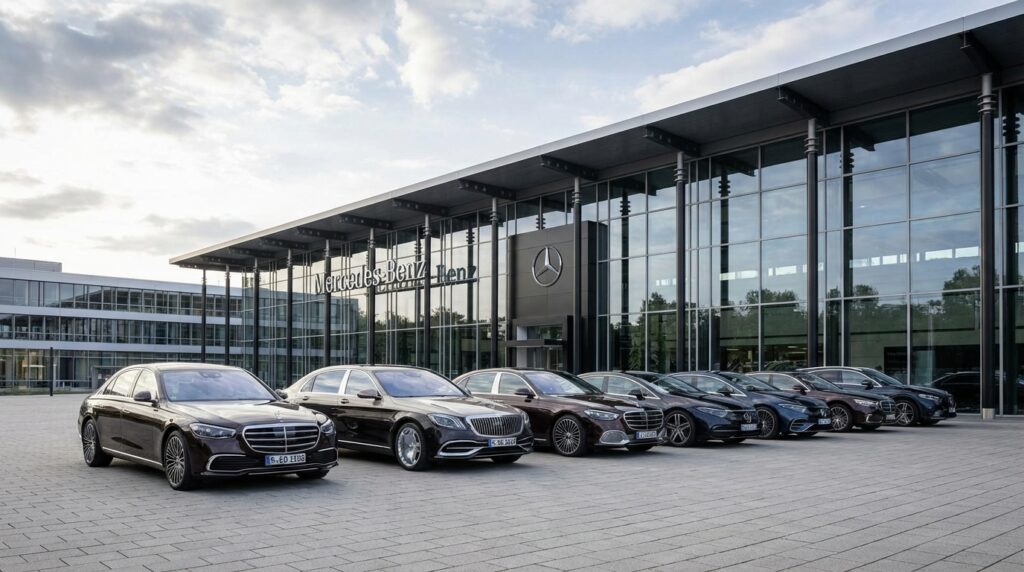
Yes, Mercedes-Benz remains a distinctly German company at its core. Even though international investors from China, the United States, and Kuwait own massive portions of the stock, the company’s heart and soul reside firmly in Germany.
Mercedes-Benz Group AG maintains its massive global headquarters in Stuttgart, Germany. The company operates strictly under German corporate law. This legal structure requires a unique two-tier board system. The company has a Board of Management that handles daily operations, and a Supervisory Board that oversees the management team. German law requires employee representatives and labor union members to hold half of the seats on the Supervisory Board. This rule ensures that German workers have a strong voice in all major corporate decisions.
Furthermore, the company employs tens of thousands of German workers. They design, engineer, and manufacture many of their most important and profitable vehicles in historic German factories. Facilities like the famous Sindelfingen plant (which builds the S-Class) and the Bremen plant produce the most advanced vehicles in the lineup. The high-performance AMG division also operates entirely out of Affalterbach, Germany. So, while the financial ownership spans the globe, the corporate identity, engineering heritage, and workplace culture remain proudly German.
Mercedes Benz Brands and Subsidiaries
The Mercedes-Benz Group does much more than just sell standard luxury sedans. The parent company controls a family of highly specialized brands and subsidiaries. These specialized divisions help the company target different types of luxury buyers and dominate various segments of the global market.
- Mercedes-Benz: This division serves as the core brand. It produces the popular and iconic luxury vehicles that fill highways globally, such as the C-Class, E-Class, S-Class sedans, and the legendary G-Class SUV.
- Mercedes-AMG: This specialized division acts as the extreme performance wing of the company. Interestingly, two former Mercedes engineers originally founded AMG as an independent tuning company in 1967. Mercedes later purchased the AMG brand outright. Today, engineers in the AMG division build high-performance engines, tune sport suspensions, and create track-ready cars for driving enthusiasts.
- Mercedes-Maybach: If standard luxury does not satisfy a wealthy buyer, Maybach delivers ultra-luxury. The company originally tried to launch Maybach as a standalone brand in the early 2000s, but the cars failed to sell well. The executives eventually rebranded it as a top-tier luxury trim level. Today, the Mercedes-Maybach brand competes directly with super-premium automakers like Rolls-Royce and Bentley. These vehicles feature extended wheelbases, custom hand-stitched interiors, and exclusive premium features.
- Mercedes-Benz Mobility: This vital financial subsidiary handles the money side of the business. It offers car loans, vehicle leasing options, fleet management services, and specialized car insurance for customers worldwide.
- Smart Automobile: While Mercedes used to own the tiny Smart car brand entirely, they recently changed their strategy. They formed a 50/50 joint venture with Geely (the Chinese automaker owned by major shareholder Li Shufu). Today, the joint venture builds all-electric Smart cars primarily for the global market.

Frequently Asked Questions
1. Who is the CEO of Mercedes-Benz?
Ola Källenius currently serves as the Chairman of the Board of Management and the Chief Executive Officer of Mercedes-Benz Group AG. He assumed this top leadership position in 2019. Under his guidance, the company aggressively shifted its focus toward advanced electric vehicles, software development, and high-end luxury models.
2. Does Geely own Mercedes?
No, the Chinese automaker Geely does not own Mercedes outright. However, Geely’s billionaire founder and chairman, Li Shufu, personally owns roughly 9.69 percent of Mercedes-Benz Group AG shares. This massive financial investment makes him the second-largest individual shareholder and gives his companies a strong strategic partnership with the German brand.
3. What happened to Daimler AG?
Daimler AG no longer exists under that specific name. In February 2022, the corporate leadership officially changed the company name to Mercedes-Benz Group AG. They executed this name change to highlight their pure focus on manufacturing luxury passenger vehicles after spinning off their commercial heavy truck division.
4. Who owns Mercedes trucks today?
Mercedes-Benz Group AG spun off its commercial truck and bus division in late 2021. Today, a completely separate and publicly traded company called Daimler Truck Holding AG owns and builds those heavy commercial vehicles. However, the passenger car company (Mercedes-Benz Group) still holds a minority 35 percent stake in the new truck company as a strategic financial investment.
5. Does Mercedes own Chrysler today?
No, the company does not own any part of Chrysler today. Daimler-Benz merged with Chrysler in 1998 to form DaimlerChrysler, but the massive corporate partnership ultimately failed due to clashing corporate cultures. The parent company sold off the Chrysler division in 2007. The two automakers have no ownership ties today. For context, the global automotive conglomerate Stellantis currently owns the Chrysler brand.
According to the official Mercedes-Benz Group website, the company operates as one of the largest luxury vehicle manufacturers in the world.
Mercedes-Benz Group Official Website