

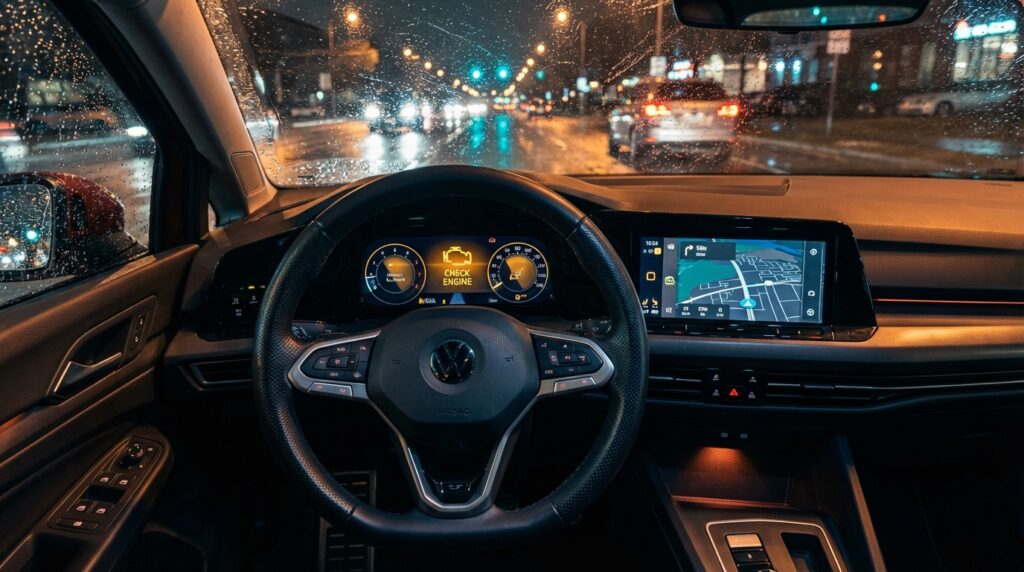
You are driving down the road in your Volkswagen Golf. The engine sounds great, the radio is playing, and everything feels completely normal. Suddenly, you hear a small beep, and a yellow engine icon lights up on your dashboard. Seeing the VW Golf check engine light turn on can ruin your day and make you worry about expensive repair bills.
Do not panic. This little yellow light is simply your car’s way of talking to you. The engine control unit (ECU) constantly monitors your vehicle’s performance. When a sensor detects an issue, the system triggers the light to grab your attention.
Sometimes, the fix is incredibly simple, like tightening a loose gas cap. Other times, it requires replacing a faulty sensor. In this comprehensive guide, we will explore the exact VW Golf check engine light meaning, the most common causes, and actionable steps you can take to diagnose and reset it.
What Does the VW Golf Check Engine Light Mean?
The check engine light—also known as the Malfunction Indicator Lamp (MIL)—is part of your car’s onboard diagnostics system (OBD2). When this light appears, it means the system has logged an error code. However, the way the light behaves tells you how urgent the problem is.
1. A Solid Yellow Light (Minor to Moderate Issue)
If the light stays on continuously without blinking, your car has detected a fault, but it is not an immediate emergency. You can usually continue driving safely to your destination. However, you should not ignore it. Driving with a solid light for weeks can lower your fuel economy, increase emissions, and eventually damage other engine components.
2. A Flashing Yellow Light (Severe Issue)
If the engine light is blinking or flashing, you have a serious problem. A flashing light almost always indicates an active engine misfire. Unburned fuel is dumping into the exhaust system. This can quickly destroy your catalytic converter and cause severe internal engine damage.
7 Most Common VW Golf Engine Warning Light Causes
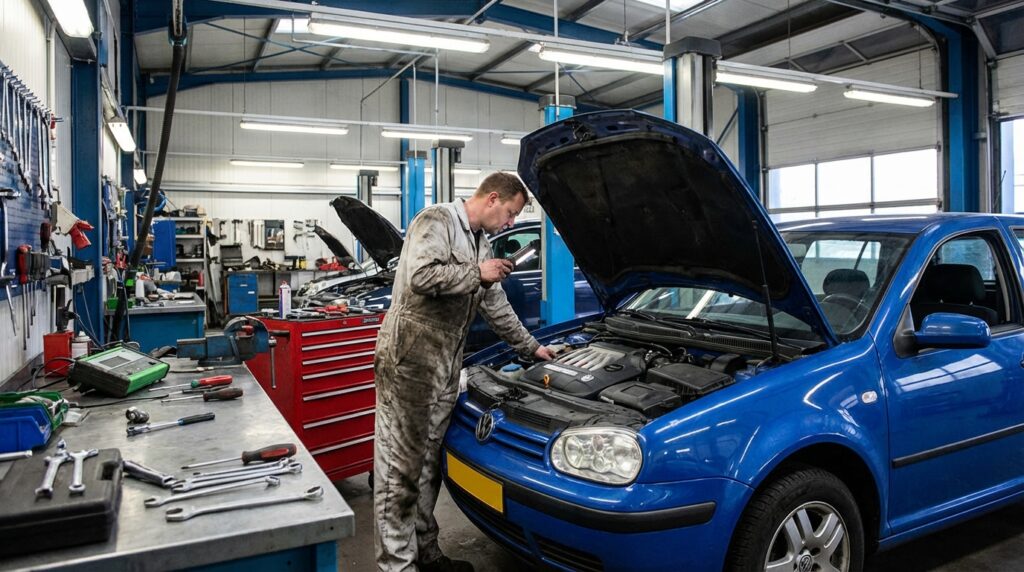
Volkswagen Golfs are brilliant cars, but they have a few well-known quirks. The TSI and TDI engines used across different Golf generations (like the MK6, MK7, and MK8) share some common failure points. Here are the most frequent causes behind that pesky dashboard warning.
1. Loose or Damaged Gas Cap
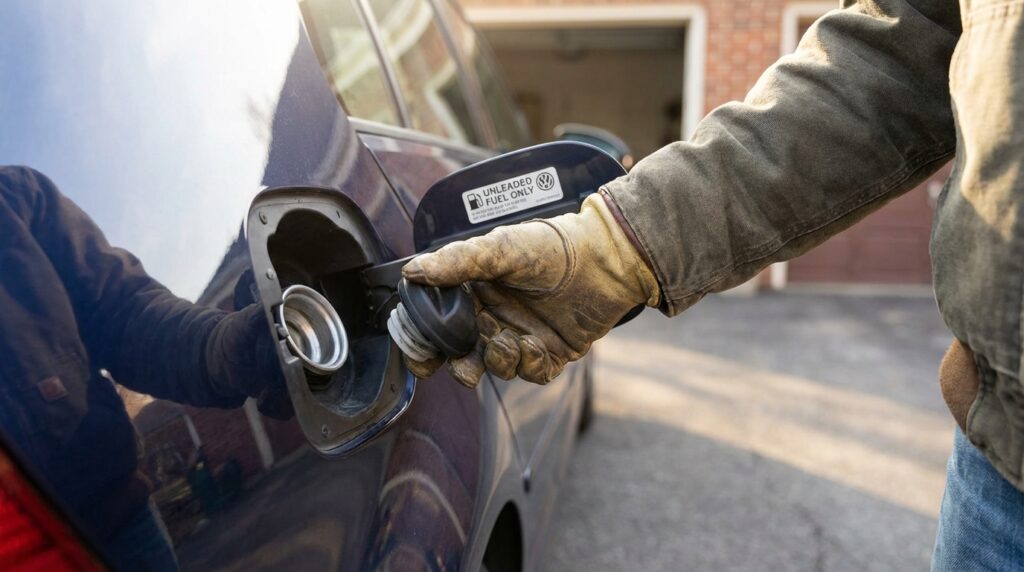
Believe it or not, this is one of the most common reasons the light comes on. The gas cap seals your fuel system. If it is loose, cracked, or missing, fuel vapors escape into the air. The evaporative emissions (EVAP) system detects this leak and triggers the light.
- The Fix: Pull over, remove the gas cap, and click it back into place tightly. If the cap looks cracked, buy a cheap replacement. Drive for a day or two, and the light should turn off by itself.
2. Faulty Ignition Coils and Spark Plugs
Volkswagen engines, especially the 1.8T and 2.0T engines found in standard Golfs and GTIs, are notorious for wearing out ignition coils. When a coil or spark plug fails, the engine misfires. You will usually feel a rough idle, shaking, or a lack of power when accelerating.
- The Fix: Replace the faulty ignition coil and spark plug. Most mechanics recommend replacing all coils and plugs at the same time for optimal performance.
3. PCV Valve (Breather Valve) Failure
The Positive Crankcase Ventilation (PCV) valve manages engine crankcase pressure. On many VW Golfs, the internal rubber diaphragm inside this valve tears over time. When this happens, it creates a massive vacuum leak.
- Symptoms: A rough idle, a high-pitched whistling noise from the engine, and decreased fuel efficiency.
- The Fix: Replacing the PCV assembly is a straightforward DIY job. The part sits right on top of the engine and usually requires removing just a few Torx screws.
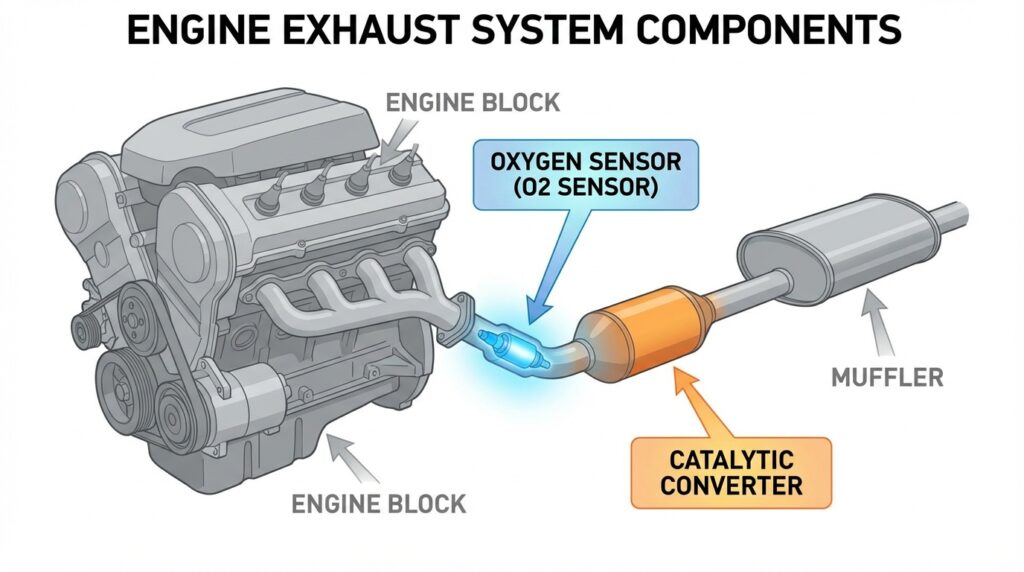
4. Failing Oxygen (O2) Sensor
Your Golf uses oxygen sensors to measure how much unburned oxygen is in the exhaust. The engine computer uses this data to adjust the air-to-fuel mixture. O2 sensors eventually get covered in carbon ash and fail.
- The Fix: You must identify which sensor failed (Sensor 1 is upstream, Sensor 2 is downstream) using a scanner, and then replace it.
5. Carbon Buildup on Intake Valves
Modern VW Golfs use direct fuel injection. Because fuel sprays directly into the cylinder, it never washes over the intake valves to keep them clean. Over thousands of miles, thick carbon buildup chokes the engine.
- The Fix: A mechanic must perform a “carbon cleaning” or “walnut blasting” to remove the carbon crust from the valves. This is regular maintenance for high-mileage VW Golfs.
6. Mass Airflow Sensor (MAF) Issues
The MAF sensor measures the amount of air entering the engine. If it gets dirty or fails, the car does not know how much fuel to add. You might notice your Golf stalling, hesitating, or getting terrible gas mileage.
- The Fix: Sometimes, simply cleaning the sensor with a specialized MAF cleaner spray solves the problem. If not, you need a replacement.
7. Faulty Catalytic Converter
The catalytic converter reduces toxic exhaust gases. They rarely fail on their own. Usually, a bad spark plug or a broken O2 sensor causes them to fail over time. If this part fails, you will notice sluggish performance and the smell of rotten eggs.
- The Fix: Replacing a catalytic converter is expensive. Always fix smaller issues (like misfires) quickly to protect this expensive part.
How to Diagnose the Issue (Using an OBD2 Scanner)
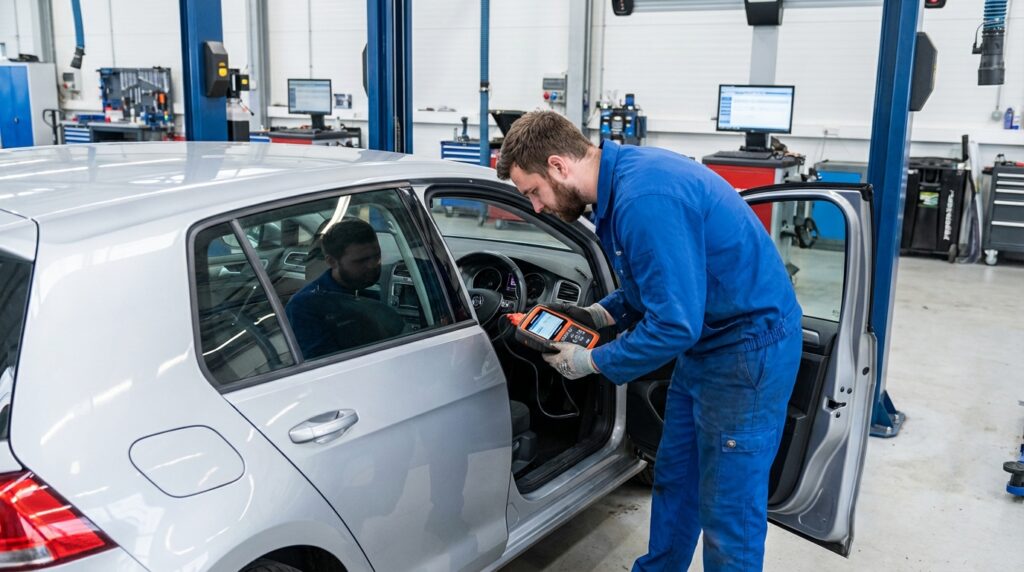
You do not need to visit an expensive dealership just to find out what is wrong with your car. You can diagnose the problem yourself using an OBD2 scanner. This tool plugs into your car and reads the exact error code causing the light.
Step-by-Step Diagnostic Guide:
- Locate the OBD2 Port: In the VW Golf, the port sits under the dashboard on the driver’s side, usually just above the pedals.
- Plug in the Scanner: Push the scanner connector into the port firmly.
- Turn on the Ignition: Turn your key to the “ON” position, or press the start button without putting your foot on the brake. Do not start the engine.
- Read the Codes: Follow the instructions on your scanner to pull the codes. Write down any codes that appear (they usually look like a letter followed by four numbers, e.g., P0300).
- Search the Code: Look up the code online to find the exact part that needs attention.
Top 5 Most Common OBD2 Codes for VW Golf
To help you understand your diagnostic results, we compiled a table of the most frequent error codes VW Golf owners encounter.
| OBD2 Code | What It Means | Severity | Common Fix |
|---|---|---|---|
| P0300 – P0304 | Engine Misfire Detected (The last number indicates the specific cylinder) | High | Replace spark plugs or ignition coils. |
| P0420 | Catalyst System Efficiency Below Threshold | Moderate | Replace catalytic converter or O2 sensor. |
| P0171 | System Too Lean (Bank 1) | Moderate | Fix vacuum leaks, replace PCV valve, or clean MAF sensor. |
| P0455 | Evaporative Emission System Leak Detected (Large Leak) | Low | Tighten or replace the gas cap. Check EVAP purge valve. |
| P0106 | Manifold Absolute Pressure (MAP) Sensor Performance | Moderate | Clean MAP sensor or check wiring harness. |
Estimated Repair Costs for Common Issues
Budgeting for repairs helps reduce the stress of car ownership. Below is an estimated cost breakdown for the most common VW Golf check engine light fixes. Keep in mind that prices vary based on your location and whether you visit a dealership or an independent mechanic.
| Repair Type | Estimated DIY Cost | Estimated Mechanic Cost |
|---|---|---|
| Gas Cap Replacement | $15 – $25 | $40 – $60 |
| Ignition Coil & Spark Plug | $40 – $80 (per cylinder) | $150 – $250 (per cylinder) |
| PCV Valve Replacement | $60 – $120 | $200 – $350 |
| Oxygen (O2) Sensor | $80 – $150 | $250 – $400 |
| Carbon Cleaning (Walnut Blasting) | N/A (Requires specialized tools) | $400 – $800 |
How to Reset the VW Golf Check Engine Light
Once you identify and fix the underlying issue, you will want to perform a VW Golf check engine light reset. Many people wonder if they can just turn the light off without fixing the car. While you can clear the code, the light will turn right back on as soon as the car detects the problem again. You must fix the root cause first.
Method 1: Let the Car Reset Itself (The Natural Way)
Modern VW computer systems are very smart. If you fix the problem (like tightening the gas cap or replacing a coil), the car will notice. After driving the car for three to five “drive cycles” (which means starting the car, driving at various speeds, and turning it off), the ECU will verify the problem is gone and turn the light off automatically.
Method 2: Use an OBD2 Scanner (The Quick Way)
The fastest and most reliable way to reset the light is by using your OBD2 scanner.
- Plug the scanner into the port.
- Turn the ignition to the “ON” position.
- Navigate to the “Erase Codes” or “Clear Codes” option on the device.
- Confirm the action. The dashboard light will disappear instantly.
Method 3: The Battery Disconnect (Not Recommended)
Some older guides suggest disconnecting the negative battery terminal for 15 minutes to reset the ECU. We highly advise against this for modern VW Golfs (MK6, MK7, MK8). Disconnecting the battery erases all system memory. Your radio might lock up, your power windows might lose their auto-roll function, and your transmission will forget its learned shifting habits. Stick to using a proper scanner.
“Using an OBD2 scanner not only gives you the exact code but allows you to clear the memory safely without disrupting the sophisticated electronics in modern European cars.” – Automotive Diagnostic Specialist
Differences Across VW Golf Generations
While many engine codes are universal, different generations of the VW Golf have specific weak points. Knowing your generation helps you diagnose issues faster.
MK5 and MK6 Golfs (2004 – 2014)
These generations commonly suffer from PCV valve ruptures and high-pressure fuel pump (HPFP) cam follower wear (especially in the GTI models). If you drive an MK6, a sudden check engine light accompanied by a whistling noise is almost certainly a blown PCV valve.
MK7 and MK8 Golfs (2015 – Present)
Volkswagen improved the PCV design heavily for the MK7 generation. However, the MK7 1.8T and 2.0T engines often trigger the light due to leaking thermostat housings or issues with the electronic wastegate actuator on the turbocharger.
Golf TDI (Diesel Models)
If you drive a Golf TDI, your check engine light causes are completely different. You do not have spark plugs. Instead, TDI owners often face issues with the Diesel Particulate Filter (DPF) clogging, faulty glow plugs, or issues with the Exhaust Gas Recirculation (EGR) valve. If your DPF light comes on alongside the check engine light, you usually need to take the car for a long highway drive to trigger a filter regeneration cycle.
Preventive Maintenance: Stop the Light Before It Starts
The best way to deal with engine warning lights is to prevent them from turning on in the first place. You can extend the life of your engine and save money by following a strict maintenance schedule.
- Use Premium Fuel: While standard Golfs can run on regular gas, using Top Tier fuel prevents harmful deposits from clogging your fuel injectors.
- Change Oil On Time: VW engines require high-quality synthetic oil. Change your oil every 5,000 to 7,500 miles. Dirty oil causes timing chain wear and trips engine sensors.
- Replace Spark Plugs Regularly: Do not wait for a misfire. Replace your spark plugs every 40,000 to 60,000 miles to keep the ignition system healthy.
- Inspect Hoses: Open your hood occasionally and look for cracked rubber hoses. Fixing a small vacuum leak early prevents lean fuel codes later.
For official safety guidelines and vehicle recalls that might affect your engine components, you can always check the National Highway Traffic Safety Administration (NHTSA) database.
Frequently Asked Questions (FAQs)
Is it safe to drive my VW Golf with the check engine light on?
If the light is solid yellow and the car feels normal, it is generally safe to drive to your home or a mechanic. However, if the light is blinking red or flashing yellow, you must stop driving immediately to prevent catastrophic engine damage.
Will the VW Golf check engine light turn off by itself?
Yes, but only if the underlying issue resolves itself. For example, if you had a loose gas cap and you tightened it, the ECU will verify the fix after a few drive cycles and turn the light off.
What is the EPC light, and is it the same as the check engine light?
No. The Electronic Power Control (EPC) light is specific to Volkswagen and Audi vehicles. It monitors the drive-by-wire throttle system. While the check engine light monitors emissions and general engine health, the EPC light points to issues with the throttle body, accelerator pedal, or traction control. Often, both lights will turn on together if the engine goes into “limp mode.”
How much does a diagnostic test cost at a VW dealership?
A typical VW dealership charges between $100 and $180 for a diagnostic fee. They use specialized software to read the codes. You can save this money by purchasing your own OBD2 scanner or visiting a local auto parts store that reads codes for free.
Can low oil cause the check engine light to come on?
Low oil typically triggers the red oil pressure warning light, not the check engine light. However, if the oil gets so low that it affects the variable valve timing system or causes internal friction, the check engine light may illuminate as a secondary warning.
Final Thoughts
Seeing the VW Golf check engine light illuminate on your dashboard is never a fun experience. However, understanding what it means puts you back in control. Remember the golden rule: a solid light means you should investigate soon, while a flashing light means you need to pull over right away.
By investing in an inexpensive OBD2 scanner, you remove the mystery from car repairs. You can quickly pull the codes, determine if the fix is as simple as a loose gas cap, or figure out if you need to call your local mechanic. Keep up with your routine maintenance, treat your VW engine well, and you will enjoy hundreds of thousands of miles of trouble-free driving.