
Finding a dark, greasy puddle under your car is a stressful experience. Your immediate thought probably jumps to the worst-case scenario: a ruined engine and a massive mechanic bill. If you are dealing with this problem right now, you need to know the exact engine oil leak repair cost so you can prepare your budget.
Every driver faces a vehicle leak at some point. Sometimes, the fix requires a simple part that costs less than a decent dinner. Other times, the repair demands hours of intense mechanic labor, pushing the bill much higher. Because oil is the lifeblood of your vehicle, you cannot ignore the problem for long without risking complete engine failure.
In this guide, we break down exactly how much you can expect to pay. We will explore the different types of leaks, the labor involved, and how your specific vehicle affects the final price. Whether you drive a compact sedan or a heavy-duty pickup truck, this article will give you a clear, honest look at the true car oil leak repair cost in the United States.
Quick Engine Oil Leak Repair Cost Overview
Engine oil leak repair costs vary depending on the location of the leak and the amount of labor required to fix it. Some leaks are quick and inexpensive to repair, while others require extensive engine disassembly. The table below gives a quick overview of the most common oil leak repairs and their typical costs in the United States.
| Oil Leak Source | Average Repair Cost | Repair Difficulty | Typical Labor Time |
|---|---|---|---|
| Oil Filter Leak | $30 – $100 | Very Easy | 10 – 20 minutes |
| Valve Cover Gasket Leak | $150 – $400 | Easy | 1 – 2 hours |
| Oil Pan Gasket Leak | $300 – $800 | Moderate | 2 – 4 hours |
| Timing Cover Gasket Leak | $500 – $1,000+ | Hard | 4 – 6 hours |
| Rear Main Seal Leak | $800 – $2,000+ | Very Hard | 6 – 12 hours |
As you can see, the actual gasket or seal usually costs very little. The majority of the engine oil leak repair cost comes from labor time. Repairs that require removing major engine components or the transmission will naturally cost far more than simple fixes like replacing an oil filter or valve cover gasket.
Average Engine Oil Leak Repair Cost
When you take your vehicle to a mechanic, the average engine oil leak repair cost estimate ranges widely. Most drivers in the U.S. spend between $150 and $850 to fix a standard oil leak. However, minor fixes can cost as little as $50, while major, labor-intensive repairs can easily exceed $1,500.
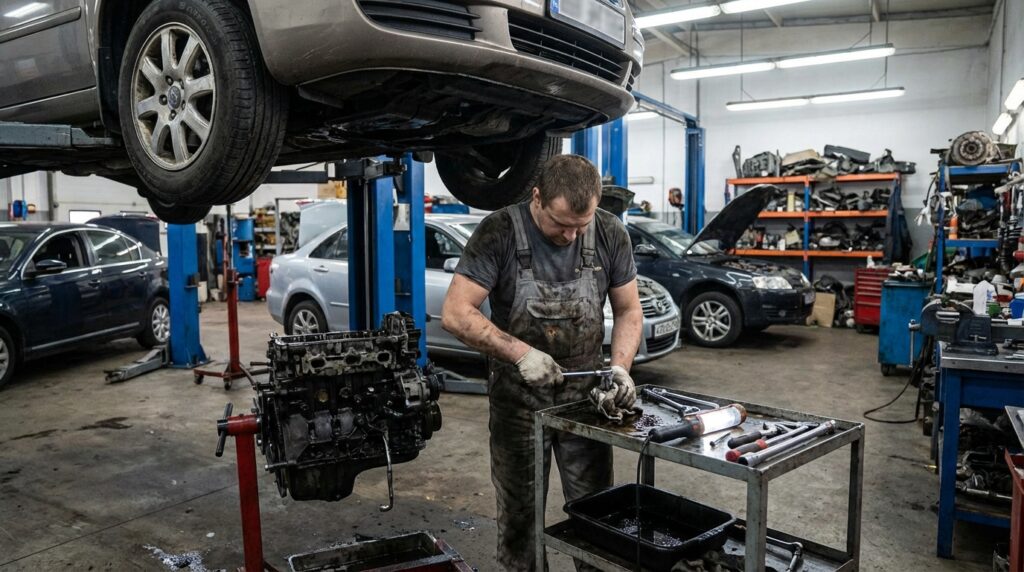
Why does the price vary so drastically? The cost rarely comes from the replacement part itself. Most rubber gaskets and metal seals cost between $10 and $60. The real expense comes from the labor. Mechanics charge between $80 and $200 per hour. If a mechanic needs five hours to disassemble your engine just to reach a $20 seal, your final bill will reflect that time.
Important Note: Never approve a major repair without asking for a detailed, written estimate first. A good mechanic will break down the exact cost of parts, taxes, and hourly labor so you know exactly where your money goes.
Engine Oil Leak Repair Cost vs Other Engine Repairs
Many drivers worry about the price of fixing an oil leak, but compared to other engine repairs, oil leak repairs are often relatively affordable. While some leaks can be expensive to fix, most gasket or seal replacements cost far less than major engine repairs.
The table below compares the average engine oil leak repair cost with several common engine repair jobs in the United States. This gives drivers a clearer perspective on how serious an oil leak repair really is.
| Type of Repair | Average Cost | Repair Difficulty | Typical Labor Time |
|---|---|---|---|
| Engine Oil Leak Repair | $150 – $850 | Moderate | 1 – 4 hours |
| Timing Belt Replacement | $500 – $1,200 | Hard | 3 – 6 hours |
| Water Pump Replacement | $300 – $750 | Moderate | 2 – 4 hours |
| Head Gasket Repair | $1,200 – $2,500+ | Very Hard | 8 – 12 hours |
| Engine Replacement | $4,000 – $8,000+ | Extremely Hard | 15 – 25 hours |
As the table shows, fixing a simple oil leak is usually far cheaper than major engine repairs like replacing a head gasket or installing a new engine. Addressing oil leaks early can save thousands of dollars by preventing severe engine damage.
Oil Leak Repair Cost by Problem
To accurately answer the question, “how much does it cost to fix an oil leak?”, you must first identify exactly where the oil is coming from. Car engines have multiple seals, gaskets, and connection points. Here is a detailed breakdown of costs based on the specific broken component.
1. Oil Filter Leak
Average Cost: $30 to $100
This is the best-case scenario. Mechanics replace your oil filter during every standard oil change. Sometimes, a technician fails to tighten the filter properly, or they accidentally leave the old filter’s rubber gasket stuck to the engine block. This creates a messy, steady leak. Fixing an oil filter leak is fast and cheap. The mechanic simply removes the bad filter, cleans the area, and installs a new filter with fresh oil.
2. Valve Cover Gasket Leak
Average Cost: $150 to $400
The valve cover sits at the very top of your engine. It protects the upper engine parts and keeps the oil safely inside. Over time, the rubber or cork gasket sealing this cover becomes hard and brittle from extreme engine heat. When it cracks, oil slowly seeps down the sides of the engine. Because the valve cover is right on top of the engine, mechanics can reach it easily. This keeps labor costs relatively low.
3. Oil Pan Gasket Leak
Average Cost: $300 to $800
The oil pan acts as a reservoir at the very bottom of your engine. It holds all your motor oil when the car is turned off. The oil pan gasket seals the gap between this pan and the main engine block. Because it sits at the bottom of the car, it takes a lot of abuse from road debris, water, and salt. Replacing this gasket takes more time because the mechanic often has to remove steering components or exhaust pipes just to reach the pan.
4. Timing Cover Gasket Leak
Average Cost: $500 to $1,000+
Your engine uses a timing belt or timing chain to keep the internal parts moving in perfect sync. A metal cover protects these timing components, and oil constantly lubricates the chain inside. If the timing cover gasket fails, you will see oil dripping down the front of the engine. Repairing this leak requires the mechanic to remove the engine cooling fans, accessory belts, and sometimes the radiator. The high labor time drives this repair cost up.
5. Rear Main Seal Leak
Average Cost: $800 to $2,000+
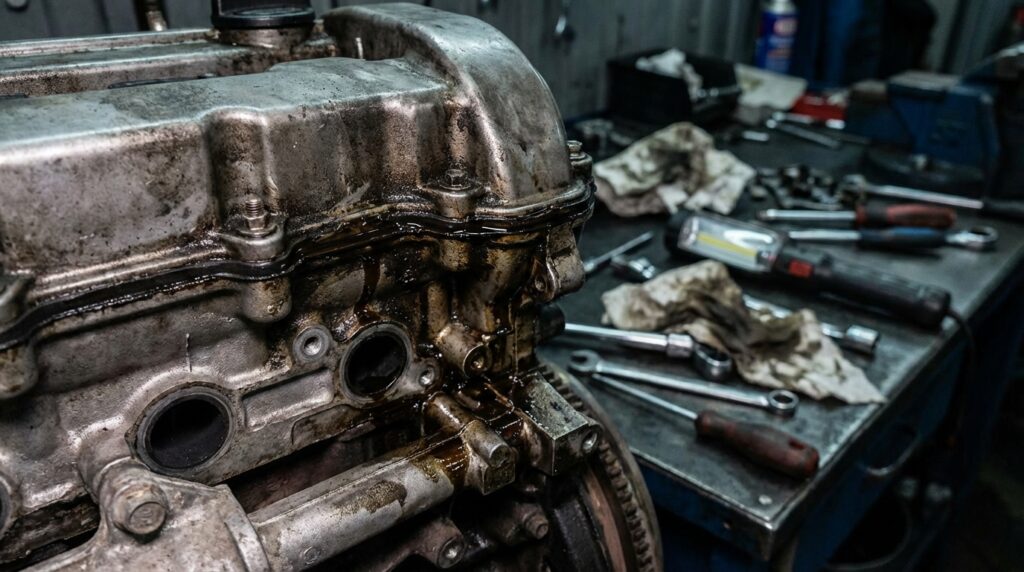
The rear main seal is the most dreaded oil leak for any car owner. This seal sits at the back of the engine, right where the engine connects to the transmission. The part itself usually costs less than $40. However, to replace it, the mechanic must completely remove your car’s transmission. In some vehicles, they even have to pull the entire engine out of the car. This takes many hours of heavy labor, making it one of the most expensive oil leaks to fix.
Quick Comparison Table: Cost by Problem
| Source of the Leak | Part Cost Estimate | Total Repair Cost (Parts + Labor) | Repair Difficulty |
|---|---|---|---|
| Oil Filter | $10 – $20 | $30 – $100 | Very Easy |
| Valve Cover Gasket | $20 – $50 | $150 – $400 | Easy to Moderate |
| Oil Pan Gasket | $30 – $70 | $300 – $800 | Moderate |
| Timing Cover Gasket | $40 – $100 | $500 – $1,000+ | Hard |
| Rear Main Seal | $20 – $50 | $800 – $2,000+ | Very Hard |
Oil Leak Repair Cost by Vehicle Type
The car you drive plays a huge role in your final bill. Auto manufacturers build engines differently. Some vehicles offer plenty of space under the hood, making repairs quick. Others pack the engine bay so tightly that mechanics struggle to reach basic components. Let us look at the oil leak repair cost by vehicle type.
Sedans and Compact Cars
Small cars like the Honda Civic, Toyota Corolla, or Hyundai Elantra usually have four-cylinder engines. These smaller engines leave plenty of room in the engine bay. Because mechanics can reach parts easily, labor times drop. You will typically pay on the lower end of the cost spectrum for a sedan. Expect to pay between $150 and $500 for standard gasket replacements.
SUVs and Crossovers
SUVs feature larger engines, often V6s. A V6 engine has two valve covers instead of one, which means double the gaskets and double the chance of a leak. Many SUVs also have All-Wheel Drive (AWD). AWD systems require extra axles and transfer cases near the bottom of the engine. These parts block access to the oil pan. Mechanics must remove these extra parts to fix lower engine leaks, pushing average SUV repair costs between $300 and $800.
Pickup Trucks
Pickup trucks carry heavy V8 engines and massive transmissions. While trucks often sit higher off the ground, making underneath access easier, the parts themselves are larger and heavier. A rear main seal job on a heavy-duty 4×4 pickup takes special equipment and extra time. Truck owners usually pay between $400 and $1,200 depending on the severity of the leak.
Luxury Vehicles
If you drive a Mercedes-Benz, BMW, Audi, or Porsche, you already know repairs cost more. Luxury brands use highly specialized parts that you cannot buy at a cheap local auto store. Furthermore, luxury engines feature complex designs, twin-turbos, and tight plastic covers everywhere. Mechanics charge higher labor rates to work on European luxury cars. A minor oil leak on a luxury car starts around $500, while major seal replacements easily top $2,500.
Factors That Affect Engine Oil Leak Repair Cost in the US
When you get your quote, several different variables influence the final number. Understanding these factors helps you negotiate better and avoid getting overcharged.
- Labor Rates: The physical location of the repair shop changes the price. A dealership in downtown Los Angeles might charge $220 an hour. An independent mechanic in rural Ohio might charge $85 an hour. Independent shops almost always beat dealership prices.
- Parts Quality: You can choose Original Equipment Manufacturer (OEM) parts directly from the brand, or cheaper aftermarket parts. OEM parts cost more but guarantee a perfect fit. High-quality aftermarket parts work great, but avoid ultra-cheap parts, as they often fail quickly.
- Engine Layout: A transverse engine (mounted sideways, common in front-wheel-drive cars) requires different labor steps than a longitudinal engine (mounted front-to-back, common in rear-wheel-drive cars). Sometimes, sideways engines hide critical seals against the firewall, making them incredibly hard to reach.
- Collateral Damage: Oil destroys rubber over time. If your leaking oil drips onto your serpentine belt, radiator hoses, or engine mounts, those rubber parts will degrade and break. The mechanic will have to replace those ruined parts too, adding to your bill.
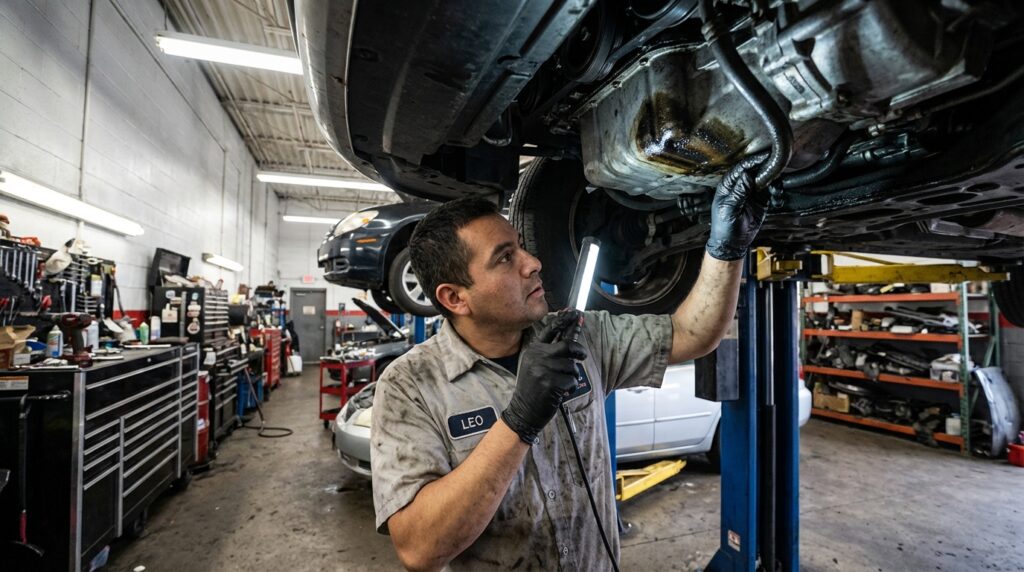
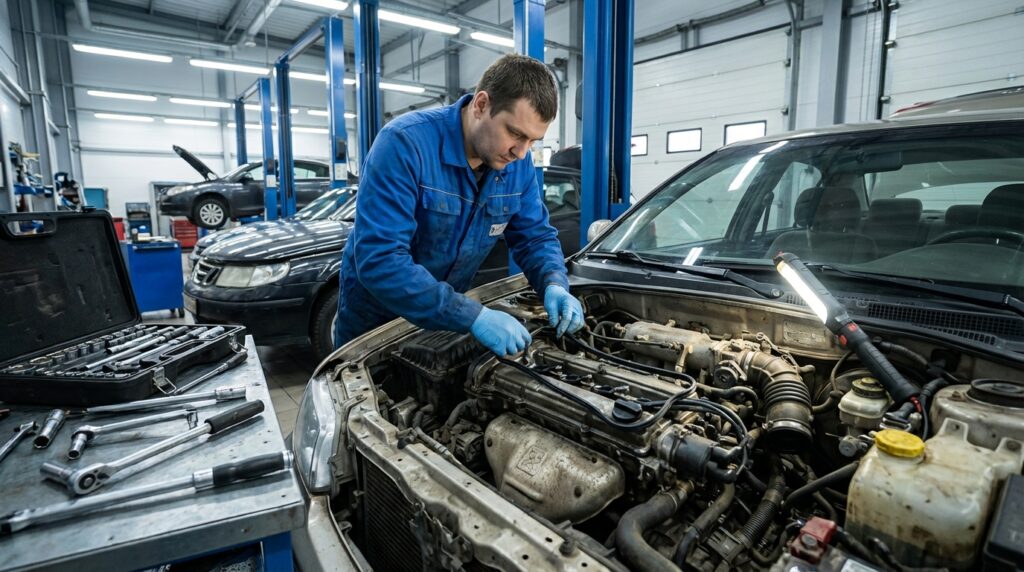
Expert Tip: Ask your mechanic to show you the leak while the car is raised on the lift. A trustworthy mechanic will gladly grab a flashlight and point out the exact source of the wet oil, explaining exactly why they need to charge a certain amount of labor hours.
Signs Your Engine Has an Oil Leak
Catching a leak early saves you hundreds of dollars in collateral damage. You do not have to be a car expert to spot a problem. Watch out for these obvious warning signs:
- Puddles Under the Car: This is the most obvious sign. Engine oil looks dark brown or black and feels very slick and greasy to the touch. (If the fluid is bright red, you likely have a transmission leak. If it is green or pink and feels watery, it is coolant).
- Burning Oil Smell: If oil drips out of the valve cover and lands on your incredibly hot exhaust manifold, it instantly burns. You will smell a distinct, thick, acrid odor coming through your air vents.
- Smoke from the Hood: Burning oil does not just smell; it creates a highly visible bluish-gray smoke. If you stop at a red light and see faint smoke drifting out from the edges of your hood, pull over safely and check your engine.
- Low Oil Dashboard Light: Your dashboard features a warning light that looks like a dripping oil can. This light turns on when your engine oil pressure drops too low. If this light turns on, turn off your engine immediately.
- Engine Overheating: Oil does more than lubricate; it also helps absorb and pull heat away from the engine block. When you lose too much oil, friction increases rapidly, causing the engine temperature gauge to spike.
Common Causes of Engine Oil Leaks
Why do engines suddenly start dripping? Understanding engine oil leak causes helps you maintain your car better over the long run. Engines endure extreme conditions, and parts naturally break down.
- Degraded and Hardened Gaskets: Car engines operate at over 200 degrees Fahrenheit. Over five to ten years, this constant baking heat cooks the rubber seals and cork gaskets. They lose their flexibility, turn hard, crack, and let oil slip past.
- Irregular Oil Changes: Old, dirty engine oil becomes acidic and fills with microscopic metal shavings. This dirty sludge acts like liquid sandpaper. It aggressively wears down your internal engine seals much faster than clean oil would.
- Damaged Oil Pan: Your oil pan sits inches away from the asphalt. If you drive over a large rock, hit a deep pothole, or strike road debris, the impact can puncture or bend the metal oil pan. Even a small dent can break the seal around the edge.
- Clogged PCV Valve: Your engine produces natural pressure inside the crankcase. The Positive Crankcase Ventilation (PCV) valve safely releases this pressure. If the valve clogs, pressure builds up massively inside the engine. The trapped pressure eventually forces oil to blow out through the weakest rubber gaskets.
- Loose Drain Plug: Every time you get an oil change, the mechanic removes a bolt at the bottom of the pan to drain the old oil. If they fail to tighten this drain plug properly, or if they forget to replace the small crush washer on the plug, oil will slowly drip out.
Is It Safe to Drive with an Oil Leak?
Many drivers notice a few drops of oil on their driveway and ask, “Can I just keep driving?”
The short answer is: No, you should not drive a car with an active oil leak.
While a very tiny seep might let you safely drive a few miles to a local repair shop, driving daily with a leak carries massive risks. First, oil leaks are completely unpredictable. A seal that drips one drop a day can suddenly blow out on the highway, dumping all your oil in seconds.
If your engine runs out of oil, metal rubs directly against metal. The internal parts will fuse together from extreme heat in less than five minutes. This destroys the engine entirely. Instead of paying $300 for a new gasket, you will pay $5,000 for a complete engine replacement.
Furthermore, oil dripping onto a hot exhaust pipe creates a serious fire hazard. Countless vehicle fires start because ignored oil leaks ignite under the hood. For your safety, and for the safety of your bank account, address oil leaks as soon as you find them.
How to Prevent Engine Oil Leaks
You cannot stop the natural aging of your vehicle, but you can take proactive steps to extend the life of your engine seals and prevent expensive leaks.
- Change Your Oil on Time: This is the golden rule of car maintenance. Fresh oil keeps seals lubricated and prevents acidic buildup. Follow your car manual’s recommended oil change intervals perfectly.
- Use High-Mileage Motor Oil: Once your car passes 75,000 miles, switch to a high-mileage oil formula. These specific oils contain seal conditioners. The conditioners soak into aging rubber gaskets, helping them swell up and regain their flexibility, which stops minor seeps before they turn into major leaks.
- Replace the PCV Valve: As mentioned earlier, a clogged PCV valve causes blowouts. This little plastic valve usually costs less than $15. Ask your mechanic to check and replace it every 50,000 miles to keep internal engine pressures normal.
- Avoid Bottoming Out: Drive carefully over speed bumps, steep driveways, and unpaved roads. Protecting the underside of your car prevents accidental impacts to your oil pan.
Tips to Save Money on Oil Leak Repairs
Repair bills hurt, but smart drivers know how to soften the blow. If you face a steep engine oil leak repair cost estimate, use these strategies to keep cash in your pocket.
First, shop around for quotes. Never accept the first estimate blindly, especially if it comes from a major dealership. Call three well-reviewed independent mechanics in your local area. Tell them exactly which gasket is leaking and ask for their labor rate. You can often save hundreds of dollars just by moving your car down the street to a different shop.
Second, combine overlapping repairs. If your mechanic has to take apart the front of your engine to replace a leaking timing cover gasket, ask them to replace the water pump and the timing belt at the same time. Since the mechanic has already done the hard labor to open the engine, they will likely only charge you for the parts. This saves you from paying another massive labor bill six months later.
Third, wash your engine bay. Sometimes mechanics struggle to find the actual source of a leak because the entire engine is covered in a thick layer of old grime. If you safely degrease and wash your engine before taking it to the shop, the mechanic can spot the exact leak instantly, saving you an hour of diagnostic diagnostic labor fees.
Common Mistakes Drivers Make When Ignoring Oil Leaks
When drivers try to delay spending money on a repair, they often make costly mistakes that make the original problem much worse.
Mistake 1: Relying heavily on “Stop Leak” additives.
Auto parts stores sell cheap bottles of thick liquid called “engine oil stop leak.” Drivers pour this into their engine hoping it will plug the hole. These chemicals work by artificially swelling rubber seals. While this might stop a tiny leak for a few weeks, these harsh chemicals often swell every seal in the engine until they weaken and burst. Stop leak additives are temporary band-aids, not real mechanical fixes.
Mistake 2: Only adding oil instead of fixing the root cause.
Some drivers keep a jug of oil in their trunk and just top off the engine every few days. While this keeps the engine from running dry, the leaking oil continues to spray all over the engine bay, ruining the starter motor, the alternator, and the drive belts. You end up replacing four expensive parts instead of one cheap gasket.
Mistake 3: Ignoring the oil pressure warning light.
If the red oil can light turns on while driving, it means the engine has lost vital oil pressure. Many drivers assume they can make it home and just drive slower. Driving even one mile with this light on will permanently score the engine cylinders and ruin the bearings.
FAQ Section
How much does it cost to fix an engine oil leak?
The total cost usually ranges from $150 to $850 for most common vehicles. Minor fixes like a loose oil filter cost around $50. However, repairing deep internal seals, like a rear main seal, can push the bill past $1,500 due to intense labor requirements.
Can you drive a car with an oil leak?
It is highly discouraged. A small drip can quickly escalate into a massive blowout. Leaking oil can catch fire on hot exhaust pipes, or your engine could suddenly lose all lubrication and destroy itself. Only drive the car a short distance directly to a repair shop.
Is it expensive to fix an oil leak?
It depends entirely on the location of the leak. The actual replacement parts (rubber seals and gaskets) are usually very cheap, costing between $20 and $50. The expense comes from the mechanic’s labor time. If the mechanic can reach the leak in ten minutes, it is cheap. If they need six hours, it becomes very expensive.
What is the most expensive oil leak repair?
The rear main seal replacement is universally the most expensive oil leak repair. Because the seal is trapped between the engine block and the transmission, the mechanic must remove the transmission entirely, disconnect the driveshafts, and support the engine. This job costs between $800 and $2,000+ depending on the vehicle.
How long does it take to repair an oil leak?
A simple valve cover gasket or oil pan gasket replacement usually takes a mechanic between one to three hours to complete. Complex repairs like timing cover gaskets or rear main seals can take anywhere from six to twelve hours, meaning your car will likely spend a full day or two at the repair shop.
Conclusion
Dealing with an engine leak is never fun, but understanding your expected engine oil leak repair cost puts you back in control. By identifying where the leak is coming from and knowing the average labor involved, you can confidently speak to your mechanic and avoid getting ripped off.
Remember, oil is vital to your vehicle’s survival. Brushing off a few dark drops on your driveway today can easily transform into a catastrophic engine failure tomorrow. If you spot a leak, smell burning oil, or see smoke, take action immediately. Get a professional diagnostic test, compare quotes from trusted local shops, and fix the worn-out gasket. Protecting your engine now guarantees your car will run smoothly and safely for years to come.