
A car battery typically lasts 3 to 5 years under normal driving conditions. However, extreme heat, short trips, and poor maintenance can reduce its lifespan significantly.
You slide into the driver’s seat, ready to head to work or run errands. You turn the ignition key, and instead of the familiar roar of your engine, you hear a rapid clicking sound. The dashboard lights flicker, the radio barely powers on, and your heart sinks. You have a dead battery. If you have ever found yourself stranded in a grocery store parking lot or stuck inside your garage on a freezing morning, you probably asked yourself: how long do car batteries last?
Knowing your car battery lifespan helps you avoid the immense frustration of an unexpected breakdown. The battery acts as the heart of your vehicle’s electrical system. It provides the massive jolt of electricity required to start the engine, and it stabilizes the voltage while your car runs. However, just like the battery inside your smartphone or laptop, a car battery loses its ability to hold a charge over time.
In this comprehensive guide, we will explore the true lifespan of a modern car battery. We will look at how your driving habits and local weather affect its health. Furthermore, we will walk you through the undeniable warning signs of a dying battery and share proven secrets to help you maximize its lifespan. If you want to take better care of your vehicle and avoid unexpected towing bills, keep reading.
Quick Answer: How Long Does a Car Battery Last?
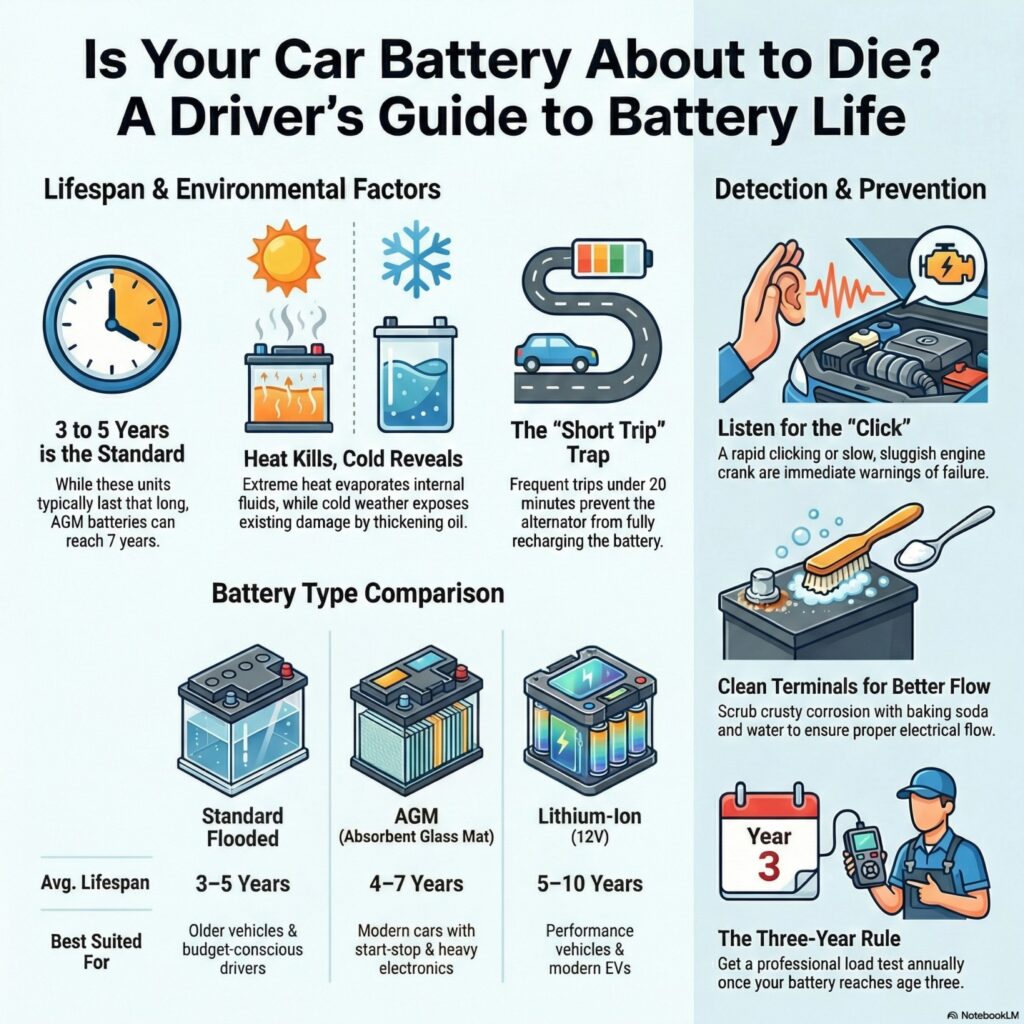
Under normal driving conditions, a standard car battery lasts between three and five years. However, this timeframe depends heavily on the climate you live in, your daily driving habits, and the type of battery installed in your vehicle. To stay safe and avoid getting stranded, automotive experts recommend testing your battery once it reaches the three-year mark and replacing it proactively before it fails completely.
Battery Types and Lifespan
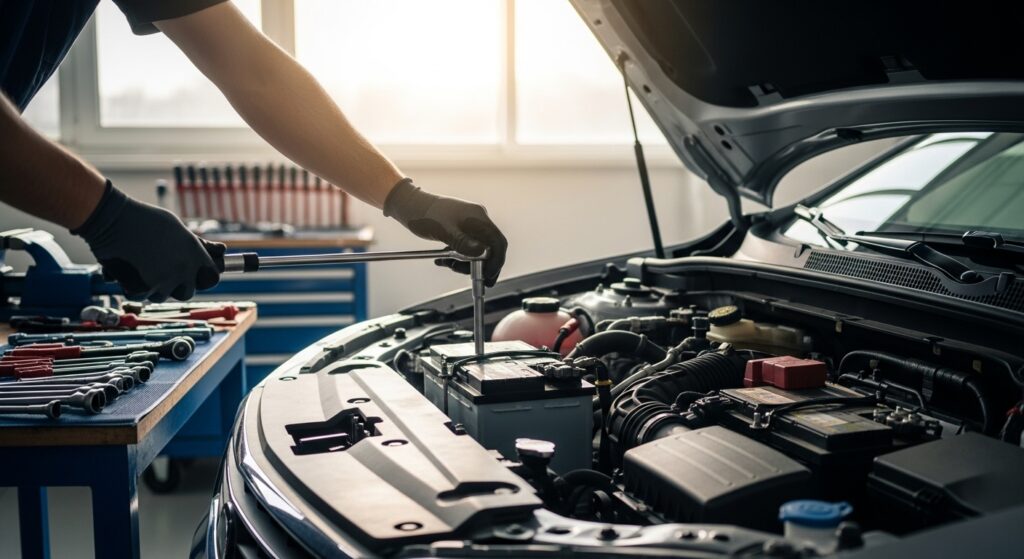
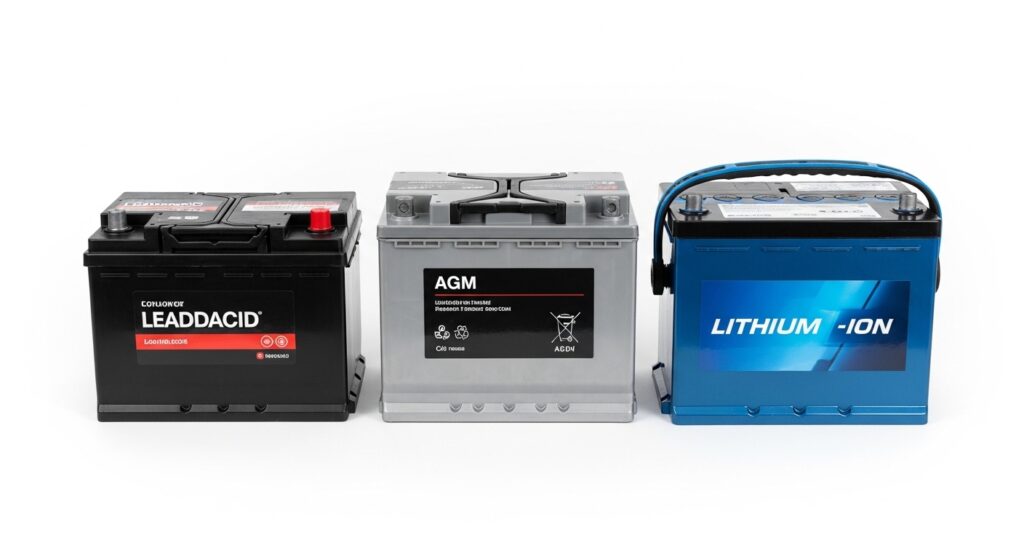
When you ask how often to replace a car battery, you must first consider the specific type of battery hiding under your hood. Not all car batteries feature the same chemistry or internal construction. Technology has advanced significantly over the last decade, giving drivers several options. Before you head to an auto parts store for a replacement, review this comparison table to understand the different battery types and their average lifespans.
| Battery Type | Average Lifespan | Best Suited For | Pros & Cons |
|---|---|---|---|
| Standard Flooded (Lead-Acid) | 3 to 5 years | Older vehicles, basic daily commuters, budget-conscious drivers. | Pros: Most affordable, widely available. Cons: Shorter lifespan, requires upright mounting, susceptible to extreme weather. |
| Absorbent Glass Mat (AGM) | 4 to 7 years | Modern cars with auto start-stop systems, heavy electronics, and luxury vehicles. | Pros: Long lifespan, spill-proof, handles deep discharges well. Cons: More expensive than standard flooded batteries. |
| Gel Cell | Up to 5 years | Extreme climates, off-road vehicles, and sports cars. | Pros: Excellent resistance to vibration, handles heat incredibly well. Cons: Requires specific charging voltages, expensive. |
| Lithium-Ion (12V) | 5 to 10 years | Performance vehicles, lightweight custom builds, and some modern EVs. | Pros: Extremely lightweight, longest lifespan, fast charging. Cons: Very high upfront cost, sensitive to extreme cold. |
As the table illustrates, an AGM battery generally outlasts a standard lead-acid battery. Many new cars sold in the United States today come off the factory line with an AGM battery. These modern vehicles contain dozens of computers, large infotainment screens, advanced safety sensors, and auto start-stop technology. A standard flooded battery simply cannot handle the heavy electrical demand of a modern vehicle as efficiently as an AGM unit.
Factors That Affect Battery Life
You might wonder why your neighbor’s car battery lasted six years, while yours died after just three. Car battery lifespan is not a fixed number. Several external and internal factors drastically alter how long your battery survives. Let us break down the most common elements that dictate the health of your battery.
Extreme Climate and Weather
Where you live in the United States plays a massive role in your battery’s health. You might think that freezing winter weather causes the most battery damage, but that is a common myth. Extreme heat actually destroys batteries much faster than cold weather.
If you live in a scorching climate like Arizona, Texas, or Florida, the extreme summer heat evaporates the essential liquid inside the battery. Heat also accelerates the internal chemical reactions, which leads to faster degradation of the internal lead plates. Drivers in the Sunbelt states often find themselves replacing their batteries every two to three years.
On the other hand, if you live in a colder state like Minnesota, Michigan, or Maine, your battery might last closer to five years. However, cold weather thickens your engine oil, forcing the starter motor to demand more power from the battery. At the same time, freezing temperatures reduce the battery’s overall power output. Therefore, winter weather often reveals the unseen damage that the summer heat already caused.

Your Driving Habits
How you drive matters just as much as where you drive. When you start your engine, the battery expends a massive amount of electrical energy. As you drive, the alternator generates electricity and slowly recharges the battery. The catch? The alternator needs time to do its job.
If your daily commute consists of short, five-minute trips to the local grocery store or coffee shop, the alternator never gets enough time to fully recharge the battery. Over time, your battery lives in a state of chronic undercharge. This condition causes acid stratification and sulfation—a process where harmful crystals build up on the battery plates. To keep your battery healthy, you need to drive your car at highway speeds for at least twenty minutes on a regular basis.
Parasitic Electrical Drains
Your car uses electricity even when you turn off the engine and remove the key. The vehicle needs a small amount of power to maintain the internal clock, remember your radio station presets, and keep the security alarm active. We call this normal power usage “parasitic draw.”
However, aftermarket accessories drastically increase this power draw. If you leave an OBD2 Bluetooth scanner plugged in, permanently wire a dashcam incorrectly, or forget to turn off an interior dome light, you will drain the battery overnight. Frequent deep discharges ruin standard car batteries quickly.
Vibration and Mounting Issues
Your battery contains delicate internal lead plates suspended in fluid. If you frequently drive down rough, unpaved roads, or hit severe potholes, the intense vibrations can literally shake the battery apart from the inside. Furthermore, if your battery hold-down bracket comes loose, the battery will bounce around under the hood while you drive. This excessive movement easily cracks the external casing or breaks the internal connections, leading to sudden battery failure.
Important Note on Alternator Health
A failing alternator will quickly destroy a perfectly good battery. The alternator provides power to the vehicle while the engine runs and recharges the battery. If your alternator breaks, your car will drain all the remaining energy directly from the battery until the engine stalls. If you replace your battery, always ask your mechanic to test your alternator to ensure it produces the correct voltage.
Signs Your Car Battery Is Dying
Fortunately, car batteries rarely die without giving you a few warning signs first. If you know what to look and listen for, you can replace the battery on your own schedule rather than waiting for an emergency breakdown. Watch out for these common signs of a bad car battery:
1. A Slow, Sluggish Engine Crank
This serves as the most obvious and common warning sign. When you turn the key or push the start button, the engine should roar to life almost instantly. If the engine groans, cranks very slowly, and sounds like it struggles to turn over, your battery lacks the necessary starting power. Do not ignore this sluggish sound; your battery sits on the brink of total failure.
2. Rapid Clicking Sounds
If you turn the key and hear a fast “click-click-click-click” noise instead of the engine turning, your battery is nearly dead. The clicking sound comes from the starter relay. The battery possesses just enough power to engage the relay, but it cannot supply the heavy voltage required to spin the heavy starter motor.
3. Dim Headlights and Interior Lights
Your battery powers all the electronic components in your car when the engine is off. If you notice your headlights look yellow, weak, or dimmer than usual before you start the car, suspect a weak battery. You might also notice the dashboard lights flickering or the power windows rolling up much slower than normal.
4. The Check Engine or Battery Warning Light
Modern vehicles monitor the health of their own electrical systems. If the internal computer detects an unusually low voltage, it will illuminate the dashboard warning lights. You might see a red battery-shaped icon light up. While this light can also indicate an alternator problem, it always means you have a severe charging system issue that requires immediate attention.
5. Excessive Corrosion on the Terminals
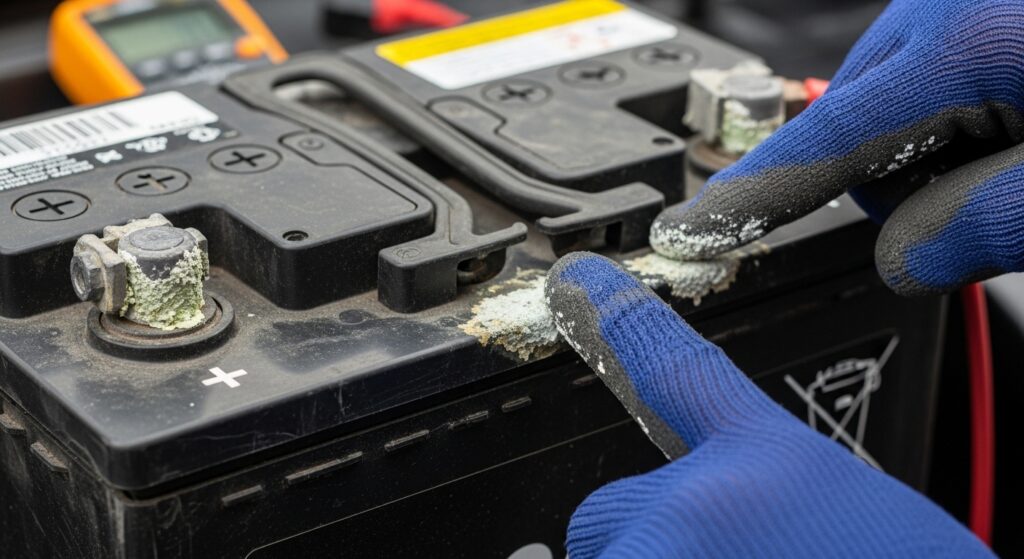
Pop your hood and look closely at the battery. Do you see a crusty, fluffy, white, blue, or green powdery substance covering the metal connection posts? That substance is acidic corrosion. As batteries age, they sometimes vent corrosive sulfuric gases. This corrosion creates a barrier that prevents electricity from flowing properly between the battery and the cables.
6. A Swollen or Misshapen Battery Case
A healthy car battery resembles a perfect rectangular box. If you look at your battery and notice the sides bulging outward—like the battery just ate a massive meal—you have a severe problem. Extreme heat and overcharging cause the internal components to expand. A swollen battery presents a safety hazard and you must replace it immediately.
7. A Rotten Egg Smell
If you open the hood and immediately detect a strong sulfur smell that reminds you of rotten eggs, step back. A failing, overcharged, or frozen battery can leak hazardous sulfuric acid gas. This situation is dangerous, and you should have a professional handle the vehicle.
If you experience a dead battery and use jumper cables to start your car, do not turn the engine off immediately when you reach your destination. Drive the car continuously at highway speeds for at least 30 minutes. This gives your alternator enough time to push a surface charge back into the depleted battery.
How to Make Your Car Battery Last Longer
Nobody enjoys spending $150 to $300 on a new battery. Fortunately, you hold the power to extend your car battery lifespan through basic, routine maintenance. Follow these practical tips to keep your battery healthy and strong for years to come.
Limit Short Trips
As mentioned earlier, frequent short drives prevent your battery from fully recharging. Try to consolidate your errands. Instead of making five separate short trips throughout the week, combine them into one longer trip. Driving continuously allows the alternator to replenish the energy drained during startup.
Keep the Battery Terminals Clean
Corrosion acts as an insulator, forcing your battery to work harder to push electricity through the cables. You can clean this corrosion away easily at home. First, disconnect the negative battery cable, followed by the positive cable. Mix one tablespoon of baking soda into a cup of warm water. Pour the mixture over the terminals and scrub them with an old toothbrush or a specialized wire battery brush. Once the metal looks clean and shiny, rinse it with plain water, dry it thoroughly with a rag, and reconnect the cables.
Invest in a Smart Battery Tender
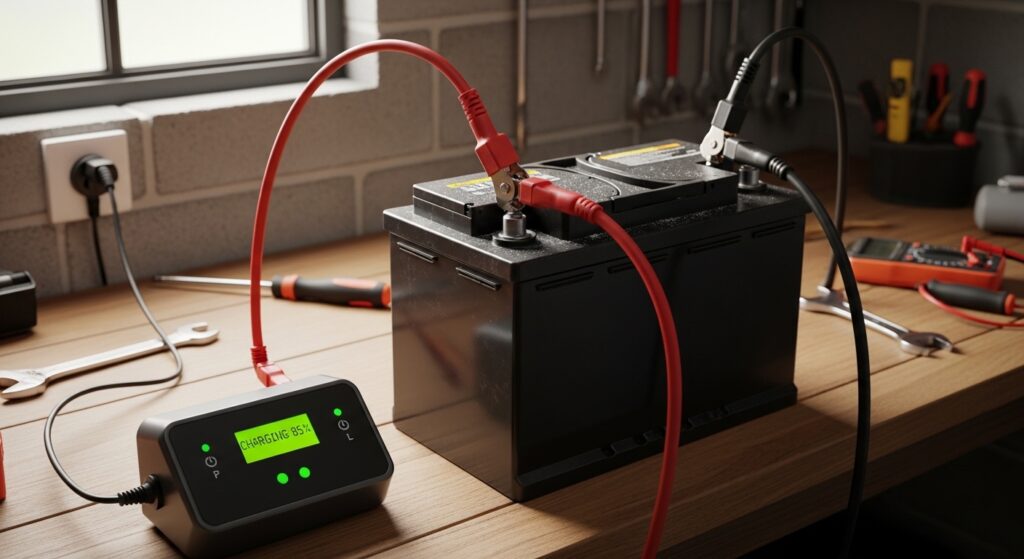
If you own a seasonal sports car, work from home, or plan to leave your car parked in the garage for more than two weeks, you need a smart battery maintainer (also known as a trickle charger). You connect this inexpensive device to your battery and plug it into a standard wall outlet. The device monitors the battery’s voltage and delivers a tiny, controlled charge to keep the battery at 100 percent without ever overcharging it. This prevents harmful sulfation from forming on the internal plates.
Turn Off Accessories Before Shutting Off the Engine
Reduce the strain on your battery by building a simple habit. Before you turn off your ignition, turn off the air conditioning blower, lower the radio volume, turn off the headlights, and unplug your phone chargers. When you start the car the next morning, the battery will only need to focus on powering the starter motor, rather than instantly trying to blast the AC and radio simultaneously.
Check Your Battery Securement
Open your hood and gently shake the battery with your hands (make sure the engine is off). The battery should not move at all. If it wiggles or shifts, tighten the hold-down bracket immediately. Securing the battery minimizes the destructive vibrations that break the internal lead plates.
When to Replace Your Car Battery
You should never wait for your battery to leave you stranded in the rain before replacing it. Proactive maintenance saves you time, stress, and money. But how do you know exactly when to pull the trigger on a replacement?
As a general rule of thumb, you should start monitoring your battery very closely once it reaches the three-year mark. Most batteries have a date sticker on top indicating the month and year they shipped from the factory. If your battery is four years old, you live on borrowed time, especially if you reside in a harsh climate.
The smartest approach is to get a professional load test. Almost every major auto parts store in the United States offers free battery testing. A technician hooks a specialized digital meter to your battery. This meter measures the resting voltage (which should sit around 12.6 volts) and tests the Cold Cranking Amps (CCA) to see how much power the battery can deliver under load. If the test shows that the health of the battery dropped below 50 percent, you should buy a replacement immediately.
Consider the seasons as well. If your battery approaches four years of age and the harsh heat of summer or the bitter cold of winter looms around the corner, replace it early. Extreme weather pushes a weak battery over the edge.
Frequently Asked Questions (FAQs)
1. How often should I replace my car battery?
You should replace your standard car battery every three to five years. If you drive a modern car with a lot of electronics and use an AGM battery, you might stretch that timeline to four to seven years. Always rely on an annual professional load test once the battery turns three years old to determine its true health.
2. Can a completely dead battery be recharged and saved?
It depends on why the battery died. If your battery is relatively new and you simply left the headlights on overnight, a jump-start and a long drive (or a session on a battery charger) will usually save it. However, if the battery is over four years old and died because the internal components degraded, jump-starting it only provides a temporary fix. You will need to replace it.
3. Does cold weather kill a battery faster than heat?
No, this is a very common misconception. Extreme summer heat actually causes permanent, irreversible damage to the internal chemistry of the battery. Cold weather simply thickens engine oil and slows down chemical reactions, making it harder for the battery to perform. Mechanics often say: heat kills batteries, but cold weather proves they are dead.
4. How long does a car battery last without driving?
If you park your car and do not drive it, a healthy battery will typically go dead in about two to four weeks. Modern vehicles constantly drain a small amount of power to run the security system, internal computers, and clock. If you plan to leave your car parked for an extended period, hook it up to a smart battery tender.
5. Does the radio drain the battery when the car is off?
Yes. If you turn the engine off but leave the key in the accessory position to listen to the radio, you draw power directly from the battery without the alternator recharging it. Doing this for 15 to 30 minutes usually will not cause harm, but running a high-powered stereo system for an hour or more can easily drain the battery completely.
Final Thoughts
Understanding how long car batteries last puts you in control of your vehicle’s maintenance. By paying attention to the age of your battery, keeping the terminals clean, and driving your car long enough to recharge the system, you can easily maximize the battery lifespan. Remember the golden rule: when your battery hits the three-year mark, get it tested. A quick, free test at a local service center takes only two minutes, but it can save you from spending hours waiting for a tow truck on the side of the road.
Car battery maintenance tips from the U.S. Department of Energy