
If you are thinking about buying a battery-powered vehicle, you probably have one major question on your mind: how long does it take to charge an electric car? Unlike filling up a traditional gas tank, which takes about five minutes, charging an EV requires a shift in how you think about “refueling.” Depending on how you charge, replenishing your battery can take anywhere from 15 minutes to more than an entire day.
For new and prospective owners, understanding electric vehicle charging time is the key to conquering range anxiety. You do not need a degree in electrical engineering to master EV charging, but you do need to understand the basic charging levels, the size of your vehicle’s battery, and the specific equipment you plan to use. Whether you plug into a standard wall outlet at home or connect to a high-speed public charger on a road trip, your experience will vary wildly.
In this complete guide, we will break down exactly how long you can expect to wait at the plug. We will explore real-world charging times for popular vehicles, the crucial differences between fast charging vs home charging, and the hidden factors that speed up or slow down your charging sessions. By the end of this article, you will know exactly how to keep your battery full without wasting your valuable time.
A typical electric car takes between 15 minutes and 10 hours to charge depending on the charger type, battery size, and power output.
Quick Answer: EV Charging Times at a Glance
A typical electric car takes the following amounts of time to charge from empty to full (or 10% to 80% for fast charging):
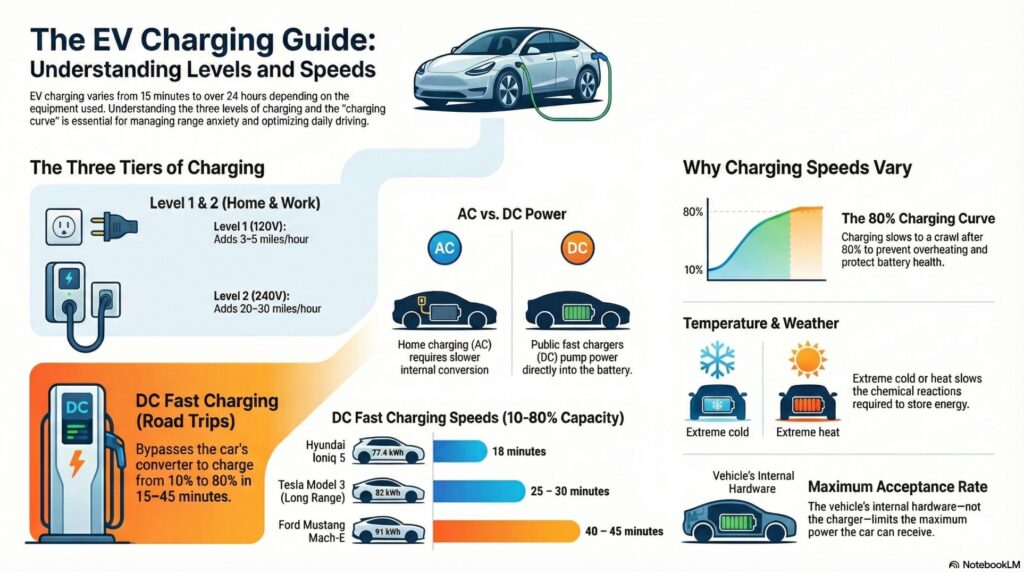
- Level 1 (Standard 120V Outlet): 40 to 50+ hours (adds about 3 to 5 miles of range per hour).
- Level 2 (Upgraded 240V Outlet): 4 to 10 hours (adds about 20 to 30 miles of range per hour).
- DC Fast Charging (Public Stations): 15 to 45 minutes to go from 10% to 80% battery capacity.
Average Electric Car Charging Time: How Long Does It Take to Charge an Electric Car?
When people ask about the average EV charging time, the true answer depends on two main variables: how big your battery is and how much power the charger delivers. Think of your electric car’s battery like a bucket, and the charger like a water hose. A large bucket (a massive long-range battery) takes longer to fill than a small bucket (a standard-range battery). Similarly, a thick fire hose (a fast public charger) fills the bucket much faster than a tiny garden hose (a standard home wall outlet).
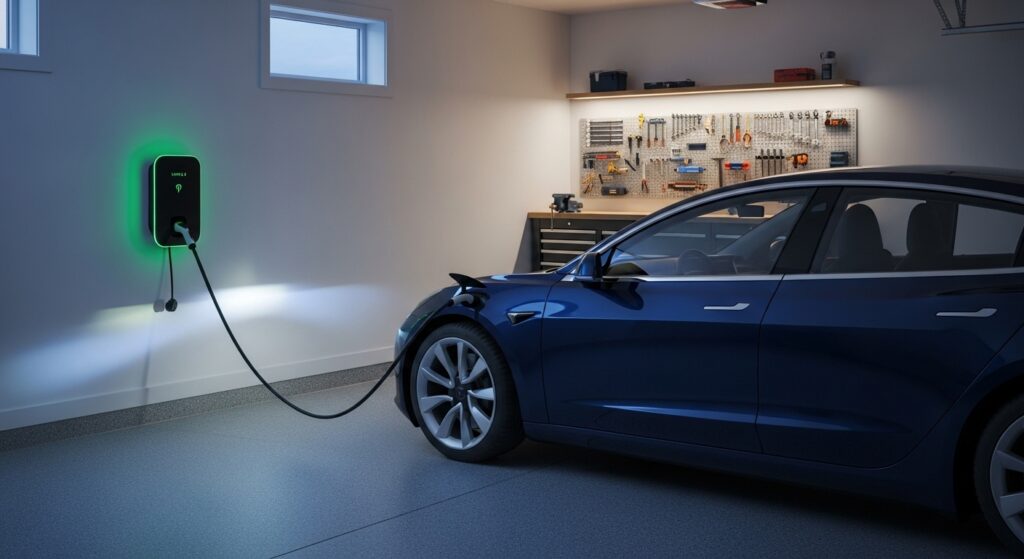
Most EV owners prefer to charge their vehicles overnight. Because of this, the “average” charging experience usually involves pulling into a garage, plugging into a home EV charger, and letting the car pull electricity for 6 to 8 hours while the driver sleeps. In this scenario, the charging time barely matters because you wake up to a “full tank” every single morning.
However, when you travel long distances, average charging times change completely. On the highway, drivers rely on ultra-fast public chargers designed to get them back on the road quickly. During a road trip, the average charging stop lasts between 20 and 30 minutes. You rarely charge to 100 percent at these public stations. Instead, you charge just enough to comfortably reach your next destination or charger. Automakers specifically engineer modern EVs to accept massive amounts of power quickly so that long-distance travel feels as normal as possible.
EV Charging Levels Explained
To understand EV charging levels, you first need to understand a basic rule about electricity: the power grid delivers alternating current (AC), but your car’s battery can only store direct current (DC).
When you plug your car into an AC power source (like your house), a device inside your car called an “onboard charger” must convert that AC power into DC power before sending it to the battery. This conversion process takes time and limits how fast the battery can charge. Both Level 1 and Level 2 charging use AC power, which is why they take hours rather than minutes.
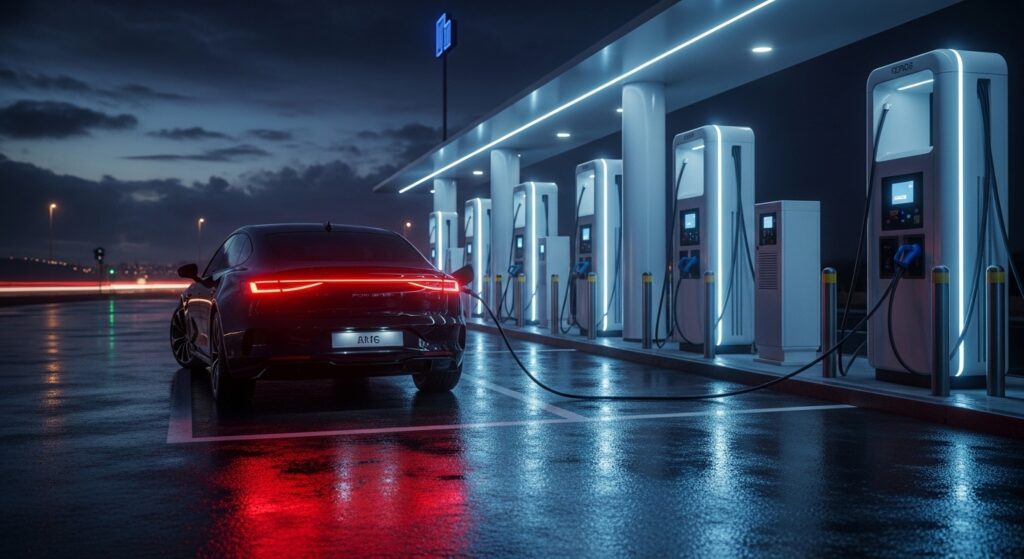
On the other hand, commercial DC fast charging stations handle the AC-to-DC conversion outside the car. These massive, refrigerator-sized units pump pure direct current straight into your car’s battery pack. By bypassing the car’s internal converter, these stations deliver incredible amounts of power, allowing the battery to fill up in a fraction of the time.
The industry categorizes EV charging into three main tiers based on power output and speed. Knowing which level you are using is the most important step in estimating your total charging time. Let’s look closely at the differences between the three main charging tiers.
Level 1 vs Level 2 vs DC Fast Charging
Choosing the right charging level depends entirely on your daily driving habits and immediate needs. Here is a breakdown of the three main EV charging levels.
Level 1 Charging (120-Volt)
Level 1 charging uses a standard, three-prong household wall outlet. Every electric car comes with a portable Level 1 cord (or offers one as an option). You literally plug your car into the exact same outlet you use to power your television or charge your smartphone. Because standard outlets only deliver up to 120 volts of electricity, this method is extremely slow. We call this “trickle charging.” It adds roughly 3 to 5 miles of driving range per hour. If you drive a massive electric truck with a huge battery, a full charge from 0% to 100% on Level 1 could take days. However, if you work from home or only drive 15 miles a day, a Level 1 charger will comfortably replenish your daily mileage overnight.
Level 2 Charging (240-Volt)
Level 2 represents the sweet spot for daily electric vehicle ownership. It utilizes a 240-volt electrical circuit—the same type of heavy-duty circuit required to run an electric clothes dryer or an electric oven. You can find Level 2 chargers installed in residential garages, apartment complexes, workplaces, and grocery store parking lots. A standard Level 2 home EV charger time ranges from 4 to 10 hours for a full charge, adding between 20 and 30 miles of range per hour. For almost all EV owners, installing a Level 2 charger at home is the best way to guarantee a fully charged car every morning.
DC Fast Charging (Level 3)
People commonly refer to this as Level 3 charging. DC fast charging bypasses your car’s internal converter and shoots direct current straight into the battery. You will only find these chargers at commercial, public charging stations along major highways and busy urban centers due to their massive electrical requirements and high installation costs. DC fast charging time is dramatically shorter, typically getting a battery from 10 percent to 80 percent in just 15 to 45 minutes.
| Charging Level | Power Source | Speed (Miles per Hour Added) | Best Use Case |
|---|---|---|---|
| Level 1 | 120V Standard Wall Outlet | 3 to 5 miles | Low daily mileage, plug-in hybrids |
| Level 2 | 240V Dedicated Circuit | 20 to 30 miles | Overnight home charging, workplace |
| DC Fast Charge | 400V to 800V Direct Current | 100 to 250+ miles in 30 mins | Road trips, quick top-offs |
Real Charging Times for Popular Electric Cars
Every electric car features a unique battery size and a specific maximum charging speed. Automakers design different electrical architectures for different cars, meaning two vehicles plugged into the exact same ultra-fast charger will likely finish charging at different times.
To give you a realistic idea of electric car charging times, we gathered the data for four of the most popular EVs currently on the road in the United States. Note that the DC Fast Charging metric specifically measures the time it takes to go from 10 percent to 80 percent, which is the industry standard measurement.
| EV Model | Battery Size | Level 2 Time (0-100%) | DC Fast Charge (10-80%) |
|---|---|---|---|
| Tesla Model 3 (Long Range) | 82 kWh | 10 – 11 hours | 25 – 30 minutes |
| Ford Mustang Mach-E (Extended) | 91 kWh | 11 – 12 hours | 40 – 45 minutes |
| Hyundai Ioniq 5 (Long Range) | 77.4 kWh | 7 – 8 hours | 18 minutes |
| Nissan Leaf (SV Plus) | 60 kWh | 10 – 11 hours | 45 – 60 minutes |
Tesla Model 3: Tesla built an incredibly efficient vehicle paired with a proprietary, massive Supercharger network. When a Tesla navigates to a Supercharger station, it automatically warms up its battery to ensure the car accepts maximum power the second you plug it in. This makes the Model 3 an excellent road trip car.
Ford Mustang Mach-E: Ford engineered the Mach-E with a rather conservative charging curve to protect the battery over the long haul. While its large 91 kWh battery provides excellent driving range, you will spend a bit more time at a DC fast charging station compared to a Tesla or Hyundai.
Hyundai Ioniq 5: The Ioniq 5 represents the bleeding edge of charging technology. Hyundai equipped this car with an advanced 800-volt electrical architecture. Because of this high voltage, the vehicle can accept massive bursts of power (up to 230 kW), allowing it to rocket from 10 percent to 80 percent in a blistering 18 minutes under ideal conditions.
Nissan Leaf: As one of the original electric cars, the Nissan Leaf uses a slightly older battery technology and a CHAdeMO charging port, rather than the more common CCS or NACS ports. It charges perfectly fine at home on a Level 2 unit, but it charges noticeably slower on public DC fast chargers than its modern rivals.
Factors That Affect EV Charging Time
Even if you know your charging level and battery size, you will rarely experience the exact same charging time twice. Several real-world factors influence how quickly electricity flows from the plug into your vehicle.
1. Battery State of Charge (The Charging Curve)
An EV battery never charges at a flat, constant speed from 0 to 100 percent. Automakers program their vehicles to follow a “charging curve.” To understand this, think about walking into an empty movie theater. You and your friends can quickly run in and find excellent seats. However, when the theater hits 80 percent capacity, finding three seats together takes much longer as you squeeze past other people.
A battery works exactly the same way. When the battery is nearly empty, it happily accepts massive amounts of electricity. As the battery gets closer to 80 percent full, the car’s computer drastically slows down the power input to prevent overheating and protect battery health. The final 20 percent of a charge often takes just as long as the first 80 percent.
2. Maximum Acceptance Rate
Your car acts as the boss of the charging session, not the charger. Every EV features a maximum acceptance rate (measured in kilowatts, or kW). If you plug a car with a maximum acceptance rate of 50 kW into a blazing fast 350 kW charger, your car will only draw 50 kW. The vehicle physically limits the speed to protect its internal hardware.
3. Temperature and Weather
Batteries despise extreme temperatures. EV batteries rely on chemical reactions to store and release energy. When winter weather causes temperatures to plummet, these chemical reactions slow down significantly. A freezing cold battery stubbornly resists charging. Conversely, if you drive hard in the scorching summer heat, the battery might run too hot. The vehicle will then throttle the charging speed so it can run cooling fans to bring the temperature down.
4. Shared Power at Public Stations
Some older public charging stations operate on shared circuits. If you pull up to a 150 kW charging station and you are the only one there, you get all 150 kW. But if another electric car pulls into the stall next to you and plugs into the same cabinet, the station might split the power, giving both of you only 75 kW. This instantly doubles your charging time.
Home Charging vs Public Charging
Comparing home charging and public charging reveals two completely different lifestyles. When you purchase an electric vehicle, home charging will likely account for 80 to 90 percent of your charging sessions.
Home charging emphasizes convenience over speed. You simply arrive home, plug in your vehicle, and walk inside. You sleep, eat, and spend time with your family while your car slowly tops up in the garage. Because the car sits idle for 10 to 12 hours a night anyway, the slower speed of a Level 1 or Level 2 charger simply does not matter. You gain back the time you used to spend waiting in line at gas stations.
Public charging flips the script. You use public chargers when you are far from home and actively waiting to get back on the road. Fast charging vs home charging involves a trade-off. At a public DC fast charger, you pay a premium price for the privilege of high speed. EV drivers usually combine public charging with a bathroom break or a quick meal. You plug in, go grab a sandwich, and by the time you finish eating, your car is ready for the next leg of the journey.
Pro Tip: Do not treat an EV like a gas car by waiting until the battery is at 5% to charge. Practice the “ABC” rule: Always Be Charging. Plug in whenever you are parked at home or at work. Smaller, frequent charging sessions are faster, easier to manage, and excellent for the long-term health of your battery.
How to Charge Your EV Faster
Nobody wants to spend more time than necessary sitting at a charging station. If you want to optimize your electric vehicle charging time during a road trip, follow these simple habits to speed up the process.
- Precondition Your Battery: If your car features built-in navigation, use it to set the charging station as your destination. The car will automatically “precondition” (warm up or cool down) the battery while you drive, ensuring the battery sits at the perfect temperature to accept maximum power the moment you plug in.
- Stop Charging at 80 Percent: As mentioned earlier, charging slows to a painful crawl after your battery reaches 80 percent. Unless you absolutely need maximum range to reach the next charger, unplug at 80 percent and get back on the highway. You will save a tremendous amount of time.
- Arrive with a Low Battery: Batteries charge the fastest when they are nearly empty. Pulling into a charging station with 10 percent battery remaining allows you to take full advantage of peak charging speeds. If you plug in at 60 percent, the car will charge much slower.
- Pick the Right Charger: Check the kW rating on the charging stall before you plug in. If your car can handle 200 kW of power, do not plug into a 50 kW stall if a 350 kW stall is open right next to it.
Cost of Charging an Electric Car
Charging speed directly impacts the cost of your charging session. Home charging represents the cheapest way to “fuel” an electric car. Across the United States, the average residential cost of electricity sits around 16 cents per kilowatt-hour (kWh). Filling a standard EV battery at home usually costs between $10 and $15, saving you significant money compared to buying gasoline. Many utility companies even offer special overnight EV charging rates that drop the price to pennies per kWh.
Public DC fast chargers cost much more because you pay for convenience and high-speed infrastructure. Public networks typically charge between 35 and 50 cents per kWh. A fast-charging session can cost $20 to $40. Also, note that some states require charging networks to bill you by the minute rather than by the kWh. If you use a slow charger that bills by the minute, you will end up paying more money for a longer wait. To dive deeper into pricing, read our full guide on the cost to charge an EV.
Important Note: Idle fees can dramatically increase the cost of public charging. Once your car hits 100 percent full, many public charging stations will charge you up to $1.00 for every minute your car remains plugged in and blocking the stall. Always move your car as soon as your charging session finishes!
Is Fast Charging Bad for the Battery?
A common myth in the EV community claims that using DC fast chargers frequently will ruin your battery. While it is true that fast charging generates intense heat—which batteries generally dislike—modern electric vehicles are incredibly smart.
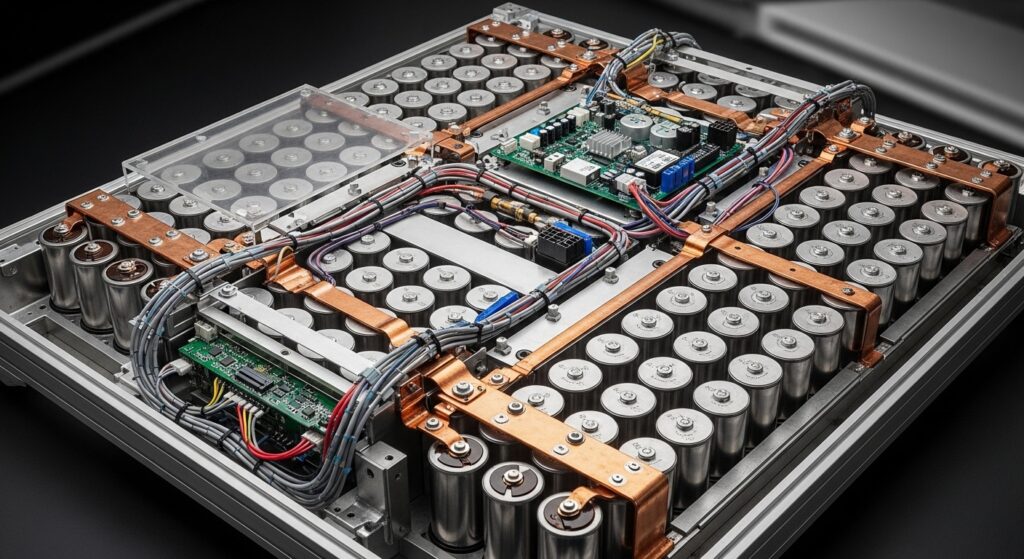
Every EV utilizes a complex computer called a Battery Management System (BMS). The BMS constantly monitors voltage, temperature, and cell balance. If things get too hot during a fast charge, the BMS automatically slows down the flow of electricity and kicks on liquid cooling pumps to protect the battery pack. Furthermore, automakers hide “buffer” zones in the battery. Even when your dashboard says 100 percent full, the battery actually holds a little extra unused space to prevent over-stressing the battery cells.
Data shows that frequent fast charging causes a very slight increase in electric car battery degradation compared to exclusive home charging, but the difference is minimal (often just a 1 to 2 percent difference over several years). You should still use Level 2 home charging for your daily needs, but you never need to fear using public fast chargers when taking road trips.
Frequently Asked Questions (FAQ)
1. Can I plug my electric car into a regular outlet?
Yes, you can plug your EV into a standard 120-volt household outlet using a Level 1 charging cord. However, this method is extremely slow. It will only add about 3 to 5 miles of range per hour. It works well for plug-in hybrid vehicles with small batteries or drivers who only travel a few miles a day, but most full EV owners eventually upgrade to a 240-volt outlet for faster charging.
2. Should I charge my EV every night?
If you use your car daily, plugging it in every night is a great habit. Automakers encourage keeping your car plugged in while parked, especially in extreme heat or extreme cold, so the vehicle can use wall power (rather than battery power) to run its internal thermal management systems. Just remember to use your car’s settings to limit the daily charge limit to 80 percent to prolong the battery’s lifespan.
3. Why does charging slow down after 80 percent?
Charging slows down after 80 percent to protect the battery’s health and prevent overheating. As a lithium-ion battery fills up, it becomes harder for the electrical system to push the remaining energy into the battery cells without causing damage. The car’s software intentionally throttles the charging speed. This is why EV road-trippers usually unplug at 80 percent and continue driving.
4. Do all EVs use the same charging plug?
Historically, EVs used different plugs. Most non-Tesla vehicles used the CCS plug, while Tesla used its own proprietary plug. However, the industry is currently undergoing a massive shift. Almost all major automakers in the US market have agreed to adopt the Tesla plug style, now known as the North American Charging Standard (NACS). Soon, practically all new EVs will use the exact same plug.
5. Can you overcharge an electric car?
No, it is virtually impossible to overcharge a modern electric vehicle. Every EV features an intelligent Battery Management System that strictly controls the flow of electricity. Once the battery reaches 100 percent capacity (or whatever custom limit you set on your dashboard), the car physically stops pulling power from the charger. You can leave your car plugged in for weeks while on vacation without any risk of overcharging.
EV charging guide from the U.S. Department of Energy