
Let’s be honest for a second. Buying a used car can feel incredibly stressful. You know it is a smart financial move—you get to skip the terrible depreciation that hits new cars the second they leave the lot. But handing over your hard-earned cash to a stranger or a fast-talking salesperson? That causes real anxiety. You just want a reliable ride, not a headache waiting to happen.
So, how do you protect yourself? You take control of the conversation. Knowing the exact questions to ask when buying a used car is your secret weapon. Asking the right things helps you spot hidden red flags, uncovers the car’s true past, and honestly, gives you the upper hand when it is time to negotiate the price.
We put together this guide to act as your personal car-buying wingman. Below, we break down 25 essential questions into bite-sized, easy-to-remember categories. Grab a coffee, take some notes, and get ready to buy your next car with total confidence.
Why Asking the Right Questions Actually Works
Have you ever walked up to a shiny used car and felt your heart beat a little faster? The fresh wax, the clean interior, the idea of driving it home—it is exciting! Sellers count on that excitement. They want your emotions to take over so you ignore the slightly worn tires or that weird sound coming from the engine.
Asking direct questions breaks that emotional spell. It forces the seller to go on the record. An honest seller will gladly chat with you and answer every single question. But if a seller gets defensive, tries to dodge your questions, or gives super vague answers? Congratulations, you just spotted a bad deal, and it is time to walk away.
“The best tool you have when car shopping isn’t a mechanic’s wrench; it’s your voice. A few smart questions can save you thousands of dollars in surprise repairs.” – Auto Industry Expert
Questions About the Car’s History and Ownership
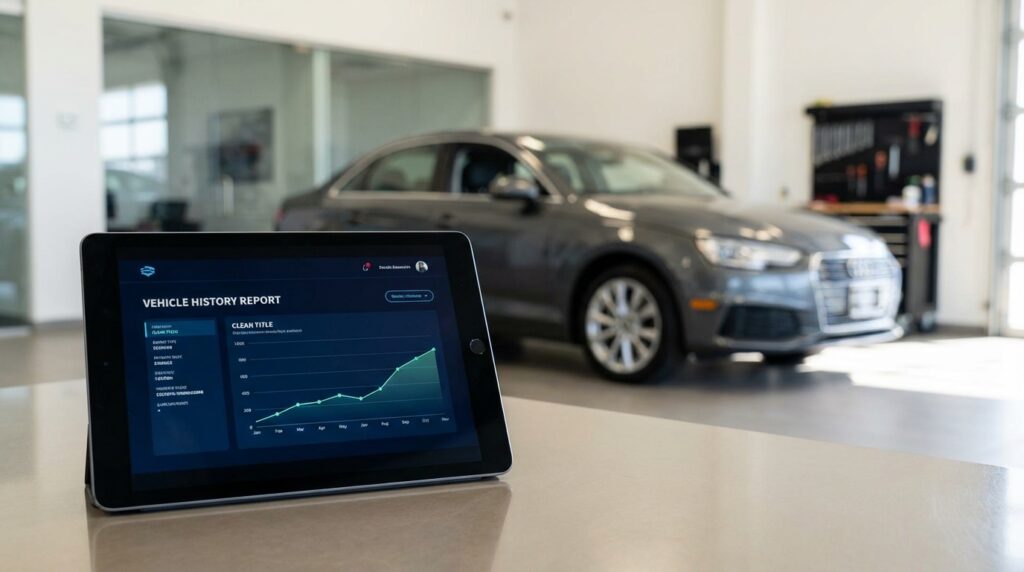
A car’s past tells you exactly what to expect in its future. You need to know where this car lived, who drove it, and why they suddenly want to get rid of it.
1. Can I see the vehicle history report?
Why you need to ask: Never just take a seller’s word for it. A vehicle history report gives you the cold, hard facts. It shows past accidents, odometer rollbacks, and title issues. Dealerships should hand this to you for free. If you are buying from a private seller, ask for the VIN (Vehicle Identification Number) and run it yourself through a site like Carfax.
The red flag: If they refuse to give you the VIN or tell you history reports are a “scam,” run away.
2. Are you the original owner?
Why you need to ask: Finding a one-owner car is like finding a unicorn. Original owners usually treat their cars better and keep great service records. On the flip side, if the car had five different owners in the last four years, that usually means it has a terrible, expensive problem that everyone keeps trying to escape.
3. Why are you selling the car?
Why you need to ask: You want to know their real motivation. “We just had twins and need a minivan” is a great answer. “I got a new job in the city and take the train now” is also great.
The red flag: “I just don’t need it anymore,” especially if they seem eager to sell it for a suspiciously low price.
4. Has the car ever been in an accident?
Why you need to ask: History reports don’t catch everything. Sometimes people fix minor fender benders in their own garage to keep their insurance rates down. A replaced bumper isn’t the end of the world, but bent frame damage ruins a car’s safety forever.
5. Where has this car lived most of its life?
Why you need to ask: Weather beats up cars. A car from the snowy Northeast has probably driven through tons of road salt, which means you need to look hard for rust underneath. A car from the hot Arizona desert might have a fried battery and a cracked dashboard from the sun.
6. Do you have the title in hand, and is it in your name?
Why you need to ask: This is non-negotiable. If they don’t have the title, they cannot legally sell you the car. Sometimes a seller tries to sell a car with a title that has their cousin’s or friend’s name on it. This is called “title jumping.” It is illegal in most states and creates a massive headache for you at the DMV.
A Quick Heads-Up: Always check the top of the title. If it says “Salvage” or “Rebuilt,” an insurance company previously decided the car was completely totaled. Unless you are a professional mechanic, do not buy a salvage car.
Questions About Maintenance and Condition
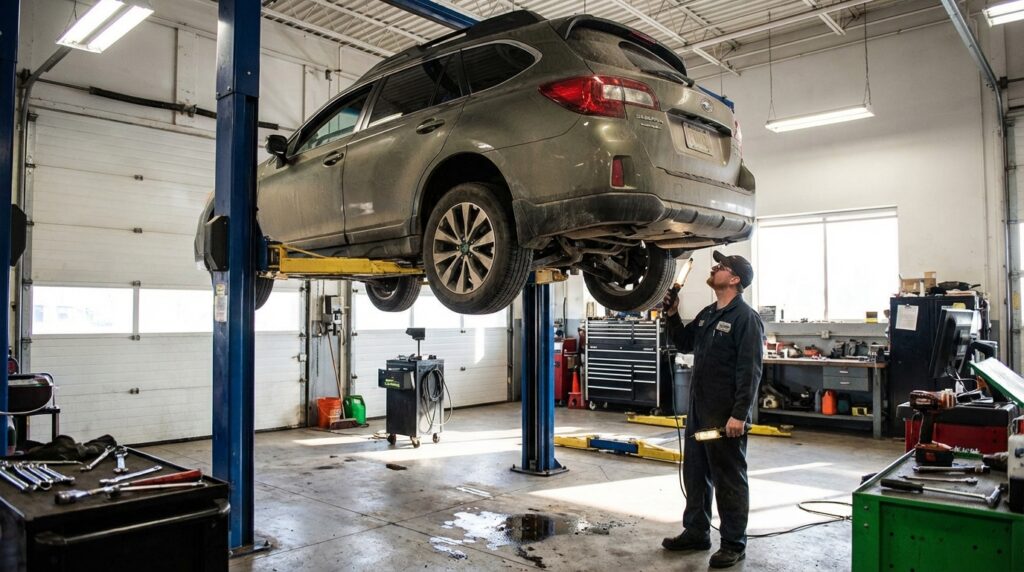
Even the most reliable Toyota or Honda will fall apart if the previous owner neglected it. These questions help you figure out if the car was babied or abused.
7. Can I see the service records?
Why you need to ask: A folder full of maintenance receipts is a beautiful sight. It proves the owner cared. It shows they changed the oil on time, fixed squeaky belts, and did the routine checkups.
8. When did you last change the oil?
Why you need to ask: Oil keeps the engine alive. If you ask this question and the seller stares blankly or stutters, they probably ignored other basic maintenance too.
9. Are there any current mechanical issues I should know about?
Why you need to ask: Give them a chance to be honest. Ask this while looking them directly in the eye. A great way to phrase it is playfully asking, “So, what is the very first thing I’m going to have to fix if I buy this from you?”
10. Have you replaced any major parts recently?
Why you need to ask: New parts are awesome! Did they just put in a new alternator, battery, or fresh set of tires? That saves you a lot of money in the near future. Just ask to see the receipt so you know it was done right.
11. Has anyone smoked in the car or carried pets?
Why you need to ask: Nothing ruins the vibe of a new-to-you car quite like the lingering smell of stale cigarettes or wet dog. These smells get trapped deep in the seats and the air conditioning system. If you have allergies, this is a dealbreaker.
12. Are there any warning lights on the dashboard?
Why you need to ask: That glowing orange “Check Engine” light is terrifying. It could mean a loose gas cap, or it could mean a dying transmission. Never buy a car with a warning light on unless your own mechanic tells you exactly what is causing it.
13. How old are the tires and brakes?
Why you need to ask: Tires and brakes wear out, and replacing them costs hundreds of dollars. If you look and see the tires are completely bald, use that fact to negotiate the price down.
14. Has the transmission or engine ever been rebuilt?
Why you need to ask: This means the car went through major surgery. If it has a rebuilt transmission, you need to know who did the work and if they provided any sort of warranty for the job.
Questions to Ask During the Test Drive
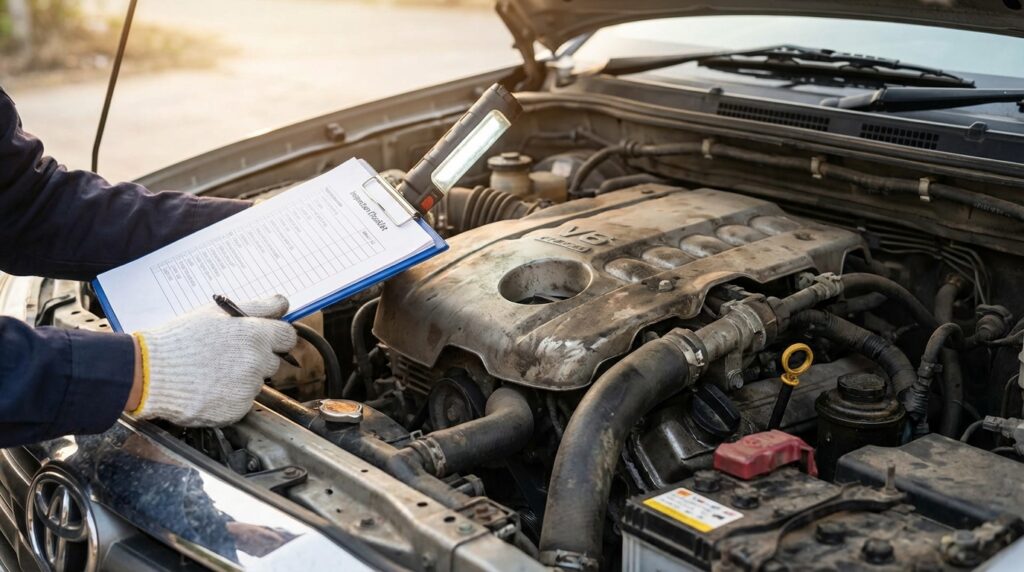
The test drive is your moment of truth. Turn off the radio, roll the windows down a little bit so you can hear outside noises, and get a feel for the ride.
15. Can I take it for a long test drive?
Why you need to ask: A five-minute drive around a quiet neighborhood tells you nothing. You need to get the car on the highway. You need to feel how it shifts at 65 mph. You need to hit the brakes somewhat hard. If the seller tries to keep you on slow streets, they might be hiding a weird vibration that only happens at high speeds.
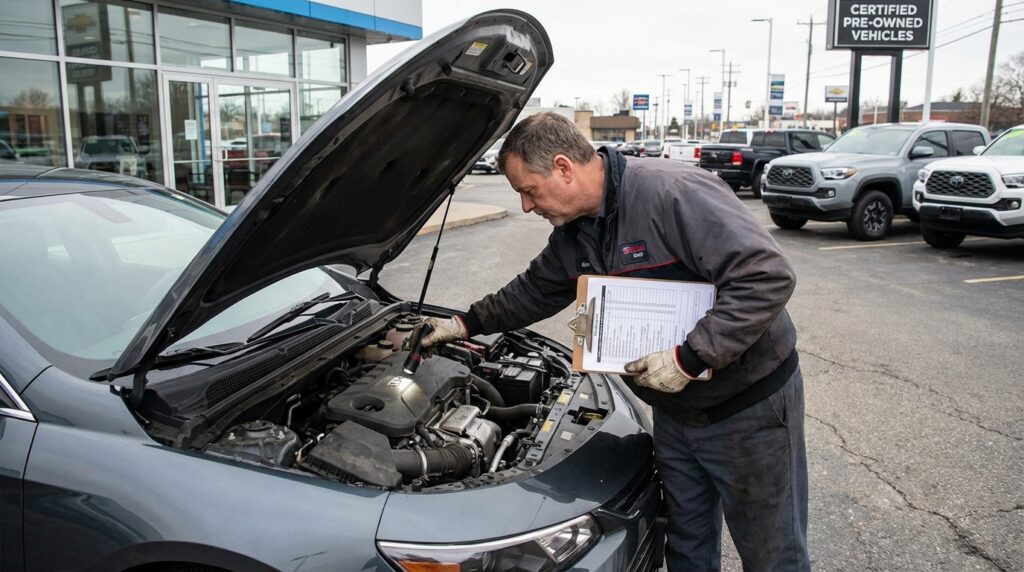
16. Can I take the car to my mechanic for an inspection?
Why you need to ask: If you only remember one question from this list, make it this one. A Pre-Purchase Inspection (PPI) from a trusted, independent mechanic usually costs about $100 to $200. They put the car on a lift and check for hidden leaks, rust, and worn parts. It is the best money you will ever spend.
The red flag: If the seller says “no” to a mechanic inspection, smile, hand them the keys, and walk away.
17. Do all the buttons, windows, and electronics work?
Why you need to ask: Modern cars are basically rolling computers. Take five minutes to push every button. Roll all the windows up and down. Test the AC, crank the heater, try the sunroof, and test the backup camera. Fixing a broken power window motor is surprisingly expensive.
18. Do you have both sets of keys?
Why you need to ask: Have you priced a modern car key lately? Because they have computer chips inside them, a replacement key fob from a dealer can cost $300 to $500. If the seller only has one key, you need to deduct that cost from your offer.
19. Are there any active recalls on this vehicle?
Why you need to ask: Car manufacturers issue recalls when they find a safety defect. You can pop the VIN into the NHTSA recall website to check. The good news? Dealerships fix recalls for free. The bad news? You have to deal with the hassle of taking it in.
Questions About Pricing and Documentation
Okay, the car looks great and drives smoothly. Now it is time to talk about money. These questions set the stage for a fair negotiation.
20. How did you arrive at this asking price?
Why you need to ask: This question gently puts the seller on the spot. Did they look up the actual value on a site like Kelley Blue Book, or did they just guess? If they are asking way too much, you can politely show them the real market value to bring the price down.
21. Is the price negotiable?
Why you need to ask: Always ask this. Nearly every private seller and dealership leaves a little wiggle room in their asking price. Even if their ad says “price is firm,” cash in hand usually changes their mind.
22. Are there any hidden dealer fees? (For Dealerships)
Why you need to ask: Dealerships are famous for advertising a super low price online, only to hit you with $800 in “documentation fees” or mandatory “paint protection” packages when you sit down to sign the papers. Ask for the “out-the-door” price right away so you know exactly what you are paying.
23. Can I trade in my current vehicle? (For Dealerships)
Why you need to ask: Trading in your old car is super convenient and can even lower the sales tax you pay on the new car. Just remember one rule: negotiate the price of the car you are buying first, and then talk about the trade-in separately.
24. Is the car still under any factory warranty?
Why you need to ask: If you are buying a car that is only a couple of years old, it might still have the original bumper-to-bumper or powertrain warranty. That gives you amazing peace of mind. Just call a local dealer to make sure the warranty actually transfers to a second owner.
25. Would you take [Your Offer] in cash today?
Why you need to ask: This is how you close the deal. By giving a specific number and saying “today,” you create urgency. People love a quick, easy sale. Do not insult them with a crazy lowball offer, but do not be afraid to offer 10% to 15% below their asking price to see what they say.
Dealerships vs. Private Sellers: What is the Vibe?
Buying a car from Bob down the street is a very different experience than walking into a massive, brightly lit dealership. Here is a quick cheat sheet on what to expect.
| What to Expect | Buying from a Private Seller | Buying from a Dealership |
|---|---|---|
| The Price Tag | Usually cheaper. You avoid dealership overhead and doc fees. | Priced higher because they need to pay their staff and make a profit. |
| Knowing the History | High. They drove it every day and know its little quirks. | Low. They likely bought it at an auction or took it as a trade-in. |
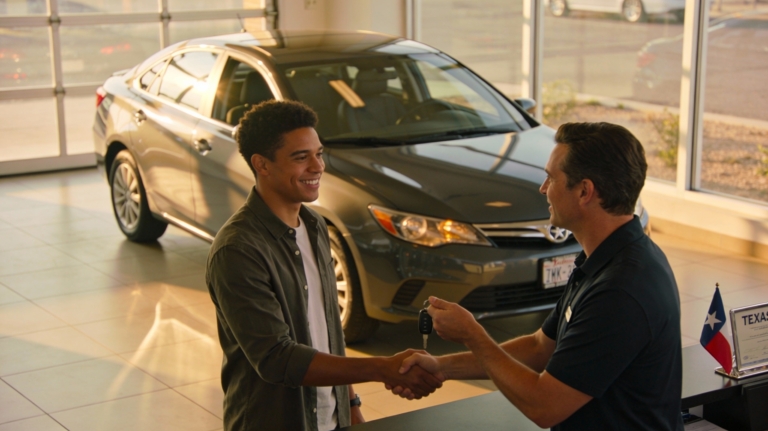
| Getting a Loan | You have to do the legwork with your bank or show up with cash. | Super easy. They have a finance office right there (watch the interest rates!). |
| If Things Go Wrong | You buy it “As-Is.” If it breaks tomorrow, it is your problem. | They might offer a short return window or a small limited warranty. |
| Negotiation Style | Casual. You are just talking to a regular person trying to sell a car. | Professional. You are dealing with someone who negotiates for a living. |
A Quick Pro Tip: It does not matter who you buy from—always run your own history report. Sometimes well-meaning people just don’t know the full history of their own car!
Watch Out for These Massive Red Flags
Even if the seller gives you perfect answers, trust your eyes and your nose. If you spot any of these things during your test drive, walk away immediately:
- It smells like a damp basement: This is a massive warning sign of previous flood damage. You do not want a flood car.
- The paint looks mismatched: Look at the side of the car in the sunlight. If the front door is a slightly different shade of silver than the back door, the car was definitely in a crash.
- The oil looks like a chocolate milkshake: Pull the engine oil dipstick. If the oil is milky, brown, and frothy, the engine has a blown head gasket. That is a thousands-of-dollars repair.
- The steering wheel shakes: If your hands vibrate when you hit the brakes, the brake rotors are warped.
Frequently Asked Questions (FAQs)
What is the 20% rule for buying a car?
Financial pros recommend putting down at least 20% of the purchase price in cash. Cars drop in value pretty fast. Putting 20% down ensures you don’t end up “upside-down” on your car loan, which means owing the bank more money than the car is actually worth.
What is the one thing I should NEVER say to a car seller?
Never say, “I am absolutely in love with this car!” Keep a good poker face. If they know you are emotionally attached, they will not lower the price. Also, never tell a dealer what you want your monthly payment to be. They will just stretch out the length of the loan to hit your number, and you will pay way more in interest.
Is it honestly better to buy from a dealer or a private owner?
It really depends on what you value more: price or convenience. A private seller will almost always give you a better deal and knows the car’s real history. A dealership is much more convenient, handles all the DMV paperwork for you, and offers easy financing.
How many miles is too many for a used car?
Miles matter, but maintenance matters more. A Honda Civic with 130,000 miles that got regular oil changes is a much safer bet than a neglected car with only 60,000 miles. Don’t let high mileage scare you away if the seller has a stack of service records.
Final Thoughts
You’ve got this. Armed with these questions to ask when buying a used car, you are no longer an easy target. You are a smart, informed buyer. Remember that buying a car is a big deal, so take your time, trust your gut, and don’t let anyone rush you.
If someone gets annoyed that you are asking too many questions, consider it a blessing in disguise. There are millions of used cars out there. Just walk away and find a seller who respects you and your money.