
The Toyota Camry has earned its place as one of the best-selling sedans in America, primarily due to its reputation for bulletproof reliability. However, seasoned mechanics and long-term owners know that even the most reliable machines have weak points. For the Camry, that weak point—specifically in certain model years—is the transmission.
While the engine in a Camry will often run for 300,000 miles with basic maintenance, the transmission history is a bit more complicated. From the “rumble strip” shudder in the 2012–2014 models to the hesitation and gear-hunting found in the newer 8-speed automatics, toyota camry transmission problems are a reality that buyers and owners need to understand.
This guide will break down exactly what goes wrong, which years are most affected, and how to distinguish between a simple software glitch and a major mechanical failure. If you want a broader overview of the vehicle’s history, you can also read our comprehensive guide to Toyota Camry common problems.
The Two Main Types of Camry Transmission Issues
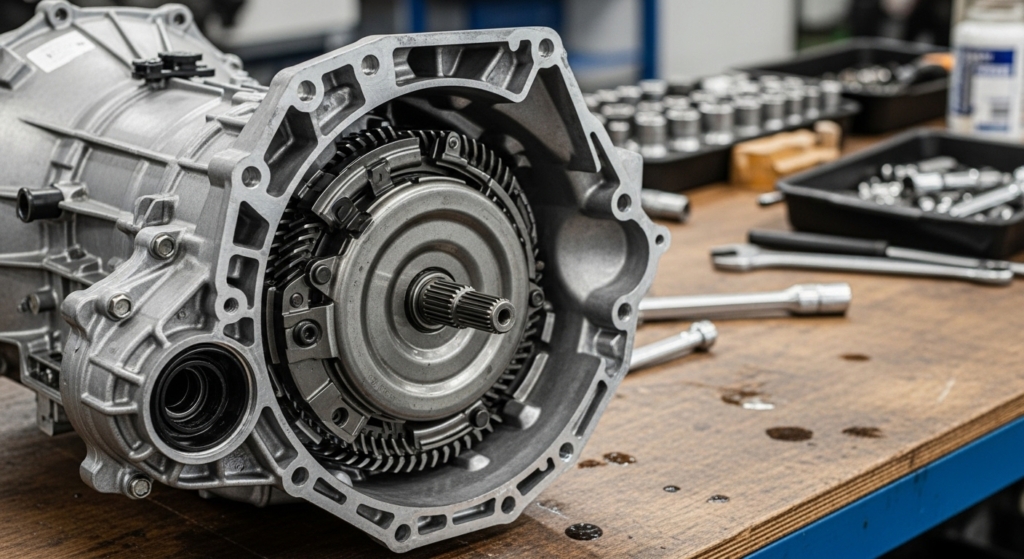
Before panicking, it is important to categorize the problem. Most complaints fall into one of two buckets: Mechanical Failures (hardware breaking) or Drivability Concerns (computer logic issues).
1. The “Shudder” (Mechanical/Torque Converter)
This is the most severe and widely reported issue, specifically affecting the 2012, 2013, and 2014 models (and some 2015s). The torque converter—the component that connects the engine to the transmission—experiences a “shudder” during lock-up. It feels like you are driving over rumble strips on the side of the highway. If left untreated, this can destroy the transmission.
2. The “Lag” (Software/Shift Logic)
When Toyota introduced the 8-speed Direct Shift automatic in 2018, the goal was fuel economy. However, this resulted in camry delayed shifting. Drivers often report that when they step on the gas, the car hesitates for a second before downshifting, or it feels “confused” about which gear to be in. This is usually not a broken part, but rather aggressive computer programming designed to save gas.
Warning Signs: What to Look (and Listen) For
Transmission issues rarely happen overnight. Your car will usually give you warning signs weeks or months before a total failure. Here is what you should pay attention to.
Shuddering or Vibration
This is the classic symptom for the U760E transmission found in the 7th generation Camry. It typically happens between 25 and 50 MPH under light acceleration. The car vibrates noticeably. If you let off the gas, it stops. This is camry transmission shudder, and it indicates the torque converter flex lock-up is failing.
Delayed Engagement
When you shift from “P” (Park) to “D” (Drive) or “R” (Reverse), the engagement should be almost instant. If there is a 2-3 second pause before you feel the gear catch, or if it slams into gear with a clunk, internal pressure is likely low, or the solenoids are sticking.
Flare or “Slip” Between Gears
A “flare” happens when the engine RPM spikes up while the transmission is changing gears, almost as if the car went into Neutral for a split second. This suggests the clutches inside the transmission are worn out or the fluid level is critically low.
Whining Noises
If you hear a high-pitched whine that gets louder as you accelerate, it often points to the transmission pump. This pump is responsible for circulating fluid; if it fails, the transmission will overheat and seize very quickly.
Toyota Camry Transmission Issues by Model Year
Not all Camrys use the same transmission, and some years are significantly more problematic than others. Use this table to check the risk level for your specific year.
| Model Years | Transmission Model | Common Symptoms | Risk Level |
| 2002 – 2006 | U241E / U151E (5-speed) | Hard shifting into reverse; solenoid failure. High mileage wear. | Low / Age-Related |
| 2007 – 2011 | U660E (6-speed) | Flaring between 3rd and 4th gear. Output speed sensor failures. | Medium |
| 2012 – 2014 | U760E (6-speed) | Torque Converter Shudder. Vibration at 25-50 MPH. | High |
| 2015 – 2017 | U760E (Updated) | Mostly resolved. Occasional rough shifts if fluid is never changed. | Low |
| 2018 – 2020 | UA80E (8-speed) | Hesitation, lagging acceleration, jerky low-speed shifts. | Medium (Software) |
| 2021 – Present | UA80E (Updated) | Improved logic. Minor complaints of rough downshifting. | Low |
A Note on the 2012-2014 Shudder
If you own a Camry from these years, you need to know about Toyota Service Bulletin T-SB-0034-14. Toyota acknowledged the torque converter issue and offered a software update. If the software didn’t fix it, they recommended replacing the torque converter. Many of these extended warranties have now expired, meaning the cost falls on the owner.
Toyota Official Owners & Service Info
Causes: Why Do These Transmissions Fail?
Understanding why the failure happens can help you prevent it or decide if a repair is worth it.
1. The “Lifetime Fluid” Myth
This is the number one killer of Toyota transmissions. Toyota markets their World Standard (WS) transmission fluid as “lifetime” fluid, meaning it never needs to be changed. Mechanics vehemently disagree. Over time, fluid breaks down, loses its protective properties, and fills with metal shavings. We recommend changing the fluid every 60,000 miles regardless of what the manual says.
2. Software Calibration (Adaptive Learning)
Modern transmissions, especially the 8-speed in the 2018+ Camry, use “adaptive learning.” The computer watches how you drive and adjusts shift points to match. Sometimes, this learning process gets corrupted or is programmed too aggressively for fuel economy, causing camry rough shifting. A dealer can often reset this “memory,” making the car drive like new.
3. Solenoid Failure
Solenoids are small electro-mechanical valves that direct fluid flow inside the transmission. If a solenoid gets clogged with dirty fluid or burns out electrically, the car won’t be able to enter a specific gear. This often triggers a Check Engine Light and “Limp Mode.”
Toyota Camry Transmission Repair Cost
The cost to fix a transmission issue varies wildly depending on whether it is a simple electronic fix or a full mechanical rebuild. Here are realistic price ranges for the US market.
| Repair Service | Estimated Cost | Complexity |
| Transmission Fluid Exchange | $150 – $300 | Maintenance. Can fix minor slips. |
| Software Update / Reset (Dealer) | $100 – $200 | Fixes lag and hesitation (2018+ models). |
| Shift Solenoid Replacement | $400 – $800 | Moderate repair. Requires dropping the pan. |
| Torque Converter Replacement | $2,000 – $2,800 | Major repair. Transmission must be removed. |
| Used Transmission Replacement | $2,500 – $3,500 | Installing a unit from a wrecked car (risky). |
| Rebuild or Remanufactured Unit | $3,500 – $5,000+ | The most reliable long-term fix. |
Note: Prices include parts and labor. Dealership labor rates will be significantly higher than independent shops.
Prevention Tips: How to Extend Transmission Life
You can’t change the engineering of your car, but you can change how you treat it. Following these tips can help you avoid a massive toyota camry transmission repair cost down the road.
- Change the Fluid: Ignore the “sealed transmission” sticker. Drain and fill the transmission fluid every 60,000 miles. Do not perform a high-pressure “flush” on high-mileage cars; a simple drain and fill is safer.
- Stop Before Shifting: Never shift from Reverse to Drive (or vice versa) while the car is still rolling. This acts like a sledgehammer on the internal gears and parking pawl.
- Use the Parking Brake: When parking on a hill, engage the parking brake before shifting into Park. This prevents the weight of the car from resting entirely on the transmission’s parking pawl.
- Check for Leaks: If you see red or reddish-brown fluid on your driveway, get it checked immediately. Low fluid causes heat, and heat kills transmissions.
Frequently Asked Questions (FAQ)
Is it safe to drive with a transmission shudder?
You can drive for a short time, but you shouldn’t ignore it. The shudder is caused by the torque converter slipping. If it slips too much, it creates excessive heat and metal debris, which will eventually ruin the entire transmission, turning a $2,500 repair into a $5,000 one.
Can a software update fix my transmission?
If you own a 2018–2021 Camry and are experiencing hesitation or weird shifting patterns, yes. There is a Technical Service Bulletin (TSB) that updates the Engine Control Module (ECM) to smooth out the shifting. However, software cannot fix mechanical grinding or slipping in older models.
Which Camry year has the best transmission?
The 2015–2017 models (late 7th generation) are widely considered to have the most reliable transmission setups. By this time, Toyota had resolved the torque converter issues of the 2012–2014 era, but hadn’t yet introduced the complex 8-speed transmission of 2018.
What does “Limp Mode” mean?
If your Camry detects a serious transmission fault, it may enter “Limp Mode.” The car will stay in one gear (usually 3rd) to protect the engine, and you won’t be able to accelerate past 30 or 40 MPH. This is a sign to pull over and call a tow truck immediately.
Final Thoughts
While toyota camry transmission issues can be frustrating, especially the notorious 2012–2014 shudder, the car remains a solid choice if maintained properly. If you are test-driving a used Camry, pay close attention to how it shifts at highway speeds and from a dead stop. A smooth transmission usually indicates a well-maintained car, while hesitation or vibration is a clear warning sign to walk away or negotiate a lower price.