
We live in a world where automatic transmissions rule the road. Every day, automakers introduce new vehicles that shift gears for you. This leaves driving purists asking a very important question: does a hybrid car manual transmission actually exist?
If you love the feeling of pressing a clutch pedal and rowing through gears, but you also want the fuel efficiency of an electric motor, you might feel left out. The modern car market focuses heavily on convenience and fuel economy. Because of this, finding a stick shift hybrid feels like hunting for a unicorn.
Interestingly, when people search for a “hybrid car manual,” they usually mean one of two things. They either want to know if they can buy a stick shift hybrid vehicle, or they simply want to find the printed owner’s handbook for the hybrid car they already own.
This article covers both topics in complete detail. First, we will explore the fascinating world of manual transmission hybrids. We will look at why automakers stopped making them, and we will celebrate the classic models that still roam the streets today. Later in the article, we will provide a quick, helpful guide for drivers who just need to download the official owner’s manual for their specific vehicle.
Can You Buy a Hybrid Car with a Manual Transmission Today?
Let us answer the biggest question right away. As of today, no major automaker produces a brand-new, traditional hybrid car with a manual transmission. If you walk into a Toyota, Honda, or Ford dealership looking for a brand-new hybrid with a stick shift, you will leave empty-handed.
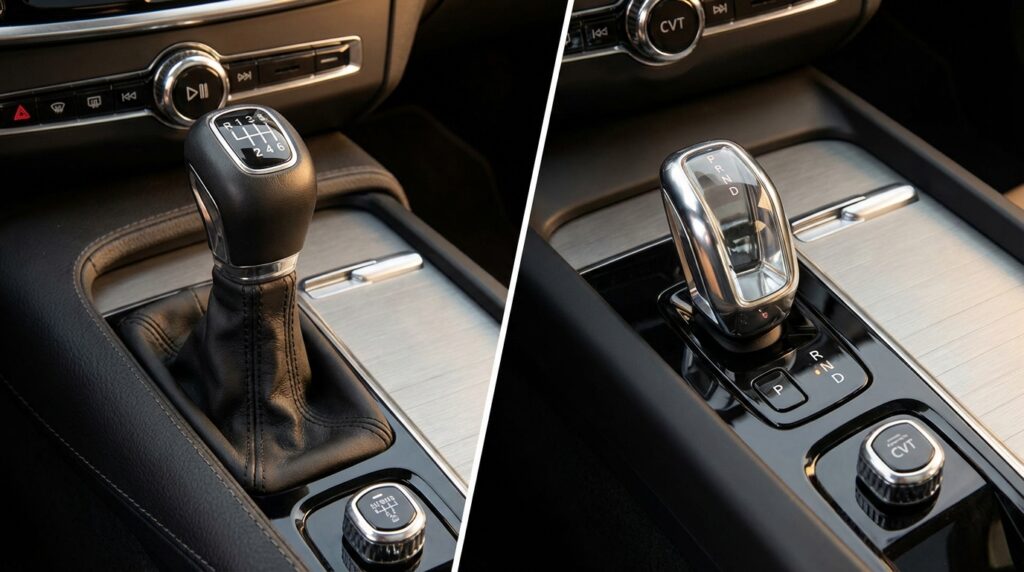
The current automotive landscape heavily favors automatic transmissions. More specifically, most modern hybrids use something called a Continuously Variable Transmission (CVT) or an electronic CVT (e-CVT). These modern gearboxes do not have traditional fixed gears like a standard manual or older automatic transmission.
Instead, a CVT uses a clever system of belts and pulleys, or complex planetary gearsets. This system constantly adjusts itself. It keeps the internal combustion engine at the absolute perfect RPM (revolutions per minute) for maximum fuel efficiency. A computer controls everything in real time. Because the computer can adjust the transmission faster and more accurately than a human driver ever could, automakers abandoned the manual transmission for new hybrid models.
However, this does not mean manual hybrids never existed. You can still buy them on the used market. But to understand why they disappeared from showrooms, we need to look under the hood.
Why Are “Stick Shift” Hybrid Cars So Rare?
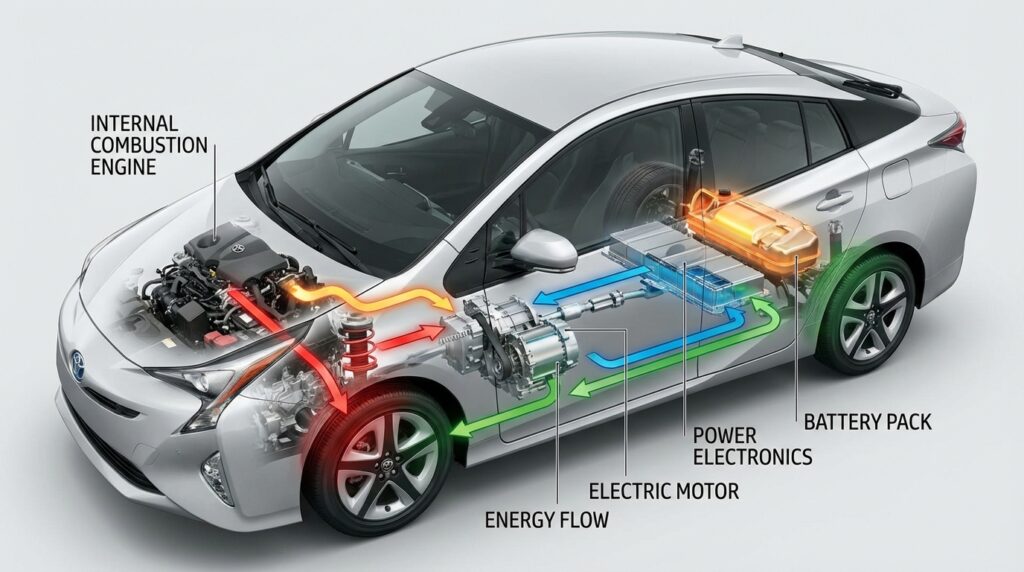
You might wonder why car companies cannot just attach a standard manual gearbox to a hybrid engine. The truth involves complex engineering. A hybrid vehicle combines a traditional gas engine with an electric motor and a high-voltage battery. Getting these different power sources to work together smoothly requires intense precision.
Here are the three main reasons why a stick shift hybrid is incredibly rare today.
Reason 1: Computer Control and Seamless Switching
In a standard car, the driver controls the power flow. You press the clutch, change the gear, and press the gas pedal. In a hybrid car, a computer controls the power flow. The computer constantly decides whether to use the gas engine, the electric motor, or both at the same time.
When a human driver operates a clutch, it interrupts the connection between the engine and the wheels. This human interruption confuses the delicate, efficiency-focused computer system. Automakers prefer to use automatic CVTs because the computer can smoothly blend gasoline and electric power without a human suddenly pressing a clutch pedal and cutting the power delivery.
Reason 2: Regenerative Braking Efficiency
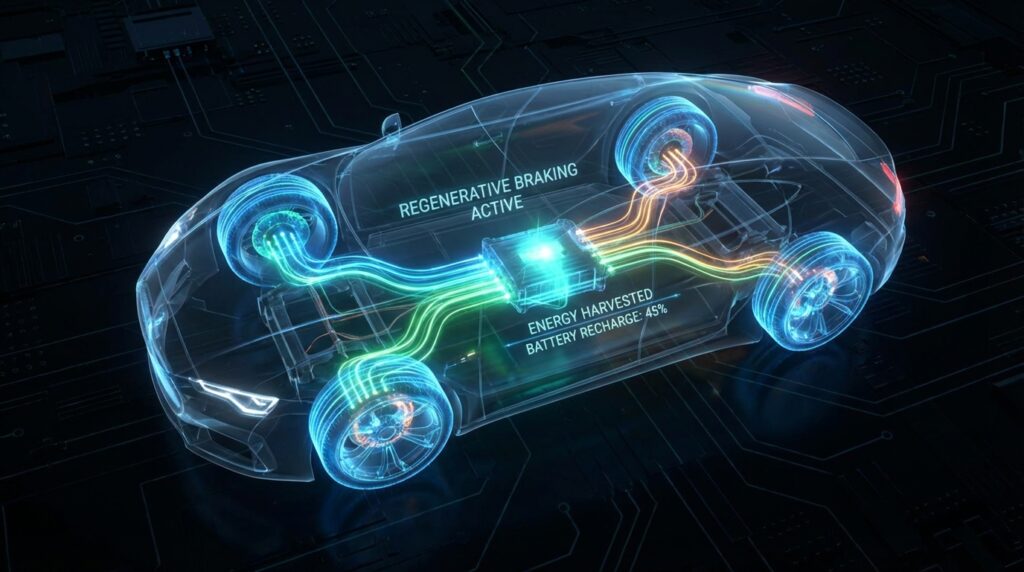
One of the best features of a hybrid car is regenerative braking. When you step on the brakes or take your foot off the gas pedal, the electric motor runs in reverse. It acts as a generator. It captures the kinetic energy from the moving car and turns it into electricity. The system sends this free electricity back into the hybrid battery.
Automatic transmissions manage this energy recovery perfectly. If a driver presses the clutch pedal on a manual transmission while slowing down, the car disconnects the engine and motor from the wheels. This action completely stops the regenerative braking process. Therefore, manual transmissions actually force hybrids to waste valuable energy.
Reason 3: Market Demand
Ultimately, car companies build what people want to buy. Most people buy hybrid cars for ease of use, smooth daily commuting, and low gas station bills. They do not buy hybrids for aggressive track days or canyon carving.
While driving enthusiasts love manual transmissions, the general public does not. Automakers looked at the sales numbers and realized that engineering a complex manual hybrid system simply cost too much money for too few buyers.
If you find a modern hybrid labeled as having a “manual mode,” this does not mean it has a real stick shift or clutch pedal. Automakers often add paddle shifters behind the steering wheel that simulate gear changes. This provides a sporty feel, but a computer still controls the actual transmission.
Comparing Transmissions in Hybrid Cars
| Transmission Feature | Standard Manual Transmission | Continuously Variable Transmission (CVT) |
|---|---|---|
| Driver Engagement | High (Driver must use clutch and gear stick) | Low (Car shifts automatically) |
| Fuel Efficiency | Good, but depends heavily on the driver’s skill | Excellent, computer optimizes RPM constantly |
| Regenerative Braking | Interruptible (Pressing clutch stops charging) | Seamless (Always captures energy when coasting) |
| Availability in Hybrids | Extremely rare (Only older used models) | Standard in almost all modern hybrids |
The Legends: Classic Hybrid Cars with Manual Transmissions
Even though automakers no longer build them, we must respect automotive history. There was a golden era when you could walk into a dealership, buy a high-tech hybrid, and still get three pedals on the floor. Honda essentially pioneered this niche market. Honda used a unique setup called Integrated Motor Assist (IMA).
Unlike Toyota’s complex system, Honda’s IMA placed a very thin electric motor directly between the gas engine and the transmission. Because the electric motor acted like a simple booster, Honda could easily attach a standard manual gearbox to it. Let us look at the legendary vehicles that satisfy the “hybrid car manual” search.
First Generation Honda Insight (1999–2006)
The original Honda Insight looks like a spaceship from the future. Honda designed this two-seater car with a singular goal: maximum fuel efficiency. They built the body out of lightweight aluminum and covered the rear wheels to make the car incredibly aerodynamic.
Most importantly, Honda offered the first-generation Insight with a 5-speed manual transmission. When paired with the manual gearbox, this tiny car achieved an astonishing EPA rating of over 60 miles per gallon (and many drivers reported getting over 70 mpg on the highway). The manual transmission allowed hyper-milers (drivers obsessed with fuel economy) to control their engine speed perfectly and coast down hills to save gas.
Honda Civic Hybrid (2003–2005)
While the Insight was a weird and quirky two-seater, Honda wanted to bring manual hybrids to the masses. They introduced the Honda Civic Hybrid. From the outside, it looked exactly like a normal, everyday Honda Civic. You could easily fit a family of four inside.
Under the skin, it featured the same clever IMA hybrid system. Honda offered a 5-speed manual transmission for the first few years of production. It provided a completely normal driving experience but delivered fantastic fuel economy. Today, finding a manual Civic Hybrid in good condition is quite rare, but they make excellent and affordable commuter cars.
Honda CR-Z (2010–2016)
The Honda CR-Z is arguably the most famous stick shift hybrid ever made. Honda designed it as the spiritual successor to the beloved CRX from the 1980s. The CR-Z featured sharp, aggressive styling, a sporty suspension, and a driver-focused interior.
Best of all, it came with a crisp, close-ratio 6-speed manual transmission. Driving the CR-Z manual was a unique joy. It offered three driving modes: Econ, Normal, and Sport. When you pressed the Sport button, the electric motor provided an instant boost of torque as you shifted gears, making the car feel much faster than its horsepower numbers suggested.
“Driving a manual Honda CR-Z proves that you don’t have to choose between saving the planet and having fun on a winding back road. It blends the mechanical joy of shifting gears with the high-tech surge of electric power.”
The Future: Will Manual Hybrids or EVs Make a Comeback?
With Honda long abandoning the IMA system, you might think the manual hybrid is dead forever. However, the automotive industry always holds surprises. We are currently shifting toward fully Electric Vehicles (EVs) and high-performance plug-in hybrids.
Interestingly, driving enthusiasts miss the engagement of a manual transmission so much that automakers are taking notice. Toyota recently made headlines by filing patents for a “simulated manual transmission” designed specifically for future EVs and high-performance hybrids.
According to reports from trusted sources like Car and Driver, Toyota’s new system will feature a physical gear shifter and a clutch pedal. Even though the electric motors do not actually need gears, software will simulate the feeling of shifting. The car will jerk slightly when you change gears, mimic engine braking, and even simulate a stall if you release the clutch too fast.
While purists argue that a “fake” manual is not the same as a real mechanical gearbox, it shows that car companies still value the emotional connection between a driver and their vehicle. We may soon see a new generation of hybrid and electric sports cars that offer a manual-like driving experience.
Looking for Your Hybrid Car Owner’s Manual?
Now, let us switch gears. Many people searching for a “hybrid car manual” are not looking for a stick shift. They are simply trying to find the instructional booklet for the hybrid car parked in their driveway.
Modern hybrid cars are rolling computers. They feature complex dashboard warning lights, specific battery maintenance schedules, and unique safety procedures. If you buy a used Toyota Prius, Ford Escape Hybrid, or Hyundai Ioniq, the previous owner often loses the physical owner’s manual.
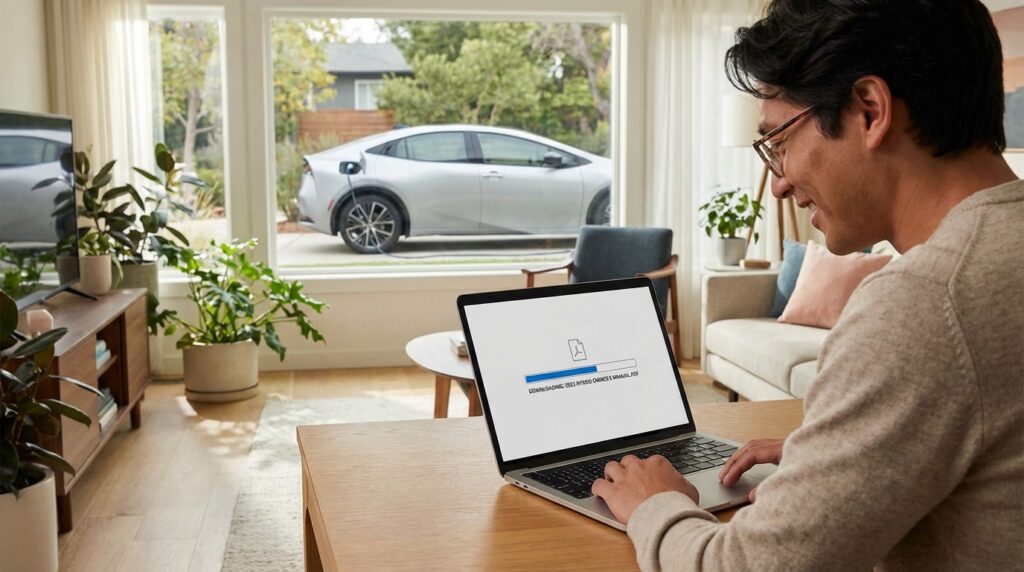
Do not worry. You do not need to buy an expensive replacement booklet from the dealership. Almost every major automaker provides free digital PDF versions of their owner’s manuals online.
Steps to Find Your Digital Owner’s Manual
- Find your VIN: Locate your Vehicle Identification Number (VIN). You can usually find this 17-character code on the dashboard near the bottom of the windshield on the driver’s side, or on the sticker inside the driver’s door jamb.
- Visit the Official Website: Go to the official website of your car’s manufacturer (e.g., Toyota.com, Honda.com).
- Navigate to the Owners Section: Look at the top menu for a tab labeled “Owners,” “Support,” or “Service.”
- Enter Your Details: The website will ask you to enter your VIN, or manually select the Year, Make, and Model of your hybrid car.
- Download the PDF: Once you locate your vehicle, look for the “Owner’s Manual” download link. Save the PDF directly to your smartphone or computer so you always have it handy in emergencies.
Hybrid cars have specific procedures for jump-starting the 12-volt battery. If you connect jumper cables incorrectly on a hybrid, you can destroy the highly expensive computer systems. Always consult your hybrid car manual before attempting any mechanical work or jump-starts.
Frequently Asked Questions (FAQs)
To provide even more clarity, we gathered the most frequently asked questions from search engines regarding manual hybrid vehicles. Here are the simple, direct answers you need.
Can you buy a hybrid car with a manual transmission?
Today, no. You cannot buy a brand-new hybrid vehicle with a manual transmission from any major automaker. However, you can easily find classic manual hybrids, like the Honda CR-Z or early Honda Insights, on the used car market.
Why don’t hybrid cars have manual transmissions?
Automakers avoid manual transmissions in hybrids because human shifting disrupts the computer-controlled efficiency. Automatic systems (like CVTs) seamlessly manage the transition between gas and electric power, and they maximize the energy captured through regenerative braking. A human operating a clutch interrupts both of these critical processes.
Did Toyota or Honda ever make a manual hybrid?
Honda is famous for making manual hybrids. They produced the manual Insight, Civic Hybrid, and CR-Z. Toyota, on the other hand, never produced a manual hybrid. Toyota’s Hybrid Synergy Drive system relies on a planetary gearset that physically cannot work with a traditional clutch pedal.
Is the Honda CR-Z a manual?
Yes, the Honda CR-Z was offered with a traditional 6-speed manual transmission, complete with a clutch pedal. Buyers could also choose an automatic CVT if they preferred, but the manual version remains the most popular among car enthusiasts today.
Are manual hybrids good on gas?
Yes, they are excellent on gas. The first-generation manual Honda Insight could achieve over 60 miles per gallon. However, technology has improved. Today’s modern automatic hybrid CVTs actually shift smarter than humans and deliver even better fuel efficiency than the old manual gearboxes.
Can you stall a manual hybrid?
Yes and no. It depends on the car. If you release the clutch too fast in a manual Honda CR-Z, the gas engine will stall just like a normal car. However, the hybrid system performs a magic trick. Because the electric motor sits between the engine and transmission, it acts as a massive starter motor. The moment you press the clutch pedal back in, the electric motor silently and instantly restarts the gas engine before you even realize you stalled.
Where can I download an owner’s manual for my hybrid car?
You can download free digital owner’s manuals directly from your automaker’s official website. Navigate to the “Owners” or “Support” section, enter your Vehicle Identification Number (VIN) or select your model year, and download the PDF file to your device.
Conclusion
The concept of a hybrid car manual creates an interesting bridge between two automotive worlds. On one hand, the phrase reminds us of an era when automakers like Honda combined futuristic electric motors with old-school stick shifts, giving driving enthusiasts the best of both worlds. Cars like the Insight and the CR-Z remain highly sought-after classics for people who want to save fuel while still rowing their own gears.
On the other hand, the phrase reminds us of the practical reality of owning a modern vehicle. As complex computers take over our engines and automatic CVTs become the standard, having access to your car’s physical or digital owner’s manual is more important than ever.
Whether you are searching the used market for a rare 6-speed hybrid, waiting to see if Toyota releases a simulated EV stick shift, or just trying to figure out how to jump-start your Prius, understanding the technology under your hood makes you a better, safer driver. The manual transmission hybrid may be a relic of the 2000s and 2010s, but its legacy continues to fascinate driving purists around the globe.