

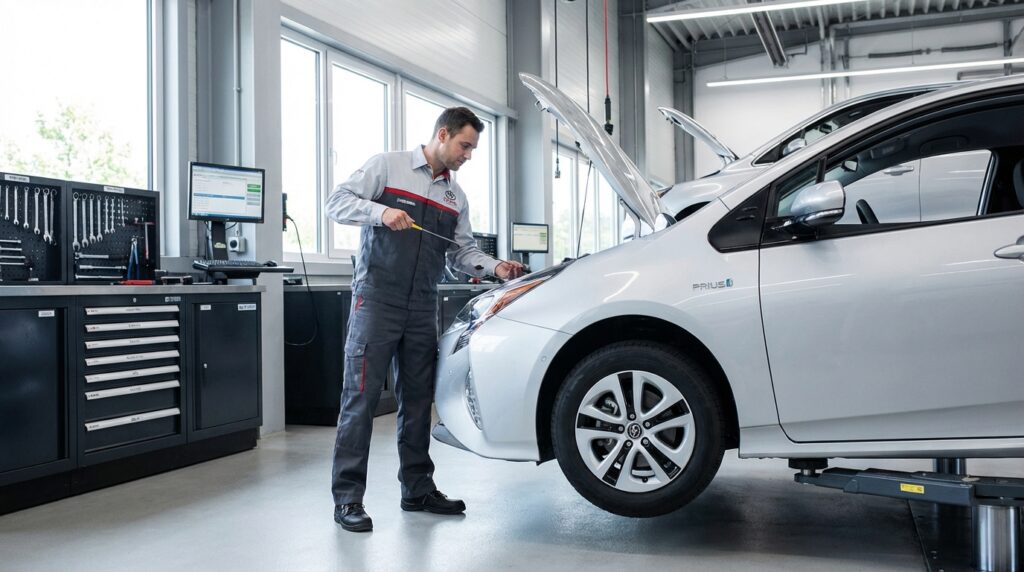
The streets are filling up with hybrid vehicles. Drivers love the idea of spending less money at the gas pump. However, many people still hesitate before buying one. They fear the “new technology.” When drivers look under the hood of a hybrid, they see two engines—a traditional gas engine and an electric motor. Naturally, a common fear pops up: do two engines mean double the repair bills?
Let us clear up this myth right away. People assume that modern technology brings massive service costs. But this simply is not true. We have great news for you. Proper hybrid car maintenance is actually very simple. In fact, caring for a hybrid is incredibly similar to maintaining a traditional gas car.
Even better, a hybrid system actually protects your car from heavy wear and tear. Because the electric motor does so much of the heavy lifting, your gas engine gets a break. This means many of your basic parts will last much longer than you expect.
Whether you already own a hybrid or you plan to buy one soon, you need facts. You need to know what services your car requires. You need to know how much those services cost. In this comprehensive guide, we will break down everything. We cover routine check-ups, battery care, cost comparisons, and easy tips to keep your hybrid running smoothly for years.
How is Hybrid Car Maintenance Different from Gas Cars?
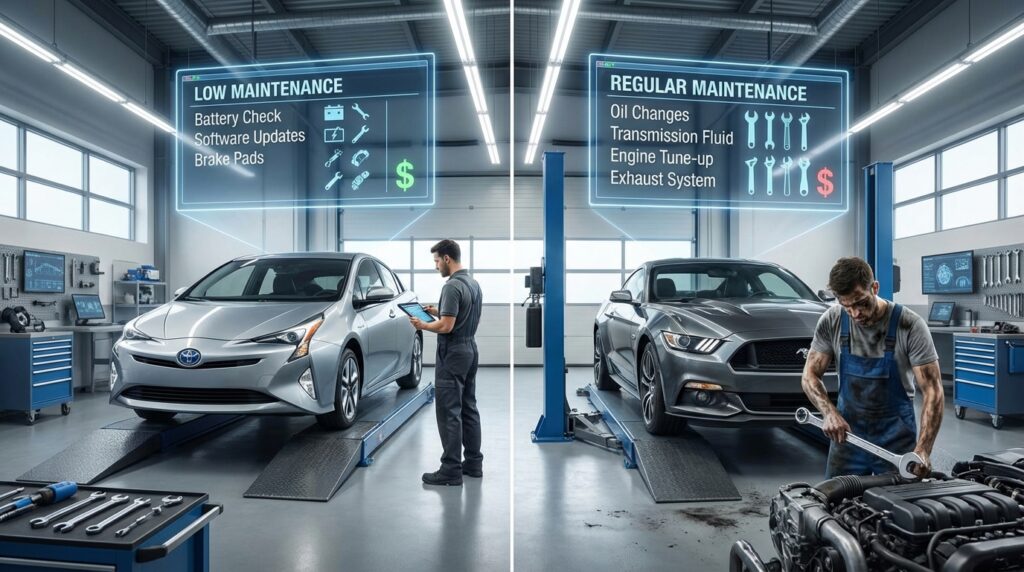
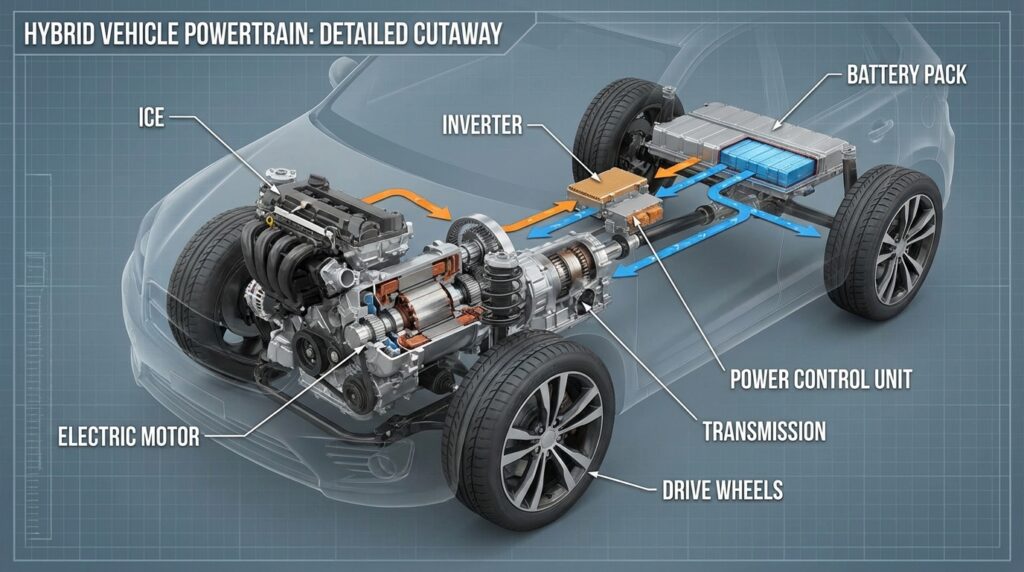
To understand how to fix a car, you first need to understand how it works. A traditional car uses an Internal Combustion Engine (ICE). This engine runs purely on gasoline. It does all the work to move your heavy car forward.
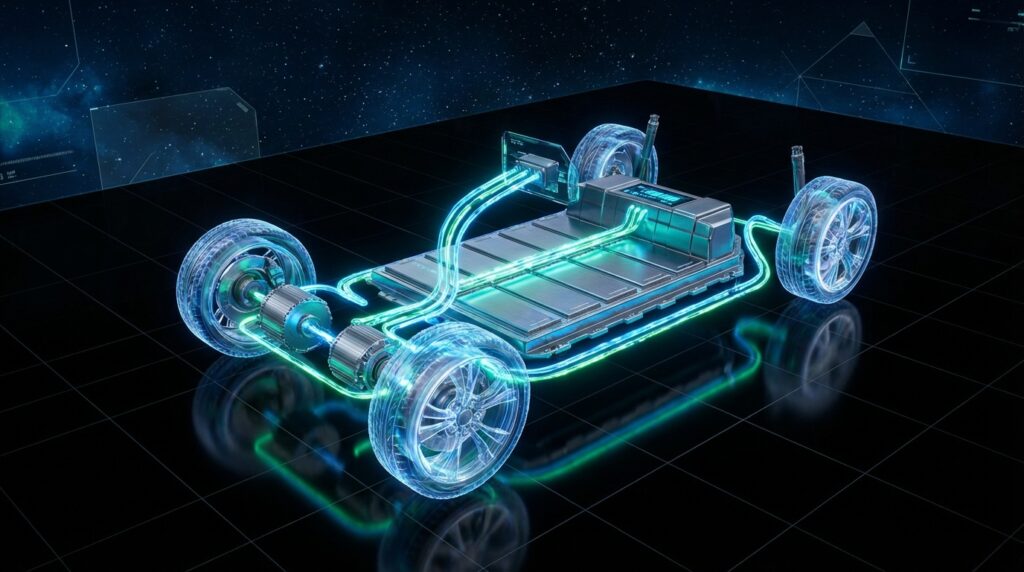
A hybrid vehicle uses a dual-powertrain system. This means it combines a traditional gas engine with a powerful electric motor. These two systems work together in perfect harmony. When you drive at low speeds, the electric motor takes over. When you accelerate hard or drive on the highway, the gas engine kicks in. Sometimes, they both work together to give you extra power.
So, how does this affect your maintenance schedule?
It actually reduces your workload. The electric motor takes the strain off the gas engine. Because the gas engine does not run 100 percent of the time, it suffers far less wear and tear. The belts, the oil, and the mechanical parts simply do not work as hard. Many drivers find that their engine parts outlast the parts on their older, gas-only vehicles.
“The beauty of a hybrid is the synergy. The electric motor acts as a shield for the gas engine, taking the brunt of stop-and-go city driving.”
However, you do have some unique parts to care for. You have a large battery pack. You have complex electrical wiring. You have a special cooling system for the hybrid inverter. These unique parts require specialized attention, which we will cover in the checklist below.
The Essential Hybrid Car Maintenance Checklist
Keeping your hybrid in top shape does not require a magic wand. You just need a solid routine. Below, we break down the most critical maintenance areas for your hybrid vehicle. Follow this checklist to save money and avoid sudden breakdowns.
Do Hybrid Cars Need Oil Changes?
Yes, hybrid cars absolutely need oil changes. Even though your car uses an electric motor, it still relies on a gasoline engine. Gasoline engines use moving metal parts. Those parts need fresh oil to prevent friction and overheating.
But here is the main difference: you can wait longer between oil changes. In a standard car, mechanics often suggest an oil change every 3,000 to 5,000 miles. In a hybrid, the gas engine often shuts off at stoplights or during low-speed driving. Therefore, the engine oil stays cleaner for a longer period.
- Standard Interval: Most modern hybrids require an oil change every 5,000 to 10,000 miles.
- Oil Type: Almost all hybrid manufacturers recommend full synthetic oil. Synthetic oil flows better at low temperatures. This is vital because hybrid gas engines frequently turn on and off while you drive.
- Check Your Manual: Always check your owner’s manual. A Toyota Prius will have slightly different requirements than a Ford Escape Hybrid.
Brake System & Regenerative Braking
If you hate paying for new brake pads, you will love owning a hybrid. Hybrids use a brilliant technology called regenerative braking. This system changes everything about how your car stops.
When you step on the brake pedal in a standard car, mechanical brake pads clamp down on metal rotors. The friction stops the car. This friction wears down the brake pads very quickly.
When you step on the brakes in a hybrid, the car uses the electric motor to slow you down. The motor runs in reverse. This action captures the kinetic energy from your moving car and sends it back to the battery to charge it. Because the electric motor handles most of the stopping power, your physical brake pads hardly do any work.
Thanks to regenerative braking, hybrid brake pads and rotors last significantly longer than traditional cars. Many hybrid owners easily drive 80,000 to 100,000 miles before they need to replace their brake pads. You still need to ask your mechanic to inspect the brake fluid and the pads once a year, but you will spend far less money replacing them.
The Dual Cooling System
Heat is the enemy of any car. In a gas car, you have one radiator and one cooling system to keep the engine from overheating. A hybrid is different. A hybrid generates heat in two places: the gas engine and the electrical system.
Because of this, hybrids feature a dual cooling system. They have one cooling system for the traditional gas engine. They have a second, entirely separate cooling system for the electric inverter and the electric motor. The inverter takes electricity from the battery and converts it to power the motor. This process creates intense heat.
- Coolant Checks: You must check the coolant levels for both systems regularly.
- Hoses and Clamps: Ask your mechanic to inspect the hoses for both cooling systems. A leak in the inverter cooling system will cause the hybrid system to shut down immediately.
- Flush Intervals: You usually need to flush and replace the engine coolant at around 100,000 miles. The inverter coolant often lasts longer, but check your specific manufacturer recommendations.
Don’t Forget the Tires and Suspension
People often forget about the tires. Hybrid vehicles carry massive battery packs. This extra weight makes the car significantly heavier than a standard gas car. The extra weight pushes down hard on your tires and suspension system.
Because of this added weight, you must rotate your tires every 5,000 miles. Regular rotation prevents uneven wear. Furthermore, hybrids use special Low Rolling Resistance (LRR) tires. These tires help the car glide easier, which saves gas. When you buy new tires, make sure you buy the correct LRR tires to keep your high fuel efficiency.
The Elephant in the Room: Hybrid Battery Maintenance
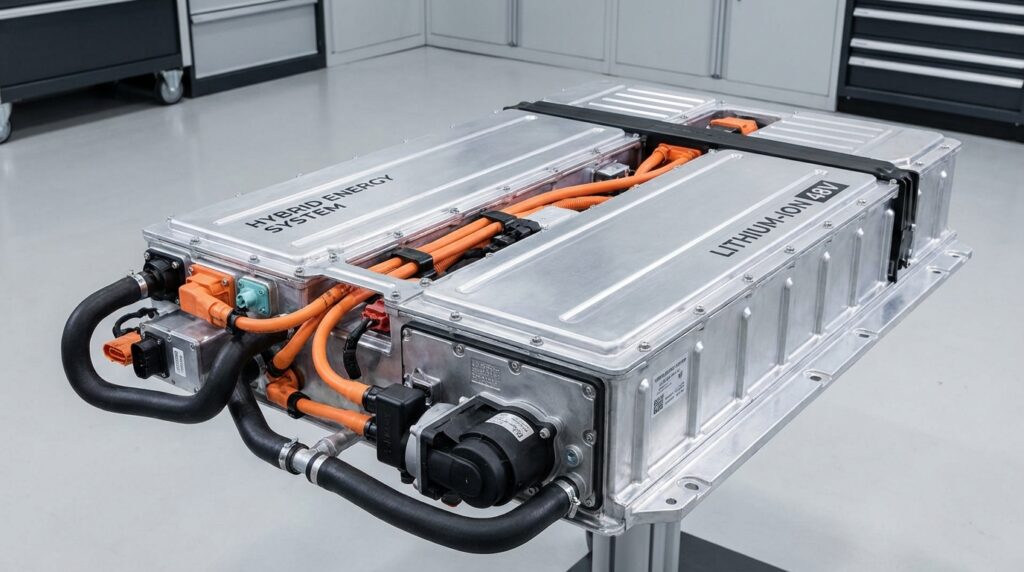
Whenever people talk about hybrids, one topic always dominates the conversation: the battery. Buyers worry about the massive battery pack dying. They hear horror stories about spending thousands of dollars to replace it. Let us look at the facts and learn how to care for this vital component.
How Long Do Hybrid Car Batteries Last?
Most people severely underestimate the lifespan of a hybrid battery. Manufacturers engineer these batteries to last for a very long time. In fact, many hybrid batteries outlast the car itself.
By federal law, auto manufacturers must warranty hybrid batteries for at least 8 years or 100,000 miles. If you live in a state that follows California Air Resources Board (CARB) emissions rules, the law requires a warranty of 10 years or 150,000 miles. If the battery fails during this time, the dealership replaces it for free.
Outside of the warranty, the reality is very positive. According to experts at the US Department of Energy, most hybrid batteries easily last 150,000 to 200,000 miles with proper care. You do not need to lose sleep over early battery failure. The technology is incredibly reliable.
3 Tips to Extend Your Hybrid Battery Life
You can actively help your battery live a long, healthy life. You just need to follow a few easy habits.
- Keep the auxiliary fan filter clean: Your hybrid battery gets hot while you drive. To cool it down, the car uses a special fan. This fan pulls air from the cabin and blows it over the battery. Most cars place the fan vent in the backseat area. A small filter covers this vent. If dog hair, dust, or dirt blocks this filter, the battery will overheat. You must clean or replace this filter once a year. This simple step is crucial for battery cooling.
- Avoid extreme battery depletion: Hybrid batteries hate sitting empty. If you do not plan to drive your car for several months, do not park it with an empty battery. Try to start the car and drive it around the block every few weeks. This keeps the battery cells active and balanced.
- Park in the shade during extreme heat: Extreme temperatures stress battery cells. Heat degrades lithium-ion and nickel-metal hydride batteries faster than anything else. If you live in a very hot climate, try to park your car in a garage or under the shade. Keeping the core temperature down extends the life of the battery pack.
Hybrid Maintenance Cost Breakdown
Let us look at the money. Are hybrids truly cheaper to maintain? We built a table to compare the estimated maintenance schedules and costs between a standard gas car and a hybrid car over five years.
| Maintenance Item | Standard Gas Car | Hybrid Car | Cost Difference Impact |
|---|---|---|---|
| Oil Changes | Every 3,000 – 5,000 miles | Every 5,000 – 10,000 miles | Hybrids save roughly 40% on oil change costs. |
| Brake Pads | Replace every 30,000 – 50,000 miles | Replace every 80,000 – 100,000 miles | Huge savings. Hybrids rarely need new brakes. |
| Engine Belts | Replace every 60,000 miles | Many hybrids use electric accessories (no belts) | Hybrids save money on belt replacements. |
| Coolant Flushes | One system (Engine) | Two systems (Engine + Inverter) | Hybrids cost slightly more for cooling service. |
| High-Voltage Battery | N/A | Rarely replaced under 150k miles. Cost: $2,000+ | High potential cost, but covered by long warranty. |
Overall, routine maintenance on a hybrid costs less than a gas car. You visit the shop less often for oil changes and brake jobs. However, if your high-voltage battery dies after the 150,000-mile mark, you face a large, one-time replacement cost. Most drivers find that the money they save on gasoline easily covers the cost of any future battery repairs.
Answering Your Top Questions (FAQ Section)
We gathered the most frequently asked questions from the internet. Here are the clear, honest answers you need.
Are hybrid cars more expensive to maintain?
Generally, no. Hybrid cars are not more expensive to maintain on a day-to-day basis. While a full battery replacement is expensive, your routine maintenance is usually cheaper. The electric motor reduces wear and tear on your gas engine. Therefore, you spend less money on oil changes, brake pads, and engine repairs over the life of the car.
Do hybrid cars break down more often?
No. Hybrids are historically some of the most reliable vehicles on the road. Because the gas engine does not run continuously, parts simply last longer. Brands like Toyota and Honda perfected hybrid technology over twenty years ago. Cars like the Toyota Prius frequently rank at the top of long-term reliability charts. They rarely suffer sudden breakdowns.
Do hybrid cars need oil changes?
Yes. Even though they have an electric motor, hybrids still have a gasoline engine. That gasoline engine requires clean oil to lubricate its moving parts. However, because the engine turns off during low-speed driving, you can usually wait 5,000 to 10,000 miles between oil changes.
How long do hybrid car batteries last?
Most manufacturers warranty their hybrid batteries for 8 years or 100,000 miles. However, the batteries usually outlast the warranty. With regular driving and proper care, a typical hybrid battery easily lasts 150,000 to 200,000 miles before it needs a replacement.
Can any mechanic work on a hybrid car?
For basic things like oil changes, tire rotations, and cabin filters, yes. Any local mechanic can handle those basic tasks. But for electrical diagnostics or hybrid battery issues, you need a certified hybrid technician. Hybrid cars use high-voltage electrical systems. These systems hold enough power to cause fatal injuries. Only specially trained technicians with insulated tools should touch the orange high-voltage cables under the hood.
Conclusion
Making the switch to a hybrid vehicle is a smart choice for your wallet and the environment. You do not need to fear the technology under the hood. The dual-powertrain system actually works in your favor. It protects your engine, extends the life of your brakes, and keeps you away from the repair shop.
Remember the golden rules of hybrid ownership. Keep up with your extended oil change intervals. Ensure your mechanic checks both cooling systems. Keep the battery cooling fan clean. If you follow these simple steps, your hybrid will deliver hundreds of thousands of miles of reliable, low-cost driving.
You now hold the ultimate guide to keeping your hybrid running perfectly. The technology is safe, the maintenance is affordable, and the gas savings are real.