
Buying a Toyota Camry is often called a “safe bet.” You buy it because you want a car that starts every morning, holds its value, and doesn’t drain your bank account with surprise repairs. But even the most reliable sedan in America needs more than just gas to keep running.
If you are planning your budget or comparing used cars, you need to know the truth about toyota camry maintenance cost. Is it actually cheap to own, or do hidden service fees pile up as the odometer spins?
The short answer is yes, the Camry is exceptionally affordable to maintain—but costs do change significantly as the vehicle ages. This guide breaks down exactly what you can expect to pay, from the first oil change to the high-mileage investments needed after 100,000 miles.
Average Toyota Camry Maintenance Cost Per Year
The Toyota Camry consistently ranks as one of the cheapest vehicles to maintain in the midsize sedan segment. According to data from RepairPal and CarEdge, the average toyota camry maintenance cost per year sits around $388 to $450. This is significantly lower than the industry average for midsize sedans, which hovers closer to $530 per year.
However, “average” can be misleading. A brand-new Camry will cost very little, while a ten-year-old model will naturally require more attention. Below is a realistic breakdown of estimated annual costs over a 10-year ownership period.
| Vehicle Age | Est. Annual Maintenance Cost | Common Services |
|---|---|---|
| Year 1 | $205 | Oil changes, tire rotations (often free with ToyotaCare) |
| Year 3 | $285 | Filters, brake inspections, alignment check |
| Year 5 | $425 | Tires, battery, transmission fluid check, brake pads |
| Year 7 | $600 | Coolant flush, potential brake rotors, spark plugs |
| Year 10 | $670+ | Belts, hoses, suspension wear, high-mileage fluids |
Note: These prices are estimates based on independent shop rates. Dealership service centers typically charge 20–40% more.
Maintenance Cost by Mileage
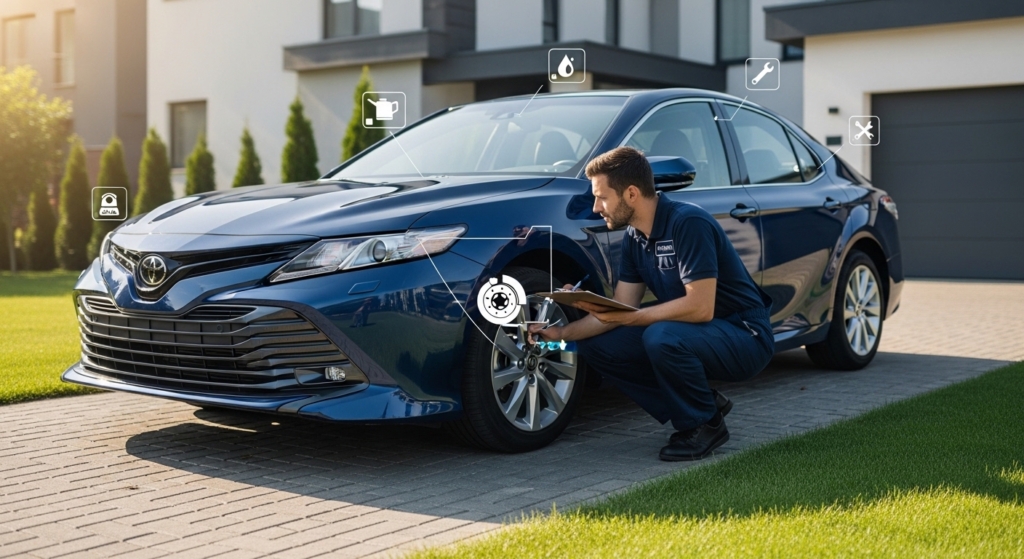
To understand where your money goes, it helps to look at the car’s life in three distinct stages. The toyota camry service cost profile shifts from basic upkeep to preventative replacements as you rack up miles.
0 to 50,000 Miles: The “Honeymoon” Phase
During this period, your wallet is safe. The Camry requires very little beyond the basics. If you bought new, the first two years or 25,000 miles of maintenance are often covered by ToyotaCare. Your main expenses here will be routine oil changes (every 5,000–10,000 miles), tire rotations, and engine/cabin air filters. Unless you drive aggressively, you likely won’t even need new brakes yet.
50,000 to 100,000 Miles: The “Wear & Tear” Phase
As you approach the 60,000-mile mark, standard wear items start needing replacement. This is where the toyota camry ownership cost takes a slight jump.
- Tires: A good set of tires will cost between $600 and $900.
- Brakes: Brake pads usually last 40k–60k miles. Expect to pay for at least one set of pads and possibly rotors.
- Transmission Fluid: While Toyota claims some fluids are “lifetime,” most mechanics recommend a drain-and-fill around 60,000 miles to ensure longevity.
100,000+ Miles: The “Investment” Phase
Once you hit six figures on the odometer, maintenance shifts from “keeping it running” to “keeping it reliable.” Camry maintenance after 100k miles is critical. You are not just changing oil anymore; you are replacing parts that have cycled millions of times.
At this stage, you should budget for spark plugs, a coolant flush, and potentially a water pump or serpentine belt. This is also when suspension components like struts may begin to soften. While this sounds expensive, it is far cheaper than a monthly car payment. If you skip these services, you risk encountering Toyota Camry Common Problems like oil consumption or overheating.
What Maintenance Costs the Most?
Most Camry owners will never face a catastrophic repair bill. However, it is smart to know the price of common service items so you aren’t shocked at the repair shop counter.
| Service Item | Estimated Cost (Parts & Labor) | Frequency |
|---|---|---|
| Synthetic Oil Change | $60 – $90 | Every 10k miles (5k recommended) |
| Tire Rotation | $30 – $50 | Every 5k miles |
| Brake Pads (Per Axle) | $180 – $300 | Every 40k–60k miles |
| Transmission Fluid Change | $200 – $400 | Every 60k–100k miles |
| Spark Plugs Replacement (4-cyl) | $150 – $250 | Every 100k–120k miles |
| Struts/Shocks Replacement | $800 – $1,200 | Every 100k+ miles (if worn) |
A Note on Hybrid Models
If you own a Camry Hybrid, you save money on brake pads (thanks to regenerative braking) but face one unique long-term cost: the high-voltage battery. While modern Toyota hybrid batteries are incredibly durable, often lasting 150,000 to 200,000 miles, replacing one is a major expense. A new OEM battery can cost $2,500 to $4,500, though refurbished options are available for significantly less.

How Camry Costs Compare to Competitors
You might be wondering, is toyota camry expensive to maintain compared to its rivals? Generally, no. It often wins the comparison.
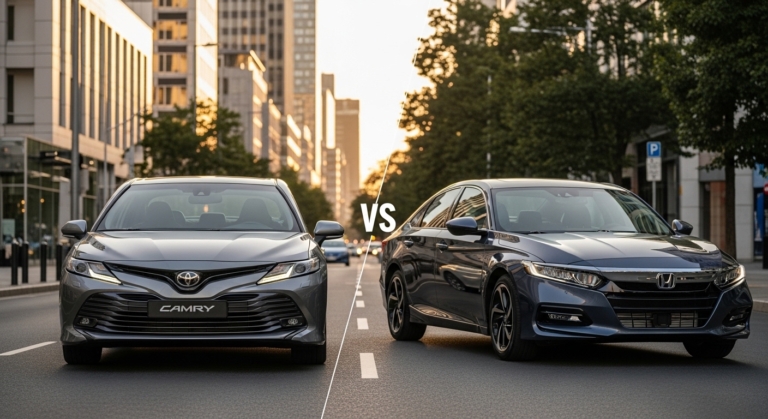
- Toyota Camry vs. Honda Accord: These two are neck-and-neck. The Accord is reliable, but some model years have slightly higher costs for transmission services and turbocharger maintenance (on newer 1.5T models). The Camry’s naturally aspirated engines are simpler and often cheaper to service long-term.
- Toyota Camry vs. Nissan Altima: The Camry is the clear winner here. While routine maintenance prices are similar, the Altima has a higher historical risk of CVT transmission failure, which can turn a maintenance budget into a massive repair bill.
- Toyota Camry vs. German Sedans: There is no contest. A Camry will cost half (or less) of what it costs to maintain a BMW 3-Series or Audi A4 over 10 years.
Tips to Keep Maintenance Costs Low
Even though the Camry is affordable, you don’t want to overpay. Here is how experienced owners keep their running costs down:
1. Find a Trusted Independent Mechanic
Once your warranty expires, stop going to the dealership for routine work. Independent shops usually charge $100–$150 per hour for labor, whereas dealerships can charge $180 or more. For standard jobs like brakes and suspension, the quality of work is virtually the same.
2. DIY the Easy Stuff
You can save $100 a year just by changing your own air filters. Engine and cabin air filters on a Camry require no tools and take five minutes to swap. Wiper blades are another easy DIY win.
3. Don’t Ignore the “Severe” Schedule
Most owners follow the “Normal” maintenance schedule in their manual. However, if you do short city trips, drive in extreme heat, or sit in stop-and-go traffic, you fall under “Severe” service. Changing your oil every 5,000 miles instead of 10,000 miles costs a little more now but protects your engine from Toyota Camry Engine Problems later, such as sludge buildup.

Frequently Asked Questions
Is the Toyota Camry expensive to maintain?
No. The Toyota Camry is one of the least expensive sedans to maintain. Owners typically spend between $388 and $450 per year on routine maintenance, which is well below the industry average.
Does Camry maintenance get expensive after 100k miles?
Maintenance costs do increase after 100,000 miles because major service items like spark plugs, coolant flushes, and suspension struts usually come due. However, these are predictable wear items, not surprise repairs.
How much is a Toyota Camry oil change?
A synthetic oil change for a Toyota Camry typically costs between $60 and $90 at an independent shop. Dealership prices may range from $80 to $120.
Is the Camry Hybrid more expensive to maintain than the gas model?
Generally, no. The hybrid system reduces wear on the engine and brakes, often lowering annual costs. The only major potential expense is the high-voltage battery replacement, which may occur after 10 to 15 years.
The Bottom Line
The toyota camry maintenance cost is one of the strongest selling points of the car. It offers a rare combination of comfort, longevity, and financial predictability. While no car is free to run, the Camry respects your budget more than almost any other vehicle on the road.
If you stick to the schedule and treat the car well, it will likely return the favor for hundreds of thousands of miles. For a deeper look into what to watch out for as your mileage climbs, be sure to read our guide on Toyota Camry Common Problems.
According to industry data from RepairPal, the Toyota Camry ranks among the lowest-cost midsize sedans to maintain.