
The Toyota Camry is widely considered the gold standard of the midsize sedan segment. For decades, it has served as the default choice for buyers seeking reliability, resale value, and stress-free ownership. However, even automotive legends have off years. While the Camry is generally more dependable than almost any competitor, there are specific model years where engineering missteps, manufacturing defects, and component failures created headaches for owners.
If you are in the market for a used sedan, knowing which worst Toyota Camry years to steer clear of can save you thousands of dollars in repairs. A 2009 model might look identical to a 2011 on the outside, but under the hood, the difference in reliability can be drastic.
This guide dives deep into the specific production years that carry higher risks. We will analyze the data, explain the mechanical reasons behind the failures, and help you find a bulletproof model that lives up to the Toyota reputation.
Why Model Year Matters More Than Generation
Many buyers assume that if a “generation” of cars is good, every year within that generation is safe. With the Camry, this isn’t always true. Toyota often refreshes engines, transmissions, and interior materials mid-cycle. Consequently, the first year of a new generation often has “teething issues,” while the final years are usually the most refined.
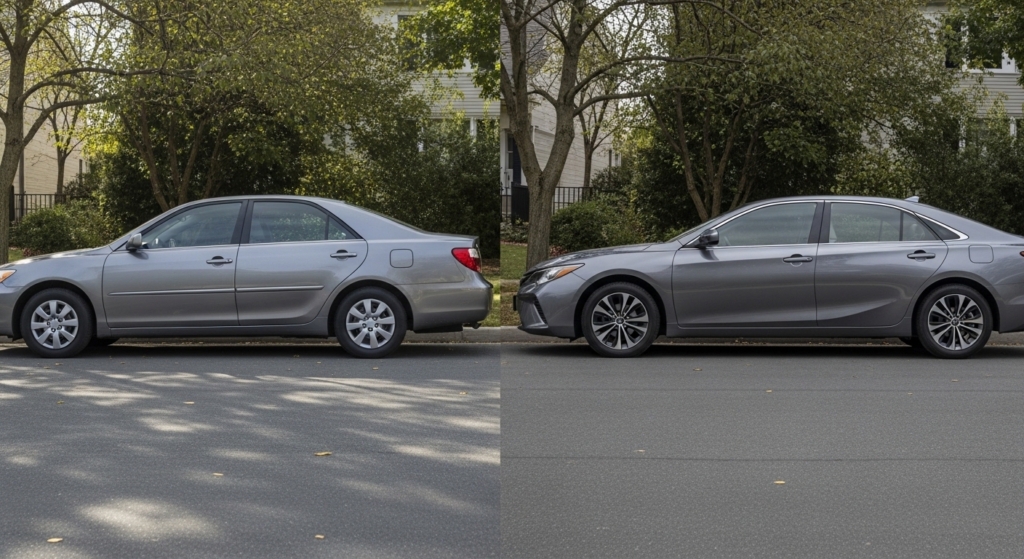
For example, the XV40 generation (2007–2011) contains both some of the most problematic vehicles Toyota ever produced and some decent options, depending entirely on the manufacture date and engine choice. Understanding these nuances is key to using this used Toyota Camry buying guide effectively.
Quick Look: Toyota Camry Years to Avoid vs. Best Bets
Before we dig into the mechanical details, here is a quick cheat sheet to help you categorize your search.
The “Red Flag” List
These are the years with the highest volume of complaints regarding engine failures, transmission issues, or interior defects.
| Model Year | Primary Risk Factor | Severity Level |
|---|---|---|
| 2007 | Excessive Oil Consumption & Transmission Hesitation | High |
| 2008 | Excessive Oil Consumption & Melting Dashboards | High |
| 2009 | Engine Defects (Oil Burning) | Medium-High |
| 2002 | Stripped Head Bolts (Engine Failure) | Medium |
| 2012–2014 | Torque Converter Shudder & AC Mold Smells | Moderate |
The “Green Light” Alternatives
If you want the classic Camry reliability, these years generally have lower complaint volumes and proven longevity.
| Model Year | Why It’s a Safer Bet |
|---|---|
| 2004–2006 | The peak of the 5th generation. Highly refined engine mountings and very few transmission complaints. |
| 2015–2017 | Post-refresh models where the torque converter issues were largely resolved. Updated styling and tech. |
| 2010–2011 | The tail end of the problematic generation, but with many of the oil consumption issues addressed by Toyota manufacturing changes. |
| 2018–Present | Built on the TNGA platform. While newer, they have shown excellent powertrain stability so far. |
Deep Dive: The Worst Toyota Camry Years Analyzed
To make an informed decision, you need to understand why these years are flagged. It is rarely the entire car that fails; rather, specific components tend to wear out prematurely. For a broader overview of component failures across all generations, you can refer to our detailed guide on Toyota Camry Common Problems.
2007–2009: The Oil Consumption Era
If there is one period of time that stains the Camry’s resume, it is the launch of the XV40 generation. The 2007 model year is statistically one of the most complained-about vehicles in Toyota’s history.
The Problem: The 2AZ-FE 2.4L 4-cylinder engine had a fatal design flaw in the piston rings. The oil return holes in the pistons were too small and prone to clogging with carbon deposits. Once clogged, the engine would begin to burn oil at an alarming rate—sometimes a quart every 600 to 1,000 miles.
The Risk: Many owners didn’t realize their oil was low until the oil pressure light came on, by which time internal engine damage had occurred. Driving with low oil accelerates timing chain wear and can lead to rod knock.
Secondary Issue: These years also suffered from the infamous “melting dashboard” sticky surface, where the dashboard material would degrade in sunlight, becoming shiny, sticky, and reflective.
2002: The Stripped Head Bolt Disaster
The 2002 Camry marked the introduction of the 5th generation. While the V6 models were generally solid, the 4-cylinder models introduced a new aluminum block engine that had a specific weakness.
The Problem: The threads for the cylinder head bolts in the engine block were too short and weak. Over time, heat cycles caused the threads to strip out. When the bolts lost their grip, the head gasket would lose its seal.
The Risk: This mimics a blown head gasket but is much more expensive to fix. Coolant would leak, the engine would overheat, and the heater would stop working. Repairing this properly often required drilling out the block and inserting steel thread inserts (Time-Serts), a costly labor-intensive job.
2012–2014: The Torque Converter Shudder
The 2012 redesign brought a sharper look, but it introduced some drivability issues, particularly with the automatic transmission paired with the 4-cylinder engine.
The Problem: The torque converter software (and sometimes the hardware itself) caused a “shudder” that felt like driving over rumble strips when accelerating lightly between 25 and 50 mph.
The Risk: While less catastrophic than a blown engine, this issue significantly degrades the driving experience. Toyota issued a “Limited Service Campaign” (essentially a warranty extension) to update the software or replace the torque converter, but coverage for many of these vehicles has since expired.
Secondary Issue: These years are also notorious for a foul, musky odor coming from the air conditioning vents, caused by mold growth on the evaporator core due to poor drainage design.
Are These “Bad Years” Always a Bad Buy?
This is where the nuance of a used car purchase comes into play. Just because 2007 is listed among the problematic Toyota Camry years doesn’t mean every single 2007 Camry is destined for the junkyard.
The Maintenance Factor
Toyota acknowledged the oil consumption issue on the 2007–2009 models and offered a warranty extension (Enhanced Warranty Support Program ZE7) that covered engine repairs for 10 years or 150,000 miles. If you find a 2008 Camry that had its pistons and rings replaced by a Toyota dealership under this program, it is actually a very safe buy. The defect was removed.
Similarly, a 2012 Camry that received the transmission software update and a torque converter replacement early in its life is likely to run for another decade without complaint.
The Engine Distinction
When discussing the worst Camry models, we are often talking about the 4-cylinder versions. In almost every “bad” year listed above, the V6 option was significantly more reliable. For example, a 2007 Camry XLE with the V6 engine does not suffer from the piston ring oil burning issue that plagued the base 4-cylinder models.
If you love the body style of a specific “bad” year, simply opting for the V6 engine can often bypass the major reliability hurdles.
Buyer’s Inspection Guide: What to Check
If you are looking at a Toyota Camry reliability by year chart and still decide to view a high-risk model (perhaps because the price is unbeatable), you must perform a rigorous inspection. Here is what to look for before handing over cash.
1. The Cold Start Test (For 2002–2009 Models)
Ask the seller not to run the car before you arrive. Start the engine cold and watch the exhaust immediately. A puff of blue smoke indicates oil burning (valve stem seals or rings). A puff of white, sweet-smelling smoke could indicate the head bolt/gasket failure common in 2002–2006 models.
2. The Dipstick Check
Pull the oil dipstick. If the oil level is critically low, or if the oil looks like thick sludge, walk away. On 2007–2009 models, low oil is a tell-tale sign the owner has not been keeping up with the high consumption rate.
3. The Torque Converter Test (For 2012–2014 Models)
During your test drive, find a flat road. Accelerate gently to about 40 mph and hold your speed steady. If the car vibrates, shudders, or feels like it is struggling to decide on a gear, the torque converter is failing. This is a repair that can cost upwards of $2,000 if not covered by warranty.
4. The Dash Touch
For 2007–2011 models, touch the dashboard near the windshield. If your finger leaves an imprint or it feels sticky/tacky, the material is degrading. This causes glare issues and can be difficult to clean.
Safer Alternatives: Where to Put Your Money
If you want to avoid the headache entirely, the smartest strategy is to look for the “refresh” years. Toyota typically fixes issues 2 or 3 years into a generation.
- The Budget King: A 2005 or 2006 Camry. These are older, but the engine bolt issues were largely resolved, and they are incredibly durable.
- The Value Pick: A 2015–2017 Camry. Toyota overhauled the suspension, interior, and transmission mapping for 2015. These cars feel modern, ride well, and lack the oil burning or shuddering traits of their predecessors.
- The Modern Choice: A 2018 or newer Camry. The shift to the TNGA platform brought better handling and excellent fuel economy. While complex electronics always carry some risk, the powertrains have proven robust.
For extra peace of mind, always run the Vehicle Identification Number (VIN) through the NHTSA Recall Check to see if outstanding safety recalls have been performed.
Frequently Asked Questions
What is the absolute worst year for the Toyota Camry?
Statistically, the 2007 Toyota Camry is considered the worst year due to the sheer volume of complaints regarding excessive oil consumption in the 2.4L engine. It marked the first year of a new generation, which typically carries higher risks.
Do all 2007–2009 Camrys burn oil?
Not all of them, but a significant number of 4-cylinder models do. The issue stems from the piston ring design. V6 models from these years generally do not suffer from this specific problem.
Is the 2012 Camry transmission issue fixable?
Yes. The “shudder” issue in 2012–2014 models is usually caused by the torque converter. Toyota issued software updates that fixed it for some, while others required a full torque converter replacement. If the replacement was done, the car is likely fine.
Are high-mileage Camrys from bad years safe to buy?
Sometimes, yes. If a 2007 Camry has 200,000 miles, it likely had the piston rings replaced under warranty or the owner was meticulous about topping off the oil. A high-mileage car that runs well has proven it survived the manufacturing defects.
Which Camry generation is the most reliable?
Many mechanics consider the late 5th generation (2005–2006) and the late 7th generation (2015–2017) to be the sweet spots for reliability. They represent the most refined versions of their respective platforms.
Final Thoughts
Labeling these as the worst Toyota Camry years is relative. A “bad” Camry is often still more reliable than a “good” car from other manufacturers. However, as a buyer, your goal is to minimize risk. By avoiding the 2007–2009 oil burners and being cautious with the 2012–2014 transmissions, you can ensure your used Toyota provides the legendary longevity the brand is famous for.
Remember to check maintenance records, verify recall work, and consider a pre-purchase inspection. A little homework now prevents a lot of heartache later.