
Imagine driving your car on a hot summer day, but instead of crisp, cool air blowing from the vents, you get a weak breeze that smells like old gym socks. That is the reality of driving with a clogged, dirty cabin filter. Breathing clean air while driving is essential for your comfort and health. A dirty filter severely limits your car’s air conditioning performance and traps nasty odors inside the interior.
We have great news for you. Performing a VW Golf cabin air filter replacement is one of the absolute easiest DIY tasks you can do at home. You do not need to pay a mechanic or a dealership expensive labor fees for this job. It takes less than 10 minutes, requires zero special tools, and instantly improves your driving experience.
Keeping up with your cabin filter is a crucial part of overall VW Golf Maintenance & Service, ensuring your car runs—and smells—perfectly. In this comprehensive guide, we will walk you through every step of the process, help you identify when it is time for a change, and answer all your burning questions.
Engine Air Filter vs. Cabin Air Filter: What’s the Difference?
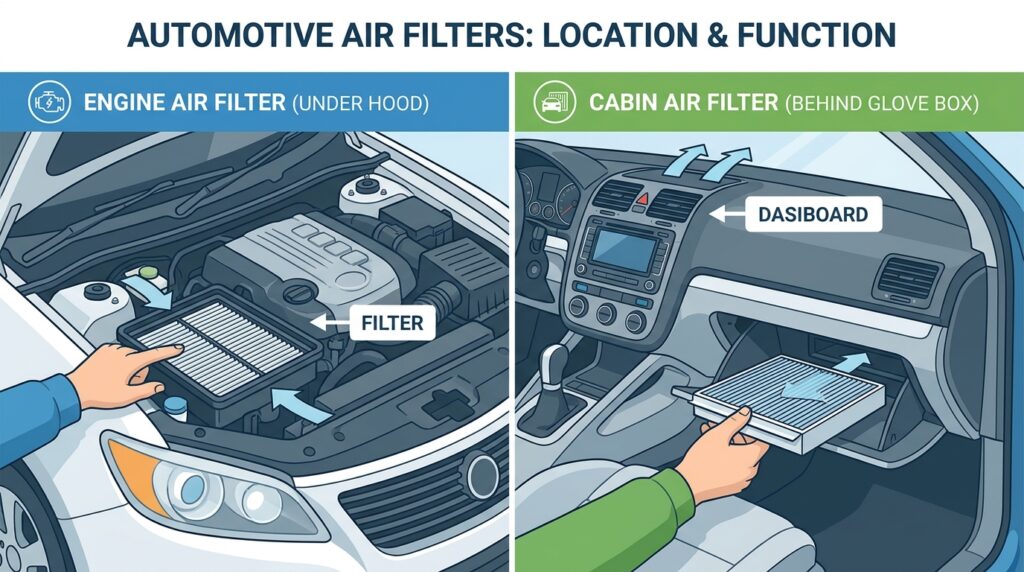
Many drivers get confused between the different filters in their vehicles. Dealerships often suggest replacing “your air filters,” but they usually refer to two very different components. Understanding the difference saves you time and money.
The cabin air filter is entirely dedicated to the passengers. It cleans the air entering the interior of your car through the HVAC (Heating, Ventilation, and Air Conditioning) system. It blocks dust, pollen, exhaust fumes, and bugs from blowing into your face. Think of it as the lungs of your car’s interior.
On the other hand, the engine air filter lives under the hood. It cleans the outside air before it goes into the engine cylinders for combustion. An engine needs clean air to burn fuel efficiently, just like you need clean air to breathe.
Pro Tip: While you are checking your cabin filter, it is highly recommended to also check your engine bay. Read our complete guide on VW Golf air filter replacement to keep your engine breathing right and maintaining top fuel efficiency.
Signs It’s Time for a VW Golf Cabin Air Filter Replacement
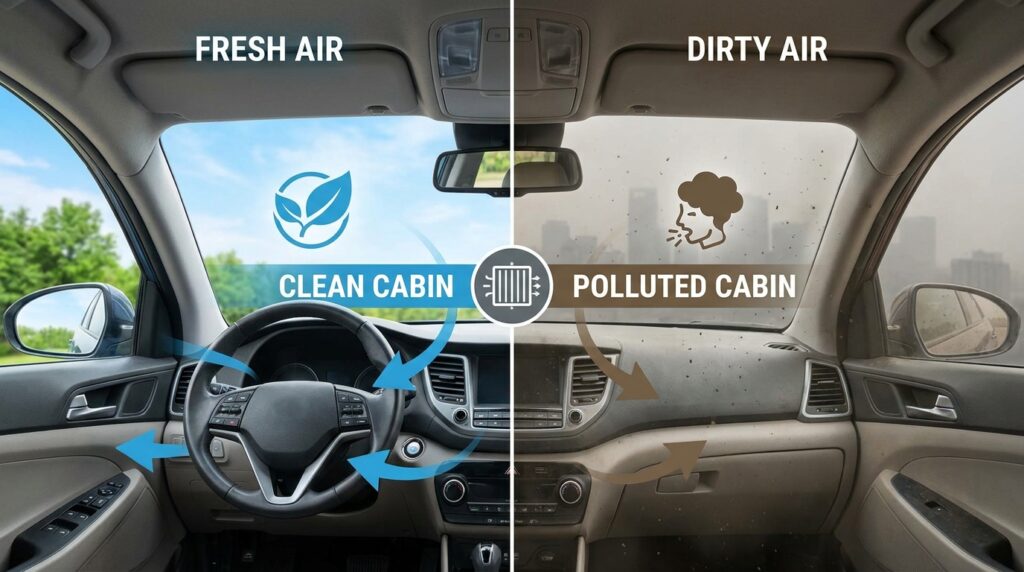
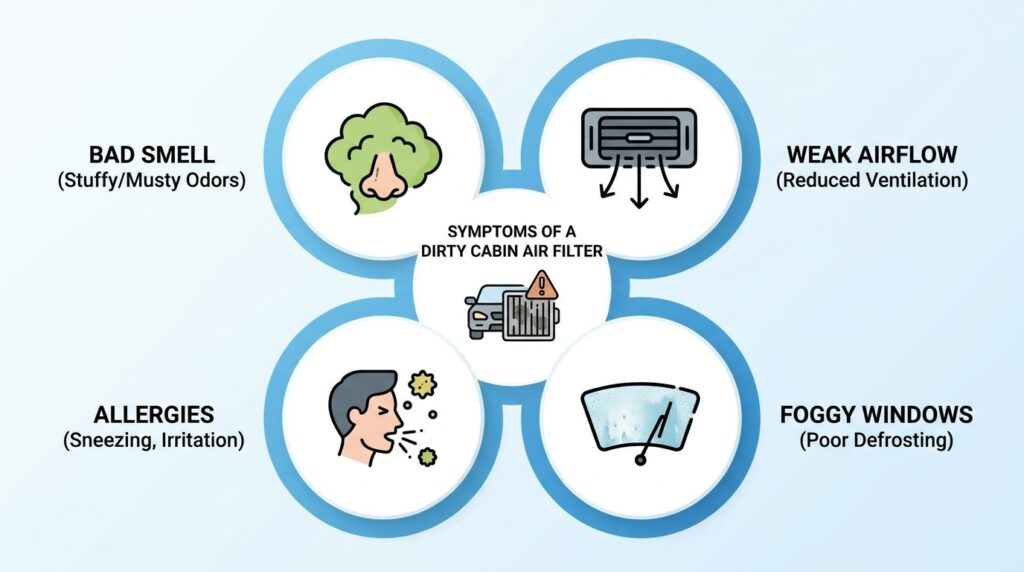
Your car usually gives you very clear hints when the cabin filter reaches the end of its life. If you ignore these signs, you put extra strain on your blower motor, which can lead to expensive AC repairs down the road. Look out for these top symptoms:
- Musty or dusty odors coming from the AC vents: If your car smells like a damp basement when you turn on the fan, mold and bacteria have likely started growing on the trapped debris in your filter.
- Weak airflow when the heater or AC is turned up: When the filter gets clogged with leaves, dirt, and dust, air physically cannot pass through it. You might hear the fan blowing hard, but feel almost no air coming from the vents.
- Increased allergies or sneezing while driving: If you find yourself sneezing or getting watery eyes every time you drive, your VW Golf AC filter is no longer trapping pollen and allergens.
- Foggy windows that take longer to clear: A clogged filter restricts fresh air circulation, trapping moisture inside the cabin. This makes your windshield fog up quickly and take forever to defrost in the winter.
“A clean filter is just as important for your interior as a good wash. If you want a perfectly fresh interior, pair this filter change with our ultimate VW Golf detailing & car wash guide.”
How Often Should You Replace It?
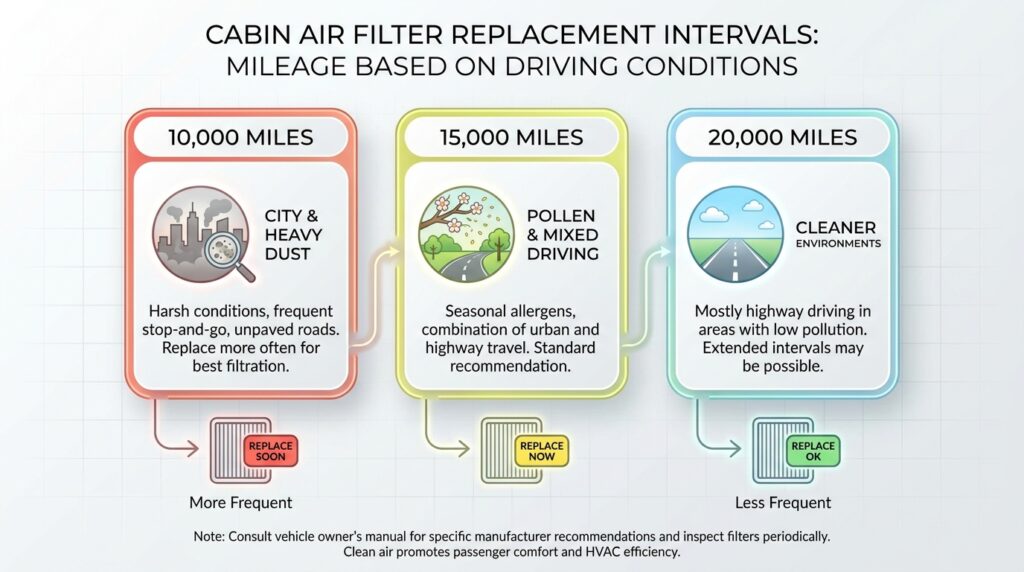
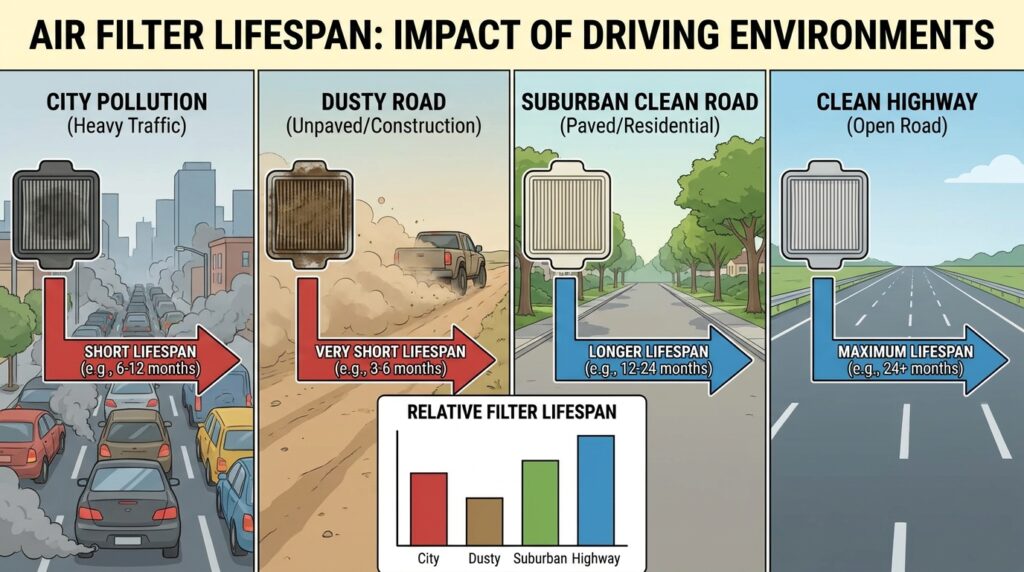
Volkswagen generally recommends changing the cabin air filter on a VW Golf every 15,000 to 20,000 miles, or at least once a year. However, this is not a strict rule. Your driving environment plays a massive role in how fast the filter gets dirty.
If you live in a city with heavy smog, park under trees that drop lots of leaves, or frequently drive on dusty gravel roads, your filter will clog much faster. In these conditions, you might need to swap it out every six months.
| Driving Environment | Recommended Replacement Interval | Why? |
|---|---|---|
| Standard Highway/Suburbs | Every 15,000 – 20,000 miles (1 Year) | Normal dust and pollen accumulation over four seasons. |
| Heavy City Traffic | Every 10,000 – 15,000 miles (8-12 Months) | High exposure to exhaust fumes, brake dust, and smog. |
| Rural / Dusty Dirt Roads | Every 10,000 miles (6 Months) | Heavy dirt and debris physical block the filter layers quickly. |
Maintenance Reminder: To see exactly where this fits into your overall vehicle care, check our complete VW Golf service intervals & schedule. Staying on schedule prevents larger mechanical failures.
Tools and Parts You Will Need
One of the best things about the Golf Mk7/Mk8 cabin filter replacement is that you need absolutely zero tools. You do not need screwdrivers, pliers, or wrenches. All you need are your hands, a good flashlight (your phone works fine), and your new replacement filter.
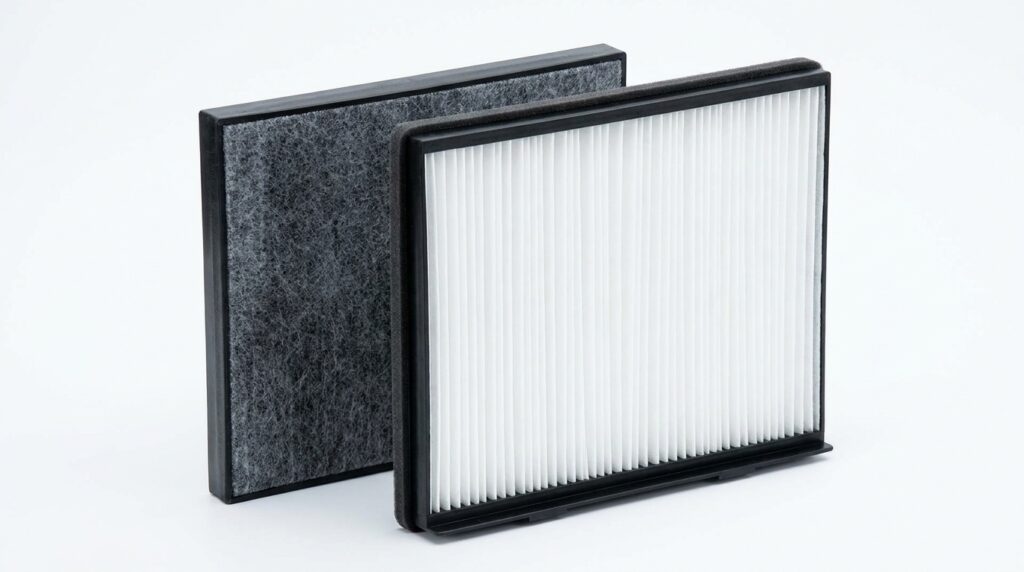
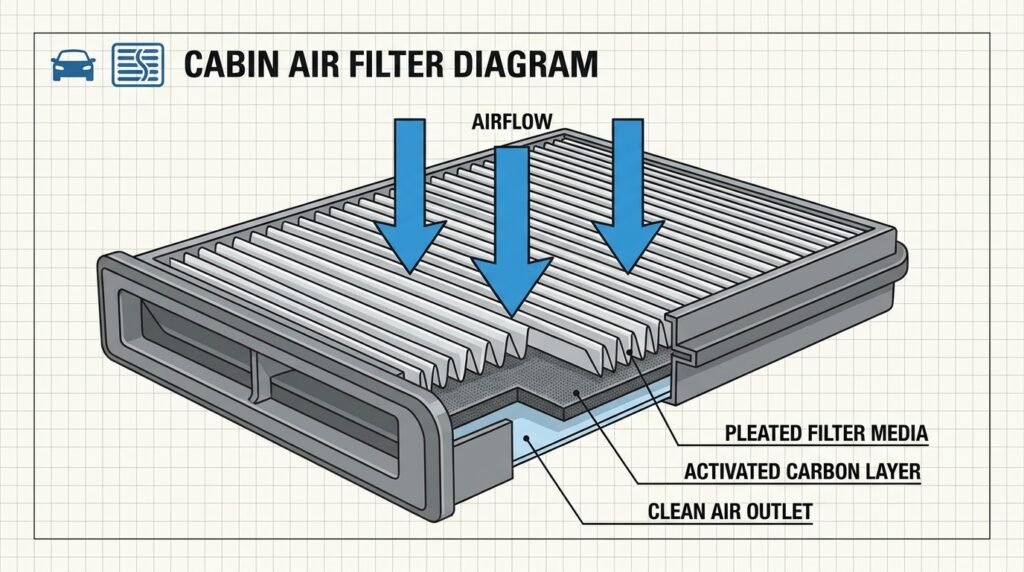
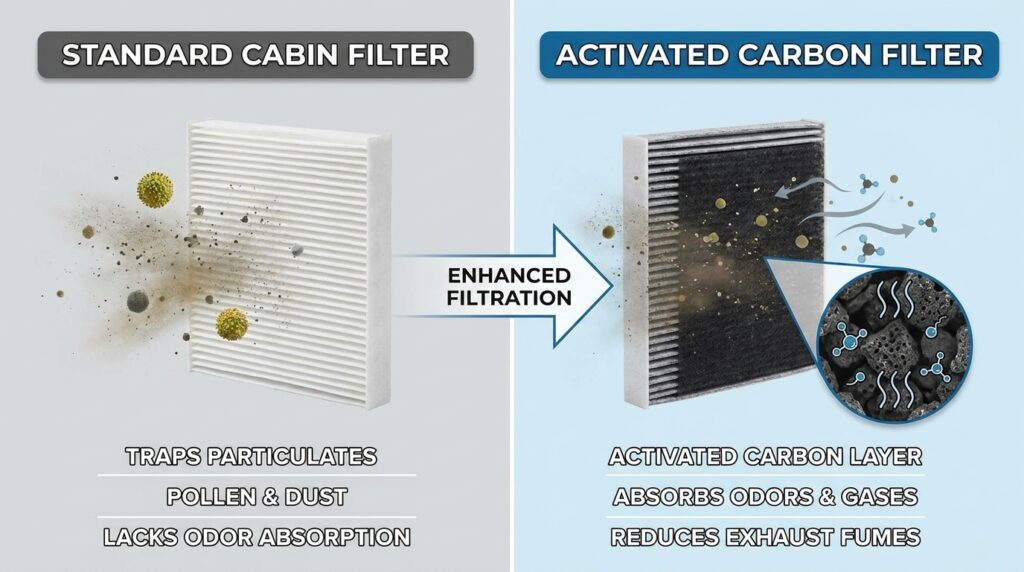
When buying a new filter, you usually have two choices: a standard paper filter or an activated carbon filter. We highly recommend spending the extra few dollars on the active carbon version.
Standard paper filters only block physical particles like dust and leaves. Activated carbon filters feature a layer of charcoal that absorbs harmful gases, exhaust fumes, and foul odors from the outside environment. If you want a premium cabin experience, carbon is the way to go. You can read more about the benefits of carbon filters from automotive experts at AAA Auto Repair.
Step-by-Step: How to Replace the Cabin Air Filter in a VW Golf
This process is very straightforward. Note that this guide primarily covers the highly popular MK7 and MK8 generations. The process is generally the same for both, though you might notice very slight visual variations in the plastic clips depending on your exact model year.
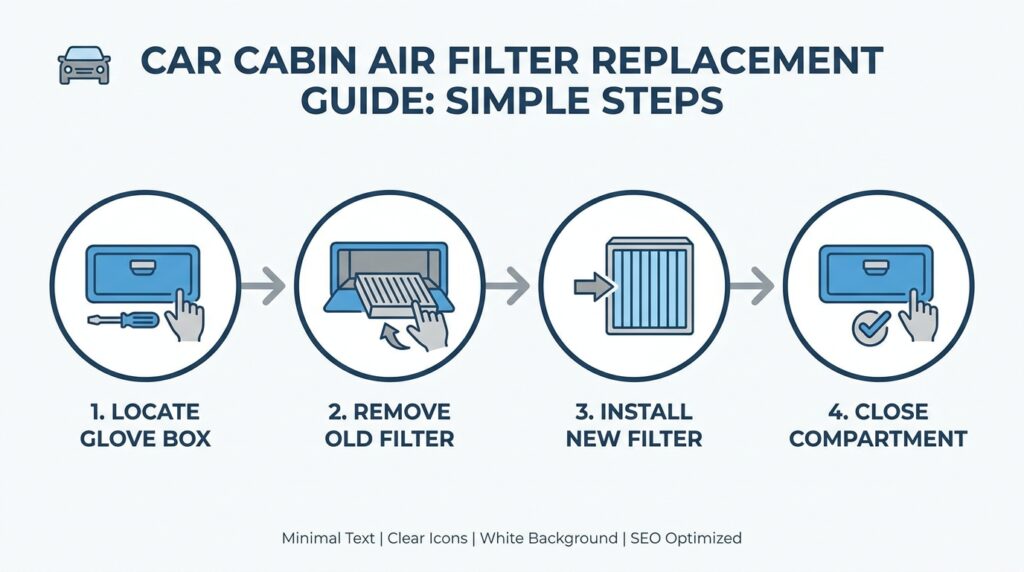
Step 1: Empty the Glove Box
The VW Golf cabin filter location is cleverly hidden right behind the passenger-side glove compartment. Before you start, open your glove box and take everything out. Remove your owner’s manual, registration papers, sunglasses, and any other items. When you drop the glove box down in the next steps, anything left inside will spill all over your floor mats.
Step 2: Release the Glove Box Tabs
Look inside the empty glove box. On the left and right sides near the top, you will see two plastic stopper tabs holding the box up. You need to push upwards on these tabs while gently pulling the glove box towards you.
If you own an MK7 Golf, look on the outer right side of the glove box. You will see a small plastic arm (the damper gear) connected to the box. This arm makes the glove box open smoothly instead of falling fast. Simply push this little arm upward to unclip it. Once the tabs and the arm are released, the glove box will swing all the way down toward the floorboard, revealing the blower motor and filter housing behind it.
Step 3: Locate and Open the Filter Housing
Look into the space that was behind the glove box. You will see a rectangular black plastic cover. This is the door to your cabin air filter housing. At the top of this cover, there are three small plastic clips. Push down on these clips gently and pull the cover toward you. It will unclip and come right off. Set this cover aside safely.
Step 4: Remove the Old Filter
You can now see the edge of your old filter. Grab it and pull it straight out toward you.
Important Note: Pull the old filter out very slowly and carefully! It is likely filled with dead bugs, dry leaves, and loose dust. If you yank it out quickly, all that debris will fall straight down into your blower motor fan or onto your passenger floor mat, creating a huge mess. Keep it level as you pull it out.
Step 5: Insert the New Cabin Air Filter
Take your brand-new filter out of its packaging. Before you slide it into the housing, you must look at the sides of the filter. You will see arrows printed on the edge labeled “Air Flow.”
Crucial step: The Air Flow arrows must point DOWN toward the floor of the car. The blower motor pulls air from the outside (top) and blows it into the cabin (bottom). If you install the filter upside down, it will restrict your airflow and eventually cause a whistling noise. Once the arrows are pointing down, slide the new filter smoothly into the slot until it sits flush.
Step 6: Reassemble the Glove Box
Now, just reverse your steps. Take the black plastic housing cover, line up the bottom hinges, and snap the top three clips back into place. You will hear a satisfying click. Next, lift the glove box back up. If you disconnected the damper arm on the right side, snap it back onto its peg. Push the glove box firmly upward until the two side stopper tabs click back into their normal position. Put your belongings back inside, and you are done!
Maximize Your DIY Time: Since your car is already parked and you’re in a DIY mood, this is a great time to tackle other easy maintenance items, such as a VW Golf oil change or a simple VW Golf battery replacement. Doing these tasks together saves you massive amounts of time and dealership fees.
Frequently Asked Questions (FAQs)
Even though this is a simple procedure, many owners have specific questions before they get their hands dirty. We researched the most commonly asked questions by VW Golf owners to give you clear, direct answers.
Where is the cabin air filter located on a VW Golf?
It is located inside the cabin, tucked directly behind the passenger-side glove compartment. You access it by emptying the glove box, releasing the side clips, and lowering the box toward the floorboard to reveal the filter housing.
How much does it cost to replace a VW Golf cabin air filter?
If you do it yourself, the filter only costs between $15 and $30 depending on whether you buy a standard paper or activated carbon version. Dealerships usually charge between $60 and $100 for the exact same parts and labor. Doing it yourself saves you a significant amount of money for just 10 minutes of easy work.
Can I just wash and reuse my old cabin filter?
No, you should never wash a standard or carbon cabin air filter. The water destroys the paper fibers and washes away the active charcoal elements. Furthermore, a wet filter will instantly grow mold when placed back into the dark, damp AC housing. Always replace it with a brand-new, dry filter.
Will changing the cabin filter reset my check engine or EPC light?
No, the cabin air filter is purely a mechanical barrier for your HVAC system. It is not connected to the engine’s computer or any electronic sensors. Changing it will not fix electronic warnings.
If you have warning lights on your dash, you have a different mechanical or sensor issue. You will need to look into our guide on the VW Golf EPC light or learn how to reset the service light on a VW Golf to clear your dashboard safely.
Conclusion
Congratulations! You have successfully learned how to perform a VW Golf cabin air filter replacement. By taking 10 minutes out of your day, you have drastically improved the air quality inside your car, restored your air conditioning’s blowing power, and saved yourself a lot of money by avoiding the dealership service center.
Maintaining your car at home is rewarding and builds confidence. We highly encourage you to bookmark golfdz.com for future DIY guides. Keep checking back with our maintenance cluster to keep your VW Golf running smoothly, smelling fresh, and looking great for years to come.