
Smooth, precise shifting is the absolute hallmark of the VW Golf driving experience. Whether you drive an engaging 6-speed manual, a traditional automatic, or the lightning-fast Direct-Shift Gearbox (DSG), your transmission works incredibly hard every time you get behind the wheel. To keep that magic alive, you must prioritize a timely VW Golf transmission fluid change.
Many drivers easily remember their engine oil, but they often forget the vital fluid protecting their gearbox. Transmission fluid lubricates spinning gears, cools down hot components, and provides the hydraulic pressure needed to change gears seamlessly. When this fluid gets old, dirty, or low, you risk severe mechanical damage that can cost thousands of dollars to fix.
In this comprehensive guide, we will explore exactly when you need to change your fluid, how much it will cost you at the shop, what specific fluid your car needs, and even how you can tackle this job in your own garage.
Why is a VW Golf Transmission Fluid Change Important?
Your transmission is a complex maze of gears, bearings, clutches, and intricate hydraulic valves. As you drive your VW Golf, these metal parts constantly rub against each other. The transmission fluid acts as a protective barrier, preventing metal-to-metal contact and absorbing the massive amounts of heat generated by friction.
Over time, several bad things happen to your transmission fluid:
- Thermal Breakdown: High operating temperatures slowly destroy the fluid’s chemical structure, making it thinner and less effective at lubricating.
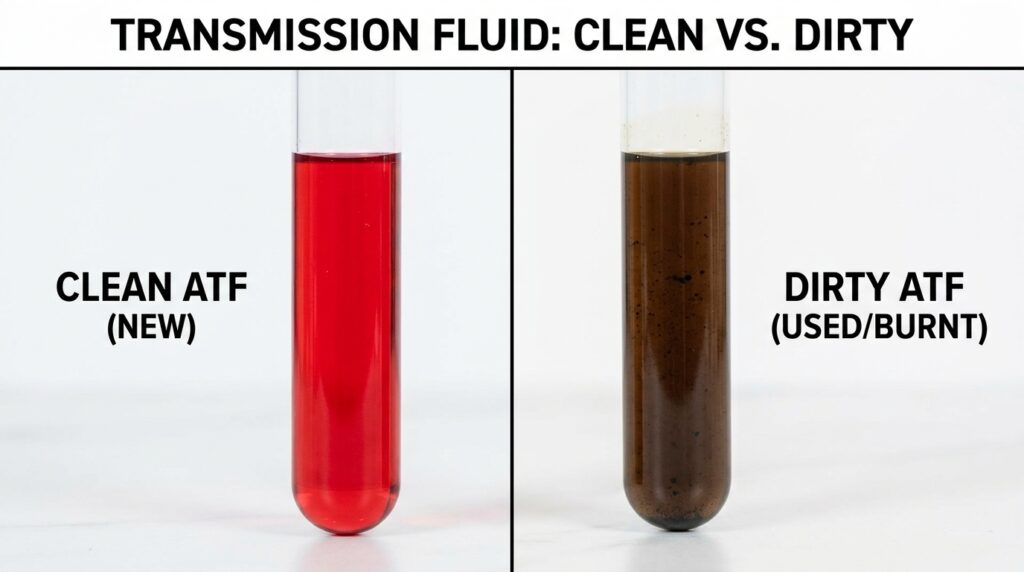
- Contamination: Tiny metal shavings naturally wear off the gears. In DSG models, clutch material also sheds into the fluid. The fluid catches these particles, turning from a clean, golden or red liquid into a dark, sludgy mess.
- Loss of Hydraulic Pressure: Degraded fluid cannot maintain the proper pressure required to actuate gear changes smoothly.
What happens if you don’t change VW DSG fluid?
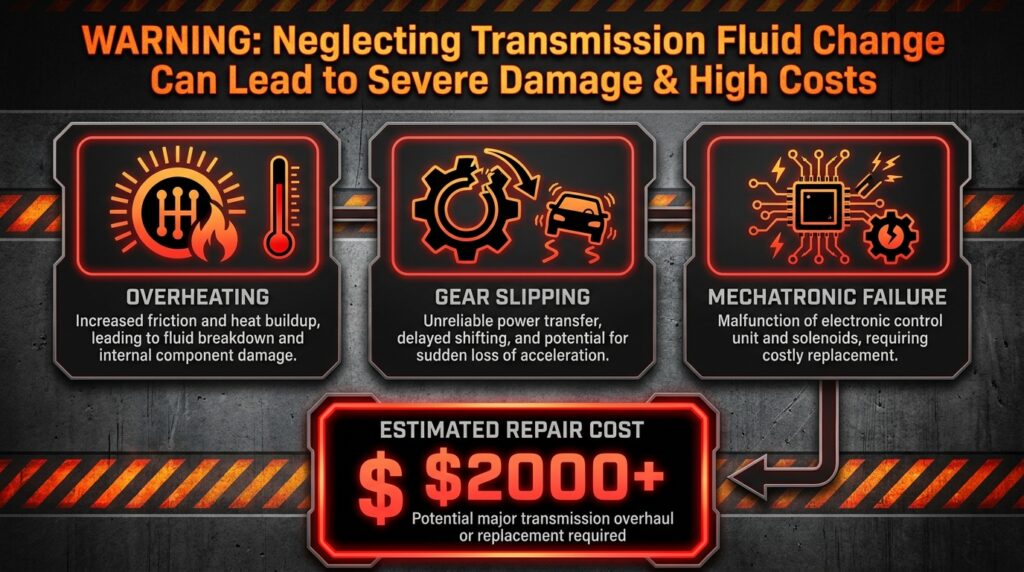
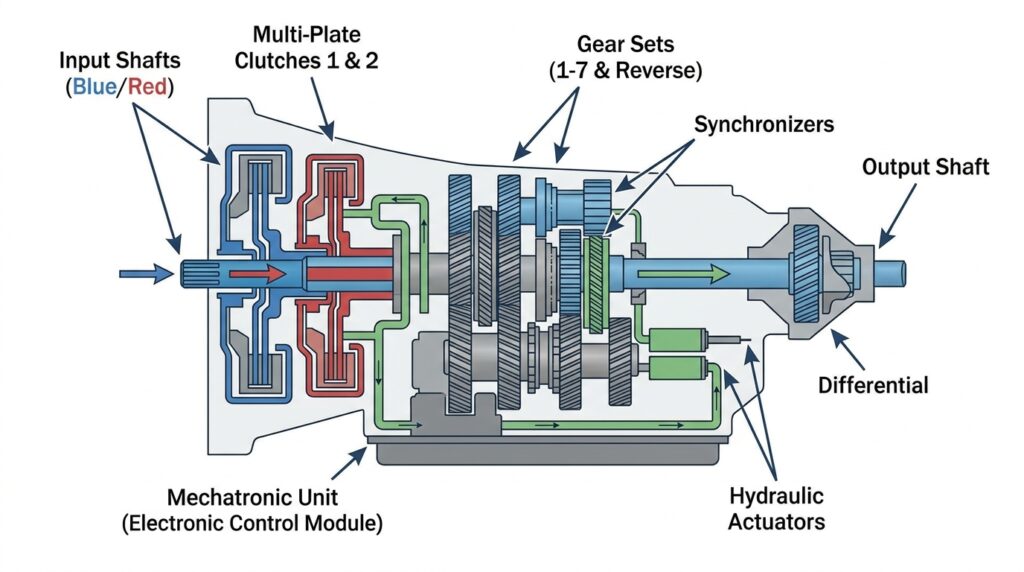
The DSG (Direct-Shift Gearbox) is an engineering marvel, but it is incredibly unforgiving if you neglect its maintenance. If you do not change your VW DSG fluid on time, you face several catastrophic risks.
First, the old fluid loses its ability to cool the dual wet clutches. This leads to immediate overheating, especially in stop-and-go traffic. Second, the microscopic metal and clutch particles will clog the mechatronic unit. The mechatronic unit is the “brain” of your transmission, filled with tiny, sensitive solenoids. When dirty fluid clogs these solenoids, you will experience violent, jerky shifting, delayed engagement, or complete loss of gears.
“Replacing a failed DSG mechatronic unit because of dirty fluid can easily cost upwards of $2,000. Changing the fluid costs a fraction of that and prevents the failure entirely.”
How Often Should I Change the Transmission Fluid in My VW Golf?
Service intervals confuse many VW owners because Volkswagen uses different transmissions across various Golf generations and trims. You cannot treat a manual transmission the same way you treat a highly advanced DSG. You need to identify your specific gearbox to follow the correct schedule.
Direct-Shift Gearbox (DSG)
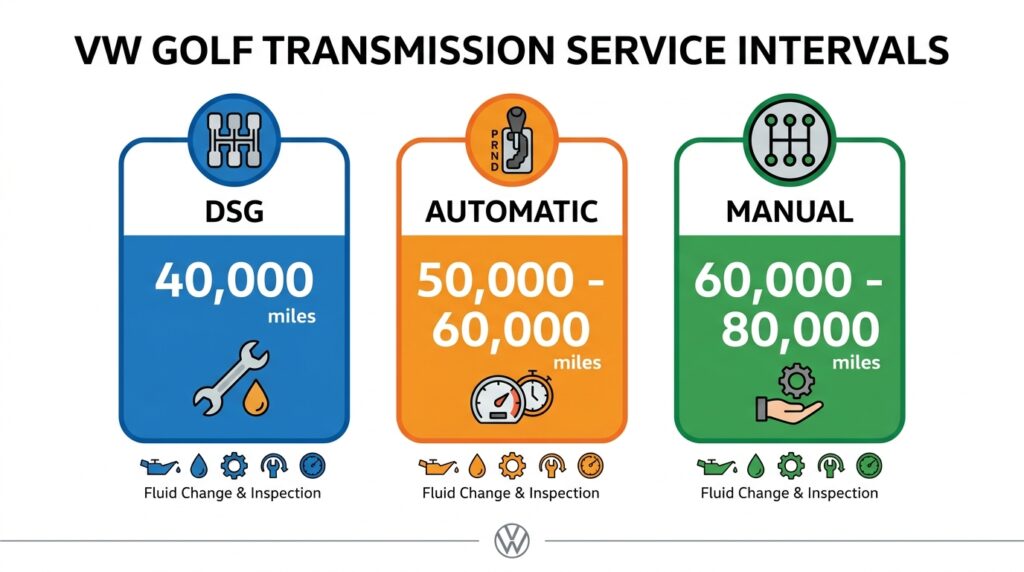
Volkswagen enforces a very strict service schedule for the DSG. If you own a GTI, Golf R, or a TDI equipped with the 6-speed DSG (02E), you must change the fluid and filter every 40,000 miles. There is no flexibility here. If you drive aggressively or track your car, many mechanics suggest changing it every 30,000 miles.
If you own a newer VW Golf with the 7-speed DSG (DQ381), Volkswagen extended the official service interval to 80,000 miles. However, independent VW specialists still highly recommend changing it earlier, around 60,000 miles, for maximum longevity.
Standard Automatic (Tiptronic)
Standard torque-converter automatics (often found in the base model 1.4T or 1.8T Golf) are more resilient than DSGs. While VW sometimes labels this fluid as “lifetime,” experienced mechanics know that no fluid lasts forever. You should perform a fluid and filter change on standard automatics every 50,000 to 60,000 miles.
Manual Transmission
Manual transmissions are mechanically simpler and do not rely on fluid for hydraulic pressure—only for lubrication. Because of this, Volkswagen frequently calls manual gear oil a “lifetime fluid.” Do not fall for the lifetime myth. Gear oil degrades, shears down, and fills with brass synchro wear particles.
To keep your manual shifter feeling buttery smooth and to protect your synchronizers, you should drain and fill the manual gear oil every 60,000 to 80,000 miles.
How Much Does a VW Golf Transmission Fluid Change Cost?
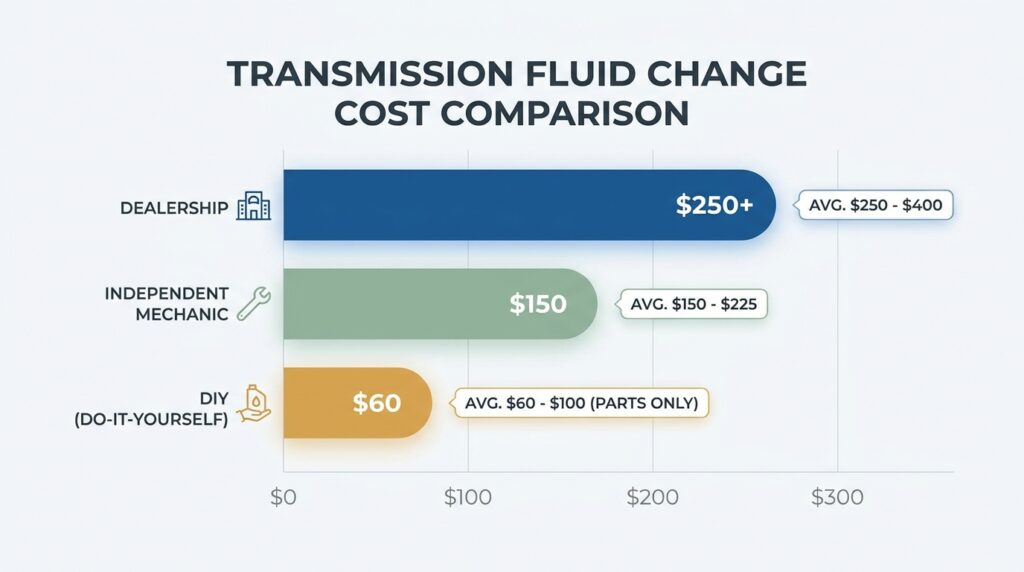
The cost of your service will depend heavily on the type of transmission you have and who does the work. Dealerships charge premium labor rates, independent European auto shops offer better value, and doing it yourself saves the most money.
| Service Provider | Manual Transmission Cost | Standard Auto Cost | DSG Cost (Includes Filter) |
|---|---|---|---|
| VW Dealership | $150 – $250 | $300 – $450 | $400 – $600+ |
| Independent Mechanic | $100 – $180 | $200 – $350 | $250 – $400 |
| DIY (Parts Only) | $40 – $70 | $80 – $130 | $120 – $180 |
Manual transmissions are the cheapest because they only require 2 to 3 liters of gear oil and no filter. Standard automatics cost more because the mechanic must drop the transmission pan, replace a gasket, and change an internal filter.
If your Golf is equipped with a dual-clutch transmission, the price can vary significantly. Read our detailed breakdown of the DSG oil change cost to know what to expect. The DSG requires expensive, specialized fluid, a proprietary top-mounted filter, and more complex labor procedures to measure fluid temperatures during the refill.
What Type of Transmission Fluid Does a VW Golf Take?
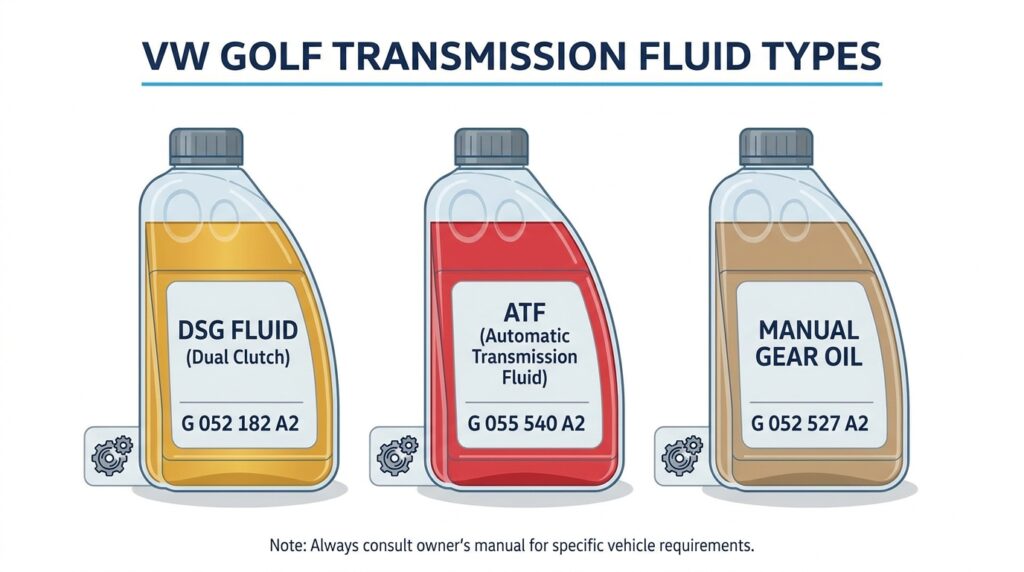
Never walk into a generic auto parts store and buy off-the-shelf “universal” transmission fluid for your Volkswagen. German transmissions require highly specific chemical formulations to operate correctly. Pouring the wrong fluid into a Golf transmission will cause harsh shifting, clutch slippage, and rapid failure.
Here are the common fluid requirements based on your transmission type:
- 6-Speed DSG (02E): Requires VW spec G 052 182 A2. You will need roughly 5 to 6 liters for a complete service. Trusted aftermarket brands include Liqui Moly 8100, Pentosin FFL-2, and Motul Multi DCTF.
- 7-Speed DSG (DQ381): Requires VW spec G 055 529 A2.
- Standard Automatic (09G): Requires VW spec G 055 025 A2 or an equivalent approved ATF.
- Manual Transmission: Typically requires an API GL-4 fully synthetic 75W-90 gear oil. Do not use GL-5, as the sulfur additives in GL-5 can corrode the brass synchronizers inside a VW manual gearbox.
Just like finding the exact VW Golf coolant type for your radiator, or choosing the right synthetic blend for a standard VW Golf oil change, using the exact OEM-spec transmission fluid is non-negotiable for the health of your gearbox.
Can I Change VW Golf Transmission Fluid Myself? (Basic DIY Overview)
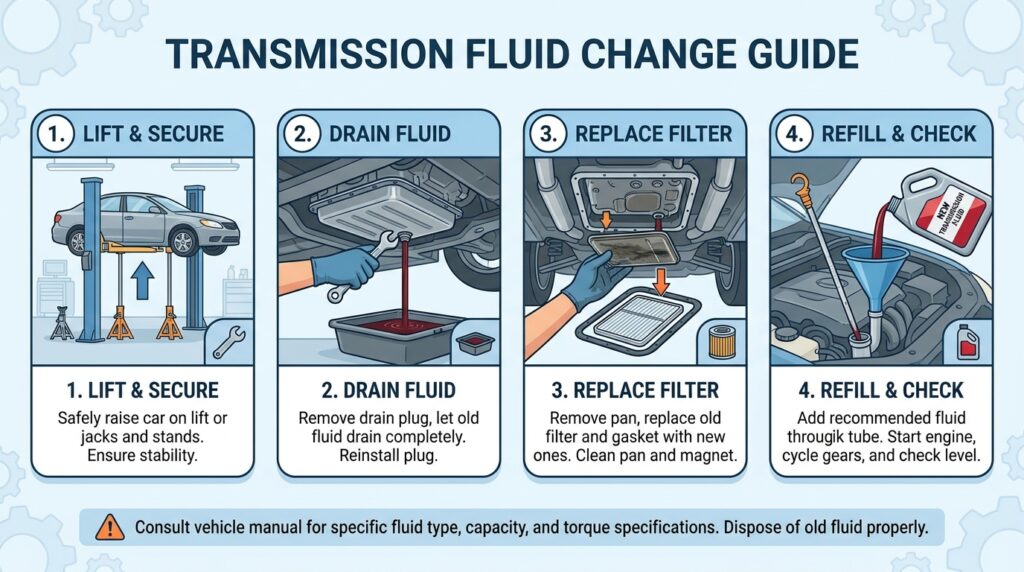
Yes, you can absolutely change the fluid yourself, but the difficulty level depends on the transmission. A manual transmission fluid change is incredibly easy—almost easier than an engine oil change. You simply remove a fill plug, remove a drain plug, let the old oil out, put the drain plug back, and pump new oil in until it drips out the fill hole.
However, automatic and DSG transmissions require a more involved process. Here is a high-level overview of a DIY DSG fluid change to help you decide if you are up for the task:
- Level the Car: You must lift the entire car safely on four jack stands. The vehicle must be perfectly level, or you will under-fill or over-fill the transmission.
- Remove the Battery and Intake: To access the DSG filter housing on top of the transmission, you usually need to remove the airbox and the battery tray.
- Replace the Filter: Unscrew the plastic filter housing, pull out the old paper filter, insert the new one, and replace the O-ring seal.
- Drain the Fluid: Get under the car, remove the main 14mm hex drain plug, and then unscrew the plastic snorkel pipe inside the drain hole. This releases all the fluid.
- Refill the Fluid: You can refill the DSG using a special tool that pushes fluid up through the bottom drain hole (Bottom-fill method), or you can slowly pour it through the top filter housing using a funnel (Top-fill method).
- Measure Temperature: This is the most critical step. You must start the car and use a diagnostic scanner (like VCDS or OBDeleven) to monitor the internal transmission fluid temperature. The fluid must be exactly between 35°C and 45°C. Once it reaches this temperature, you pull the drain plug. The excess fluid will drain out over the internal snorkel. When the fluid reduces to a slow drip, you install the final plug. Your fluid level is now perfect.
While routine jobs like a VW Golf brake pads replacement are incredibly DIY-friendly, a transmission fluid service—especially on a DSG—requires specific tools and exact temperature measurements. If you do not own a diagnostic scanner, you should leave this job to a professional.
What to Do After Your Transmission Service
Once you finish the fluid change and secure all the drain plugs, your job is not quite done yet. You need to ensure the system is operating perfectly before taking the car on a long road trip.
Take your VW Golf for a 15-minute test drive. Drive through all the gears. In a DSG or automatic, accelerate smoothly to ensure there are no harsh engagements or delayed upshifts. If you have a manual, run through the gears to feel for smooth synchronizer engagement.
After the test drive, park the car on a clean surface or put it back on jack stands. Shine a flashlight under the engine bay to inspect the drain plugs and the filter housing area for any signs of leaking fluid. A small drip can lead to a dangerous drop in fluid pressure over time.
Once the fluid is changed and the car is driving smoothly, your dashboard might still show a maintenance reminder. Here is how to easily reset the service light on your VW Golf so you can start tracking your next service interval accurately.
Frequently Asked Questions
How do I know if my VW Golf transmission fluid is low?
A low fluid level will show clear physical symptoms before complete failure occurs. In an automatic or DSG Golf, you will notice delayed engagement (for example, taking a few seconds to move after putting the car in Drive). You may also experience harsh, jerky gear shifts, slipping clutches where the engine revs but the car does not accelerate, and a distinct whining noise coming from the gearbox when accelerating. If you see a puddle of red or yellowish-brown oil under the center of your car, check your fluid level immediately.
Does a transmission fluid change improve fuel economy?
Yes, changing your transmission fluid can slightly improve your fuel economy. Old, degraded fluid loses its viscosity and creates more internal friction. The engine has to work harder to overcome this drag within the gearbox. Fresh fluid provides optimal lubrication, allowing gears to spin freely with minimal resistance. This efficient transfer of power from the engine to the wheels maximizes your miles per gallon.
Can I mix different brands of transmission fluid?
We highly advise against mixing fluid brands or types. Different manufacturers use unique chemical additive packages. Mixing them can cause the fluid to foam up or lose its protective properties. If you are doing a service, stick to one high-quality, VW-approved brand for the entire fill.
Conclusion
A VW Golf transmission fluid change is not just a suggestion; it is a mandatory requirement for keeping your German hatchback on the road. Whether you are dealing with the high-tech DSG, a smooth automatic, or an engaging manual gearbox, clean fluid is the lifeblood that prevents catastrophic failure and thousands of dollars in repair bills.
Stick strictly to the 40,000-mile rule for early DSGs, respect the 60,000-mile mark for manuals and automatics, and always use OEM-approved fluids. Whether you pay a trusted mechanic or roll up your sleeves to tackle it in your garage, this maintenance task offers the highest return on investment for your vehicle’s longevity.
Do you want to learn more about keeping your vehicle in perfect shape? Head over to our main VW Golf Maintenance & Service hub for a massive library of DIY guides, cost breakdowns, and expert tips to help you master your car’s upkeep.