
When you ask a mechanic, a ride-share driver, or a frugal relative for a used car recommendation, the answer is almost always the same: “Just get a Toyota Camry.”
But does this legendary sedan still live up to the hype in 2026? With used car prices fluctuating and competitors like the Honda Accord and Hyundai Sonata stepping up their game, you are right to ask: is a used Toyota Camry worth buying?
The short answer is yes—but with a caveat. While the Camry is arguably the king of reliability, not every model year is perfect. Buying the wrong year or a poorly maintained unit can still lead to headaches.
In this comprehensive guide, we will analyze used Toyota Camry reliability, ownership costs, and the specific years you should target (and avoid). Whether you are looking for a safe first car or a low-maintenance daily commuter, here is the honest truth about buying a used Camry.
If you want a full breakdown of long-term ownership issues, read our detailed guide on
Toyota Camry common problems.
Why the Toyota Camry Is So Popular on the Used Market
The Toyota Camry has been the best-selling passenger car in the United States for decades. Because Toyota has sold millions of them, the used market is flooded with inventory. This volume is a massive advantage for you as a buyer.
High availability means two things: price competition among sellers and an abundance of spare parts. If you need a replacement mirror or an alternator for a 2015 Camry, you can find one at any auto parts store in America, usually for a reasonable price. Mechanics know these cars inside and out, meaning you won’t pay a premium for “specialized labor.”
Furthermore, the Camry holds its value exceptionally well. While this means you might pay a little more upfront compared to a Ford Fusion or Nissan Altima, you will get much of that money back when you eventually sell it.
Used Toyota Camry Reliability: What the Data Really Shows
Reputation is one thing, but data is another. Fortunately, for the Camry, the data backs up the legend. Toyota Camry used car reviews consistently rank the vehicle at the top of the midsize sedan segment for longevity.
According to data from RepairPal, the Toyota Camry has a reliability rating of 4.0 out of 5.0, ranking it 3rd out of 24 midsize cars. The average annual repair cost is significantly lower than the industry average.
The “200,000 Mile Club”
It is not uncommon to see Camrys from the early 2000s still on the road with over 250,000 miles on the odometer. The powertrains—both the 4-cylinder and the V6—are over-engineered. Provided the previous owner kept up with oil changes, the engine block and transmission are rarely the points of failure.
Important Note for Buyers: Reliability is not magic. A neglected Camry will fail just like any other car. Always ask for service records to verify that fluid changes were performed on time.

Common Problems to Know Before Buying a Used Camry
No car is perfect. While toyota camry problems are fewer than most competitors, there are specific issues you must watch out for depending on the generation.
1. Excessive Oil Consumption (2007–2009)
The 2.4L 4-cylinder engine (2AZ-FE) used in models between 2007 and 2009 is notorious for burning oil. This was due to a defective piston ring design. If you are looking at a cheap Camry from this era, check the oil dipstick immediately. If it’s low or the oil looks burnt, walk away.
2. Transmission Shudder (2012–2014)
Some owners of the 2012–2014 models reported a shuddering sensation from the torque converter in the automatic transmission. Toyota issued a software update and extended warranty coverage for this, so most surviving models should be fixed by now, but it is worth testing on a highway drive.
3. Melting Dashboards (2007–2011)
While cosmetic, the “sticky dash” issue plagued the XV40 generation. The dashboard material would degrade in heat, becoming shiny and sticky. Toyota had a warranty enhancement program for this, but many used examples today still have the damage.
[Link Placeholder: Read our full guide on Toyota Camry Common Problems here]
Best Used Toyota Camry Years to Buy
If you are looking for the sweet spot between value and reliability, certain years stand out. The best used Toyota Camry years generally come from the end of a production generation, where all the bugs have been worked out.
| Model Years | Generation | Engine Options | Verdict |
| 2015 – 2017 | XV50 (Facelift) | 2.5L 4-Cyl / 3.5L V6 | Best Value. Extremely reliable, modern styling, updated tech, and major transmission issues were resolved. |
| 2010 – 2011 | XV40 (Late) | 2.5L 4-Cyl / 3.5L V6 | Good Budget Pick. Avoids the oil burning of the ’07-’09 models. Great engine durability. |
| 2018 – Present | XV70 | 2.5L 4-Cyl / 3.5L V6 | Best Modern Pick. Built on the TNGA platform. Better handling, safety tech (TSS), and fuel economy. |
| 2002 – 2006 | XV30 | 2.4L 4-Cyl / 3.0L V6 | The “Tank.” If you find a clean one, buy it. These are simple and nearly indestructible. |
Worst Toyota Camry Years to Avoid
While “worst” is relative when talking about Toyota, these years carry higher risks of expensive repairs.
- 2007: The first year of a new generation. Suffered from transmission hesitation and severe oil consumption.
- 2008 – 2009: Continued oil consumption issues with the 2.4L engine.
- 2014 (Early Builds): Higher complaints regarding AC odors and interior accessories failing compared to 2015 models.
Some model years suffer from serious mechanical issues, especially related to oil burning and transmission behavior.
We break these down in detail in our guide to
the worst Toyota Camry years to avoid.
Toyota Camry Ownership Cost (Maintenance + Repairs)
One of the strongest arguments for buying a used Toyota Camry is the low cost of ownership. It is not just about the purchase price; it is about how much the car drains from your wallet monthly.
Routine Maintenance
Used Camry maintenance cost is remarkably low. Because the engine bays are spacious and the engineering is logical, labor times for repairs are short. Standard maintenance items are cheap:
- Oil Change: $50 – $70 (Synthetic)
- Brake Pads (Axle): $150 – $250
- Tires (Set of 4): $600 – $800 (Standard sizes are affordable)
Fuel Economy
Even older 4-cylinder Camrys (2012+) manage nearly 35 MPG on the highway. If you opt for a Camry Hybrid, you are looking at 40+ MPG, which significantly offsets the ownership cost over five years.
Insurance
The Camry is considered a safe, “family” vehicle. Insurance premiums are typically lower than those for coupes or luxury sedans. Parts are cheap to replace after an accident, which insurers love.
If long-term ownership costs matter to you, see our full breakdown of
Toyota Camry maintenance cost.
How Many Miles Is Too Much for a Used Camry?
Mileage anxiety is real, but you need to recalibrate your expectations for a Toyota.
- Under 100,000 Miles: Just getting started. This car commands a premium price.
- 100,000 – 150,000 Miles: The “Value Zone.” If the maintenance records show regular oil changes, this car likely has another 100k miles of life left.
- Over 200,000 Miles: Proceed with caution. While the engine might be fine, suspension components (struts, bushings, control arms) will likely need replacement. Only buy if the price is very low and you have a mechanic verify the suspension.
Pros and Cons of Buying a Used Toyota Camry
Before you hand over the cash, weigh the good against the bad. Here is a realistic Toyota Camry pros and cons breakdown.
✅ The Pros
- Legendary Reliability: High probability of reaching 200k+ miles.
- Comfortable Ride: Soft suspension soaks up potholes and highway bumps.
- Spacious Interior: Genuine room for five adults and a large trunk.
- Resale Value: You won’t lose your shirt when you resell it.
- Safety: Older models still have excellent crash test ratings.
❌ The Cons
- Boring Drive: It is an appliance, not a sports car. Steering can feel numb.
- Dated Tech: Models before 2018 have clunky infotainment systems without Apple CarPlay/Android Auto.
- Commonality: You will lose it in the parking lot; everyone drives one.
- Price Premium: You pay the “Toyota Tax” upfront compared to domestic rivals.
Who Should Buy a Used Toyota Camry?
The Camry is not for everyone, but it is the perfect car for many.
You SHOULD buy one if:
- You are a commuter: You want a car that starts every morning, has good AC, and decent MPG.
- You are a parent: You need space for car seats and safety features are a priority.
- You are on a budget: You can’t afford surprise $1,000 repair bills every three months.
- You are a ride-share driver: Passengers love the legroom, and the car can handle the high mileage abuse.
You should AVOID it if:
- You want excitement: If you enjoy cornering and steering feedback, look at a Mazda 6 or Honda Accord.
- You want luxury tech: Older Camrys feel very plasticky inside compared to used Audis or Volvos (though the Camry will outlast them).
Used Toyota Camry vs. Competitors
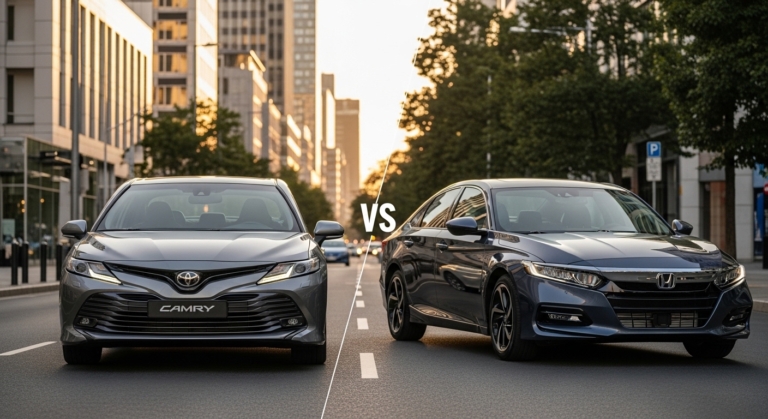
How does the Camry stack up against its two biggest rivals: the Honda Accord and the Nissan Altima?
| Feature | Toyota Camry | Honda Accord | Nissan Altima |
| Reliability | ⭐⭐⭐⭐⭐ (Excellent) | ⭐⭐⭐⭐ (Very Good) | ⭐⭐⭐ (Average) |
| Driving Fun | ⭐⭐ (Soft) | ⭐⭐⭐⭐ (Sporty) | ⭐⭐⭐ (Decent) |
| Common Major Issues | Rare (Oil burning on old models) | Turbo/Head Gasket (some years) | CVT Transmission Failure (High Risk) |
| Resale Value | High | High | Low |
The Verdict: Choose the Accord if you want a fun drive. Choose the Altima only if it’s significantly cheaper and has low miles. Choose the Camry if you want the safest financial bet.
What to Check Before Buying a Used Camry
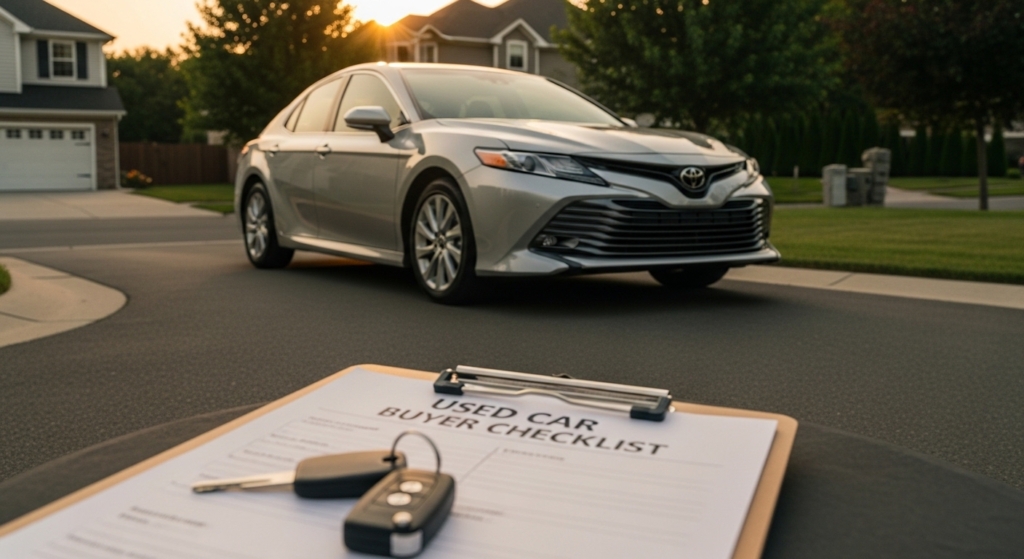
Even though it is a Toyota, you must inspect it. Bring this checklist with you:
- The Cold Start: Ask the seller not to warm up the car. Start it cold. Listen for rattles (timing chain) or blue smoke from the exhaust (oil burning).
- The Transmission Shift: Put it in Drive and Reverse. There should be no delay or “clunk.” On the highway, ensure it shifts smoothly without shuddering.
- The Oil Dipstick: Check the level and color. If it’s bone dry, the engine likely burns oil.
- The AC and Electronics: Test every window switch, the door locks, and ensure the AC blows cold immediately.
- Suspension Noise: Drive over bumps. Clunking sounds usually mean worn struts or sway bar links (common on high-mileage Camrys).
For engine-specific issues like oil consumption and cold-start noise, read our guide on
Toyota Camry engine problems.
FAQ: Is a Used Toyota Camry Worth Buying?
Is the Camry Hybrid reliable as a used car?
Yes, extremely. Toyota’s hybrid system is the best in the industry. Taxi fleets routinely push Camry Hybrids over 300,000 miles. Just be aware that if the car is over 12 years old, the hybrid battery may eventually need replacement (costing roughly $2,000).
Should I buy the 4-cylinder or the V6?
For 90% of buyers, the 4-cylinder is the better choice. It offers enough power and great fuel economy. The V6 is surprisingly fast (almost 300hp in newer models) but is harder to work on and uses more gas.
Do used Camrys rust?
Toyota had rust issues in the 90s, but modern Camrys (2010+) have decent rust protection. However, if the car lived in the Rust Belt (Northeast/Midwest), always inspect the subframe and rocker panels for corrosion.
Final Verdict: Is a Used Toyota Camry Still a Smart Buy?
So, is a used Toyota Camry worth buying? Absolutely.
It remains the gold standard for used car buyers who value their wallet and their peace of mind over flashiness. While it may not be the most exciting car to drive, the freedom from constant repair bills is a luxury in itself.
For the best experience, target a 2015–2017 model or a 2012–2014 model with service records. Avoid the 2007–2009 oil burners, and verify the transmission history on high-mileage units.
If you are planning to keep your Camry well past 100,000 miles, make sure to read our guide on
Toyota Camry reliability after 100k miles.