

Many drivers feel trapped when they want to get rid of a vehicle that they still owe money on. You might want to upgrade to a larger family SUV, downgrade to a cheaper commuter car, or simply relieve a heavy financial burden. But the big question stops you in your tracks.
If you are wondering, can you sell a car with a loan? The short answer is a resounding yes.
Selling a financed vehicle is incredibly common. Dealerships and private buyers handle these transactions every single day. The process simply requires a few extra steps to ensure your bank gets paid and the new owner gets a clean title.
In this comprehensive guide, we will break down the exact math you need to do, explain your best selling options, and walk you through the process step-by-step. By the end of this article, you will know exactly how to handle your auto loan payoff, whether you sell to a local dealer or a private buyer.
“A car loan does not chain you to your vehicle forever. With the right information, you can sell a financed car safely, legally, and profitably.”
Step 1: Find Your Exact Payoff Amount
Before you do anything else, you need to know exactly how much money you still owe the bank. However, looking at your latest monthly statement will not give you the correct number.
You need to find your payoff amount, not your current balance. What is the difference? Your current balance only shows the principal amount you owe. Your payoff amount includes the principal plus any interest that accumulates day by day until you officially close the account.
Because interest accrues daily, your payoff amount changes every single day. Here is how you find the accurate number:
- Call your lender directly: Speak to a representative and ask for a payoff quote.
- Check your online portal: Most modern auto lenders have a “Request Payoff Quote” button in their mobile app or website dashboard.
- Ask for a 10-day or 14-day window: Lenders usually generate a quote that remains valid for 10 to 14 days. This gives you time to finalize your sale without the number changing.
Important Note: Also ask your lender how they prefer to receive the payoff funds. Do they require a cashier’s check, a wire transfer, or an ACH payment? Knowing this in advance prevents delays when you finally transfer the title.
Step 2: Determine Your Car’s Current Market Value
Now that you know what you owe, you need to find out what your car is actually worth in today’s market. Used car values fluctuate based on location, seasonality, mileage, and vehicle condition.
Do not guess your car’s value. Rely on trusted industry tools. We highly recommend visiting Kelley Blue Book (KBB) or Edmunds to get a free, accurate valuation.
When you use these valuation tools, you will notice they provide two different numbers. You must understand the difference to make the best financial decision:
| Selling Method | Expected Value | Effort Required |
|---|---|---|
| Trade-In / Dealer Value | Lower. Dealers need to make a profit when they resell your car. Expect wholesale pricing. | Very Low. The dealer handles all paperwork and bank communication. |
| Private Party Value | Higher. You sell directly to the end user, cutting out the middleman. | High. You must list the car, meet buyers, and handle the bank transactions yourself. |
Be brutally honest about your car’s condition when using these tools. If the tires are bald or the bumper has a dent, mark the condition as “Fair” rather than “Excellent.” Realistic expectations prevent major disappointments later.
Step 3: Calculate Your Equity (The Most Important Step)
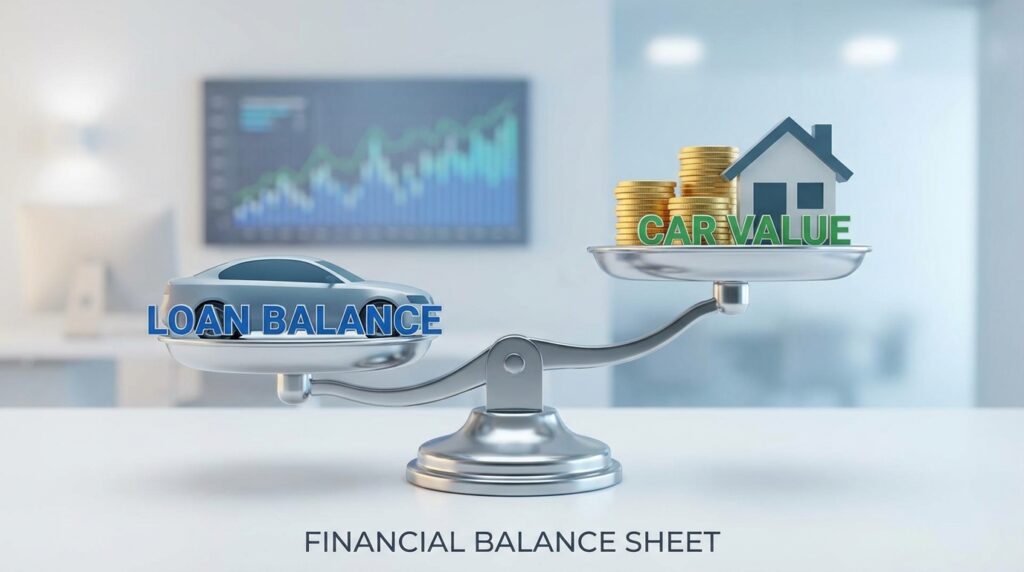
This step determines your entire selling strategy. You must subtract your exact payoff amount from your car’s current market value. The result is your vehicle equity.
You will fall into one of two categories: positive equity or negative equity. Let’s break down how to handle both situations.
How to Sell with Positive Equity
Having positive equity means your car is worth more than the amount you owe. This is the ideal scenario. You are in a great financial position to sell.
For example, if Kelley Blue Book says your car is worth $20,000, and your payoff amount is $14,000, you have $6,000 in positive equity. When you sell the car, the buyer (or dealership) pays $14,000 directly to your lender to clear the debt. The lender then releases the lienholder status.
What happens to the remaining $6,000? That money goes straight into your pocket. You can use it as a down payment on a new vehicle, pay off other debts, or put it in your savings account.
How to Sell with Negative Equity (Upside Down on Your Loan)

Having negative equity means your payoff amount is higher than your car’s current market value. People often call this having an upside-down car loan. This happens frequently if you bought a new car that depreciated quickly, or if you rolled an old loan into your current one.
For example, if your car is only worth $15,000, but your payoff amount is $18,000, you have $3,000 in negative equity. You cannot simply sell the car for $15,000 and walk away. The bank will not release the title until they receive the full $18,000.
If you find yourself in this situation, you have two realistic solutions:
- Pay the difference in cash: When you sell the car, the buyer pays the $15,000. You must bring a cashier’s check for the remaining $3,000 to your lender. This covers the shortfall and clears the title.
- Roll the negative equity into a new loan: If you are trading the car in at a dealership for a new vehicle, the dealer can often add that $3,000 deficit to your new car loan.
Warning: Rolling negative equity into a new loan increases your monthly payments and immediately puts you upside down on your new vehicle. Only use this option if absolutely necessary, and try to purchase a less expensive vehicle to balance the debt.
Option A: How to Sell a Financed Car to a Dealership (The Easiest Route)

If you value your time and peace of mind over getting the absolute maximum price, selling to a dealership is your best option. Dealerships buy financed cars every day. They have entire accounting departments dedicated to this exact process.
You can trade your car in for a new one at a franchise dealership, or you can sell it for straight cash to massive retailers like CarMax, Carvana, or AutoNation.
Here is how the dealership process works:
- You bring the car to the dealer for an appraisal.
- You provide them with your lender’s contact information and your account number.
- The dealer calls your bank to get the 10-day payoff quote.
- If you have positive equity, the dealer gives you a check for the difference.
- If you have negative equity, you give the dealer a check for the difference.
The biggest advantage here is convenience. The dealership handles all the DMV paperwork. They deal directly with your bank to transfer the title. You simply sign a few forms and walk away. You do not have to worry about scammers, test drives with strangers, or complicated bank transfers.
Option B: How to Sell a Financed Car to a Private Party (The Most Profitable Route)
If you want to squeeze every last dollar out of your vehicle, selling to a private party is the way to go. Private buyers will pay retail value, whereas dealers only pay wholesale value. However, this method requires significantly more effort, patience, and communication.
Many private buyers feel nervous about buying a car when the seller does not have the title in hand. You must reassure them by keeping the process transparent and professional.
Follow this safe, actionable process for private sales:
- Be upfront in your listing: State clearly in your online advertisement that the bank holds the title. Honesty filters out buyers who are not willing to wait a few days for paperwork.
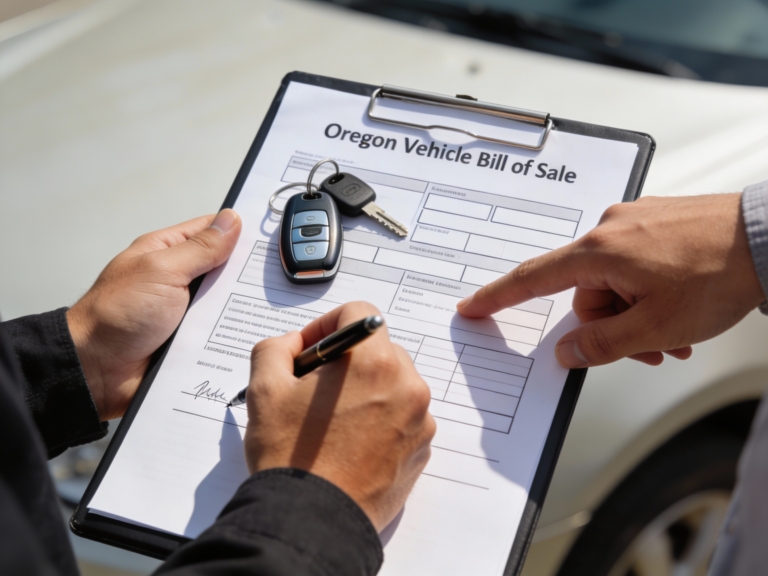
- Create a solid Bill of Sale: Draft a clear bill of sale that outlines the purchase price, vehicle details, and the terms of the payoff. Both parties must sign this document.
- Meet at your bank (The Golden Rule): Do not accept cash in a dark parking lot. Arrange to meet the buyer inside the lobby of your lender’s local branch.
Pro Tip: Meet at the Lender’s Office
Having the buyer pay the bank directly builds immense trust. The buyer hands their cashier’s check to the bank teller. The teller applies the funds to your loan, closing the account. The bank then hands you the positive equity difference.
If your lender does not have a local physical branch (for example, an online-only bank), you can complete the transaction at the buyer’s bank. You both sit with a banker who wires the payoff amount directly to your online lender. Once the loan is satisfied, your lender will mail the title to you or directly to the new owner, depending on your state’s DMV laws.
Frequently Asked Questions
Even with a step-by-step guide, you might still have a few specific concerns. We researched the most common questions drivers ask when trying to sell a vehicle with an active lien.
How do you sell a car if the bank has the title?
You facilitate a transaction where the buyer pays the bank first. The bank applies that payment to your remaining loan balance. Once the balance hits zero, the bank releases their hold on the vehicle and signs the title over to either you or the new buyer. You never need to physically hold the title to start the sale process.
Who keeps the title when a car is financed?
In most states, the lender (the lienholder) physically holds the vehicle’s title until the loan is paid in full. They do this to protect their investment. If you stop making payments, holding the title allows them to legally repossess the car. A few states are “title-to-owner” states, meaning you hold a piece of paper, but it explicitly lists the bank as the lienholder, preventing you from selling it without their permission.
Can I trade in a car that I haven’t paid off?
Yes, absolutely. Dealerships prefer this. They will appraise your vehicle, find out your payoff amount, and handle all the paperwork. They simply pay off your old loan and apply any positive equity toward the down payment of your new vehicle.
Is it better to sell a financed car to a dealer or privately?
It depends entirely on your goals. If you want a fast, secure, and stress-free transaction, selling to a dealer is better. They do all the heavy lifting. If you want the absolute highest price possible and are willing to handle DMV paperwork and buyer meetings, selling privately is the better financial choice.
Will selling a financed car hurt my credit score?
No, paying off an auto loan early or selling the vehicle will not damage your long-term credit score. In fact, fulfilling a debt obligation proves to future lenders that you are responsible. You might see a tiny, temporary dip in your score (usually 5 to 10 points) simply because you closed an active credit account, which alters your credit mix. However, your score will rebound quickly.
Conclusion
Let go of the stress. Selling a financed vehicle is a standard, everyday procedure. Whether you want to upgrade your ride or eliminate a monthly payment, the fact that you still owe money should not hold you back.
Remember the golden rule: math dictates your options. If someone asks you, “can you sell a car with a loan?” you now know that the answer is yes, provided you understand your vehicle’s equity.
Your first step costs nothing and takes only five minutes. Pick up the phone, call your auto lender today, and ask for your 10-day payoff quote. Once you have that number in hand, you hold the power to make the best decision for your financial future.