
You love your Volkswagen Golf. Whether you drive a reliable commuter, a sporty GTI, or a torque-heavy TDI, your Golf delivers a great driving experience. But if you want to keep that engine running smoothly for years to come, you must stay on top of regular maintenance.
For a full maintenance plan, check our VW Golf Maintenance & Service Guide
A proper VW Golf oil change is the single most important thing you can do for your car. Fresh engine oil lubricates moving parts, cools the turbocharger, and prevents expensive mechanical failures. However, Volkswagen engines are specific about what they need. You cannot just pour any cheap oil into the engine and hope for the best.
In this ultimate guide, we will cover everything you need to know. We will explore the exact oil types your Golf requires, how often you need to replace it, and how much it costs. If you want to save money, we also included a complete, step-by-step DIY guide so you can do the job yourself in your own driveway.
Best Oil Specs: VW 504 00 / 507 00 (for most modern models), VW 502 00, or VW 508 00.
Common Viscosity: 5W-30 or 5W-40 (0W-20 for newer Mk8 models).
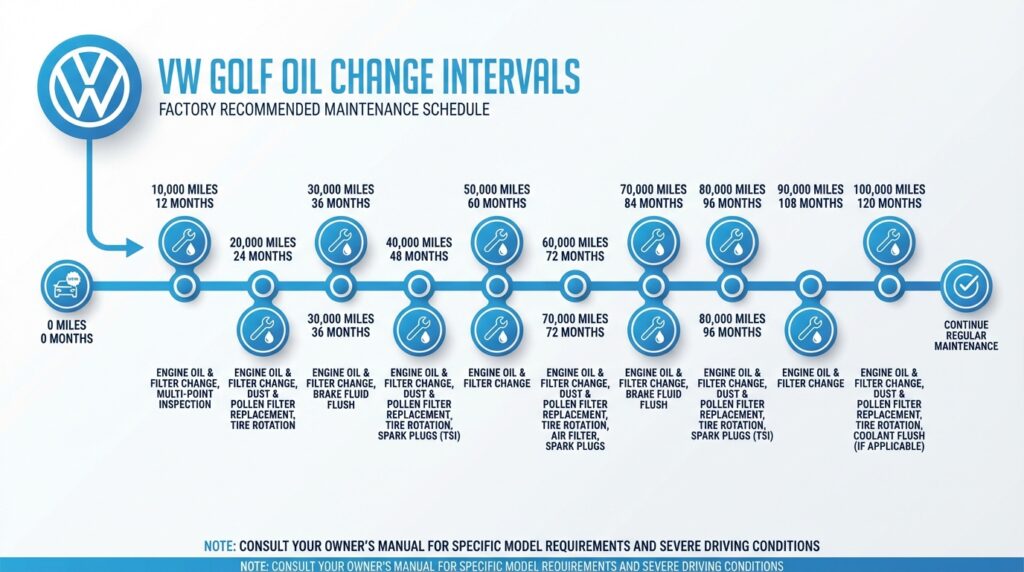
Service Interval: Every 10,000 miles or 12 months (whichever comes first).
DIY Cost: $50 – $80.
Dealer Cost: $100 – $180.
What Oil Type Does a VW Golf Need?
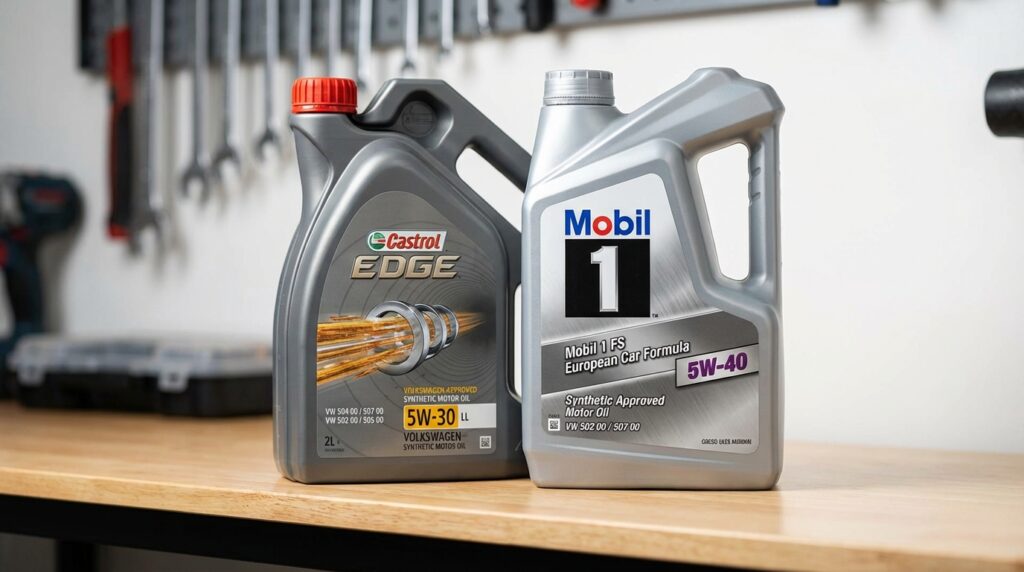
Choosing the right oil for your Golf can feel confusing. When you walk into an auto parts store, you see dozens of brands and numbers. For a Volkswagen, you need to look beyond just the brand name. You must look at the specific manufacturer approvals printed on the back of the bottle.
Volkswagen builds engines with tight tolerances. Because of this, they created their own strict oil standards. If you use an oil that does not meet these standards, you risk damaging your engine and voiding your warranty.
Understanding VW Oil Specifications
Always check your owner’s manual first, but here are the most common Volkswagen oil specifications you will encounter:
- VW 504 00 / 507 00: This is the modern gold standard. VW 504 is for gasoline engines (TSI), and VW 507 is for diesel engines (TDI). It is a low-ash formula that protects emissions systems like catalytic converters and diesel particulate filters (DPF).
- VW 502 00: You will find this spec used heavily in older generation Golfs (Mk4, Mk5, and Mk6 gasoline engines). It provides excellent protection for engines that do not require low-ash oil.
- VW 508 00: This is the newest specification. Volkswagen uses this ultra-thin oil strictly for fuel economy in newer models (like the Mk8 Golf). You usually find it in a 0W-20 viscosity. Do not use this in older engines designed for thicker oil.
“Using the correct VW-approved oil specification is more important than the brand of oil you buy. Always look for the ‘VW 504.00’ or similar approval text right on the back label.”
5W-30 vs. 5W-40: Which is Better?
For most VW Golf models built between 2005 and 2020, you will choose between 5W-30 and 5W-40 fully synthetic oil. Both options work perfectly as long as they carry the correct VW approval.
Choose 5W-30 if: You want better fuel economy and you live in a moderate or cold climate. This oil flows slightly better when the engine reaches normal operating temperature.
Choose 5W-40 if: You drive aggressively, you own a tuned GTI or Golf R, or you live in a very hot climate. The slightly thicker oil provides an extra layer of protection under high heat and heavy engine load.
How Often Should You Change the Oil in a VW Golf?
Old mechanic myths suggest changing your oil every 3,000 miles. With modern synthetic oils and advanced engine designs, this is no longer necessary. In fact, changing your oil that early just wastes money.
Volkswagen officially recommends a specific interval for modern Golfs, but your driving habits play a huge role in when you should actually schedule your service.
| Golf Generation | Engine Type | Recommended Interval | Best Practice Interval |
|---|---|---|---|
| Mk4 (1998 – 2004) | 1.8T / 2.0L / TDI | 10,000 miles or 12 months | 5,000 – 7,500 miles |
| Mk5 (2004 – 2008) | 2.5L / 2.0T FSI | 10,000 miles or 12 months | 5,000 – 7,500 miles |
| Mk6 (2009 – 2013) | 2.0T TSI / 2.5L / TDI | 10,000 miles or 12 months | 7,500 miles |
| Mk7 (2014 – 2020) | 1.4T / 1.8T / 2.0T TSI | 10,000 miles or 12 months | 7,500 miles |
| Mk8 (2021 – Present) | 2.0T TSI | 10,000 miles or 12 months | 10,000 miles |
Time vs. Mileage
Notice that the guidelines say “or 12 months.” Oil degrades over time, even if the car just sits in the garage. Moisture builds up inside the engine crankcase. If you only drive 4,000 miles in a year, you still need to change the oil at the 12-month mark to remove that moisture and keep the internal parts safe.
Normal Driving vs. Severe Driving Conditions
The 10,000-mile interval assumes you drive under “normal” conditions. However, many people actually fall into the “severe” driving category. You should shorten your oil change interval to 5,000 or 7,500 miles if you:
- Take frequent short trips under 5 miles (the engine never fully warms up).
- Drive heavily in stop-and-go city traffic.
- Live in an area with extreme hot or extreme cold weather.
- Participate in track days or drive a heavily modified/tuned Golf.
How Much Does a VW Golf Oil Change Cost?
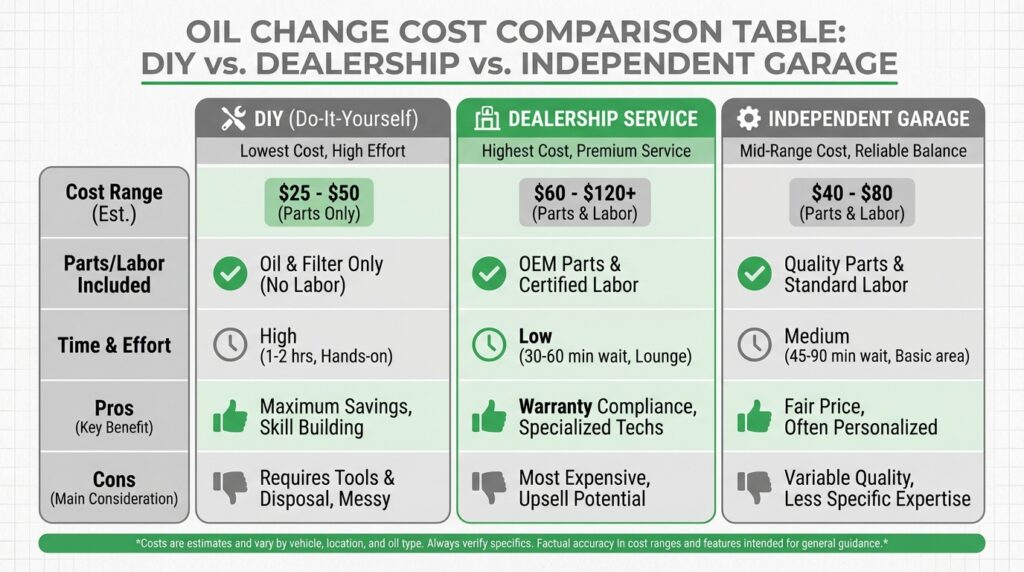
The cost of your service depends entirely on where you take the car. Because European cars require specific synthetic oils and quality filters, the price sits slightly higher than a standard economy car.
| Service Option | Estimated Cost | Pros | Cons |
|---|---|---|---|
| Do-It-Yourself (DIY) | $50 – $80 | Cheapest option, you know it is done right. | Requires tools and takes your personal time. |
| Independent Euro Garage | $90 – $130 | Fair price, experienced mechanics. | Quality varies by shop. |
| VW Dealership | $120 – $180+ | Factory-trained techs, OEM parts. | Most expensive, potential upselling. |
Avoid quick-lube chain stores. While they might advertise a $39.99 oil change, they rarely stock the correct VW-approved oil. They often use cheap, universal bulk oil and low-quality filters that can harm your Golf’s engine over time.
Step-by-Step DIY VW Golf Oil Change Guide
Changing the oil on a VW Golf is a highly rewarding DIY project. Volkswagen engineers actually made this process quite simple, especially on the Mk7 and Mk8 generations where the oil filter sits right on top of the engine.
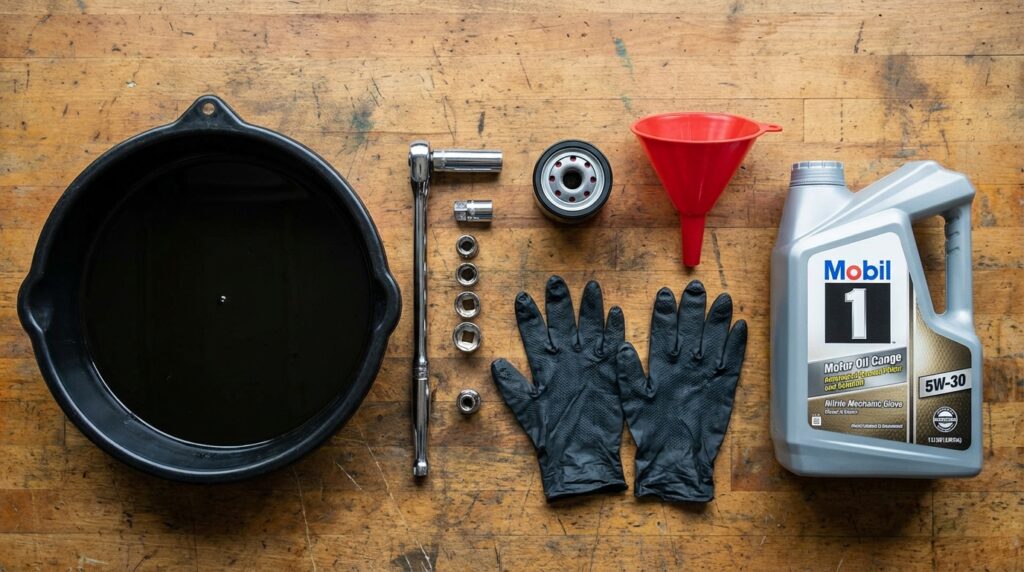
Tools and Parts You Need
- Fully Synthetic Engine Oil: 5 to 6 quarts of VW-approved oil (check your manual for exact capacity).
- OEM Quality Oil Filter: Buy brands like Mann, Mahle, or genuine VW.
- New Drain Plug or Crush Washer: Note: Mk7 and Mk8 Golfs use a plastic oil pan with a single-use plastic drain plug. You must buy a new one every time.
- Car Jack and Jack Stands: Or car ramps to lift the vehicle safely.
- Torx T25 Screwdriver: To remove the plastic under-engine cover (skid plate).
- Socket Wrench Set: Specifically a 19mm socket for metal drain plugs, or a flathead screwdriver for plastic drain plugs.
- Oil Filter Socket: 32mm socket for newer Golfs, or an oil filter wrench for older spin-on filters.
- Oil Drain Pan: To catch the old fluid.
- Shop Towels and Funnel.
Step 1: Warm Up the Engine and Lift the Car
Start your Golf and let it run for about five minutes. Warm oil flows much faster and carries more trapped dirt out of the engine. Once warm, turn off the engine.
Safely lift the front of the car using ramps or a floor jack. If you use a floor jack, you must secure the car with jack stands before you ever get underneath it. Never rely on just a hydraulic jack.
Step 2: Remove the Undertray
Slide under the front of the car. You will see a large plastic shield protecting the bottom of the engine. Grab your T25 Torx driver and remove all the screws holding it in place. Slide the tray out of the way and store the screws safely.
Step 3: Drain the Old Oil
Locate the oil pan and the drain plug. Place your drain pan directly underneath it.
Pro Tip Open the hood and remove the oil filler cap on top of the engine. This breaks the vacuum seal and helps the old oil drain much faster.
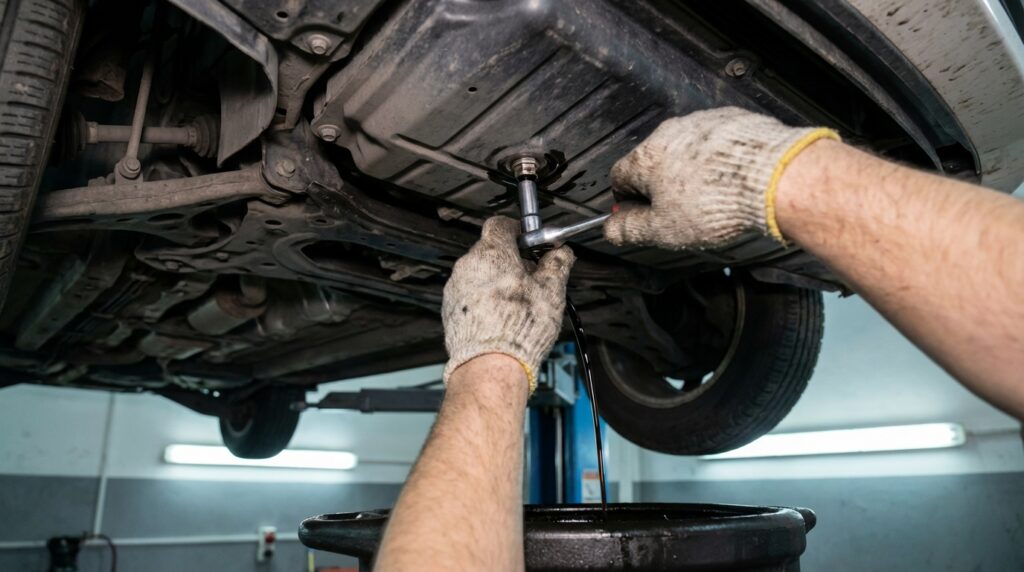
Carefully loosen the drain plug. If you have an older Golf (Mk4, Mk5, Mk6), use your 19mm wrench. If you have a newer Golf (Mk7, Mk8), use a large flathead screwdriver to turn the plastic plug a quarter-turn counterclockwise. Pull the plug away quickly and let the oil drain completely. This usually takes about 10 minutes.
Step 4: Replace the Oil Filter
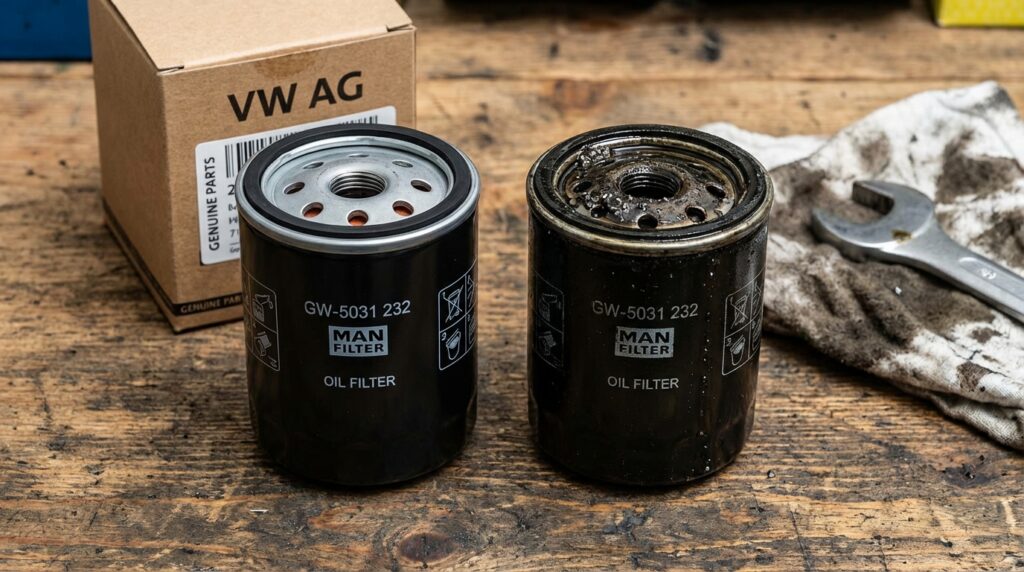
While the oil drains, move to the engine bay to change the filter. On most modern Golfs, the oil filter housing sits right on top, slightly off-center.
- Use your 32mm socket to loosen the plastic oil filter cap.
- Pull the cap straight up. The old paper filter cartridge will come up with it.
- Pull the old filter firmly out of the plastic cap.
- Use a small flathead screwdriver to remove the old rubber O-ring from the threads of the cap.
- Slide the new rubber O-ring onto the cap. Rub a little bit of fresh engine oil on the new O-ring so it seals properly.
- Push the new filter cartridge into the cap until it clicks.
- Screw the cap back into the engine housing. Tighten it snugly, but do not overtighten it. The cap usually says “25 Nm” on top.
Step 5: Install the New Drain Plug
Wipe the area around the drain hole with a clean towel. If you have a metal oil pan, install the metal drain plug with a brand-new crush washer. Tighten it securely (usually around 22 ft-lbs).
If you have a plastic oil pan, insert your brand-new plastic drain plug and turn it a quarter-turn clockwise until it locks into place. Do not reuse the old plastic plug; it will leak.
Wipe away any dripped oil and reinstall the plastic undertray using your T25 Torx screws.
Step 6: Add the New Oil
Lower the car back to the ground. Insert your funnel into the oil filler hole on top of the engine. Pour in the manufacturer-specified amount of fresh synthetic oil. Most 2.0T engines take roughly 6 quarts (5.7 liters), but check your manual to be certain.
Pour the oil slowly to avoid spills. Once filled, put the oil cap back on.
Step 7: Check for Leaks and Reset the Service Light
Start the engine and let it idle for about 30 seconds. Look underneath the car to ensure nothing is dripping. Turn off the engine, wait two minutes, and pull the dipstick. Wipe it clean, reinsert it, and pull it out again to verify the oil level sits nicely in the crosshatched “Full” area.
Finally, reset your service light. On most VW Golfs, you do this by holding the “0.0/SET” button on the instrument cluster while turning the ignition on (without starting the engine), and then confirming the reset on the steering wheel controls.
Never dump used motor oil in the trash or down a drain. Pour your old oil into the empty jugs from your new oil. Most auto parts stores will accept and recycle used motor oil for free. You can find a local recycling center at Earth911.
Common VW Golf Oil Change Mistakes to Avoid
Even though an oil change is simple, a few small mistakes can cause massive headaches. Keep these common errors in mind:
- Reusing the Plastic Drain Plug: The plastic plugs on Mk7 and Mk8 models feature a built-in rubber seal that flattens out. Reusing it almost always results in an oil leak on your driveway.
- Forgetting to Oil the Filter O-Ring: If you install the new oil filter housing O-ring dry, it can bunch up or tear when you tighten the cap. This causes a massive oil leak right at the top of the engine.
- Over-tightening the Filter Housing: The plastic filter housing cracks easily if you apply too much force. Hand-tight plus a tiny nudge with a wrench is all you need.
- Using the Wrong Oil Spec: Throwing standard 5W-30 conventional oil into a modern TSI engine will cause oil sludge buildup and turbocharger failure. Always check for the VW approval rating.
which may also be related to issues like the VW Golf timing belt
What Happens If You Skip or Delay Oil Changes?
We all get busy, and sometimes we forget our car maintenance. Pushing an oil change by a few hundred miles will not kill your Golf. However, actively ignoring the service light for thousands of miles causes severe internal damage.
Transmission maintenance is also important, including DSG oil change cost and intervals
As engine oil ages, it breaks down and turns into thick, black sludge. This sludge blocks tiny oil passages inside the engine.
The first component to suffer is usually the turbocharger. The turbo spins at over 100,000 RPM and relies entirely on a constant flow of clean oil to keep it cool and lubricated. Old, gritty oil destroys turbo bearings very quickly. Replacing a blown turbocharger costs well over $1,500.
Additionally, modern Volkswagen engines use complex timing chain systems. These chains require high oil pressure to maintain proper tension. Sludgy oil drops engine pressure, which causes the timing chain to stretch or skip. If the timing chain skips, the engine pistons will smash into the valves, resulting in complete engine destruction.
Frequently Asked Questions (FAQ)
Can I use conventional oil or a synthetic blend in my VW Golf?
No. You must exclusively use fully synthetic motor oil in your VW Golf. Modern Volkswagen engines, especially those with turbochargers, operate at very high temperatures. Conventional oil breaks down too quickly under this heat and creates damaging engine sludge. Always stick to the approved synthetic formulas.
Is it normal for my Golf to burn oil between changes?
Yes, some oil consumption is completely normal. Volkswagen turbocharged engines (like the TSI and TDI) naturally burn a small amount of oil as part of their standard operation. You should pull your dipstick and check your oil level every 1,000 miles. It is always a smart idea to keep a spare quart of the correct oil in your trunk for quick top-ups.
What should I do if the oil warning light comes on?
Volkswagen uses two different warning lights for the oil system. If you see a yellow oil light, your oil level is low. You should drive to a safe spot, check the dipstick, and add oil. However, if you see a red oil light, your engine has lost oil pressure. You must pull over safely and turn off the engine immediately. Driving with a red oil light will destroy your engine in minutes.
Should I get an engine flush during my oil change?
No, you do not need an engine flush. Volkswagen actually advises against using harsh chemical engine flushes. As long as you use high-quality, VW-approved synthetic oil and change it at the proper intervals, the oil already contains powerful cleaning detergents that keep the internal parts perfectly clean.
Can I mix different brands of motor oil?
Yes, you can mix different brands of oil if you are in a pinch and need a quick top-up. However, you must make sure the top-up oil matches the exact same VW specification (such as VW 504 00) and shares the same viscosity (such as 5W-30) as the oil already inside your engine.
Does my Golf use a cartridge or spin-on oil filter?
This depends on your Golf’s generation. Older models (like the Mk4) often use traditional metal spin-on filters located underneath the car. Modern models (like the Mk6, Mk7, and Mk8) use eco-friendly paper cartridge filters. These sit inside a reusable plastic housing right on top of the engine bay.
Conclusion
Performing a VW Golf oil change on time is the best investment you can make in your car. By understanding the correct VW oil specifications, sticking to a strict maintenance schedule, and learning how to do the job yourself, you save money and protect your engine.
Whether you choose to tackle the job in your driveway or prefer to drop your car off at a trusted local mechanic, never compromise on oil quality. Treat your Golf well, give it the fresh synthetic oil it craves, and it will reward you with thousands of miles of driving joy.