
Taking care of your car does not have to mean spending hundreds of dollars at the dealership. For many car owners, the idea of opening the hood and performing mechanical work feels overwhelming. However, a VW Golf air filter replacement is one of the easiest, most rewarding, and most cost-effective maintenance tasks you can do yourself.
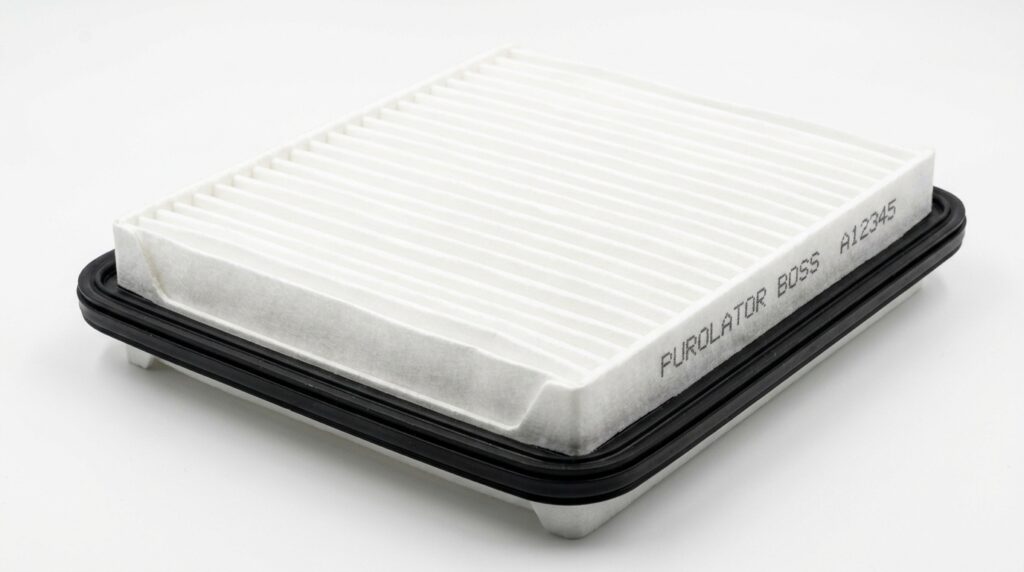
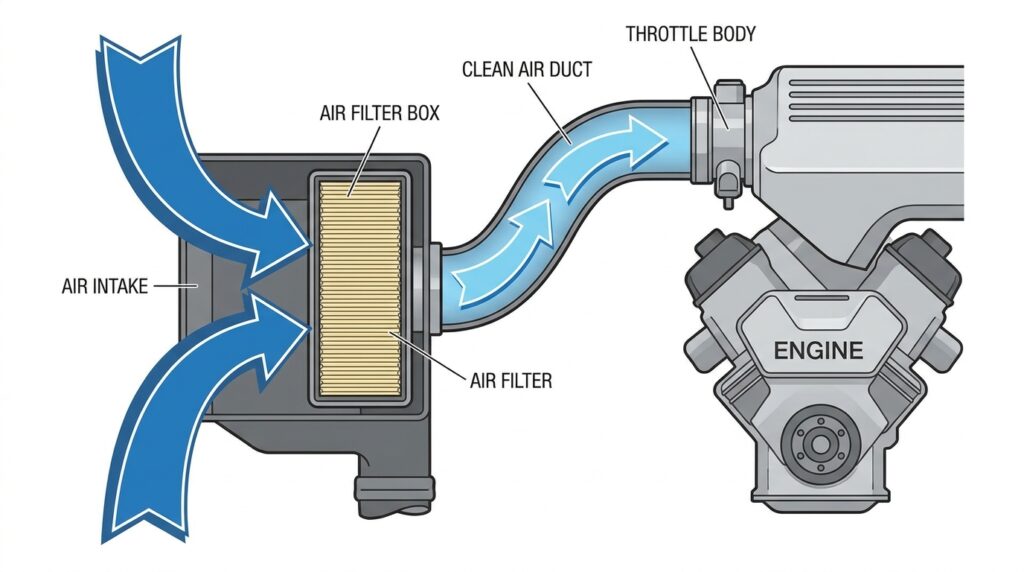
Think of the engine air filter as the lungs of your vehicle. Every time you start your car and drive down the road, your engine pulls in thousands of gallons of air. This air mixes with fuel to create the combustion that powers your wheels. Before that air enters the delicate internal chambers of your engine, it must pass through the air filter. This simple pleated paper device protects your complex engine from dust, dirt, sand, bugs, and road debris.
When you neglect this simple part, you slowly choke your engine. A restricted engine works harder, burns more gas, and loses its snappy acceleration. Learning how to swap this part out yourself takes less than fifteen minutes. It builds your confidence as a car owner and keeps your vehicle running at peak performance. By staying on top of your routine VW Golf Maintenance & Service, you prevent major repairs down the road and extend the life of your vehicle.
Engine Air Filter vs. Cabin Air Filter: What’s the Difference?
Before you buy parts or open your hood, you must understand a very common point of confusion. Mechanics and auto parts stores sell two very different types of filters for your car. Knowing the difference saves you time, money, and frustration.
Many drivers go to a quick-lube shop for an oil change and the technician asks, “Do you want to change your air filter?” The technician might be holding a filter covered in leaves and dust. But which filter is it? Let’s break down the two main filters in your vehicle.
The Engine Air Filter
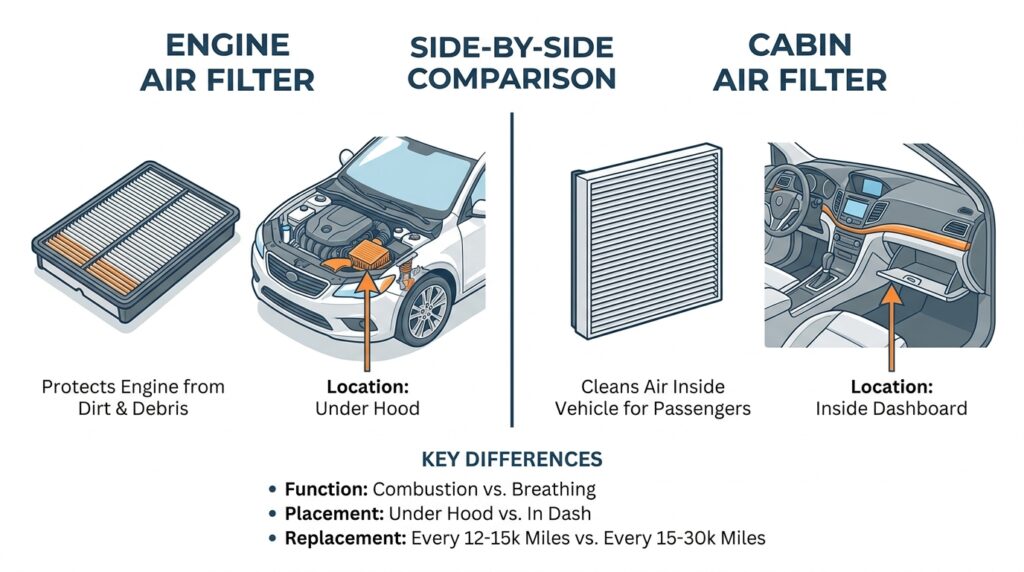
As mentioned in the introduction, the engine air filter lives under the hood of your car. It sits inside a plastic housing called the airbox. Its sole job is to clean the air entering the engine’s intake manifold. If this filter fails, hard particulate matter can scratch the inside of your engine cylinders, leading to catastrophic internal damage. You change this filter to protect the car’s mechanics.
The Cabin Air Filter
The cabin air filter lives inside the interior of your car, usually hidden behind the passenger-side glovebox. This filter cleans the air that blows through your air conditioning and heating vents. It catches pollen, dust, smog, and unpleasant odors before they reach your lungs. You change this filter to protect your own health and breathing comfort. If you are looking to improve the air quality inside your car, check out our guide on VW Golf cabin air filter replacement.
Here is a quick reference table to help you remember the differences:
| Feature | Engine Air Filter | Cabin Air Filter |
|---|---|---|
| Location | Under the hood, inside the plastic airbox | Inside the car, behind the glovebox |
| Primary Purpose | Protects the engine from dirt and debris | Protects passengers from pollen and dust |
| Impact of Neglect | Poor gas mileage, sluggish acceleration | Bad odors inside the car, weak AC airflow |
| Material | Heavy-duty pleated paper or washable cotton | Thinner paper, often infused with activated carbon |
Signs It’s Time for a VW Golf Air Filter Replacement
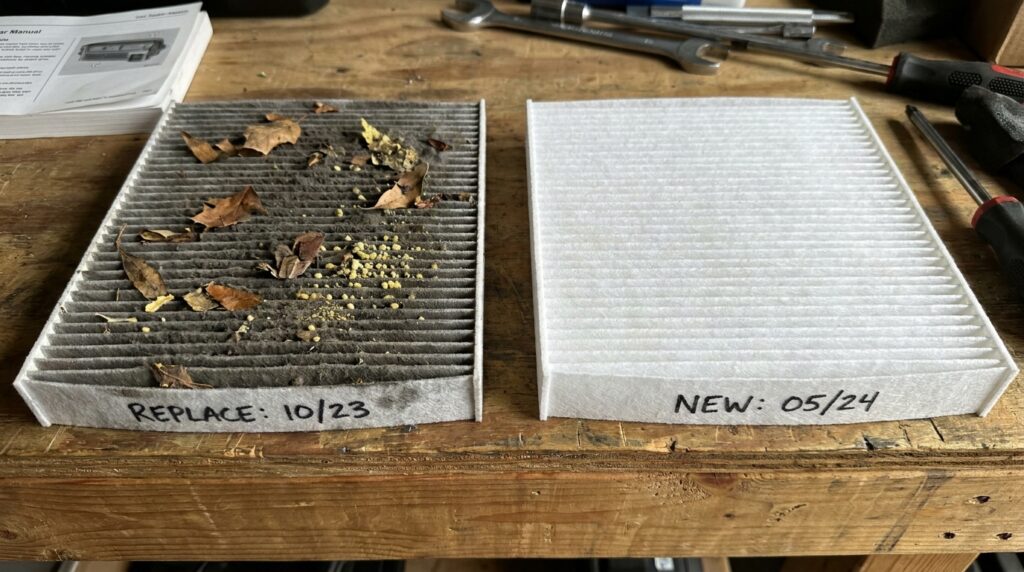
Your vehicle communicates with you constantly. When a part starts to fail or clog, the car changes its behavior. You do not always need to wait for a specific mileage milestone to change your engine filter. Sometimes, the environment around you dictates an early change. If you live on a dirt road, drive through heavy construction zones, or experience heavy pollen seasons, your filter will clog much faster than average.
Here are the clearest symptoms and signs that your engine breathes through a dirty, clogged filter:
1. Decreased Fuel Efficiency (Lower MPG)
Your engine requires a precise mixture of air and fuel to run efficiently. When dirt blocks the airflow, the engine receives less oxygen. To compensate, the engine computer pumps extra fuel into the combustion chamber to keep the engine running. We call this running “rich.” When your car runs rich, you burn through gas much faster. If you notice yourself visiting the gas station more frequently for the same daily commute, check your filter first.
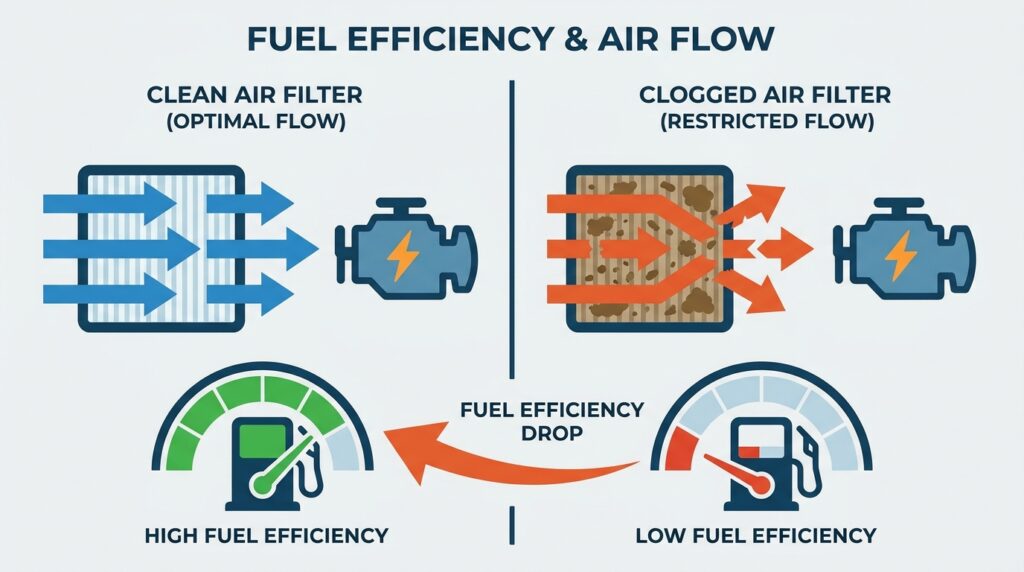
2. Sluggish Acceleration
Do you press the gas pedal to merge onto the highway, but the car hesitates? A choked engine cannot respond quickly to your commands. It needs a massive gulp of air to accelerate quickly. If the filter looks like a solid brick of dust and dead bugs, the air simply cannot pass through fast enough. Restoring that crisp, responsive acceleration often requires nothing more than a fresh filter.
3. Misfiring Engine or Rough Idling
When an engine runs “rich” (too much fuel and not enough air) for a long period, unburned fuel creates black soot. This soot travels through the engine and coats the spark plugs. A soot-covered spark plug cannot create a strong spark. This causes the engine to misfire, shake, or idle roughly when you stop at a red light. If you’ve replaced the filter and your engine is still misfiring, it might be time for a VW Golf spark plugs replacement.
4. Warning Lights on the Dashboard
Modern cars feature incredibly sensitive sensors. The Mass Airflow (MAF) sensor sits right behind your air box. It measures exactly how much air enters the engine. If a clogged filter severely restricts this airflow, the computer panics. It assumes something is mechanically wrong with the intake system. A severely choked engine can sometimes cause sensors to panic, potentially triggering the VW Golf EPC light or the Check Engine Light.
5. Visual Inspection Failure
The most obvious sign is a visual check. A brand new filter looks bright white or pale yellow. Over time, it turns grey, then dark brown, and finally black. If you open the airbox and see a filter caked in dark grime, leaves, pine needles, or dead insects, throw it away immediately.
“Preventative maintenance is always cheaper than reactive repairs. A twenty-dollar filter can save you thousands of dollars in internal engine damage over the lifespan of your vehicle.”
How Often Should You Change Your VW Golf Air Filter?
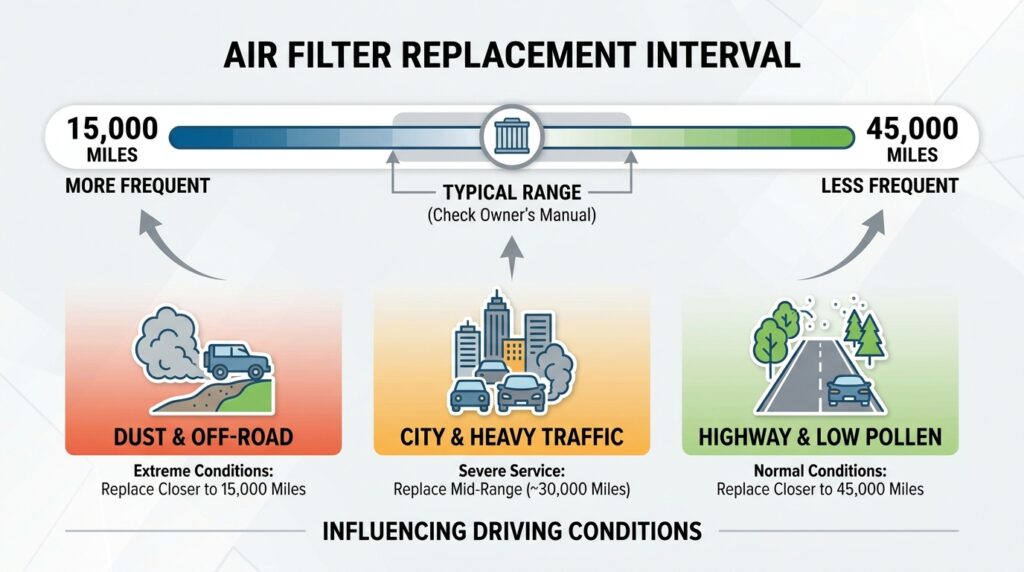
Car manufacturers provide specific guidelines for every part on your vehicle. According to the official maintenance schedules for most modern VW Golf models, you should replace the engine air filter every 30,000 to 45,000 miles.
However, this number represents a broad average based on “normal” driving conditions. Normal conditions mean driving on paved, clean roads in a temperate climate. Very few people actually drive in perfect conditions all the time.
You should consider replacing your filter every 15,000 to 20,000 miles if you frequently experience any of the following “severe” driving conditions:
- Driving on unpaved dirt or gravel roads.
- Living in a dry, desert climate with frequent dust storms.
- Commuting in heavy stop-and-go city traffic with high exhaust smog.
- Living in areas with massive seasonal pollen drops.
- Parking under trees that drop heavy amounts of sap, leaves, and needles.
It is always better to change the filter slightly early rather than waiting too long. For a complete list of when to perform all routine tasks, refer to our comprehensive VW Golf service intervals & schedule.
Tools Needed & Air Filter Replacement Cost
One of the best reasons to do this job yourself is the minimal tool requirement. You do not need heavy jacks, power tools, or specialized mechanical equipment. You only need a few basic household items.
Tools You Will Need:
- A Screwdriver: Most modern VW Golf models (Mk6, Mk7, Mk8) use Torx screws for the airbox. You will typically need a T25 Torx screwdriver. Older models (Mk4, Mk5) might use standard Phillips-head screws. Check your specific airbox before starting.
- A Clean Microfiber Rag: You will use this to wipe out the empty plastic airbox.
- A New Engine Air Filter: Ensure you buy the correct part number for your specific engine size (e.g., 1.4T, 1.8T, 2.0T).
The Cost: Dealership vs. DIY
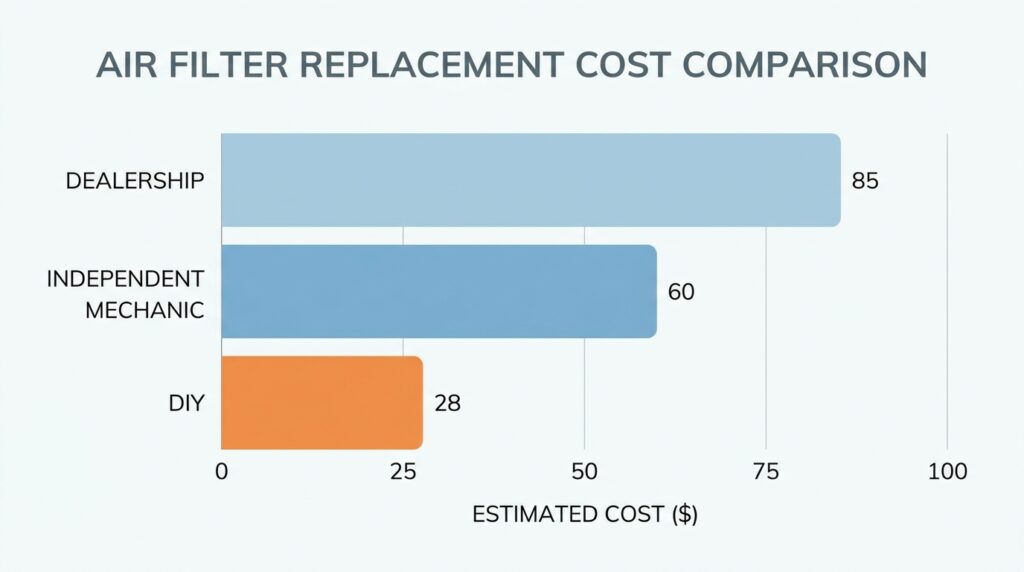
Dealerships and quick-lube shops make a massive profit margin on air filters. They charge you a premium for the part, and then they charge you a high hourly labor rate for a job that takes five minutes.
When you buy the part yourself, you pay retail price for the filter and your labor is entirely free. You can buy excellent Original Equipment Manufacturer (OEM) parts from reputable auto suppliers, or high-quality aftermarket options. According to independent testing by government fuel economy experts, keeping a clean filter is a cheap way to maintain factory efficiency.
| Service Method | Cost of Filter Part | Estimated Labor Cost | Total Estimated Cost |
|---|---|---|---|
| VW Dealership | $30 – $45 | $40 – $70 | $70 – $115+ |
| Independent Mechanic | $25 – $35 | $20 – $40 | $45 – $75 |
| Do-It-Yourself (DIY) | $15 – $30 | $0 (Free) | $15 – $30 |
By simply holding a screwdriver and following the steps below, you keep up to $85 in your pocket.
Step-by-Step VW Golf Air Filter Replacement (DIY Guide)
Now that you have your new filter and your screwdriver ready, it is time to get to work. Park your car on a flat surface, turn off the engine, and ensure the vehicle is in park (or in gear with the parking brake engaged for manual transmissions). Wait a few hours if you recently drove the car; engine bays get incredibly hot.
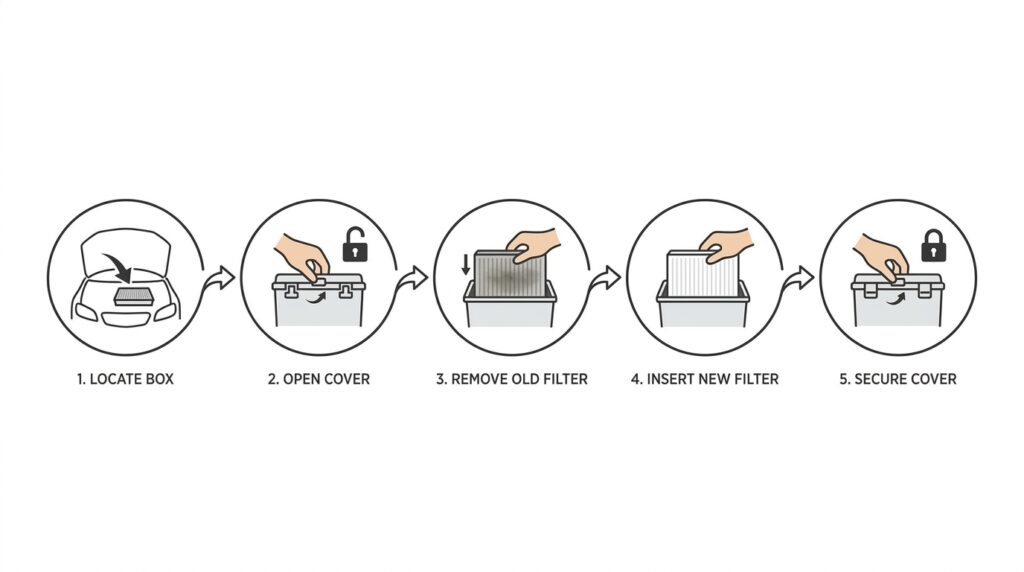
Step 1: Pop the Hood and Locate the Airbox
Pull the hood release lever located near your left foot inside the driver’s cabin. Walk to the front of the car, find the secondary safety latch under the center of the hood, squeeze it, and lift the hood up. Secure the hood with the prop rod (unless your model features hydraulic hood struts).
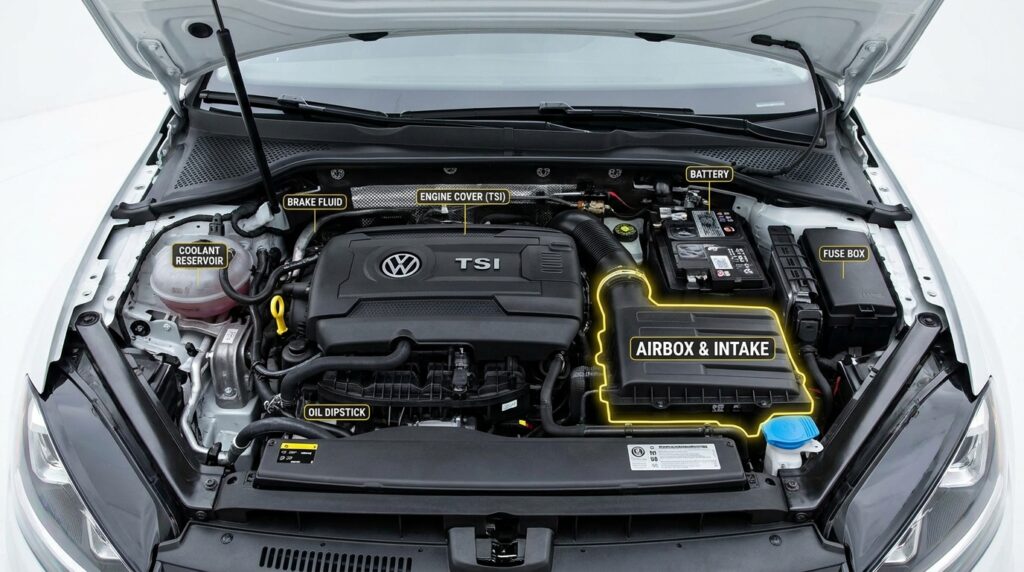
Look into the engine bay. The airbox is a large, rectangular black plastic box. In most VW Golf models, it sits prominently on the driver’s side or slightly toward the center, right behind the battery or next to the engine cover. A thick black plastic tube (the intake hose) connects to it.
While you have the hood open, it’s a great time to check for corrosion and see if you need a VW Golf battery replacement. Keeping an eye on your whole engine bay builds good maintenance habits.
Step 2: Unscrew the Airbox Cover
Take your T25 Torx screwdriver (or Phillips, depending on your model year) and locate the screws securing the top lid to the bottom half of the airbox. There are usually 6 to 8 screws spaced around the perimeter.
In some models, you may also need to unclip a small vacuum hose attached to the side of the box. Gently pull it off if it restricts the lid’s movement.
Step 3: Remove the Old Filter and Clean the Box
Once you loosen all the screws, carefully lift the top lid of the airbox. You do not need to remove the lid completely; just lift it high enough to expose the old filter. Pull the dirty filter straight up and out of the lower housing.
Take a moment to inspect the empty bottom half of the airbox. You will likely see sand, dead bugs, and dry leaves resting at the bottom. Take your clean microfiber rag and wipe out all this debris. Do not use compressed air to blow it out, as you risk blowing dirt up into the upper intake tube leading directly to the engine.
Step 4: Insert the New Air Filter
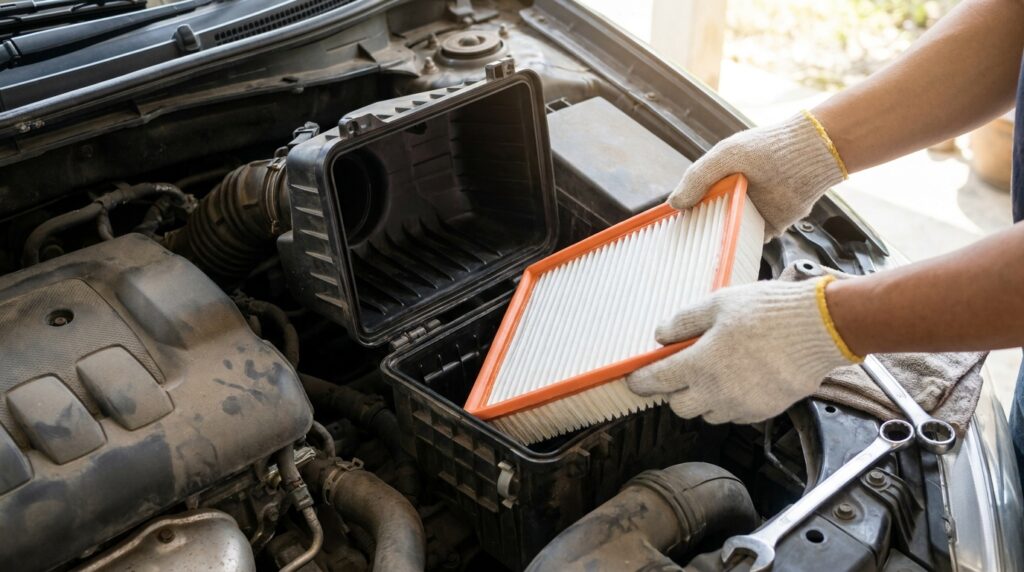
Take your brand new engine air filter out of its packaging. Notice the thick orange or black rubber gasket running around the edges. This gasket creates an airtight seal so dirty air cannot bypass the paper pleats.
Drop the new filter into the lower housing. It only fits correctly in one direction. Ensure the paper pleats point straight down and the flat rubber gasket faces up. Run your fingers around the edge to confirm the gasket sits perfectly flush inside the plastic groove. If the filter sits crooked, the lid will not close properly.
Step 5: Re-secure the Airbox Cover
Gently lower the plastic lid back down over the new filter. Ensure the lid sits perfectly flat. If it feels wobbly or uneven, lift it up and reposition the filter gasket.
Take your screwdriver and tighten the screws. Do not tighten them in a circle. Instead, use a star pattern (tighten the top left, then the bottom right, then the top right, then the bottom left). This technique ensures the plastic lid applies even pressure across the rubber seal, preventing air leaks. Hand-tighten them until they feel snug. Do not overtighten, or you will crack the plastic housing.
Reconnect the small vacuum hose if you removed it in Step 2. Double-check your work, remove your tools from the engine bay, and firmly close your hood. You have successfully completed the job!
Frequently Asked Questions (FAQs)
Even with a straightforward task, car owners often have specific concerns. We researched the most common questions drivers ask about this process to give you absolute clarity.
Can I clean my VW Golf air filter instead of replacing it?
Usually, no. Standard original equipment filters feature tightly packed paper fibers. If you try to wash a paper filter with water, it turns to mush and ruins the structural integrity. If you try to blow it out with high-pressure air, you risk tearing microscopic holes in the paper, which lets dirt straight into your engine. You must replace paper filters entirely. However, if you purchase an aftermarket “performance” filter (like those from K&N), they use oiled cotton instead of paper. You can wash and re-oil those specific performance filters.
Can I replace the air filter while doing other maintenance?
Absolutely. Grouping your maintenance tasks together saves you time and keeps you organized. We highly recommend swapping your air filter during your next VW Golf oil change to save time. Since you already have your hood open and your tools out, adding five minutes to swap the filter is highly efficient.
What is the difference between an engine air filter and a cabin air filter?
To summarize our earlier section: the engine filter goes under the hood and protects the engine from dirt and debris. The cabin filter goes inside the dashboard behind the glovebox and protects you from breathing in outside pollen, dust, and smog. They require different parts and different installation methods.
How much does a VW Golf air filter replacement cost?
If you take your car to a dealership, expect to pay between $70 and $115 for the part and the labor combined. If you choose to buy the part online or at a local auto parts store and do it yourself, you will only spend between $15 and $30. DIY is the most cost-effective method by far.
Can a dirty air filter cause my VW Golf to lose power or trigger a warning light?
Yes. An engine needs immense amounts of oxygen to create combustion. A clogged filter acts like a pillow held over the engine’s face. The car will struggle to accelerate, lose horsepower, and burn excess fuel. If the restriction becomes severe enough, the Mass Airflow sensor will detect the lack of oxygen and trigger the Check Engine light or the EPC (Electronic Power Control) warning light on your dashboard.
Conclusion
Maintaining your vehicle does not require an advanced engineering degree. As you can see, a VW Golf air filter replacement requires nothing more than a simple screwdriver, a cheap part, and fifteen minutes of your afternoon.
By taking control of this easy maintenance task, you ensure your engine breathes freely. You restore lost fuel efficiency, protect the delicate internal cylinders from abrasive dirt, and save yourself a massive dealership markup fee. The feeling of closing your hood knowing you did the job correctly brings great peace of mind.
We encourage you to explore more of our guides to become a confident DIY car owner. Bookmark our site and refer back to us whenever your VW Golf needs routine care. Safe driving, and enjoy the smooth, responsive ride of your freshly serviced engine!