
Electrical gremlins can be incredibly frustrating. Picture this: you are driving down the highway, you plug your phone into the charger, and nothing happens. Whether your 12V cigarette lighter stopped charging your devices, your infotainment radio suddenly went dark, or your interior lights refuse to turn on, the culprit is usually incredibly simple. You likely just have a blown fuse.
Many drivers panic when electrical components fail, fearing a massive repair bill from the dealership. But the truth is, replacing a fuse costs only pennies and takes just a few minutes of your time. You simply need the correct VW Golf fuse box diagram to know exactly which fuse to pull and replace.
Understanding your vehicle’s electrical system is a vital component of complete VW Golf Maintenance & Service, keeping you safe and saving you expensive trips to the auto electrician. In this guide, we will show you exactly where to find your fuses, how to read the layouts, and how to safely test and replace a bad fuse at home.
Where Are the Fuse Boxes Located in a VW Golf?
Most modern vehicles separate their electrical circuits to keep everything organized and safe. Volkswagen engineers designed the Golf (especially the popular Mk7 and Mk8 generations) to feature two primary fuse boxes. Knowing the VW Golf fuse box location saves you precious time when diagnosing an issue.
1. Passenger Compartment (Interior) Fuse Box
The VW interior fuse box controls the electrical components inside the cabin. This includes your radio, interior dome lights, power windows, and the 12V sockets. The exact location depends on where your steering wheel is located:
- Left-Hand Drive (LHD) Cars: Look at the driver’s side dashboard. You will see a small pull-down storage cubby just below the headlight switch. Open this cubby, squeeze the sides, and pull it entirely out. The fuse box sits right behind it.
- Right-Hand Drive (RHD) Cars: You will generally find the interior fuse box hidden behind the passenger-side glovebox. You must release the stopper tabs on the glovebox to lower it and access the fuses.
Pro Tip: Because you’ll be working in the glovebox/dashboard area, this is a perfect time to also check your cabin air quality. Read our guide on the VW Golf cabin air filter replacement which is located right in the same area.
2. Engine Compartment (Under the Hood) Fuse Box
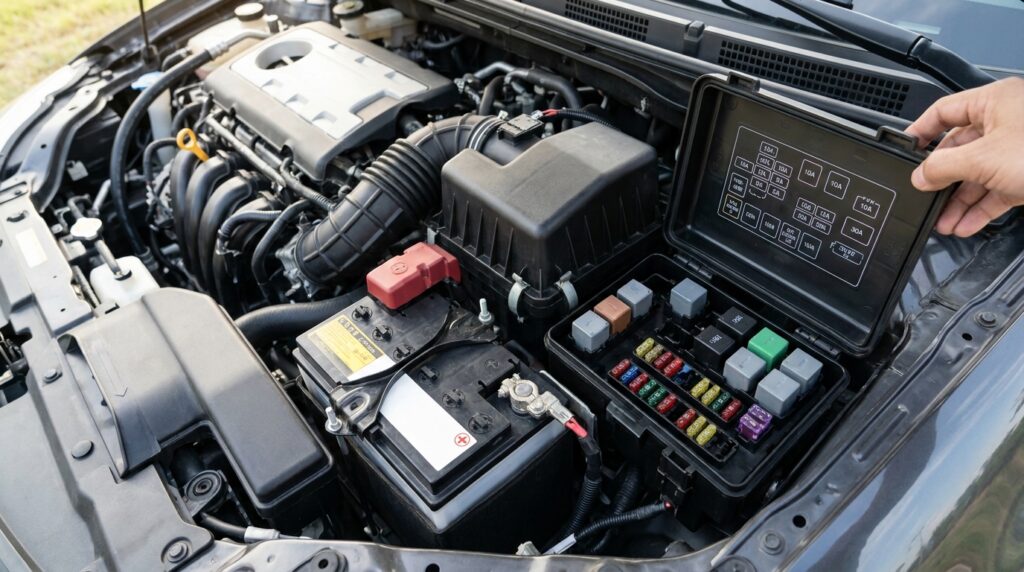
The second fuse box houses the heavy-duty fuses and relays. These protect vital mechanical components like the engine control module, ABS brakes, windshield wipers, and cooling fans.
To find it, pop your hood and look at the right side of the engine bay (driver’s side on an LHD car). You will see a rectangular black plastic cover with two locking tabs. Squeeze the tabs, lift the cover off, and you will see a densely packed array of fuses.
Pro Tip: You will find this main fuse box located directly next to the battery. If you are experiencing major power loss across the whole car, check your battery health with our VW Golf battery replacement guide before messing with the fuses.
How to Read the VW Golf Fuse Box Diagram
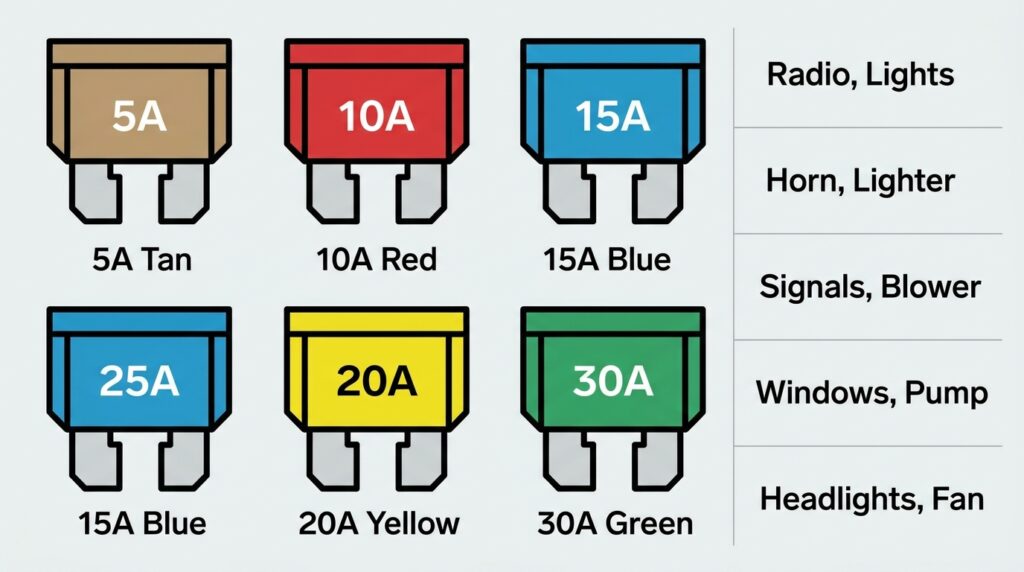
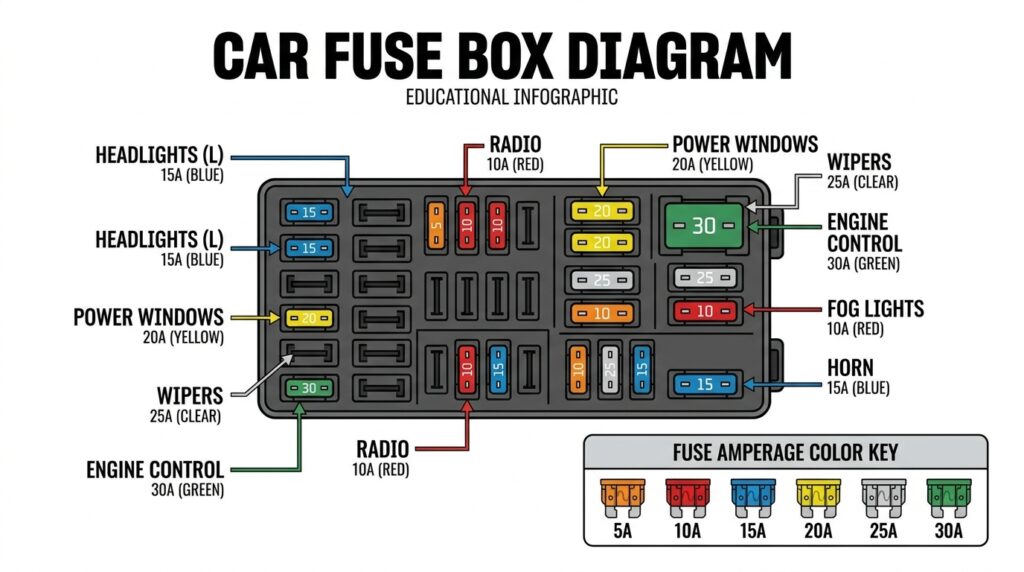
When you open the fuse box, you will see dozens of colorful plastic squares. These colors are not random; they follow a universal automotive standard. Each color represents a specific amperage rating. The number printed on the top of the fuse also tells you its amperage.
Before you match your specific issue to the VW Golf Mk7 fuse layout, you need to understand what these colors mean. Here is a quick reference guide for standard blade fuses:
| Fuse Color | Amperage Rating (Amps) | Common Uses in VW Golf |
|---|---|---|
| Orange / Brown | 5A or 7.5A | Interior switches, minor sensors, dashboard lighting. |
| Red | 10A | Exterior lights, radio, minor interior accessories. |
| Blue | 15A | Windshield washers, power outlets, infotainment screen. |
| Yellow | 20A | Cigarette lighter (12V socket), horn, sunroof motor. |
| Clear / White | 25A | Wiper motors, high-power accessories. |
| Green | 30A | Power windows, cooling fans, starter circuits. |
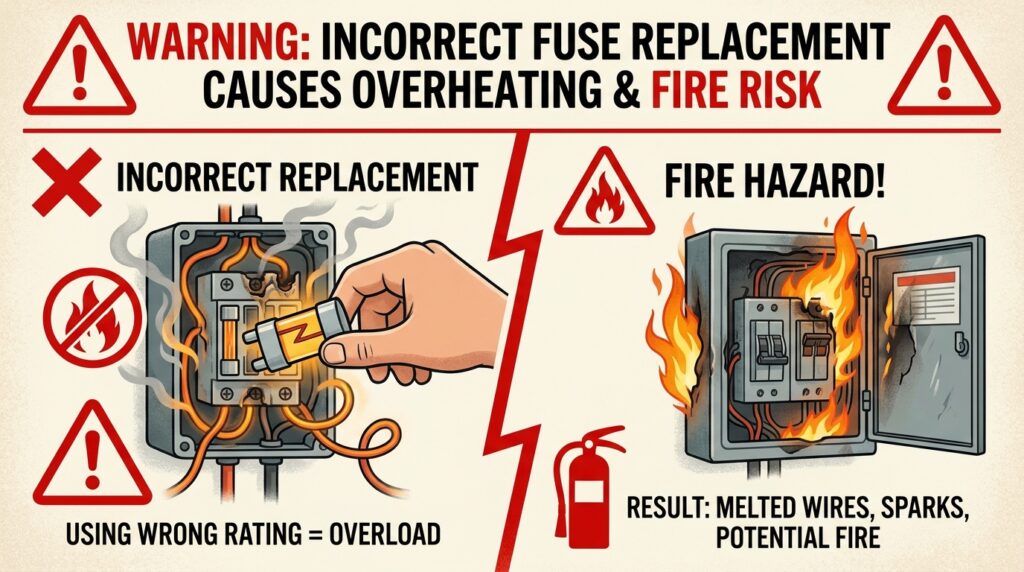
CRITICAL SAFETY WARNING: Never replace a blown fuse with a fuse of a higher amperage rating. For example, if a 15A blue fuse blows, you must replace it with another 15A blue fuse. If you put a 30A green fuse in its place, the circuit will overheat before the fuse blows, which can literally cause an electrical fire behind your dashboard. You can read more about electrical circuit safety at Lifewire’s Automotive Electrical Guide.
Most Common VW Golf Fuses You Might Need to Replace
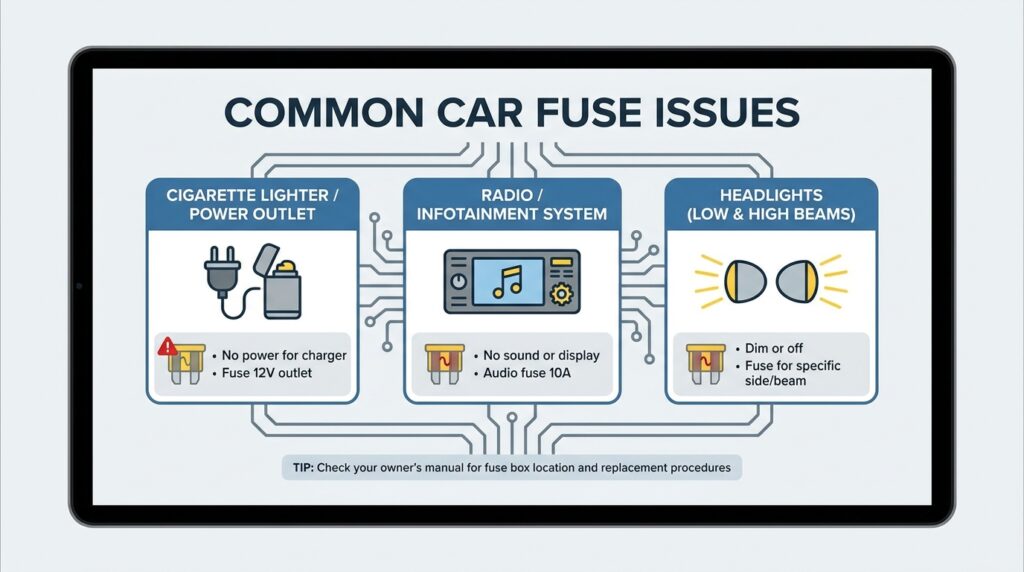
While the exact slot numbers can vary slightly depending on your specific model year and trim package (always check the diagram card tucked inside your fuse box or your owner’s manual), owners frequently replace these specific fuses:
- 12V Socket / Cigarette Lighter: This is the most frequently blown fuse VW Golf owners experience. It is typically a 20A (Yellow) fuse. People often blow this fuse by plugging in cheap, faulty phone chargers or high-draw portable tire inflators that pull too much power at once.
- Infotainment / Radio System: If your radio screen goes completely black and refuses to turn on, look for a 15A (Blue) or 20A (Yellow) fuse in the interior panel. Fixing this instantly restores your music and navigation.
- Headlights & Exterior Lights: Headlight systems use various fuses depending on whether you have Halogen, HID, or LED lights. Usually, you will find these in the engine compartment box.
“If one of your headlights is out, it might not be a fuse. A burned-out bulb is far more common. Check our step-by-step VW Golf headlight bulb replacement guide first.”
Step-by-Step: How to Test and Replace a Blown Fuse
Now that you know how to locate the fuse box and read the diagram, you are ready to fix the problem. Follow these simple steps to safely replace your bad fuse.
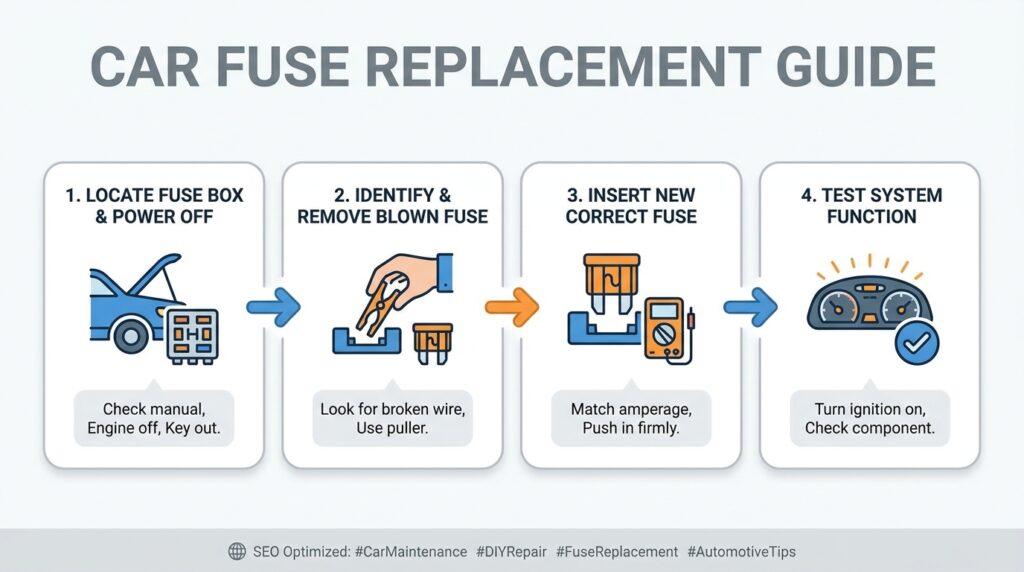
Step 1: Turn Off the Ignition
Safety always comes first. Turn off your car’s engine. Remove the key from the ignition, or keep the key fob away from the cabin if you have a push-to-start system. Turn off the headlights and make sure the radio is off. You want zero power running through the circuits while you work.
Step 2: Locate the VW Golf Fuse Puller Tool
Do not use metal pliers to pull fuses, as you can easily crush the plastic casing or cause a short circuit. Volkswagen kindly provides a small plastic tool specifically for this job. You will usually find this little white or yellow tweezer tool clipped to the inside of the fuse box cover.
Step 3: Inspect the Wire inside the Fuse
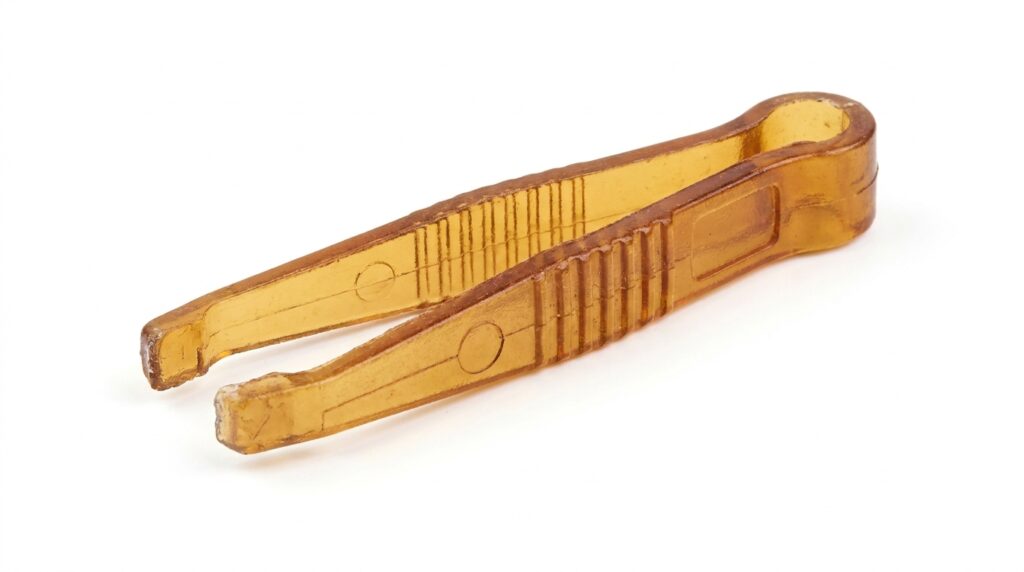
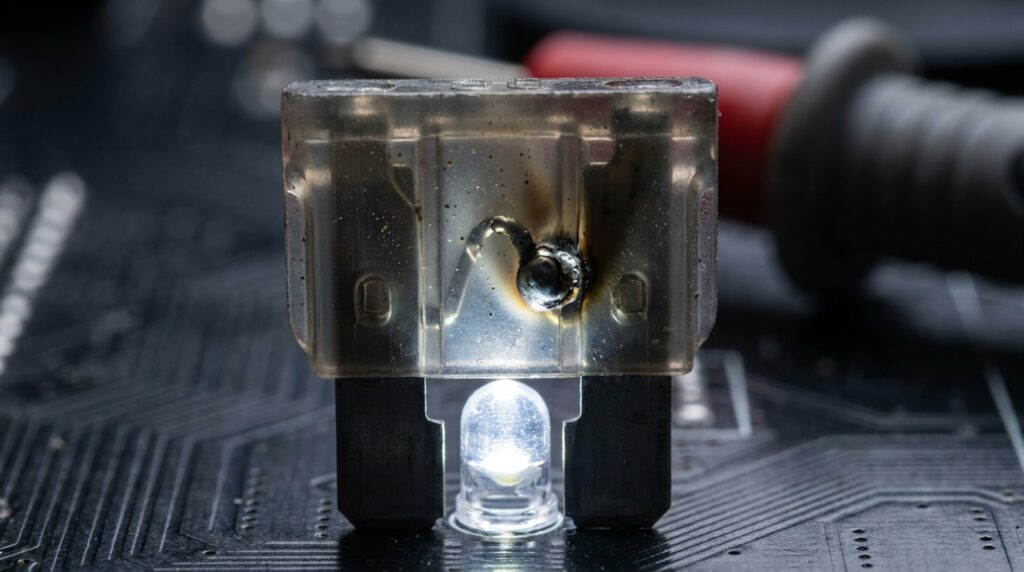
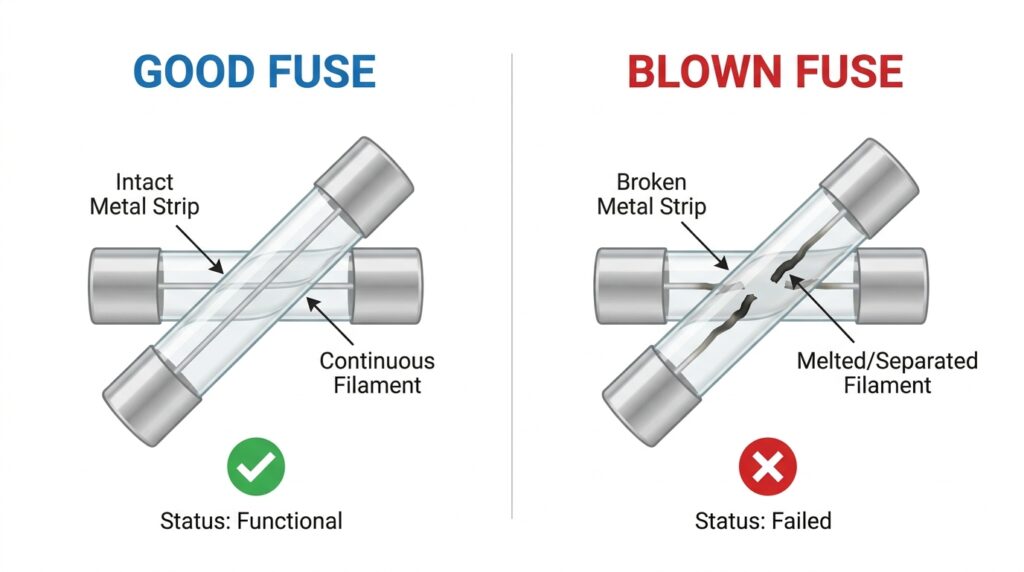
Using the plastic puller, grab the suspected bad fuse and pull it straight out. Hold the fuse up to the sunlight or a flashlight. Look at the clear plastic center. Inside, you will see a small “U” shaped metal wire. If that wire is connected and solid, the fuse is good. If the wire is broken, melted, or scorched black, you have a blown fuse.
Step 4: Insert the New Fuse
Take your brand new fuse (ensuring it matches the exact same color and amperage as the old one) and push it firmly into the empty slot. It should sit completely flush with the other fuses around it. Turn your car on and test the accessory. Your 12V socket or radio should now work perfectly!
Dashboard Light Warning: Sometimes, pulling fuses or disconnecting power can trigger dashboard warning lights. If a wrench icon appears after fixing your fuses, learn how to reset the service light on a VW Golf quickly and easily.
Frequently Asked Questions (FAQs)
We gathered the most common questions VW owners type into search engines regarding their electrical systems. Here are the direct answers you need.
Which fuse is for the cigarette lighter in a VW Golf?
The VW Golf cigarette lighter fuse is typically a 20-amp yellow fuse. For the Mk7 generation, it is usually located in slot F40 within the interior dashboard fuse box. However, always consult the diagram card inside your fuse panel cover, as different trim levels can alter the layout slightly.
Can a blown fuse cause my car to not start?
Yes. If the fuse that powers the starter motor, the fuel pump, or the ignition switch blows, your car will crank but fail to start, or it may not crank at all. These critical engine fuses sit in the under-hood fuse box next to the battery.
However, if your car won’t start and the doors won’t even unlock, the issue might just be your keys. Try a quick Volkswagen Golf key fob battery swap first.
Can a bad fuse trigger the EPC warning light?
Yes, absolutely. The Electronic Power Control (EPC) system relies on various electronic sensors to function properly, such as the brake light switch and the throttle body. If the fuse powering these specific sensors blows, the car’s computer registers a fault, and the light comes on.
“If your fuses are fine but the light remains, you need to read our comprehensive diagnostic guide on the VW Golf EPC light.”
Conclusion
Dealing with a broken phone charger socket or a dark radio does not have to ruin your day. Knowing how to locate your interior and engine fuse boxes, understanding the VW Golf fuse box diagram, and recognizing the color codes empowers you to fix annoying electrical issues in minutes.
We highly recommend buying a cheap variety pack of standard blade fuses from your local auto parts store and keeping them right in your glove box. That way, you are always prepared. Keep learning about your car, and browse the rest of our comprehensive maintenance articles on golfdz.com to keep your Volkswagen running at its absolute best.