

We all love the VW Golf because it hits that perfect sweet spot between a practical daily driver and a fun, sporty hatchback. But if you want to keep that snappy acceleration and smooth ride, you have to show the ignition system some love. Spark plugs might be small, but they carry a huge responsibility. They create the tiny electrical explosions inside your engine cylinders that actually make the car move.
As you pile on the miles, these little workhorses eventually wear out. When they do, you’ll definitely feel it. The good news? You do not need to drop a small fortune at the dealership to fix this. Doing a proper VW Golf tune-up in your own driveway or garage is incredibly satisfying, surprisingly easy, and saves you a ton of cash.
Keeping up with your engine’s ignition system is a vital part of overall VW Golf Maintenance & Service. In this guide, I am going to walk you through everything you need to know. We will cover the warning signs of failing plugs, figure out exactly what it costs, and tackle a full VW Golf spark plugs replacement together, step-by-step.
Symptoms of Bad Spark Plugs in a VW Golf
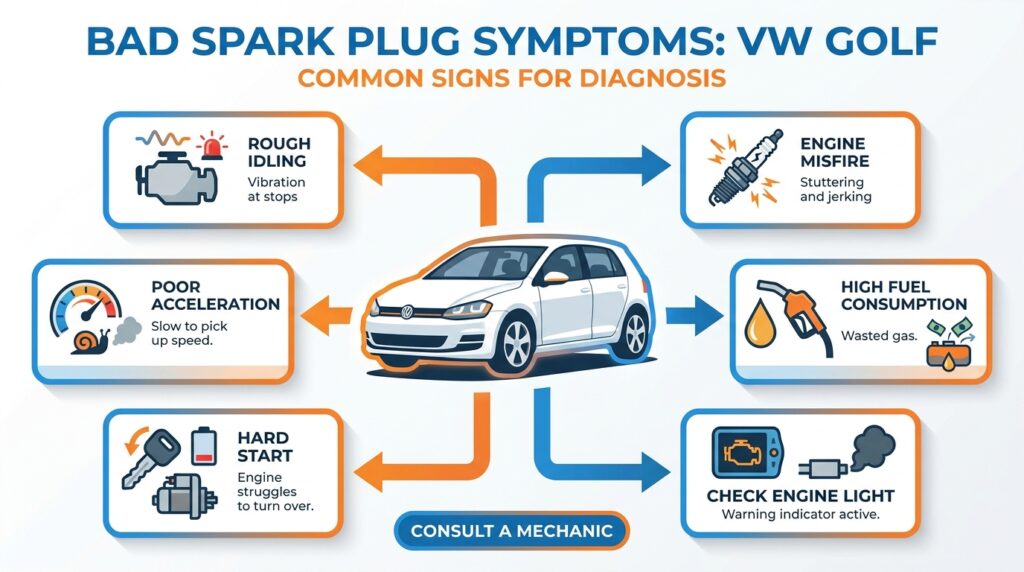
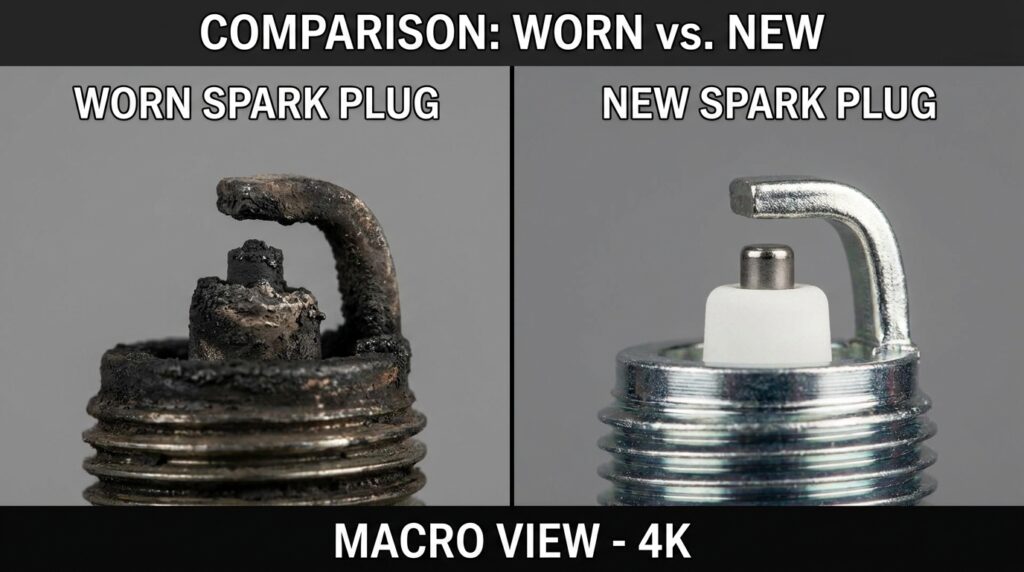
Your car has a funny way of talking to you when it’s unhappy. Long before a spark plug completely dies, it will start dropping hints. Catching these symptoms of bad spark plugs VW Golf early can honestly save you from some pretty nasty engine repair bills later on. Here is what you should watch out for:
- Rough Idling: Have you noticed the steering wheel vibrating a bit too much when you’re stopped at a red light? Your engine should purr quietly. If it feels jittery or sounds like it’s stumbling, your spark plugs are likely struggling to fire consistently.
- Engine Misfires: This is the big one. A misfire feels like the car suddenly trips or jerks while you are driving. If your engine misfires due to a dead spark plug, it will likely trigger the Check Engine light or the VW Golf EPC light on your dashboard.
- Sluggish Acceleration: When you hit the gas pedal to merge onto the highway, the car should go. If it hesitates or feels like it has lost its punch, worn-out spark plugs are giving you a weak spark, leading to poor power.
- Visiting the Gas Station More Often: Bad spark plugs cannot burn fuel efficiently. When your engine wastes unburned gas, your MPG tanks. If your fuel economy suddenly drops, check the plugs.
- Struggling to Start: Worn plugs have a wider gap, which makes it harder for the spark to jump across, especially on cold mornings. Just keep in mind, if you are having trouble starting your car, don’t automatically assume it’s the spark plugs; it could just be time for a VW Golf battery replacement.
When to Replace Your VW Golf Spark Plugs
So, how often do you actually need to learn how to change spark plugs VW Golf? Well, it really depends on which engine you have.
If you drive a standard Golf with the 1.4T or 1.8T TSI engine, Volkswagen usually sets you up with long-lasting platinum or iridium plugs. For everyday commuting, these usually last anywhere from 40,000 to 60,000 miles without much fuss.
But let’s say you drive a GTI or a Golf R with the punchy 2.0T engine. These engines run hotter and push a lot more turbo boost. Because they work harder, they chew through spark plugs much faster. If you drive a performance model, expect to swap your plugs every 30,000 to 40,000 miles. If your car is heavily modified or tuned, you might even do it sooner.
To ensure optimal performance, you should always consult your specific VW Golf service intervals & schedule to know exactly when your car is due for a tune-up.
Tools and Parts Needed for the Job
Before you get your hands dirty, gather your gear. Having everything sitting on the workbench makes this job a breeze. Here is your shopping list:
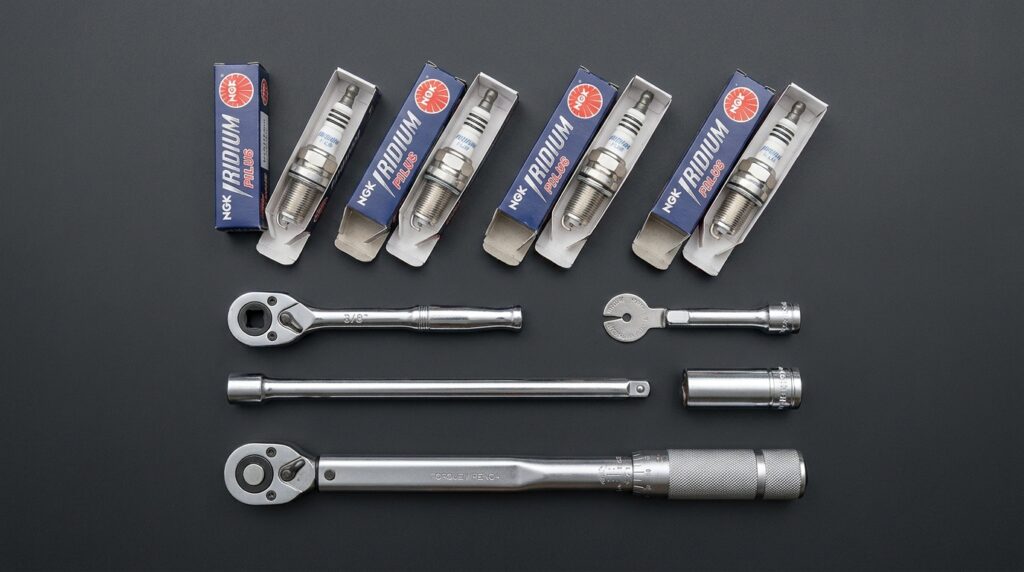
- The Right Spark Plugs: Stick to the good stuff. Buy OEM-recommended NGK or Bosch plugs tailored to your exact engine code.
- Spark Plug Socket: You will need a 5/8″ (16mm) spark plug socket. Do not use a normal deep socket! Get one with a rubber insert or a magnet inside so it grabs the plug and pulls it out of the deep engine tube.
- Ratchet and Extension Bar: A standard 3/8-inch drive ratchet with at least a 6-inch extension so you can reach down into the engine block.
- Torque Wrench: I can’t stress this enough—buy or borrow one. VW engines have aluminum heads, and over-tightening a plug will ruin your day (and your wallet).
- Feeler Gauge: A cheap little tool to verify the VW Golf spark plug gap before you put them in.
- Dielectric Grease: Just a tiny tube to keep moisture out of your electrical connections.
“Working on your own car is all about having the right tools. A magnetic socket and a torque wrench separate a fun Saturday morning project from a frustrating afternoon.”
Step-by-Step: How to Replace VW Golf Spark Plugs
Got your parts? Great. Take a deep breath, and let’s get into the engine bay. Follow these steps, and you’ll do just fine.
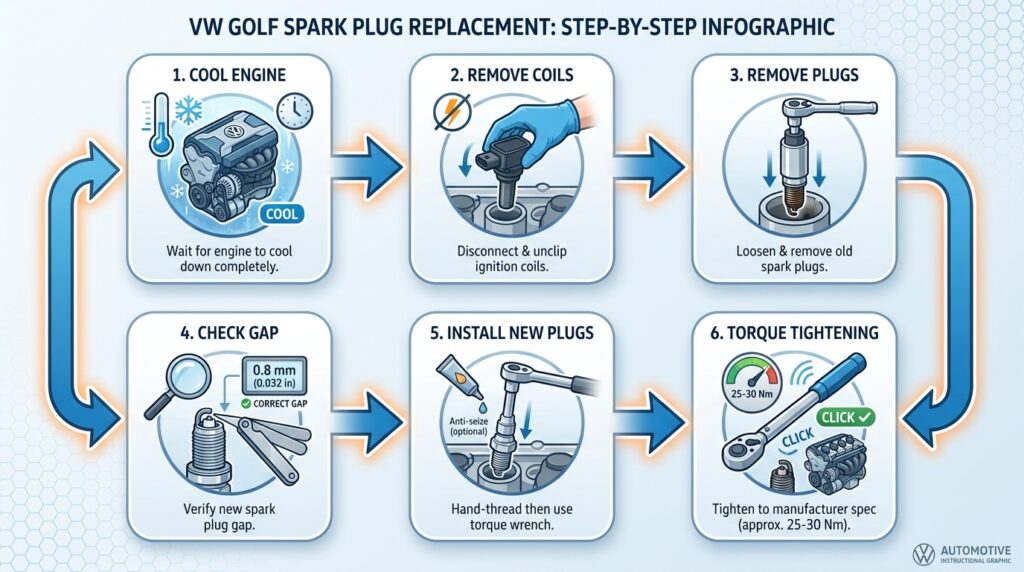
Step 1: Prep and Let It Cool
First rule of spark plugs: never work on a hot engine. If you just drove the car, pop the hood and let it sit for a few hours. Aluminum expands when it is hot. If you try to unscrew a spark plug from a hot engine, you risk ripping the metal threads right out of the cylinder head.
Step 2: Remove the Cover and Coil Packs
Grab the edges of the plastic engine cover and pull it straight up. Underneath, you’ll see your ignition coil packs—one for each cylinder.
Before you can pull them out, you have to disconnect the wiring harness. Take your time here! VW plastic clips get very brittle from engine heat over the years. Gently push the clip inward, press the little release tab, and wiggle it off. Once the wires are free, grab the coil pack, twist it slightly, and pull it straight up and out. Lay them safely to the side.
Step 3: Remove the Old Plugs
Look down the hole, and you’ll see the spark plug waiting for you. Drop your 5/8″ spark plug socket and extension down there until you feel it slide over the plug.
Attach your ratchet and turn counterclockwise to break it loose. Once it is fully unscrewed, pull your extension up. Because you used a spark plug socket, the old plug will come right up with the tool. Do this for all four cylinders.
Step 4: Check the Gap and Install the New Ones
Even if the box claims they are “pre-gapped,” always check them with your feeler gauge. Sometimes they get dropped in shipping, which bends the tip and closes the gap.
Once the gap looks good, pop the new plug into your socket. Lower it gently into the engine. Here is the pro-secret: do not use the ratchet handle yet. Use your bare hands to twist the extension bar clockwise. You want to hand-thread the plug to make sure it goes in perfectly straight. If it fights you or feels crunchy, stop and back it out. You do not want to cross-thread it.
Step 5: Torque it Down
Once it is finger-tight, grab your torque wrench. Most VW Golf engines require around 18 to 22 ft-lbs (25 to 30 Nm) of torque, but please check your specific manual to be sure. Tighten it slowly until you feel or hear the wrench “click.” Stop immediately. It is perfectly tight.
Step 6: Put It All Back Together
Smear a tiny bit of dielectric grease inside the rubber boot of your coil packs. Push the coil packs back down onto the spark plugs until you feel them pop into place. Reconnect the wiring harness until it clicks, and slap your engine cover back on.
While you have your hood open and are doing engine maintenance, it is highly recommended to check and perform a VW Golf air filter replacement to maximize your engine’s breathing and fuel efficiency.
Resetting the Dashboard Lights
If your old spark plugs were so bad that they triggered the Check Engine or EPC light, installing new ones won’t instantly make the lights vanish. The car’s computer needs a minute to realize the problem is fixed.
The fastest way to clear the dash is by plugging in a basic OBD2 scanner, reading the misfire codes, and hitting “erase.” If you don’t have a scanner, just drive the car normally for a few days. After a couple of cold starts and warm-up cycles, the computer will usually clear the light on its own.
If you are doing this as part of your routine mileage tune-up, you will also want to know how to reset the service light on your VW Golf so your dashboard notifications are up to date.
How Much Does a VW Golf Spark Plug Replacement Cost?

Let’s talk money, because this is where doing it yourself really pays off. Shops charge heavy labor rates for a job that will probably take you less than an hour. Here is a quick breakdown of the VW Golf spark plug replacement cost.
| Service Option | Cost of Parts | Labor Costs | Estimated Total Cost |
|---|---|---|---|
| Dealership / Auto Shop | $60 – $100 (Shop markup) | $100 – $200 (1 to 1.5 hours) | $160 – $300+ |
| Do-It-Yourself (DIY) | $40 – $80 (OEM Plugs) | $0 (Just your weekend time) | $40 – $80 |
Taking your Golf to the dealership or a local European auto shop will easily set you back between $160 and $300. By ordering a set of four NGK or Bosch plugs online yourself, you’re looking at maybe $60 out of pocket.
Doing this job yourself saves a lot of money on labor—savings you can put toward other essential fluid maintenance, like a VW Golf oil change.
Frequently Asked Questions (FAQs)
Do I need to replace the ignition coils with the spark plugs?
Not always. Ignition coils usually outlive your spark plugs by quite a bit. However, if your Golf is creeping up over 80,000 miles, or if you still have a misfire after installing fresh plugs, it is probably time to swap the coil packs too.
What is the correct spark plug gap for a VW Golf?
It really depends on your engine. Standard 1.4T or 1.8T engines generally use a gap around 0.032 inches. If you drive a GTI, you might need a tighter gap, closer to 0.024 inches. Always double-check your owner’s manual or look up your specific car on a spark plug manufacturer guide before you put them in.
Should I use anti-seize on VW spark plugs?
This is a massive debate in the car world, but the modern answer is no. Brands like NGK put a special metal coating on their plugs specifically so they don’t seize in the engine. If you add liquid anti-seize, it acts as a lubricant, making it incredibly easy to accidentally over-tighten the plug and damage your engine head. Keep them clean and dry.
How long does it take to change spark plugs on a VW Golf?
If it is your first time turning a wrench, give yourself about an hour so you don’t feel rushed. Once you know what you are doing, you can easily knock this job out in 20 to 30 minutes. It’s one of the easiest jobs you can do since everything is sitting right on top of the engine.
Conclusion
Tackling a VW Golf spark plugs replacement is honestly one of the best ways to get comfortable working on your own car. It instantly breathes life back into your engine, smooths out the ride, brings your gas mileage back to normal, and leaves you with extra cash in your pocket.
Just remember the golden rules: work on a cold engine, hand-thread the plugs to start, and always use a torque wrench. If you follow this guide, you will be back on the road enjoying that classic Volkswagen driving dynamic in no time.
Did you run into any stubborn clips, or have a question about gaping your specific plugs? Drop a comment below! And if you want to keep your car running like a top, feel free to check out the rest of our maintenance guides on golfdz.com.