

Volkswagen designed the Golf to be a reliable, fun, and long-lasting daily driver. However, German engineering requires strict discipline. If you want to get 200,000+ miles out of your car without massive repair bills, you must follow the factory VW Golf service intervals & schedule.
Many owners make the mistake of waiting until a dashboard light turns on before they visit a mechanic. This is a dangerous habit. Preventative maintenance is the real secret to keeping your engine healthy, your transmission shifting smoothly, and your resale value high. This comprehensive guide covers the standard intervals you need to know, breaking down exactly what your car needs and when it needs it.
Pro Tip: For a broader overview of keeping your car in top shape, check out our ultimate VW Golf Maintenance & Service hub. It covers everything from diagnosing dashboard lights to detailing your interior.
Whether you drive a standard TSI, a sporty GTI, or an efficient TDI, this Volkswagen Golf service guide will serve as your ultimate roadmap for long-term reliability.
The Standard VW Golf Service Schedule (Mileage Breakdown)
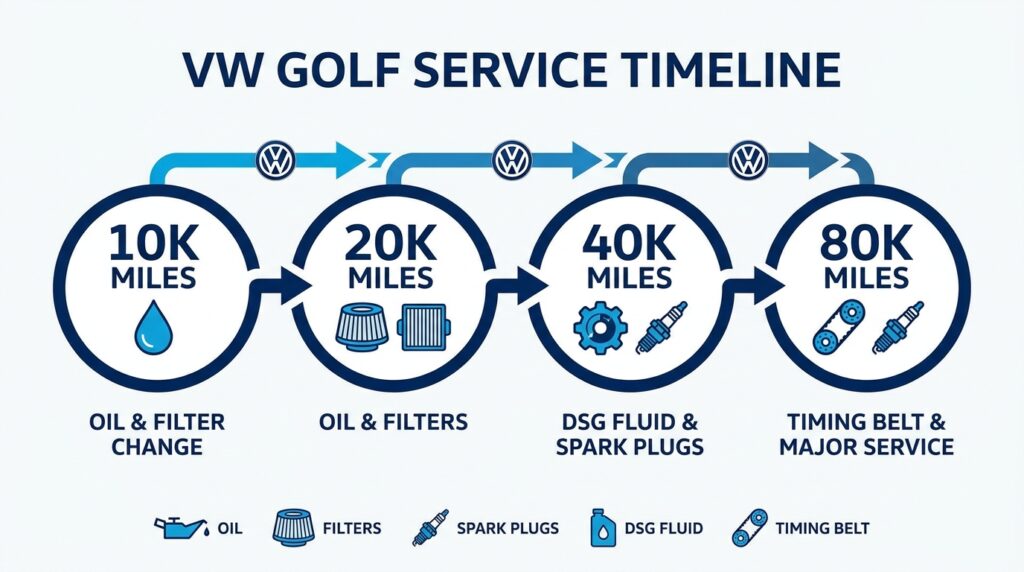
Volkswagen operates on a very simple and predictable maintenance system. They use a “10,000-mile or 1-year” interval structure. This means you need to service your car every 10,000 miles or every 12 months—whichever comes first.
If you only drive 5,000 miles a year, you still need to service the car at the 12-month mark. Oil degrades, rubber hoses dry out, and filters collect dust even when the car sits in your driveway. Let’s look at a quick comparison table of the standard VW Golf maintenance schedule milestones.
| Mileage Interval | Time Interval | Service Type | Primary Focus |
|---|---|---|---|
| 10,000 Miles | 1 Year | Minor Service | Oil change, filter, tire rotation, basic inspections |
| 20,000 Miles | 2 Years | Intermediate Service | Cabin filter, battery check, brake inspection |
| 40,000 Miles | 4 Years | Major Service | Spark plugs, DSG fluid, engine air filter, thorough diagnostics |
| 80,000+ Miles | 8+ Years | Long-Term Service | Timing belt, water pump, coolant flush, suspension wear |
Now, let’s break down each of these intervals in detail so you know exactly what to expect at the repair shop (or in your own garage).
10,000 Miles (or 1 Year): The Minor Service
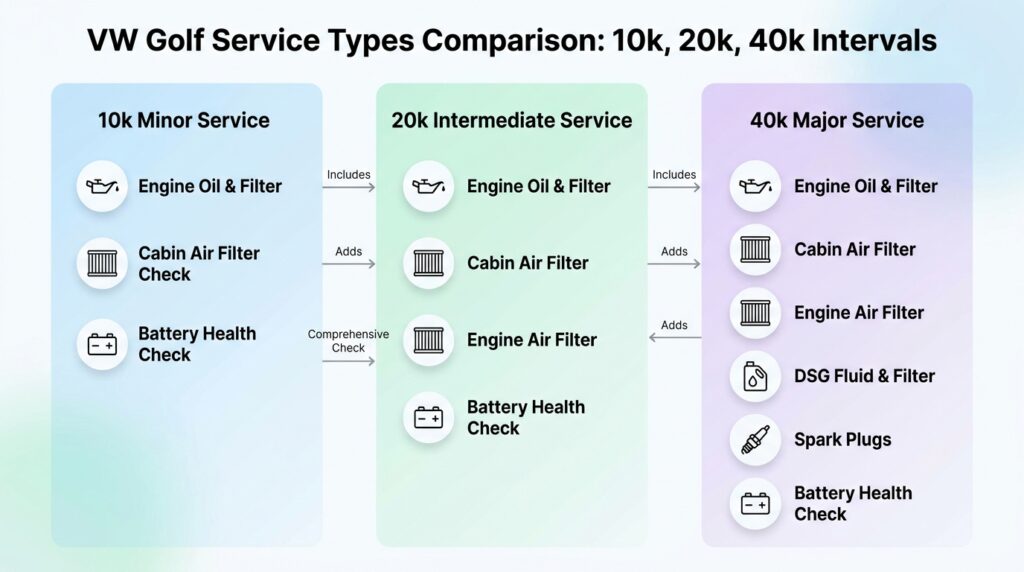
The 10k mark is the foundation of your VW Golf maintenance schedule. You should never skip this step. This minor service focuses entirely on keeping the engine lubricated and ensuring the car is safe to drive.
At 10,000 miles, your vehicle needs:
- Full Synthetic Oil Change: VW engines require specific oil formulations (usually VW 502.00, 504.00, or 508.00 depending on your engine year). Never use conventional oil.
- Oil Filter Replacement: Always replace the filter and the drain plug crush washer to prevent annoying oil leaks.
- Tire Rotation: Moving the front tires to the back ensures even wear and extends the life of your rubber.
- Visual Inspection: Check the thickness of the brake pads and look for any obvious fluid leaks under the hood.
Many drivers choose to save money by doing this work at home. Performing this minor service yourself is easy. Follow our step-by-step guide on the VW Golf oil change to learn the exact tools and fluid capacities you need.
20,000 Miles (or 2 Years): The Intermediate Service
When the odometer hits 20,000 miles, you repeat everything from the 10,000-mile service, but you add a few extra layers of preventative care. This intermediate service focuses on driver comfort and vehicle safety.
At 20,000 miles, you will complete the oil change and tire rotation, plus:
- Cabin Air Filter Replacement: This filter cleans the air coming through your AC vents. A dirty filter reduces airflow and causes bad odors.
- Battery Health Check: Mechanics will test the voltage of your battery to ensure it will survive the upcoming winter.
- Suspension Inspection: A visual check of the shocks, struts, and ball joints to look for early signs of wear.
Did you know? A clogged filter can ruin your AC efficiency. Here is how to handle your VW Golf cabin air filter replacement at home in under 10 minutes without any special tools.
40,000 Miles (or 4 Years): The Major Service
The 40,000-mile mark is one of the most critical milestones in your VW Golf service intervals & schedule. This is often called the VW Golf 40k service, and it is a comprehensive, extensive, and relatively expensive visit to the mechanic.
By this time, certain fluids have broken down, and ignition components have worn out. Ignoring the VW Golf major service intervals will result in poor fuel economy, misfires, or even catastrophic transmission failure.
Here is what the 40k service includes:
- Everything from the 10k and 20k services: Oil, oil filter, cabin filter, and tire rotation.
- Engine Air Filter Replacement: Your engine needs to breathe clean air. A dirty engine air filter starves the engine of oxygen, hurting performance.
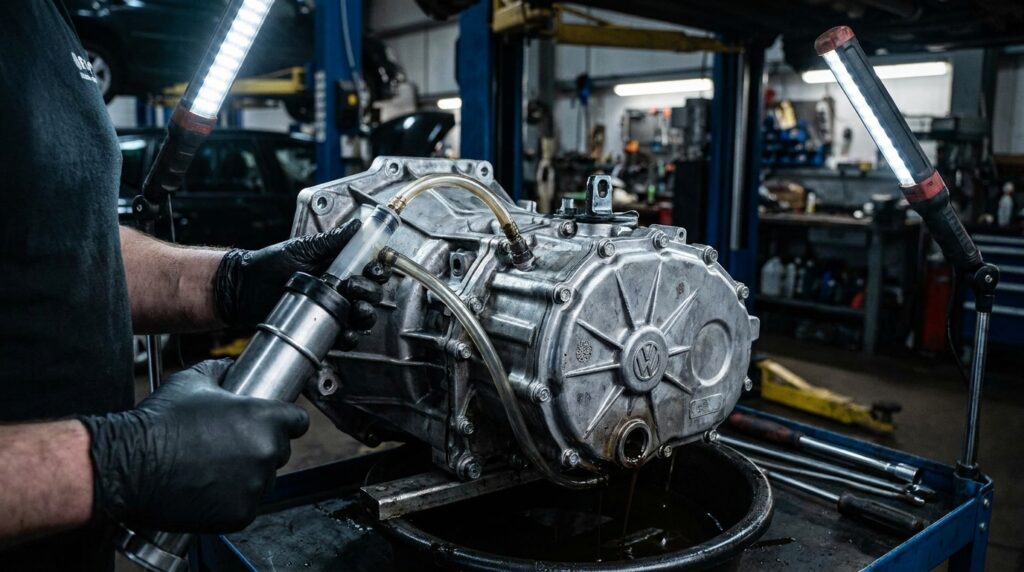
- DSG Transmission Fluid Change: If your Golf has an automatic Direct-Shift Gearbox (DSG), this fluid must be changed every 40k miles. The fluid gets contaminated with clutch material over time.
- Spark Plug Replacement: Fresh spark plugs ensure a clean, powerful combustion cycle. Worn plugs lead to a rough idle and engine misfires.
Because the DSG transmission is a highly complex piece of engineering, neglecting this fluid change is a massive risk. If you drive an automatic, this interval is vital. Learn more about the DSG oil change cost and process to avoid surprise bills at the dealership.
Furthermore, you will also need to swap out your ignition components. Check out our guide on VW Golf spark plugs replacement to see how you can handle this task and save hundreds of dollars in labor.
80,000 – 100,000 Miles: Long-Term Maintenance
Congratulations! If you have reached 80,000 miles and beyond, your diligent maintenance is paying off. At this stage, your standard intervals (10k, 20k, 40k) continue to repeat. However, high-mileage cars require special attention to specific long-term components.
As you approach the 100k mark, you need to prepare for major component replacements:
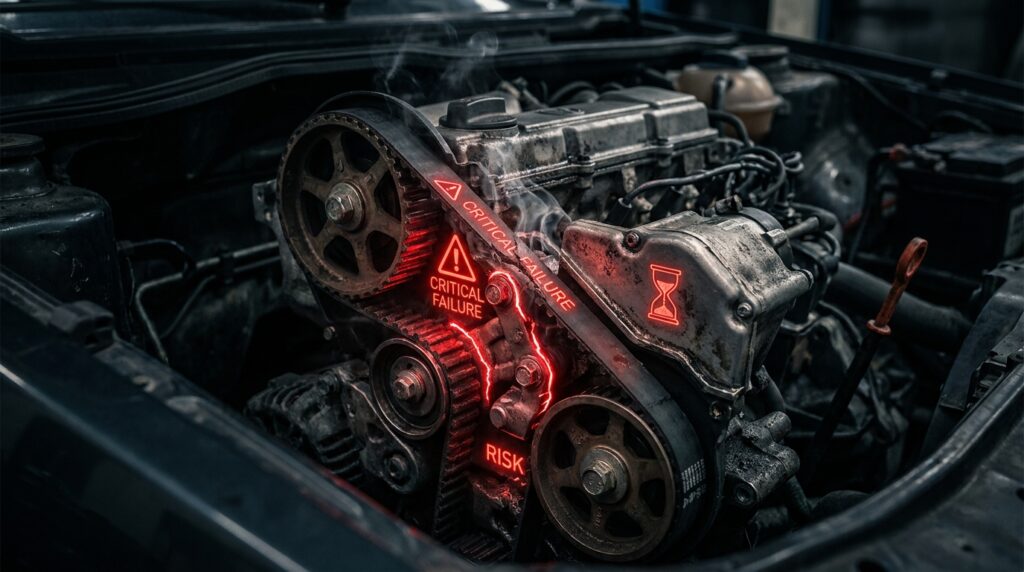
- Timing Belt and Water Pump: The timing belt keeps your engine’s internal parts moving in perfect harmony. Over time, the rubber belt degrades, cracks, and stretches.
- Coolant Flush: Volkswagen uses special pink or purple coolant (G12 or G13). Over many years, this coolant loses its anti-corrosion properties and needs to be flushed and replaced.
- Serpentine Belt Inspection: Check the drive belt that runs your alternator and AC compressor for cracks.
Volkswagen engines are usually “interference engines.” This means if the timing belt breaks while you are driving, the pistons will smash into the valves, destroying the engine entirely. A snapped belt can destroy your engine. Find out exactly when and how to handle your VW Golf timing belt.
Routine Inspections Between Services
While the formal Volkswagen Golf service guide dictates visits every 10,000 miles, a responsible owner does not ignore their car for a whole year. You need to perform basic routine checks every month (or roughly every 1,000 miles).
Here is a quick checklist for routine at-home inspections:
- Check the Oil Dipstick: Some turbocharged Golf engines burn a small amount of oil between changes. Check the dipstick monthly and top it off if the level drops below the minimum line.
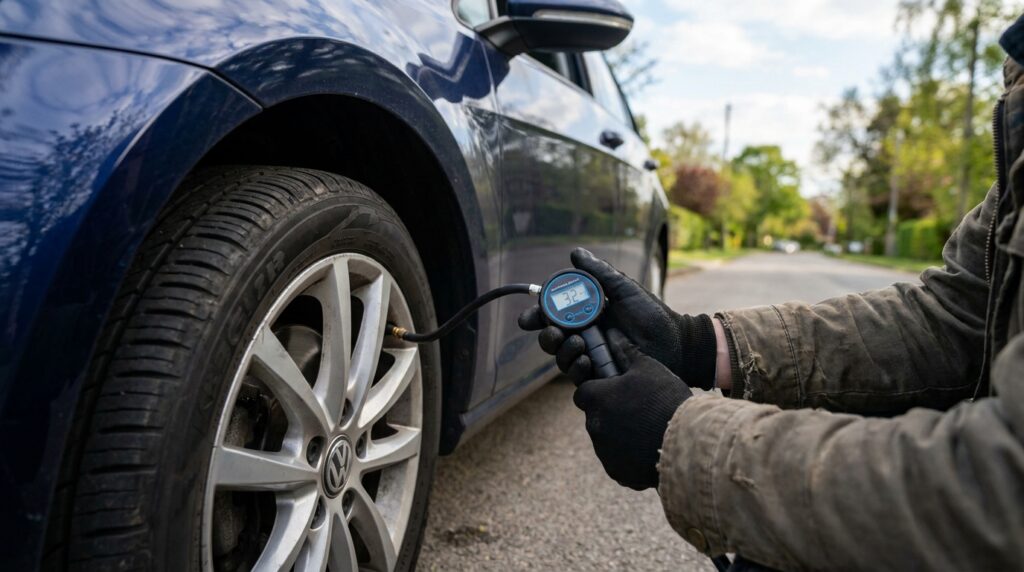
- Monitor Tire Pressure: Changes in weather cause tire pressure to drop. Under-inflated tires ruin fuel economy and handle poorly. Keep them inflated to the PSI listed on your driver’s side door jamb.
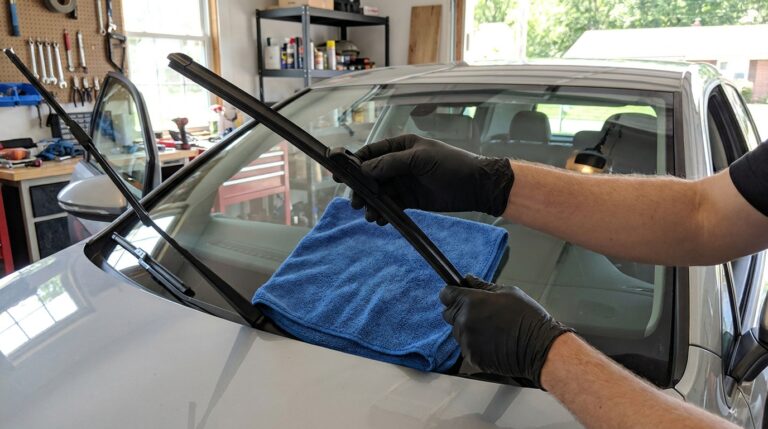
- Check Windshield Washer Fluid: Keep the reservoir topped up, especially during winter months when road salt smears your windshield.
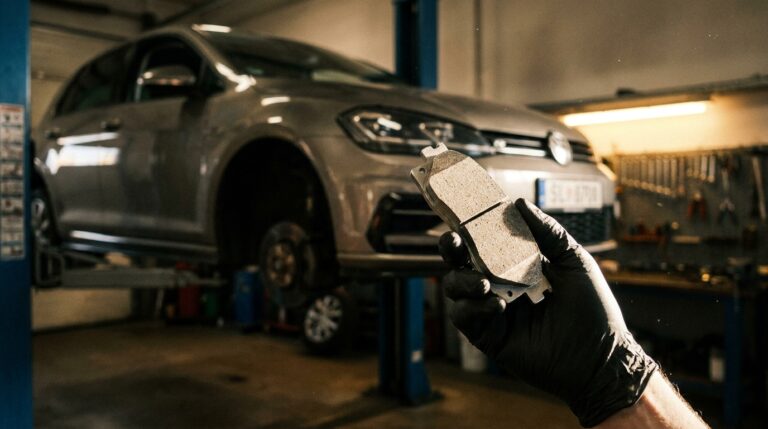
- Listen and Feel for Brake Wear: Pay attention to how your car stops. If you hear grinding or feel vibrations in the steering wheel, your brake pads are likely worn out.
Ignoring your brakes is incredibly dangerous. Squeaking noises? Learn how to inspect and perform a VW Golf brake pads replacement before they damage your rotors and double your repair bill.
For more general automotive advice on why sticking to a schedule matters across all vehicles, you can read the comprehensive Carfax Maintenance Guide.
Frequently Asked Questions (FAQs)
How often should a VW Golf be serviced?
A VW Golf should be serviced every 10,000 miles or every 12 months, whichever comes first. This baseline minor service includes a synthetic oil change, an oil filter replacement, and a general safety inspection.
Does time or mileage matter more for VW service intervals?
Both matter equally. You must follow whichever milestone occurs first. Even if a car sits in a garage and only drives 2,000 miles a year, the engine oil still oxidizes and degrades over time. Moisture can build up in the engine block, meaning the 12-month time interval is just as strict as the mileage interval.
What is included in a VW Golf 40,000-mile (major) service?
The 40,000-mile service is a major milestone. It includes a synthetic oil change, replacing the cabin air filter, replacing the engine air filter, installing new spark plugs, and crucially, changing the fluid and filter in the DSG automatic transmission.
When should the timing belt be replaced on a VW Golf?
Timing belt intervals vary slightly depending on your exact engine (TDI, TSI, or GTI) and the model year. Generally, Volkswagen recommends inspecting the belt starting at 80,000 miles and replacing it somewhere between 100,000 and 120,000 miles. Always check your specific owner’s manual, as a failure is catastrophic.
How do I reset the service light after maintenance?
After performing an oil change or major service, you need to reset the dashboard computer using the buttons on your steering wheel or instrument cluster. The exact button combination varies by generation (MK6, MK7, MK8). Read the section below for a direct link to our step-by-step reset tutorial.
What to Do After Your Service is Complete
Once you or your local mechanic finish the scheduled maintenance, the physical work is done, but the electronic work remains. Your VW Golf’s internal computer tracks your mileage and time since the last service.
If you do not tell the computer that you changed the oil, the annoying “Service Now” wrench icon will remain illuminated on your dashboard every time you start the car. Furthermore, failing to reset the light throws off the tracking for your next service interval.
Action Required: Done with your maintenance? Here is the exact method to reset the service light on a VW Golf. It takes less than a minute and requires no scanning tools.
Conclusion
Understanding and following your VW Golf service intervals & schedule is the single most important thing you can do as a car owner. Skipping an oil change or ignoring your DSG fluid might save you a few dollars today, but it will inevitably cost you thousands of dollars in major engine or transmission repairs down the road.
By sticking to the 10k, 20k, and 40k maintenance milestones, you preserve your car’s fuel efficiency, maintain a smooth driving experience, and protect the vehicle’s resale value. A well-documented maintenance history proves to future buyers that your Golf was loved and cared for.
We highly recommend bookmarking this page so you can easily reference your VW Golf maintenance schedule whenever your odometer hits a new milestone. Keep your fluids clean, check your tires regularly, and enjoy the brilliant engineering of your Volkswagen Golf for years to come!