
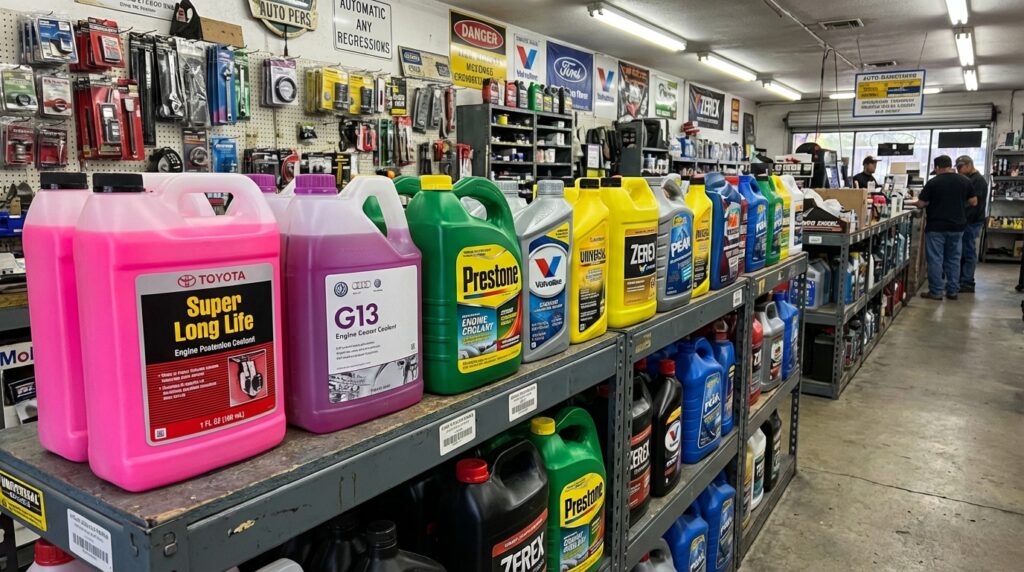
Opening the hood of your car to find the engine coolant reservoir sitting below the “MIN” line brings a rush of anxiety to any driver. You drive to the local auto parts store, walk down the fluids aisle, and suddenly face a wall of colorful jugs. Green, orange, yellow, pink, and purple liquids stare back at you.
If you own a Volkswagen, you cannot simply grab the cheapest jug of “universal” green antifreeze and pour it in. German engineering requires strict adherence to specific chemical formulas. Choosing the wrong VW Golf coolant type causes severe internal engine corrosion, destroys water pumps, and clogs heater cores with a thick, brown sludge.
To keep your car running perfectly, follow our complete VW Golf Maintenance & Service Guide
Volkswagen uses a unique “G-code” naming system for its engine coolants. Over the years, they evolved from G12 to G13, and most recently, to G12evo. But what do these codes actually mean? Does your specific car need the pink stuff or the purple stuff?
This comprehensive guide answers all your questions. We will map out the exact OEM coolant specifications for the VW Golf Mk4 through the Mk8. You will learn how to identify the right fluid, understand the strict rules of mixing different coolants, and learn how to safely top off your system.
The Quick Answer: What is the Correct VW Golf Coolant Type?
If you need an immediate answer to get your car back on the road safely, look at the plastic coolant expansion tank under your hood. Volkswagen proudly stamps the required coolant specification directly onto the plastic reservoir.
As a general rule for modern vehicles:
- If you drive a VW Golf Mk7 (2014–2019), your car likely came from the factory with G13 (Purple/Lilac) coolant.
- If you drive a newer VW Golf Mk8 (2020–Present), your car uses the newest standard, G12evo (Pink).
- Older generations like the Mk4, Mk5, and Mk6 generally use variations of the G12, G12+, or G12++ (Pink) formulas.
Regular maintenance like a proper VW Golf oil change helps keep your cooling system clean
Crucial Safety Note: Volkswagen recently discontinued G13 coolant due to issues with heater core clogging. The brand now officially recommends G12evo as the ultimate replacement for all modern Golfs. G12evo is fully backward compatible with older G12 and G13 systems.
VW Golf Coolant Chart by Generation (Mk4 to Mk8)
To make finding your specific fluid as easy as possible, we broke down the recommended coolant types by vehicle generation. Keep in mind that Volkswagen upgraded these formulas as chemical technology improved.
Match your vehicle’s year and generation to the chart below to find out what coolant does a VW Golf take for your exact model.
| VW Golf Generation | Model Years | Original Factory Coolant | Antifreeze Color | Modern Replacement Recommendation |
|---|---|---|---|---|
| Mk4 | 1998 – 2005 | G12 / G12+ | Pink / Red | G12evo |
| Mk5 | 2006 – 2009 | G12+ / G12++ | Pink / Violet | G12evo |
| Mk6 | 2010 – 2014 | G12++ | Pink / Violet | G12evo |
| Mk7 | 2015 – 2019 | G13 | Purple / Lilac | G12evo |
| Mk8 | 2020 – Present | G12evo | Pink | G12evo |
“Never base your coolant choice entirely on the color. While color acts as a helpful visual guide, chemical dyes change. Always read the label and ensure you see the specific G12, G13, or G12evo OEM approval code before pouring anything into your engine.”
Keeping proper fluid levels also requires checking your VW Golf tire pressure and fluids regularly
Understanding VW Coolant Codes: G12 vs. G13 vs. G12evo
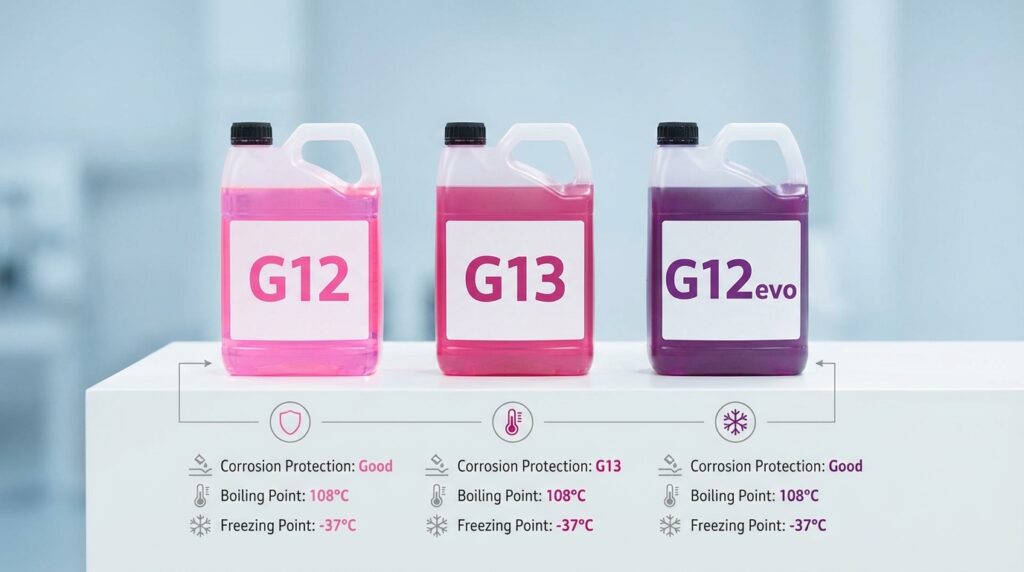
Volkswagen engines feature complex cooling channels made from specialized aluminum alloys, combined with plastic water pump impellers and rubber gaskets. To protect these materials from rusting and degrading, engineers develop highly specific Organic Acid Technology (OAT) coolants.
Let us break down the history and science behind the VW G-codes so you understand exactly what you are putting into your car.
The G12 Era (G12, G12+, G12++)
Volkswagen introduced G12 in the late 1990s as a massive leap forward in coolant technology. Unlike old-school green antifreeze that needed replacing every two years, G12 offered a “lifetime” fill. It contained zero silicates, making it perfect for aluminum engine blocks.
As engines grew more powerful and emissions standards tightened, VW released G12+ and G12++. These upgrades reintroduced a microscopic amount of silicates to provide an extra layer of rapid healing protection for internal aluminum parts.
The G13 Era (The Environmental Push)
Around 2012, just as the Mk7 Golf hit the drawing boards, Volkswagen shifted to G13. The main difference between VW G12 vs G13 coolant was environmental. G13 replaced the traditional petroleum-based glycol with glycerin, a byproduct of biodiesel production. This reduced the manufacturing carbon footprint by 11 percent.
G13 offered excellent cooling properties and shared the same purple/lilac color as G12++. However, over several years of real-world driving, mechanics noticed a flaw. Under extreme heat conditions, the silicates in G13 sometimes separated and dropped out of the fluid. This created a sandy blockage inside the car’s heater core, leading to a total loss of cabin heat.
The G12evo Era (The Modern Solution)
To solve the heater core clogging issues caused by G13, Volkswagen released G12evo in late 2019. This new formula returned to a more stable chemical base, completely eliminating the silicate drop-out problem.
Today, G12evo stands as the ultimate, bulletproof VW Golf coolant type. Volkswagen ships every new Mk8 Golf with G12evo from the factory. Furthermore, the company advises dealership service centers to use G12evo to top off or flush older Mk7, Mk6, and Mk5 models.
VW Golf Antifreeze Color Explained (Why is it Pink or Purple?)
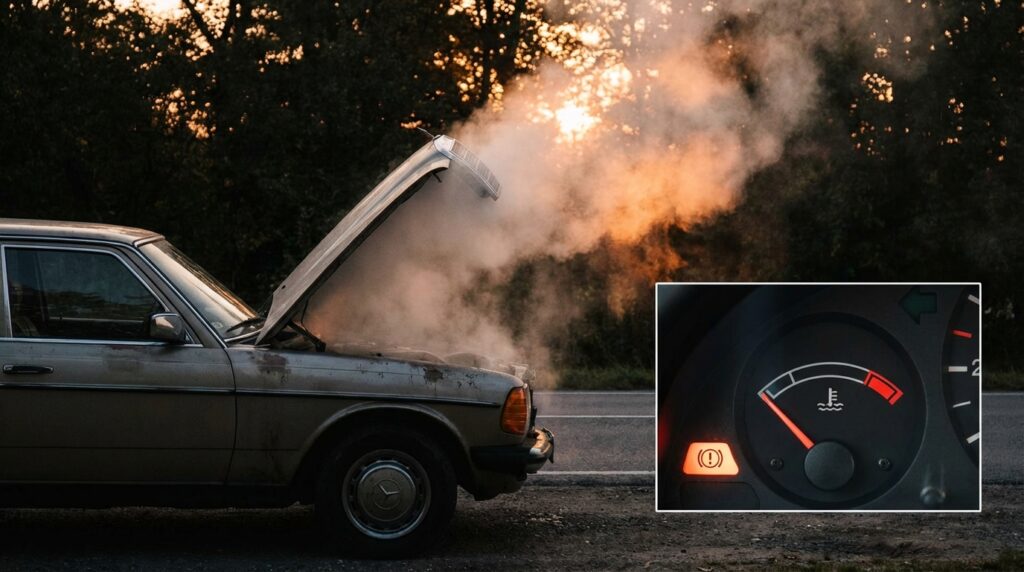
If you ask a seasoned mechanic about VW Golf antifreeze color, they will immediately mention pink or purple. But why does Volkswagen use these specific bright colors instead of the traditional neon green?
Automakers use bright chemical dyes in coolant for two very practical reasons:
- Leak Identification: A bright pink or purple puddle under your car immediately tells you that you have a coolant leak, rather than a brown oil leak or a clear puddle of harmless water from the air conditioning system.
- Cross-Contamination Warning: The unique colors warn technicians not to mix the fluid with cheaper, incompatible coolants.
Generally, G12 and G12evo feature a bright, vibrant pink hue. G13 and G12++ feature a deeper purple or lilac tone. However, as fluid ages and goes through thousands of heat cycles inside your engine, it can lose its vibrancy. A healthy coolant should look translucent and clean. If your coolant looks muddy, rusty, or brown, you need an immediate system flush.
The Golden Rule: Can I Mix Different Types of VW Coolant?
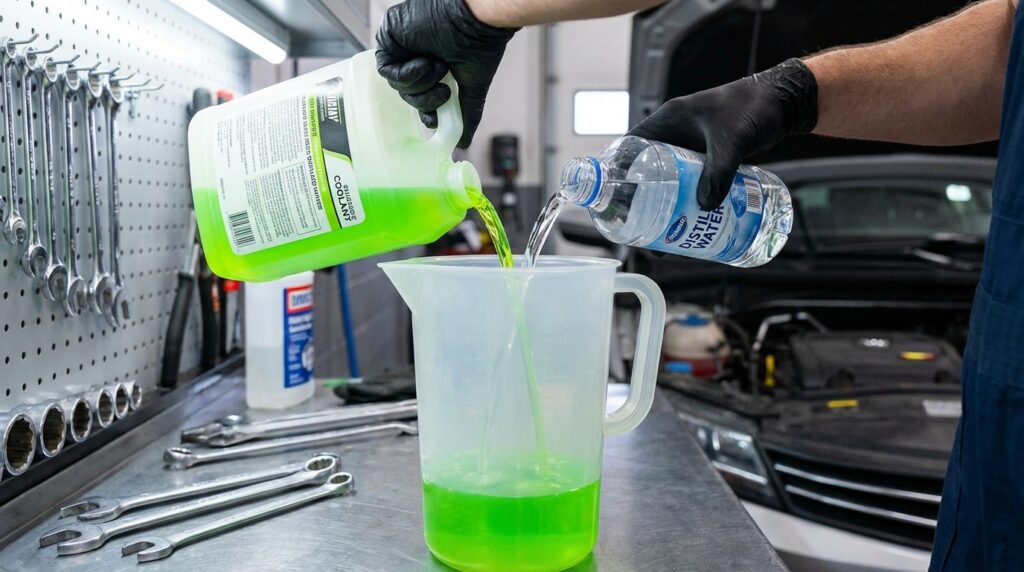
Mixing coolants is where many VW owners make their most expensive mistakes. Different antifreeze formulas use clashing chemical inhibitors. When these chemicals meet inside a hot engine block, they react aggressively.
Electrical issues caused by overheating can also lead to problems like needing a VW Golf battery replacement
DANGER: Never mix “Universal Green” or “All Makes/All Models” yellow coolant into a Volkswagen. Mixing traditional Inorganic Acid Technology (IAT) coolant with VW’s Organic Acid Technology (OAT) coolant creates a thick, brown gel. This gel clogs the radiator, destroys the water pump, and quickly overheats the engine.
However, you can safely mix certain VW G-codes together in an emergency. Follow these strict OEM compatibility rules:
- G12evo can safely mix with G13, G12++, G12+, and G12. It is the safest universal top-off fluid for your Golf.
- G13 can safely mix with G12++ and G12+.
- G12++ can safely mix with G12+ and G12.
- Never mix G11 (a very old blue coolant from the early 1990s) with G12.
If you find yourself stuck on the side of the highway with a low coolant warning and you do not have the correct VW fluid, add pure distilled water. Adding distilled water safely raises the fluid level without introducing harmful clashing chemicals. Once you get home, you can test the mixture and add pure G12evo concentrate to restore the proper freeze-protection ratio.
How to Check and Top Off Your VW Golf Coolant
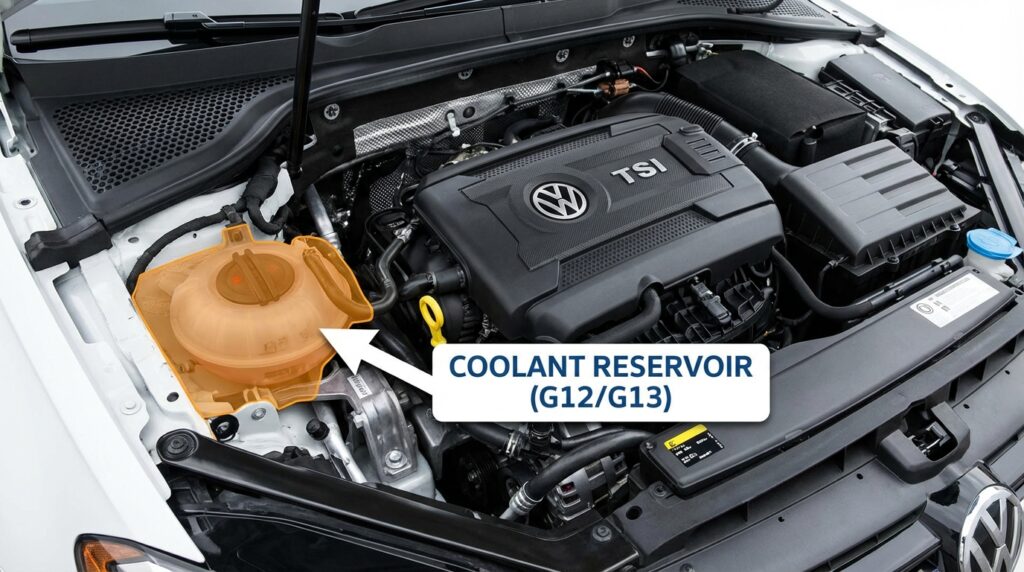
Maintaining the proper fluid level prevents your engine from overheating during intense summer traffic and stops it from freezing solid during winter blizzards. Topping off the coolant is a simple DIY task that requires no special tools.
Ignoring cooling issues can lead to serious problems like the VW Golf EPC light
Step 1: Wait for a Cold Engine
Never open the coolant reservoir cap while the engine is hot. The cooling system operates under extreme pressure. Removing the cap on a hot engine causes boiling liquid to explode outward, resulting in severe burns. Let the car sit overnight, or wait at least three hours after driving before checking the level.
Step 2: Locate the Expansion Tank
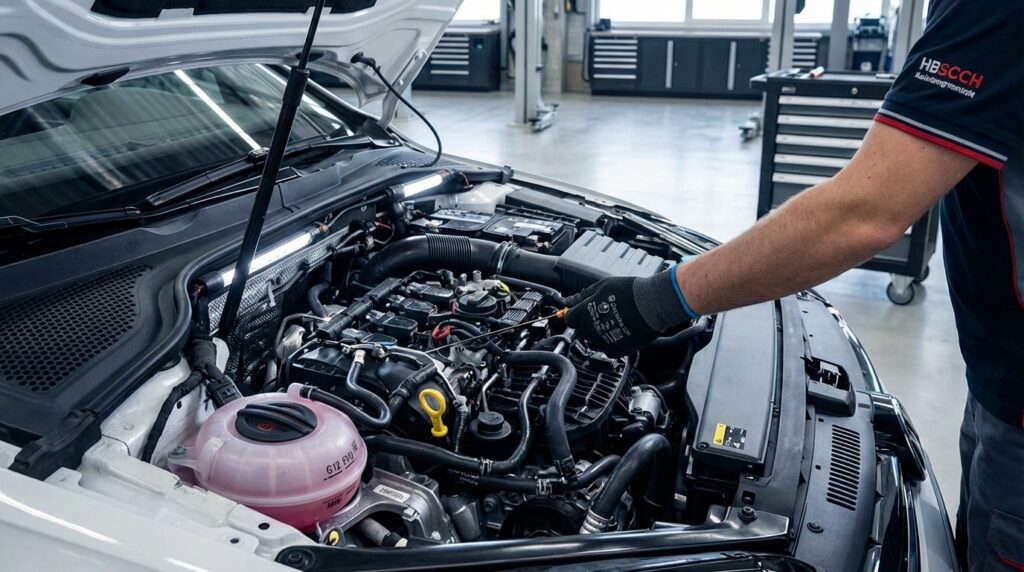
Open the hood and secure it. Look for a spherical, translucent plastic tank on the passenger side of the engine bay. It has a blue or black cap with a thermometer symbol on it. You will see the required VW Golf coolant type (like G12 or G13) stamped on the plastic.
Step 3: Check the Min and Max Lines
Look at the side of the plastic tank. You will see two molded lines indicating the “MIN” (Minimum) and “MAX” (Maximum) levels. The pink or purple fluid should sit right in the middle of these two lines when the engine is perfectly cold.
Step 4: Mix the Coolant (If using Concentrate)
If you bought pre-mixed (50/50) coolant, you can pour it straight into the tank. If you bought pure concentrate, you must mix it with distilled water at a 50/50 ratio before pouring it in. Never use tap water. Tap water contains minerals like calcium and magnesium that create scale buildup inside the radiator.
Step 5: Fill and Secure
Slowly pour the correct mixture into the tank until the fluid reaches the midpoint between the MIN and MAX lines. Do not overfill the tank. The system needs empty space at the top to allow the fluid to expand as it gets hot. Finally, twist the cap back on tightly until you hear it click or feel it lock into place.
If you want to learn more about the deep engineering behind how cooling systems protect your engine, check out this excellent breakdown on engine coolant dynamics .
Frequently Asked Questions (FAQs)
Can I use universal auto parts store coolant in my VW Golf?
No. Most universal coolants available at auto parts stores do not meet Volkswagen’s strict chemical specifications. Using them risks severe galvanic corrosion inside your engine block. Always spend the extra few dollars to buy an OEM-approved G12evo or G13 coolant.
Why is my VW Golf losing coolant but there is no leak on the ground?
If your fluid level drops but you do not see a puddle, your engine might be consuming the coolant internally. Common culprits include a failing water pump (where the fluid evaporates on hot engine parts before hitting the ground), a leaky EGR cooler, or a blown head gasket. Have a professional mechanic perform a cooling system pressure test immediately.
How often should I flush the coolant in my VW Golf?
While Volkswagen originally marketed G12 and G13 as “lifetime” fluids, seasoned VW mechanics heavily disagree. Fluid degrades over time and loses its anti-corrosion properties. For maximum engine longevity, you should drain and flush the cooling system every 5 years or 50,000 miles.
What happens if I overfill the coolant reservoir?
If you fill the fluid past the MAX line, the system will naturally purge the excess liquid as the engine heats up and the fluid expands. The excess fluid will vent out through a pressure release valve in the cap and spill onto the ground. While this is not catastrophic, it creates a messy engine bay and wastes expensive coolant.
Does the VW Golf require a specific water type for mixing?
Yes. You must use 100% distilled water or deionized water when mixing pure antifreeze concentrate. Never use tap water, filtered drinking water, or bottled spring water. The minerals in normal water will rapidly corrode the fine aluminum fins inside your radiator and heater core.
Understanding your exact VW Golf coolant type protects your investment and guarantees thousands of miles of trouble-free driving. Whether you drive a classic Mk4 or a brand new Mk8, respecting the engineering under the hood always pays off. When in doubt, upgrade your system to the newest pink G12evo standard, keep your fluid levels between the lines, and enjoy the open road with complete peace of mind.